Loading...
Al-Mustarshid vs Li Cui
Li Cui leads by 0.1 pts · 2 figures compared
…

Al-Mustarshid
Emperor · Medieval
39.6Total
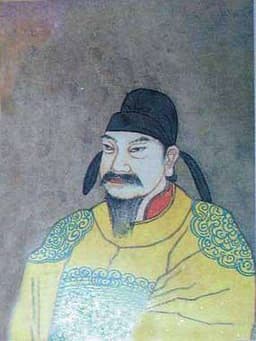
Li Cui
Emperor · Medieval
39.7Total
Basic Information
Born
1092
833
Died
1135
873
Era
Medieval
Medieval
Nationality
Abbasid Caliphate
China
Occupation
Emperor
Emperor
Civilization
Middle Eastern
Eastern
Score Comparison
Military (10%)
50.0
21.2
Political (20%)
26.4
25.0
Influence (20%)
47.9
47.9
Legacy (20%)
38.3
38.3
Leadership (15%)
34.6
55.3
Strategy (15%)
38.6
39.6
TOTAL
39.6
39.7
Al-Mustarshid — Complete Timeline
1125 AD
Rebellion Against Seljuk SultanWar
Caliph Al-Mustarshid rebelled against Seljuk Sultan Mahmud II, raising an army and fighting the Seljuks near Baghdad. The caliph was defeated and captured, then forced to pay a large ransom and recognize Seljuk authority.
RebellionSeljuk-Abbasid WarDefeat
Impact: regionaldestructive
1132 AD
Military Campaign Against SeljuksWar
Al-Mustarshid launched a military campaign against the Seljuk sultan, capturing several fortresses. This campaign temporarily expanded caliphal territory but ultimately failed to secure lasting independence.
Military CampaignTerritorial Expansion
Impact: regional
1135 AD
Assassination of Al-MustarshidPolitical Action◆ Major
Al-Mustarshid was assassinated in his tent by a group of Seljuk agents while on campaign. His death marked the first time an Abbasid caliph was killed by the Seljuks, demonstrating the fragility of caliphal power.
AssassinationSeljuk ViolenceCaliphal Death
Impact: regionaltragic
Li Cui — Complete Timeline
868 AD
Suppressed the Pang Xun RebellionWar◆ Major
Li Cui (Tang Yizong) ordered the suppression of the rebellion led by Pang Xun, a mutineer from the southern frontier. The rebellion was crushed after a year of fighting, but it exposed the weakening of Tang military control and foreshadowed larger revolts.
RebellionTang DynastyMilitary Campaign
Impact: nationaldestructive
870 AD
Ignored Growing Unrest and FaminePolitical Action◆ Major
During the later years of Li Cui's reign, widespread famine and banditry erupted across the empire. He failed to implement effective relief measures or military reforms, allowing conditions to worsen that would lead to the Huang Chao Rebellion after his death.
NeglectFamineDecline
Impact: nationaldestructive
Expert Analysis
Origins
Al-Mustarshid was born in 1092 in Baghdad, the son of Caliph Al-Mustazhir. He belonged to the Abbasid dynasty, which had long been overshadowed by Seljuk power. His early life was spent in the caliphal palace, receiving traditional Islamic education and training in governance, but he chafed under the control of the Seljuk sultans. Li Cui, posthumously known as Tang Yizong, was born in 833 in Chang'an, the eldest son of Emperor Tang Xuanzong. He grew up in the Tang imperial court, witnessing the decline of central authority. His education emphasized Confucian classics and statecraft, but he lacked military experience.
Rise to Power
Al-Mustarshid became caliph in 1118 upon his father's death. His reign was marked by tension with the Seljuk Sultan Mahmud II, who demanded tribute and military support. In 1125, Al-Mustarshid refused to pay tribute and raised an army, marching against the Seljuks near Baghdad. He initially achieved some success, capturing fortresses, but was defeated and captured in 1135. Li Cui ascended the throne in 859 after his father's death. He faced immediate challenges: the rebellion of Pang Xun (859-860), a mutineer from the southern frontier. Li Cui ordered suppression, which succeeded after a year, but the empire remained unstable.
Leadership & Governance
Al-Mustarshid attempted to reassert caliphal independence through military action, but his leadership was erratic. He scored 34.6 in leadership and 38.6 in strategy. His governance focused on breaking Seljuk control, but he lacked administrative reforms. Li Cui, with a leadership score of 55.3, was more passive. He delegated much governance to eunuchs and officials, ignoring growing unrest and famine. His military score of 21.2 reflects his failure to address banditry and rebellions beyond the initial suppression.
Triumph & Tragedy
Al-Mustarshid's triumph was his initial campaign that temporarily expanded caliphal territory. However, his tragedy was his defeat and assassination in 1135 by Seljuk agents, marking the first time an Abbasid caliph was killed in such a manner. Li Cui's triumph was the suppression of Pang Xun's rebellion, which preserved the dynasty for a few more decades. His tragedy was his neglect of the empire's underlying crises: famine and banditry proliferated, setting the stage for the Huang Chao rebellion that erupted after his death.
Character & Destiny
Al-Mustarshid was impulsive and ambitious, determined to restore caliphal power. His rebellion against the Seljuks, while courageous, was poorly planned, leading to his downfall. His character of defiance sealed his fate. Li Cui was indecisive and complacent, preferring the comforts of court over active governance. His failure to address famine and unrest allowed problems to fester, leading to the eventual collapse of the Tang dynasty.
Legacy
Al-Mustarshid's legacy is mixed: he is remembered as a caliph who resisted foreign domination, but his defeat weakened the caliphate's authority. His assassination set a precedent for Seljuk dominance. Li Cui's legacy is largely negative; his reign is seen as a period of decline for the Tang. The unrest he ignored culminated in the Huang Chao rebellion (874-884), which devastated China and led to the Tang's fall in 907.
Conclusion
Although Li Cui scores marginally higher (39.7 vs 39.6), Al-Mustarshid's attempt to assert independence, despite its failure, had a more significant impact on the Islamic world's political dynamics. Li Cui's passivity contributed to the Tang's downfall, but his reign was less decisive. Therefore, Al-Mustarshid had a greater impact relative to his context.
Rankings
🥇
Li CuiLeader
Mil: 21.2Pol: 25.0Inf: 47.9
39.7
🥈
Al-Mustarshid
Mil: 50.0Pol: 26.4Inf: 47.9
39.6
+0.1 behind
How This Comparison Works
Algorithm
Each figure is scored on 6 dimensions (0—100 scale) based on structured historical data: Military (10%), Political (20%), Influence (20%), Legacy (20%), Leadership (15%), Strategy (15%). The weighted total produces the final ranking.
Data Sources
Scores are computed from structured sub-indicators in the database. Scale factors adjust for era (Ancient ×0.85, Modern ×1.0) and civilization size (Eastern ×1.05, Other ×0.80) to account for differences in population and military scale.
Maximum 3 Figures
Comparisons are limited to 2—3 figures to ensure readability and statistical meaningfulness.
Error Margins
±5 points per dimension — Sub-scores are derived from historical records with inherent uncertainty. Two figures within 5 points on a dimension should be considered roughly equivalent in that area.
Total Score Accuracy
±3 points overall — The weighted combination of 6 dimensions produces a total score with approximately ±3 points of uncertainty. Differences of less than 3 points are not statistically significant— the figures are effectively tied.
Known Limitations
- Historical records are incomplete and uneven across civilizations
- Figures from oral-tradition societies may be underrepresented
- Occupation labels can misclassify multi-role figures
- Scores measure capability and impact, not moral character
- Quantitative scoring is a comparison tool, not absolute truth
Capability Radar
Military (10%) — Battles & Warfare
Battles
25
15
Win Rate
20
10
Expansion
10
5
Political (20%) — Governance & Reform
Reform
20
20
Diplomacy
25
20
Economy
15
15
Influence (20%) — Cultural & Global Reach
Cultural
15
15
Global
10
10
Legacy (20%) — Historical Impact
Historical
20
20
Longevity
10
10
Leadership (15%) — Power & Stability
Tenure
30
60
Stability
10
10
Strategy (15%) — Tactics & Innovation
Strategy
25
10
Tactics
20
10
Reform
15
5
Similar Comparisons
Comments & Discussion
No comments yet. Be the first to share your thoughts!