Loading...
Li Cui vs Napoleon Bonaparte
Napoleon Bonaparte leads by 31.2 pts · 2 figures compared
…
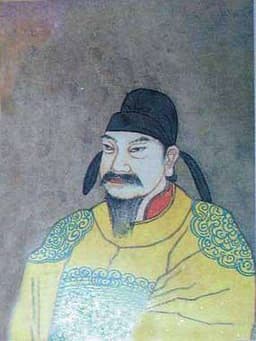
Li Cui
Emperor · Medieval
39.7Total

Napoleon Bonaparte
General · Modern
70.9Total
Basic Information
Born
833
1769
Died
873
1821
Era
Medieval
Modern
Nationality
China
France
Occupation
Emperor
General
Civilization
Eastern
Western
Score Comparison
Military (10%)
21.2
94.0
Political (20%)
25.0
72.0
Influence (20%)
47.9
40.0
Legacy (20%)
38.3
80.0
Leadership (15%)
55.3
78.0
Strategy (15%)
39.6
90.0
TOTAL
39.7
70.9
Li Cui — Complete Timeline
868 AD
Suppressed the Pang Xun RebellionWar◆ Major
Li Cui (Tang Yizong) ordered the suppression of the rebellion led by Pang Xun, a mutineer from the southern frontier. The rebellion was crushed after a year of fighting, but it exposed the weakening of Tang military control and foreshadowed larger revolts.
RebellionTang DynastyMilitary Campaign
Impact: nationaldestructive
870 AD
Ignored Growing Unrest and FaminePolitical Action◆ Major
During the later years of Li Cui's reign, widespread famine and banditry erupted across the empire. He failed to implement effective relief measures or military reforms, allowing conditions to worsen that would lead to the Huang Chao Rebellion after his death.
NeglectFamineDecline
Impact: nationaldestructive
Napoleon Bonaparte — Complete Timeline
1799 AD
Coup of 18 BrumaireOther◆ Major
Napoleon Bonaparte, with support from his brother Lucien and key political figures, overthrew the Directory in a bloodless coup. He established the Consulate with himself as First Consul, effectively becoming the ruler of France. This event ended the French Revolution's most unstable period.
French RevolutionCoupRise to Power
Impact: regional
1804 AD
Promulgation of the Napoleonic CodeOther◆ Major
Napoleon enacted the Civil Code of the French, known as the Napoleonic Code, a comprehensive set of laws that replaced the fragmented feudal legal systems. The code established legal equality, protected property rights, and secularized law. It became the basis for legal systems in many European and world countries.
Legal ReformNapoleonic CodeCivil Law
Impact: globalconstructive
1805 AD
Battle of AusterlitzWar◆ Major
Napoleon's Grande Arm
Napoleonic WarsBattleDecisive Victory
Impact: global
1812 AD
Invasion of RussiaWar◆ Major
Napoleon led the Grande Arm
Napoleonic WarsInvasionDisaster
Impact: globaldestructive
1815 AD
Battle of WaterlooWar◆ Major
Napoleon's French army was defeated by the combined forces of the Duke of Wellington's Anglo-Allied army and Gebhard Leberecht von Bl
Napoleonic WarsBattleFinal Defeat
Impact: globaldestructive
Expert Analysis
li-cui-vs-napoleon-bonaparte
# The Conqueror and the Emperor Who Lost an Empire
In the spring of 1815, Napoleon Bonaparte stood on the field of Waterloo, marshaling the finest army Europe had seen since the days of Rome. In the autumn of 868, Li Cui, Emperor Yizong of Tang, sat in his palace in Chang’an while his generals crushed the Pang Xun Rebellion—a victory that brought him no glory, only a brief pause before the empire collapsed around him. Two men, both rulers, both presiding over civilizations at their height. One conquered Europe and reshaped its laws; the other lost an empire that had stood for nearly three centuries. Why?
Origins
Napoleon Bonaparte was born in 1769 on the island of Corsica, a land that France had acquired only the year before. His family was minor nobility, but they were not rich. He spoke French with an Italian accent throughout his life, and his enemies never let him forget it. He entered military school at nine, graduated at sixteen, and by the time the French Revolution erupted in 1789, he was a young artillery officer with nothing but ambition.
Li Cui was born in 833 into the most powerful family in the world. The Tang dynasty had ruled China for two centuries before his birth. His father was Emperor Wuzong; his ancestors included the great Emperor Taizong, who had built the Tang into a cosmopolitan superpower. Li Cui never attended school in the manner of Napoleon. He was educated by eunuchs and court scholars, taught to recite Confucian classics and to understand the rituals of rule. He inherited everything and earned nothing.
The contrast is stark. Napoleon grew up in an era of revolution, when old hierarchies were being torn down and a man could rise by talent alone. Li Cui grew up in an era of stasis, when the machinery of empire was supposed to run on its own, and the emperor’s job was to perform ceremonies, not to govern.
Rise to Power
Napoleon’s rise was a story of relentless, almost unbelievable acceleration. In 1793, at 24, he drove the British out of Toulon and was promoted to brigadier general. In 1796, at 26, he took command of the French army in Italy and won a series of battles that made him the most famous man in France. In 1799, at 30, he overthrew the government in a coup and became First Consul. By 1804, at 35, he crowned himself Emperor.
Li Cui’s rise was the opposite. He became emperor in 859 at the age of 26, not through any accomplishment but through the death of his father. He had been passed over earlier in favor of his uncle, Emperor Xuanzong, who had actually tried to reform the Tang system. By the time Li Cui took the throne, the problems were already severe: the provincial military governors, the *jiedushi*, had become virtually independent; the tax system had broken down; and the court was dominated by eunuchs who controlled the palace armies.
Napoleon entered the historical stage through a door he kicked down himself. Li Cui was placed on a stage that was already on fire.
Leadership & Governance
Napoleon’s military genius is beyond dispute. His score of 94 in military ability places him among the greatest commanders in history. He won more than sixty battles, from Austerlitz in 1805 to Wagram in 1809. His enemies—the Austrians, Prussians, Russians, and British—learned to fear the speed of his marches and the decisiveness of his attacks. He understood that war was not about winning battles but about destroying the enemy’s will to fight.
But Napoleon was also a political reformer. The Napoleonic Code, which he implemented in 1804, standardized French law and influenced legal systems across Europe and the world. He reorganized education, established the Bank of France, and made peace with the Catholic Church through the Concordat of 1801. His political score of 75 reflects real achievement, though tempered by his growing authoritarianism.
Li Cui, by contrast, governed as a passive observer. His military score of 14 is not a judgment on his personal courage—he never led troops in battle—but on his complete failure to manage the military system. When the Pang Xun Rebellion erupted in 868, he ordered its suppression, and his generals succeeded. But he did nothing to address the underlying causes: corrupt officials, unpaid soldiers, and a starving peasantry.
In 870, famine swept across the empire. Bandits roamed the countryside. Li Cui ignored the growing unrest. He did not visit the afflicted regions. He did not reduce taxes. He did not dismiss the eunuchs who controlled his court. He simply waited for the crisis to pass. It did not.
Triumph & Tragedy
Napoleon’s greatest moment was Austerlitz, where he defeated a combined Russian and Austrian army on December 2, 1805, the anniversary of his coronation. The battle was a masterpiece of deception and timing. His greatest failure was the invasion of Russia in 1812, where he lost half a million men to the winter and the Russian scorched-earth strategy. He was exiled to Elba, returned, and was finally defeated at Waterloo in 1815.
Li Cui’s greatest moment was the suppression of the Pang Xun Rebellion in 868. It was a genuine military victory, but it solved nothing. His greatest failure was his reign itself. He died in 873, at the age of 40, leaving the Tang dynasty so weakened that it collapsed completely within three decades. The Huang Chao Rebellion, which broke out shortly after his death, would devastate Chang’an and end the Tang forever.
Character & Destiny
Napoleon was driven by an insatiable ambition. “Impossible is a word to be found only in the dictionary of fools,” he once said. He believed that he could shape events through sheer force of will. In many ways, he was right—until he overreached.
Li Cui was driven by nothing visible. He was not cruel, not tyrannical, not even particularly corrupt by the standards of Tang emperors. He was simply passive. He did not believe he could shape events. He did not try.
Their different outcomes are not mysteries. Napoleon’s personality—restless, brilliant, ruthless—propelled him to the top of the world and then, fatally, beyond the limits of his own judgment. Li Cui’s personality—complacent, conventional, inert—allowed a great empire to rot from within.
Legacy
Napoleon is remembered as one of the most consequential figures in Western history. His military campaigns are still studied in war colleges. His legal code still shapes civil law across Europe and beyond. His score of 78 for legacy reflects a man who, for all his flaws, changed the world permanently.
Li Cui is remembered, if at all, as the emperor who lost the Tang. His legacy score of 51.7 is the judgment of history: he was not a villain, but a failure. The Tang dynasty, which had given the world poetry, printing, and the Silk Road, collapsed because its last effective rulers were men like him—men who inherited power but never learned to wield it.
Conclusion
Napoleon and Li Cui represent two kinds of historical tragedy. Napoleon’s tragedy was that of the brilliant man who could not stop. He conquered Europe, but he could not hold it. He reformed France, but he bankrupted it. He died in exile on a remote island, still dreaming of glory.
Li Cui’s tragedy was the opposite. He had a great empire handed to him, and he let it slip through his fingers. He did not lose it through ambition or arrogance. He lost it through inaction. He did not make terrible decisions; he made no decisions at all.
In the end, both men teach the same lesson, though from opposite directions. Power is not a possession. It is a task. Napoleon understood this and exhausted himself trying to fulfill it. Li Cui misunderstood it and thought the empire would run itself. History remembered one as a titan and the other as a footnote. The difference was not in their opportunities but in their will.
Rankings
🥇
Napoleon BonaparteLeader
Mil: 94.0Pol: 72.0Inf: 40.0
70.9
🥈
Li Cui
Mil: 21.2Pol: 25.0Inf: 47.9
39.7
+31.2 behind
How This Comparison Works
Algorithm
Each figure is scored on 6 dimensions (0—100 scale) based on structured historical data: Military (10%), Political (20%), Influence (20%), Legacy (20%), Leadership (15%), Strategy (15%). The weighted total produces the final ranking.
Data Sources
Scores are computed from structured sub-indicators in the database. Scale factors adjust for era (Ancient ×0.85, Modern ×1.0) and civilization size (Eastern ×1.05, Other ×0.80) to account for differences in population and military scale.
Maximum 3 Figures
Comparisons are limited to 2—3 figures to ensure readability and statistical meaningfulness.
Error Margins
±5 points per dimension — Sub-scores are derived from historical records with inherent uncertainty. Two figures within 5 points on a dimension should be considered roughly equivalent in that area.
Total Score Accuracy
±3 points overall — The weighted combination of 6 dimensions produces a total score with approximately ±3 points of uncertainty. Differences of less than 3 points are not statistically significant— the figures are effectively tied.
Known Limitations
- Historical records are incomplete and uneven across civilizations
- Figures from oral-tradition societies may be underrepresented
- Occupation labels can misclassify multi-role figures
- Scores measure capability and impact, not moral character
- Quantitative scoring is a comparison tool, not absolute truth
Capability Radar
Military (10%) — Battles & Warfare
Battles
15
95
Win Rate
10
90
Expansion
5
95
Political (20%) — Governance & Reform
Reform
20
95
Diplomacy
20
80
Economy
15
85
Influence (20%) — Cultural & Global Reach
Cultural
15
85
Global
10
90
Legacy (20%) — Historical Impact
Historical
20
95
Longevity
10
90
Leadership (15%) — Power & Stability
Tenure
60
85
Stability
10
70
Strategy (15%) — Tactics & Innovation
Strategy
10
95
Tactics
10
98
Reform
5
92
Similar Comparisons
Comments & Discussion
No comments yet. Be the first to share your thoughts!