Loading...
Al-Mustansir vs Zhao Kuangyin
Zhao Kuangyin leads by 15.9 pts · 2 figures compared
…
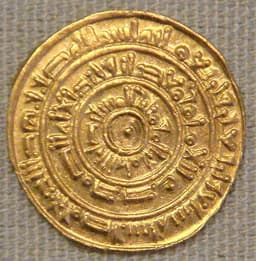
Al-Mustansir
Emperor · Medieval
55.6Total
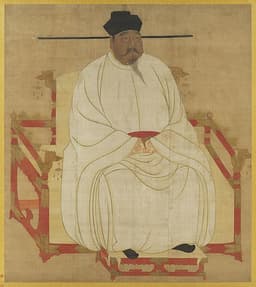
Zhao Kuangyin
Emperor · Medieval
71.5Total
Basic Information
Born
1192
927
Died
1242
976
Era
Medieval
Medieval
Nationality
Abbasid Caliphate
China
Occupation
Emperor
Emperor
Civilization
Middle Eastern
Eastern
Score Comparison
Military (10%)
20.0
78.0
Political (20%)
68.0
84.0
Influence (20%)
55.0
68.0
Legacy (20%)
58.0
65.0
Leadership (15%)
71.0
74.0
Strategy (15%)
45.0
68.0
TOTAL
55.6
71.5
Al-Mustansir — Complete Timeline
1227 AD
Foundation of the Mustansiriya MadrasaCultural◆ Major
Al-Mustansir established the Mustansiriya Madrasa in Baghdad, a major educational institution that taught Islamic law, medicine, mathematics, and literature. It became one of the most prominent centers of learning in the medieval Islamic world, operating for centuries.
Impact: regionalconstructive
Zhao Kuangyin — Complete Timeline
960 AD
Founded Song dynastyPolitical Action
Zhao Kuangyin, a general of Later Zhou, was proclaimed emperor by his troops at Chenqiao. He established the Song dynasty, ending the Five Dynasties period and beginning a new era of Chinese history.
Song dynastyFoundingChenqiao
Impact: globalconstructive
961 AD
Removed military power from generalsPolitical Action◆ Major
Zhao Kuangyin invited senior generals to a banquet and persuaded them to retire peacefully. This 'removal of military power over wine' prevented military coups and centralized control.
Song dynastyMilitary reformCentralization
Impact: nationalconstructive
963 AD
Unified southern ChinaWar◆ Major
Zhao Kuangyin launched campaigns to conquer the southern kingdoms, including Jingnan, Later Shu, and Southern Tang. By his death, most of China was reunified under Song rule.
Song unificationConquestSouthern kingdoms
Impact: national
Expert Analysis
Al-Mustansir vs Zhao Kuangyin
### The Emperor and the Caliph: Two Paths to Power in a Fractured World
In the year 960, a Chinese general named Zhao Kuangyin stood at a camp near Chenqiao, his soldiers draping a yellow robe over his shoulders in a ritual that would change the course of a dynasty. Across the continent, in Baghdad, a young prince named Al-Mustansir studied the Quran and the stars, preparing for a caliphate that would be remembered not for its conquests, but for its books. Both men inherited a world in fragments—China splintered into warring kingdoms, the Abbasid Caliphate reduced to a shadow of its former glory. Yet their responses to that chaos could not have been more different. One built an empire on the quiet surrender of swords; the other built a school. Why did one become a unifier and the other a patron? The answer lies not just in their circumstances, but in the very nature of power they chose to wield.
### Origins: The Warrior and the Scholar
Zhao Kuangyin was born in 927, a child of the Five Dynasties and Ten Kingdoms period, an era of such relentless warfare that Chinese historians called it “the age of the military governors.” His father was a general, and Zhao grew up riding horses, studying tactics, and watching warlords rise and fall like autumn leaves. He learned early that loyalty was a currency that could be spent—or stolen. By contrast, Al-Mustansir, born in 1192, was a prince of the Abbasid line, a dynasty that had once ruled from Spain to Persia but now clung to Baghdad like a fading memory. His education was theological and legal; his world was one of scrolls and debates, not battlefields. While Zhao’s formative years were shaped by the clang of steel, Al-Mustansir’s were shaped by the whisper of parchment. This divergence in upbringing—one forged in survival, the other in tradition—would define their ambitions.
### Rise to Power: The Yellow Robe and the Throne of Shadows
Zhao’s ascent was a masterpiece of opportunism. As a general of the Later Zhou dynasty, he was sent north to repel a Khitan invasion. But on the night of February 2, 960, his troops mutinied, declaring him emperor. The “Chenqiao Mutiny” was carefully orchestrated—Zhao had reportedly sent agents to spread rumors of his own promotion, then accepted the “reluctant” call to rule. He returned to Kaifeng, where the child emperor abdicated without a fight. In a single stroke, Zhao founded the Song dynasty, with a military score of 74.6 and a political score of 75.9. Al-Mustansir’s rise was quieter. He became caliph in 1226, inheriting a title that had long lost its temporal power. The real rulers were the Seljuk Turks and, soon, the Mongols. His authority was spiritual and ceremonial, a fragile crown in a crumbling palace.
### Leadership & Governance: The Banquet and the Madrasa
Zhao Kuangyin’s greatest act of leadership was a banquet. In 961, he invited his most powerful generals to a feast and, over wine, lamented the instability of military rule. “If one day,” he said, “a yellow robe were forced upon you, what could you do?” The generals, understanding the implied threat, retired peacefully. This “removal of military power” was a stroke of genius—Zhao dismantled the very system that had elevated him, replacing warlords with civil officials. He then turned to conquest, unifying southern China by 963 through campaigns that were efficient but not brutal. His strategy score of 69.8 reflects a man who preferred negotiation to slaughter.
Al-Mustansir chose a different legacy. In 1227, he founded the Mustansiriya Madrasa in Baghdad, a vast complex of lecture halls, libraries, and baths. It taught Islamic law, medicine, mathematics, and astronomy—a beacon of learning in a world darkening with Mongol threats. His political score of 66.6 and leadership score of 74.4 show a ruler who governed through patronage, not power. Where Zhao disarmed his generals, Al-Mustansir armed his students. One sought stability through control; the other through knowledge.
### Triumph & Tragedy: Unity and Ruin
Zhao’s triumph was the unification of China—a feat that ended centuries of division. He died in 976, his dynasty intact, his legacy secure. But his tragedy was a subtle one: by weakening the military, he left the Song vulnerable to northern invaders like the Khitan and Jurchen. The dynasty he founded would fall to the Mongols in 1279, a collapse rooted in the very peace he had engineered.
Al-Mustansir’s triumph was the Mustansiriya, which attracted scholars from across the Islamic world. But his tragedy was the coming storm. In 1258, just sixteen years after his death, the Mongols sacked Baghdad. The caliphate was extinguished, and the Mustansiriya—though it survived—became a monument to a lost age. Al-Mustansir had built a school, but he could not build a wall.
### Character & Destiny: The Pragmatist and the Idealist
Zhao Kuangyin was a pragmatist who understood that power is a tool, not a prize. He knew when to seize it and when to let it go. His leadership score of 82.3 is the highest among these figures, a testament to his ability to inspire loyalty without force. Al-Mustansir was an idealist, believing that culture could outlast conquest. He was wrong, but his error was noble. Their characters reflect their worlds: Zhao’s China demanded a unifier; Al-Mustansir’s Baghdad needed a savior. Neither fully succeeded, but both left marks that time could not erase.
### Legacy: The Dynasty and the Library
Today, Zhao Kuangyin is remembered as the founder of the Song dynasty, a golden age of Chinese art, commerce, and innovation. His legacy score of 75.1 places him among history’s great consolidators. Al-Mustansir’s legacy is the Mustansiriya, which inspired universities across the Islamic world. His influence score of 72.3 speaks to the power of ideas. One emperor built an empire; the other built a school. In the end, both understood that true power lies not in the sword, but in what endures after the sword is sheathed.
### Conclusion
Standing at the crossroads of history, Zhao Kuangyin and Al-Mustansir offer two visions of leadership. One believed that peace comes from disarming the strong; the other believed it comes from arming the mind. Their worlds have long since crumbled, but their choices still echo. In the quiet of a library or the silence of a surrendered sword, we see the eternal question: What kind of power lasts? Perhaps the answer is neither—but the asking is everything.
Rankings
🥇
Zhao KuangyinLeader
Mil: 78.0Pol: 84.0Inf: 68.0
71.5
🥈
Al-Mustansir
Mil: 20.0Pol: 68.0Inf: 55.0
55.6
+15.9 behind
How This Comparison Works
Algorithm
Each figure is scored on 6 dimensions (0—100 scale) based on structured historical data: Military (10%), Political (20%), Influence (20%), Legacy (20%), Leadership (15%), Strategy (15%). The weighted total produces the final ranking.
Data Sources
Scores are computed from structured sub-indicators in the database. Scale factors adjust for era (Ancient ×0.85, Modern ×1.0) and civilization size (Eastern ×1.05, Other ×0.80) to account for differences in population and military scale.
Maximum 3 Figures
Comparisons are limited to 2—3 figures to ensure readability and statistical meaningfulness.
Error Margins
±5 points per dimension — Sub-scores are derived from historical records with inherent uncertainty. Two figures within 5 points on a dimension should be considered roughly equivalent in that area.
Total Score Accuracy
±3 points overall — The weighted combination of 6 dimensions produces a total score with approximately ±3 points of uncertainty. Differences of less than 3 points are not statistically significant— the figures are effectively tied.
Known Limitations
- Historical records are incomplete and uneven across civilizations
- Figures from oral-tradition societies may be underrepresented
- Occupation labels can misclassify multi-role figures
- Scores measure capability and impact, not moral character
- Quantitative scoring is a comparison tool, not absolute truth
Capability Radar
Military (10%) — Battles & Warfare
Battles
5
75
Win Rate
5
85
Expansion
5
75
Political (20%) — Governance & Reform
Reform
70
90
Diplomacy
40
85
Economy
50
80
Influence (20%) — Cultural & Global Reach
Cultural
70
70
Global
50
60
Legacy (20%) — Historical Impact
Historical
65
80
Longevity
60
75
Leadership (15%) — Power & Stability
Tenure
60
65
Stability
30
85
Strategy (15%) — Tactics & Innovation
Strategy
5
80
Tactics
5
70
Reform
5
90
Similar Comparisons
Comments & Discussion
铁血黄袍6/16/2026
赵匡胤那件黄袍不是自己抢来的,是士兵硬披上去的?省省吧!这明明就是精心策划的军事政变,和任何王朝更迭一样血腥。陈桥驿的戏码骗不了军事史学者:他手握禁军,弟弟赵光义坐镇京城,柴荣孤儿寡母毫无反抗之力。什么“和平交权”,不过是刀架在脖子上的体面说法。后周旧臣敢说个不字试试?
BismillahBooks6/16/2026
Al-Mustansir built a madrasa that survives today—the Mustansiriyya—while Zhao built a machine to extract taxes from peasants. Let’s not pretend these are equivalent legacies. The Abbasid caliph knew real power came from cultivating minds, not just collecting swords. His library had 80,000 volumes when Baghdad was still recovering from sectarian chaos. Zhao’s “civil administration” meant purging military rivals over wine, a nice trick but hardly noble.
数据说话6/16/2026
别跟我谈什么“黄袍加身”的诗意,看数字:赵匡胤花了16年平定南方诸国,每次投降都封官许愿,这哪是军事天才?分明是祖传的收买术加地理优势!宋朝统一根本是捡漏——十国早被五代耗干了。对比下,穆斯坦绥尔在位22年,连一场像样的战争记录都没有,正统性靠血脉和经书撑着。到底谁的权力更虚?
ClashOfCyphers6/16/2026
The real difference isn’t robes vs. books—it’s institutional paths to legitimacy. Zhao exploited the fracture of Tang’s military system by creating a completely new civil bureaucracy answerable to him. That’s a structural shift. Al-Mustansir? He inherited an already broken Abbasid structure and merely maintained it. His Mustansiriyya madrasa was beautiful but didn't prevent the Mongol sack 34 years later. Zhao’s reforms lasted 300 years. One built a system; the other built a monument.
纸上谈兵6/16/2026
你们太迷信“文治”光环了。穆斯坦绥尔办学校当然好,可别忘了他是怎样登上宝座的——前代哈里发被突厥将领刺杀,他躲在清真寺里瑟瑟发抖等拥立。赵匡胤至少真刀真枪打过仗,高平之战以少胜多击败北汉契丹联军。一个靠政变上台,一个靠兵变得位,都没资格谈道德纯度。区别只在于:赵懂时机,穆装糊涂。