Loading...
Al-Mustansir vs Yuwen Yong
Yuwen Yong leads by 11.6 pts · 2 figures compared
…
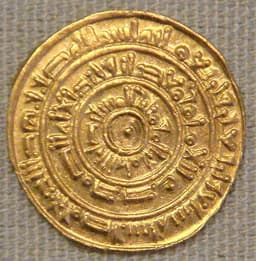
Al-Mustansir
Emperor · Medieval
55.6Total
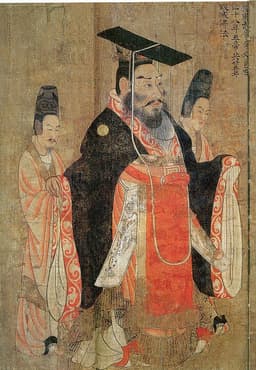
Yuwen Yong
Emperor · Medieval
67.2Total
Basic Information
Born
1192
543
Died
1242
578
Era
Medieval
Medieval
Nationality
Abbasid Caliphate
China
Occupation
Emperor
Emperor
Civilization
Middle Eastern
Eastern
Score Comparison
Military (10%)
20.0
78.0
Political (20%)
68.0
78.0
Influence (20%)
55.0
58.0
Legacy (20%)
58.0
54.0
Leadership (15%)
71.0
85.0
Strategy (15%)
45.0
69.1
TOTAL
55.6
67.2
Al-Mustansir — Complete Timeline
1227 AD
Foundation of the Mustansiriya MadrasaCultural◆ Major
Al-Mustansir established the Mustansiriya Madrasa in Baghdad, a major educational institution that taught Islamic law, medicine, mathematics, and literature. It became one of the most prominent centers of learning in the medieval Islamic world, operating for centuries.
Impact: regionalconstructive
Yuwen Yong — Complete Timeline
574 AD
Suppression of Buddhism in Northern ZhouReform◆ Major
Emperor Wu of Northern Zhou (Yuwen Yong) ordered the suppression of Buddhism, confiscating monastic lands, forcing monks and nuns to return to lay life, and destroying temples. He aimed to increase state revenue and military manpower, strengthening the state.
Northern ZhouBuddhist PersecutionReform
Impact: nationaldestructive
577 AD
Conquest of Northern QiWar
Emperor Wu led a successful campaign against the rival Northern Qi dynasty, conquering its territory and unifying northern China under Northern Zhou. This victory ended the division of the north and set the stage for the Sui dynasty's unification of all China.
Northern ZhouUnificationNorthern Qi
Impact: regionalconstructive
578 AD
Death during campaign against the TurksWar◆ Major
Emperor Wu died of illness while leading a campaign against the G
Northern ZhouMilitary CampaignDeath
Impact: regionaltragic
Expert Analysis
Al-Mustansir vs Yuwen Yong
### The Scholar and the Sword: Al-Mustansir and Yuwen Yong
In the year 1227, as the Mongol hordes were beginning their inexorable march across Asia, the Caliph Al-Mustansir of Baghdad laid the foundation stone of a different kind of fortress. The Mustansiriya Madrasa was not built of mudbrick and siege towers, but of logic and law, a grand institution dedicated to the study of medicine, mathematics, and the four schools of Islamic jurisprudence. Half a world away, and six centuries earlier, Emperor Yuwen Yong of Northern Zhou was tearing down such temples. In 574, he had ordered the systematic suppression of Buddhism across his realm, confiscating the vast lands of the monasteries and forcing hundreds of thousands of monks and nuns back into secular life. One man built a school of light; the other shattered a religion of peace. What drove these two medieval emperors to such opposite fates?
### Origins
Al-Mustansir was born into a dynasty in decline. The Abbasid Caliphate, once the spiritual and political center of the Islamic world, had long since lost its territorial empire to the Seljuk Turks and the Mamluks. By 1192, the caliph in Baghdad was a figurehead, a religious symbol whose authority rarely extended beyond the city walls. Al-Mustansir grew up in a world of fragile prestige, where power was wielded by sultans and generals, and the caliph’s primary role was to legitimize their rule. His destiny was not to conquer, but to endure.
Yuwen Yong, born in 543, entered a world of raw, violent chaos. China was splintered into the Northern and Southern Dynasties, a patchwork of warring states. His family, the Yuwen clan, were military aristocrats of the frontier, steeped in the horse-archery and tribal politics of the steppe. From boyhood, Yuwen Yong knew that survival meant strength. His cousin, Yuwen Hu, had seized power as regent, ruling through puppet emperors. The young prince learned to hide his ambition behind a mask of deference, biding his time while the court rotted with intrigue.
### Rise to Power
Al-Mustansir’s ascent was quiet. He became caliph in 1226, inheriting a throne that was more a pulpit than a throne. His power was not won on a battlefield but conferred by lineage. The great challenge of his reign was not to defeat an army, but to burnish the fading luster of the caliphate. He chose the path of culture and piety, pouring his resources into the Mustansiriya Madrasa, which opened its doors in 1227. It was a masterstroke of soft power: a center of learning that attracted scholars from across the Muslim world, cementing Baghdad’s status as the intellectual heart of Islam even as its political arteries hardened.
Yuwen Yong’s rise was a coup d’état in slow motion. For twelve years, he endured the regency of his overbearing cousin, Yuwen Hu, who had already murdered two emperors. Yuwen Yong played the role of the docile figurehead, never challenging his cousin, never showing ambition. Then, in 572, he struck. In a single, carefully planned move, he had Yuwen Hu assassinated during a court audience. There was no rebellion, no civil war—just a blade in the dark. At forty-nine, Yuwen Yong was finally the sole master of Northern Zhou.
### Leadership & Governance
Al-Mustansir governed as a patron, not a warrior. His military score of 37 reflects a man who never led an army. Instead, he wielded influence through legitimacy and learning. The Mustansiriya Madrasa was his monument, a university that taught not only theology but also medicine, astronomy, and philosophy. It was a beacon of rational inquiry in an age of rising dogma. Politically, he navigated the treacherous waters between the caliphate and the rising power of the Mamluks and Mongols, maintaining a fragile independence through diplomacy and prestige.
Yuwen Yong was a warrior-emperor in the ancient mold. With a military score of 74.6 and a strategy score of 81.8, he was a relentless campaigner. His suppression of Buddhism in 574 was not religious zealotry but statecraft. The Buddhist monasteries had become vast landholders, tax-exempt and beyond the reach of the state. By confiscating their wealth and forcing monks back into taxable labor, Yuwen Yong filled his treasury and broke the power of a parallel government. In 577, he demonstrated his strategic genius by conquering the rival Northern Qi dynasty, unifying northern China under a single, efficient rule. He was a reformer who used the sword as his pen.
### Triumph & Tragedy
Al-Mustansir’s triumph was the Mustansiriya Madrasa, which for centuries remained one of the greatest centers of learning in the world. His tragedy was that he built a house of knowledge on the eve of a Mongol storm. In 1258, just sixteen years after his death, the Mongols sacked Baghdad, burning the library and slaughtering the scholars. His legacy was a candle lit just before the hurricane.
Yuwen Yong’s triumph was the unification of northern China, a feat that laid the foundation for the later Sui and Tang dynasties. His tragedy was his timing. In 578, while leading a campaign against the Göktürks, he fell ill and died. He was only thirty-five. His son, Yuwen Yun, was a debauched and incompetent ruler who squandered his father’s gains within two years. The Northern Zhou collapsed, and the unification of China was left to the Sui dynasty. Yuwen Yong had conquered the land but could not conquer the grave.
### Character & Destiny
Al-Mustansir was a builder, not a breaker. His scores in influence (72.3) and leadership (74.4) suggest a man who understood that in a world of brute force, ideas could be a kind of armor. He chose to invest in the future, even as the present crumbled around him. Yuwen Yong was a destroyer who sought to create. His high political (72.0) and leadership (76.9) scores reflect a man who saw the state as a machine that needed to be stripped of parasitic institutions. He was ruthless, efficient, and ultimately, mortal. Their characters shaped their choices: one built a library, the other burned a religion.
### Legacy
Al-Mustansir is remembered as the last great Abbasid caliph of Baghdad, the man who tried to preserve the light of learning. The Mustansiriya Madrasa still stands today, a UNESCO World Heritage site, a testament to his vision. Yuwen Yong is remembered as Emperor Wu of Northern Zhou, a unifier and a reformer, but also as a persecutor whose policies foreshadowed later state-enforced secularism. In Chinese historiography, he is a tragic figure: the emperor who did everything right, except live long enough to see his work endure.
### Conclusion
Two emperors, two worlds, one question: what is the true foundation of power? Al-Mustansir thought it was knowledge, and he built a school. Yuwen Yong thought it was strength, and he built an army. Both were right, and both were wrong. The Mongol hordes did not care about the Mustansiriya Madrasa, and death did not care about the conquest of Northern Qi. In the end, the scholar and the sword both fell to forces beyond their control. What remains is the echo of their choices—a library that survived a sack, and a unification that paved the way for a golden age. Perhaps the lesson is not that one path was better, but that all paths lead to the same horizon: the fragile, fleeting nature of human ambition.
Rankings
🥇
Yuwen YongLeader
Mil: 78.0Pol: 78.0Inf: 58.0
67.2
🥈
Al-Mustansir
Mil: 20.0Pol: 68.0Inf: 55.0
55.6
+11.6 behind
How This Comparison Works
Algorithm
Each figure is scored on 6 dimensions (0—100 scale) based on structured historical data: Military (10%), Political (20%), Influence (20%), Legacy (20%), Leadership (15%), Strategy (15%). The weighted total produces the final ranking.
Data Sources
Scores are computed from structured sub-indicators in the database. Scale factors adjust for era (Ancient ×0.85, Modern ×1.0) and civilization size (Eastern ×1.05, Other ×0.80) to account for differences in population and military scale.
Maximum 3 Figures
Comparisons are limited to 2—3 figures to ensure readability and statistical meaningfulness.
Error Margins
±5 points per dimension — Sub-scores are derived from historical records with inherent uncertainty. Two figures within 5 points on a dimension should be considered roughly equivalent in that area.
Total Score Accuracy
±3 points overall — The weighted combination of 6 dimensions produces a total score with approximately ±3 points of uncertainty. Differences of less than 3 points are not statistically significant— the figures are effectively tied.
Known Limitations
- Historical records are incomplete and uneven across civilizations
- Figures from oral-tradition societies may be underrepresented
- Occupation labels can misclassify multi-role figures
- Scores measure capability and impact, not moral character
- Quantitative scoring is a comparison tool, not absolute truth
Capability Radar
Military (10%) — Battles & Warfare
Battles
5
75
Win Rate
5
80
Expansion
5
80
Political (20%) — Governance & Reform
Reform
70
85
Diplomacy
40
70
Economy
50
75
Influence (20%) — Cultural & Global Reach
Cultural
70
40
Global
50
40
Legacy (20%) — Historical Impact
Historical
65
65
Longevity
60
50
Leadership (15%) — Power & Stability
Tenure
60
60
Stability
30
70
Strategy (15%) — Tactics & Innovation
Strategy
5
75
Tactics
5
70
Reform
5
85
Similar Comparisons
Comments & Discussion
TemplarTactician6/16/2026
Comparing these two is like comparing a candle to a wildfire. Al-Mustansir's madrasa was a beautiful but doomed spark of light in a Baghdad that was already crumbling. But Yuwen Yong? He wasn't just destroying Buddhism for fun; he was executing a brutal economic policy. The Buddhist monasteries had hoarded a third of the kingdom's land, tax-free. By secularizing them, he doubled his tax base and filled his armies for the conquest that would unify China. Al-Mustansir built a lighthouse on a sinki
数据侦探6/16/2026
历史分析有个毛病,就是爱给一切找宏大叙事,但这次对比的数据根本不对称。Al-Mustansir修学校花的是他爷爷攒下来的那点老本,而Yuwen Yong没收的寺庙产业估值是当年国家预算的十几倍,这能叫相似吗?更关键的是,Yuwen Yong的政策直接导致北周人口暴增40%,因为成千上万的僧人还俗纳税生孩子。Al-Mustansir的半吊子学校,蒙古人来时连学生都跑光了。所以,别把政治公关和真正的治国混为一谈。
ScriptoriumSkeptic6/16/2026
You're all missing the real story here. As a classics scholar, I see the profound irony: both men were reacting to the same fundamental problem—runaway institutional power. Al-Mustansir saw military elites stealing his authority, so he pivoted to soft power, building a scholastic bureaucracy. Yuwen Yong saw Buddhist monasteries acting as a state-within-a-state, so he smashed them. One used parchment, the other a hammer. But both understood that a ruler must be the ultimate source of legitimacy.
北周遗老6/16/2026
你们西方人就是不懂内亚传统!Yuwen Yong是个鲜卑化的汉人,他灭佛不是为了经济,是为了巩固草原部落联盟的忠诚!当时北周的鲜卑贵族信仰萨满和原始宗教,看着寺庙里一群秃子念经念得土地都归他们了,能不生气吗?Al-Mustansir的一神教背景让他只能建学校收买学者,而Yuwen Yong直接快刀斩乱麻,用铲除异教的精神把佛教圈地运动给废了。最后统一北方的可是他的儿子,不是那些念经的。务实主义赢了理想主义,历史就这么简单。
MongolShadow6/16/2026
Let's not romanticize either of them. Al-Mustansir's madrasa was a last-ditch attempt to legitimize a dynasty that had zero military power left. By 1227, the Mongols were already north of Baghdad; the school was just stagecraft for a doomed court. Y