Loading...
Al-Mustansir vs Rurik
Rurik leads by 4.0 pts · 2 figures compared
…
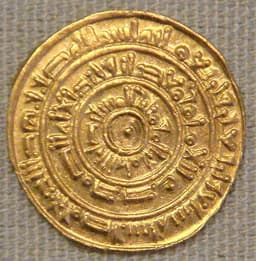
Al-Mustansir
Emperor · Medieval
55.6Total
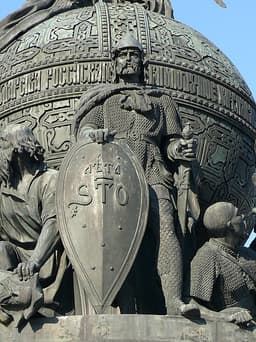
Rurik
Emperor · Medieval
59.6Total
Basic Information
Born
1192
830
Died
1242
879
Era
Medieval
Medieval
Nationality
Abbasid Caliphate
Kievan Rus
Occupation
Emperor
Emperor
Civilization
Middle Eastern
Western
Score Comparison
Military (10%)
20.0
50.0
Political (20%)
68.0
35.1
Influence (20%)
55.0
82.0
Legacy (20%)
58.0
68.0
Leadership (15%)
71.0
55.3
Strategy (15%)
45.0
35.7
TOTAL
55.6
59.6
Al-Mustansir — Complete Timeline
1227 AD
Foundation of the Mustansiriya MadrasaCultural◆ Major
Al-Mustansir established the Mustansiriya Madrasa in Baghdad, a major educational institution that taught Islamic law, medicine, mathematics, and literature. It became one of the most prominent centers of learning in the medieval Islamic world, operating for centuries.
Impact: regionalconstructive
Rurik — Complete Timeline
860 AD
Sent Askold and Dir to ConstantinopleWar
According to tradition, Rurik sent his lieutenants Askold and Dir to raid Constantinople. While the historicity is uncertain, this event is associated with the first Rus' attack on the Byzantine Empire, highlighting early Rus' expansion.
RaidByzantine EmpireExpansion
Impact: regional
862 AD
Founded the Rurik dynastyPolitical Action
According to the Primary Chronicle, Rurik, a Varangian chieftain, was invited by Slavic and Finnic tribes to rule over them. He established his capital at Novgorod, founding the Rurik dynasty that would rule Kievan Rus' and later the Tsardom of Russia until 1598.
FoundationVarangianKievan Rus'
Impact: global
864 AD
Consolidated control over NovgorodPolitical Action◆ Major
Rurik consolidated his rule over Novgorod and the surrounding territories, suppressing a rebellion led by Vadim the Bold. He established a centralized authority that became the basis for the early Russian state.
ConsolidationNovgorodRebellion
Impact: regional
Expert Analysis
Al-Mustansir vs Rurik
# The Chieftain and the Caliph: Two Paths to Power in a Fractured World
In the winter of 862, as snow gathered on the wooden palisades of a settlement that would one day be called Novgorod, a Varangian chieftain named Rurik accepted an invitation that would alter the course of Eurasian history. Nearly four centuries later, in the sun-baked halls of Baghdad, a descendant of the Prophet Muhammad laid the foundation stone for a madrasa that would become the intellectual heart of the Islamic world. Rurik and Al-Mustansir never met, never corresponded, and belonged to civilizations that regarded each other with suspicion at best. Yet both men stood at the crossroads of their respective worlds, wielding power in radically different ways. What drove one to build a dynasty through blood and iron, and the other to seek immortality through ink and prayer?
Origins
Rurik emerged from the mists of the Viking Age, a Varangian chieftain whose very existence remains contested by historians. Born around 830, he belonged to the Norse warrior-merchants who traveled the river routes from the Baltic to the Black Sea, trading furs, slaves, and amber. The Primary Chronicle, composed centuries after his death, tells a story that is as much myth as history: that Slavic and Finnic tribes, weary of internal strife, invited this foreign prince to rule over them. “Our land is great and abundant, but there is no order in it,” the chronicle reports them saying. Whether Rurik was a conqueror disguised as a savior or a genuine answer to a tribal plea, his world was one of constant motion, where a man’s worth was measured by his sword and his ability to command loyalty.
Al-Mustansir, born in 1192, entered a world already ancient. The Abbasid Caliphate, once the unrivaled superpower of the medieval world, had long since fragmented into rival emirates and sultanates. His father, Al-Zahir, had ruled a rump state centered on Baghdad, the caliph’s authority now more spiritual than temporal. Al-Mustansir was raised in the shadow of the great library of Baghdad, where the works of Aristotle and Avicenna were studied alongside the Quran. Unlike Rurik, who inherited nothing but his own ambition, Al-Mustansir inherited a title that carried the weight of centuries—Commander of the Faithful, successor to Harun al-Rashid. But the title was hollow; real power in the region belonged to the Ayyubid sultans and, soon, the approaching Mongol hordes.
Rise to Power
Rurik’s path to power was forged in violence and opportunism. According to tradition, in 860 he sent his lieutenants Askold and Dir to raid Constantinople, a daring expedition that tested the defenses of the Byzantine Empire. Whether this was a calculated move to weaken a rival or simply a Viking’s love of plunder, it established Rurik’s reputation as a leader who could project force. In 862, he accepted the invitation to rule over the tribes of the north, establishing himself in Staraya Ladoga before moving to Novgorod. By 864, he had consolidated his control, suppressing a rebellion led by a local chieftain named Vadim the Bold. The rebellion’s failure was decisive: Rurik executed the rebels and distributed their lands to his followers, binding their fates to his own.
Al-Mustansir became caliph in 1226, inheriting a throne that was more ceremonial than powerful. His rise required no rebellion, no conquest—only the accident of birth and the death of his father. Yet within a year of his accession, he undertook an act that would define his reign: the foundation of the Mustansiriya Madrasa in 1227. This was not a gesture of piety alone; it was a political statement. By creating a center of learning that taught all four schools of Sunni Islamic law, along with medicine, mathematics, and literature, Al-Mustansir positioned himself as the guardian of orthodox Islam. In a fragmented political landscape, intellectual authority became his currency.
Leadership & Governance
Rurik ruled as a warrior-king, his leadership style shaped by the harsh realities of the northern forests. He did not issue decrees from a distant palace; he led expeditions, distributed plunder, and personally settled disputes among his followers. His governance was personal and transactional—loyalty was rewarded with land and protection, disloyalty with death. The Primary Chronicle portrays him as a shrewd judge of men, willing to delegate power to lieutenants like Askold and Dir while maintaining ultimate authority. His strategy score of 52.0 reflects a leader who was competent but not brilliant, relying more on force than finesse.
Al-Mustansir governed from the caliphal palace in Baghdad, his authority expressed through patronage rather than warfare. With a military score of only 37.0, he was no general. His political score of 66.6, however, reveals a man who understood that in a world of declining temporal power, legitimacy was everything. The Mustansiriya Madrasa was his masterpiece—a sprawling complex with a hospital, a library, and classrooms that could accommodate hundreds of students. He endowed it generously, ensuring its independence from political interference. By funding education, he cultivated a class of scholars and bureaucrats loyal to the caliphate, creating a soft power that outlasted any battlefield victory.
Triumph & Tragedy
Rurik’s greatest triumph was the foundation of a dynasty that would rule for over seven centuries. He died in 879, having established a principality that his successor, Oleg, would expand into the vast state of Kievan Rus’. But his tragedy lies in the uncertainty that surrounds him. We cannot be certain he existed at all; his story may be a founding myth, invented to legitimize later rulers. The man who supposedly founded Russia remains a ghost, his deeds recorded by chroniclers writing two centuries after his death.
Al-Mustansir’s triumph was the Mustansiriya Madrasa, which became one of the most renowned educational institutions in the Islamic world. Its curriculum attracted students from across Asia and Africa, and its graduates staffed the bureaucracies of multiple dynasties. His tragedy was the approaching storm. In 1242, the year of his death, the Mongols had already devastated much of Central Asia and Persia. Twenty years later, his grandson would watch helplessly as Hulagu’s armies sacked Baghdad, burning the libraries and slaughtering the scholars that Al-Mustansir had nurtured. The madrasa survived, but the world it was meant to serve was destroyed.
Character & Destiny
Rurik’s character remains opaque, a silhouette in the fog of legend. He appears as a pragmatist, a man who seized opportunity when it presented itself and held power through calculated ruthlessness. If the invitation story is true, he possessed remarkable political instinct—knowing when to accept an offer that others might have seen as a trap. His destiny was to become the founder, whether real or symbolic, of a nation that would stretch from the Baltic to the Pacific.
Al-Mustansir’s character is better documented but no less complex. He was a patron, not a warrior; a builder, not a conqueror. In an age of violence, he chose the path of peace and learning. His destiny was to preside over the twilight of the Abbasid Caliphate, to build a monument to knowledge just before the barbarians arrived. He could not have stopped the Mongols; no one could. But he ensured that something of Baghdad’s greatness would survive the catastrophe.
Legacy
Rurik’s legacy is the Rurik dynasty, which produced figures like Yaroslav the Wise, Ivan the Terrible, and ultimately, the Romanovs who claimed descent from his line. His influence score of 68.7 reflects the enduring power of his name, even if his historicity remains debated. For Russians, he is the founding father, the Viking who became a Slav, the foreigner who became native. His legacy is a story, and stories have shaped history as much as any battle.
Al-Mustansir’s legacy is the Mustansiriya Madrasa, which continued to operate for centuries, adapting to Mongol rule and later Ottoman domination. His influence score of 72.3 and legacy score of 68.5 reflect the tangible nature of his achievement—a building that still stands, a tradition of learning that persisted. He is remembered not as a conqueror but as a civilizer, a man who understood that the sword is temporary but the book is eternal.
Conclusion
Rurik and Al-Mustansir embody two fundamental strategies for wielding power in a dangerous world. One built a dynasty through conquest and personal loyalty, creating a political structure that would endure for centuries. The other built an institution through patronage and intellectual authority, creating a cultural legacy that transcended politics. Both succeeded, and both failed. Rurik’s dynasty eventually collapsed; Al-Mustansir’s Baghdad was destroyed. Yet the Rurikid name still resonates in Russian identity, and the Mustansiriya Madrasa still stands on the banks of the Tigris. In the end, perhaps the question is not which approach was better, but which speaks more deeply to the human longing for permanence—the desire to rule, or the desire to teach.
Rankings
🥇
RurikLeader
Mil: 50.0Pol: 35.1Inf: 82.0
59.6
🥈
Al-Mustansir
Mil: 20.0Pol: 68.0Inf: 55.0
55.6
+4.0 behind
How This Comparison Works
Algorithm
Each figure is scored on 6 dimensions (0—100 scale) based on structured historical data: Military (10%), Political (20%), Influence (20%), Legacy (20%), Leadership (15%), Strategy (15%). The weighted total produces the final ranking.
Data Sources
Scores are computed from structured sub-indicators in the database. Scale factors adjust for era (Ancient ×0.85, Modern ×1.0) and civilization size (Eastern ×1.05, Other ×0.80) to account for differences in population and military scale.
Maximum 3 Figures
Comparisons are limited to 2—3 figures to ensure readability and statistical meaningfulness.
Error Margins
±5 points per dimension — Sub-scores are derived from historical records with inherent uncertainty. Two figures within 5 points on a dimension should be considered roughly equivalent in that area.
Total Score Accuracy
±3 points overall — The weighted combination of 6 dimensions produces a total score with approximately ±3 points of uncertainty. Differences of less than 3 points are not statistically significant— the figures are effectively tied.
Known Limitations
- Historical records are incomplete and uneven across civilizations
- Figures from oral-tradition societies may be underrepresented
- Occupation labels can misclassify multi-role figures
- Scores measure capability and impact, not moral character
- Quantitative scoring is a comparison tool, not absolute truth
Capability Radar
Military (10%) — Battles & Warfare
Battles
5
15
Win Rate
5
20
Expansion
5
30
Political (20%) — Governance & Reform
Reform
70
30
Diplomacy
40
35
Economy
50
25
Influence (20%) — Cultural & Global Reach
Cultural
70
50
Global
50
60
Legacy (20%) — Historical Impact
Historical
65
70
Longevity
60
80
Leadership (15%) — Power & Stability
Tenure
60
40
Stability
30
30
Strategy (15%) — Tactics & Innovation
Strategy
5
20
Tactics
5
15
Reform
5
10
Similar Comparisons
Comments & Discussion
江湖草莽评史官6/16/2026
Rurik就是北欧海盗里的暴发户,趁着斯拉夫人内乱来捡便宜,说好听点是“受邀而来”,难听点就是趁火打劫的把戏。Al-Mustansir虽然在政治上一塌糊涂,好歹给后人留了座学校,教出几个真学者。一个靠刀剑抢地盘,一个靠知识留名声。但仔细想想,抢地盘的孙子们后来也建了国,搞教育的后人却被蒙古人屠城……历史啊,从来不按剧本走。
RURIK_THE_REALIST6/16/2026
Let’s be honest—Rurik’s whole “invited to rule” story is PR fluff from the Primary Chronicle. He was a Viking warlord who saw weak Slavic tribes and exploited their feuds. Al-Mustansir at least built something constructive—his Mustansiriyya Madrasa educated scholars for centuries. Rurik just fathered a dynasty through blood and coercion. One created a legacy of knowledge; the other, a sword-based franchise. I’ll take ink over iron every time.
数据怀疑者之剑6/16/2026
这个对比太虚了!Rurik是不是真存在都存疑,Primary Chronicle写的可能是政治宣传,Al-Mustansir至少有好几个史料证实。按概率,Rurik更像传说人物,而巴格达的学校是确凿的建筑。拿神话和现实比,不是耍流氓吗?历史不是比谁更炫,而是比谁更可靠。
CLASSICS_SCHOLAR_STANCE6/16/2026
Al-Mustansir’s madrasa reminds me of the Platonic Academy—a institution built to challenge dogma. Rurik’s dynasty? Pure Machiavellian prototype. The Caliph sought intellectual immortality through dialectic and debate; the Varangian sought temporal power through oaths and axes. Which legacy endures? We still read Plato; we don’t swear by Rurik’s sword. Power without philosophy is just organized violence.