Loading...
Al-Mustansir vs Pedro I of Brazil
Al-Mustansir leads by 1.0 pts · 2 figures compared
…
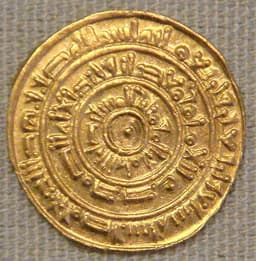
Al-Mustansir
Emperor · Medieval
55.6Total
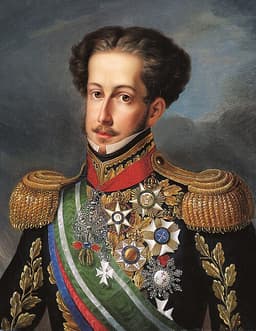
Pedro I of Brazil
Emperor · Modern
54.6Total
Basic Information
Born
1192
1798
Died
1242
1834
Era
Medieval
Modern
Nationality
Abbasid Caliphate
Brazil
Occupation
Emperor
Emperor
Civilization
Middle Eastern
Western
Score Comparison
Military (10%)
20.0
55.0
Political (20%)
68.0
62.7
Influence (20%)
55.0
59.0
Legacy (20%)
58.0
50.0
Leadership (15%)
71.0
53.2
Strategy (15%)
45.0
45.0
TOTAL
55.6
54.6
Al-Mustansir — Complete Timeline
1227 AD
Foundation of the Mustansiriya MadrasaCultural◆ Major
Al-Mustansir established the Mustansiriya Madrasa in Baghdad, a major educational institution that taught Islamic law, medicine, mathematics, and literature. It became one of the most prominent centers of learning in the medieval Islamic world, operating for centuries.
Impact: regionalconstructive
Pedro I of Brazil — Complete Timeline
1822 AD
Declaration of Independence of BrazilPolitical Action
Pedro I declared Brazil's independence from Portugal on September 7, 1822, at the Ipiranga River in S
Impact: globalprogressive
Coronation as Emperor of BrazilPolitical Action◆ Major
Pedro I was crowned Emperor of Brazil on December 1, 1822, in Rio de Janeiro. The coronation formalized the new imperial government, with Pedro I as constitutional monarch, though he retained significant executive powers.
Impact: nationalconstructive
1823 AD
War of Independence of BrazilWar◆ Major
Pedro I led Brazilian forces against Portuguese loyalists in the War of Independence. Key battles occurred in Bahia, Maranh
Impact: national
Dissolution of the Constituent AssemblyPolitical Action◆ Major
Pedro I dissolved the Constituent Assembly after conflicts over the constitution's limits on imperial power. He then imposed the 1824 Constitution, which granted the emperor extensive powers, including the Moderating Power, centralizing authority.
Impact: nationaldestructive
1831 AD
Abdication of the Brazilian ThronePolitical Action
Pedro I abdicated the Brazilian throne in favor of his five-year-old son Pedro II on April 7, 1831. He returned to Portugal to claim the Portuguese throne, leaving Brazil under a regency until his son came of age.
Impact: national
Expert Analysis
Al-Mustansir vs Pedro I of Brazil
### The Emperor and the Caliph: Two Paths to Power, Two Ends of Legacy
History rarely offers a more striking contrast than that between Pedro I of Brazil and Al-Mustansir of the Abbasid Caliphate. One was a swashbuckling prince who shouted “Independence or Death!” on the banks of the Ipiranga River, then spent a decade fighting to hold his fragile empire together before abandoning his throne for a lost crown in Portugal. The other was a caliph who, in the twilight of a dying dynasty, built a university that would outlive his reign by centuries. Both were rulers, both were men of ambition, yet the forces that shaped them—and the outcomes of their lives—could hardly be more different. What drove these two leaders along such divergent arcs?
### Origins
Pedro I was born in 1798, a prince of the Portuguese royal family, but his world was one of upheaval. The Napoleonic Wars had forced his entire court to flee to Brazil in 1807, making Rio de Janeiro the de facto capital of the Portuguese Empire. Young Pedro grew up not in the gilded halls of Lisbon, but in the tropical heat of a colony that was rapidly becoming the center of a global empire. He was impulsive, passionate, and deeply aware of his own power—a man shaped by the chaos of revolution and the weight of a crown that had been transplanted across an ocean.
Al-Mustansir, born in 1192, was a caliph of the Abbasid dynasty, but by his time the caliphate was a shadow of its former glory. The Mongols were gathering on the horizon, and the once-mighty Abbasid realm had been reduced to a ceremonial and religious authority, its political power long since fractured by rival sultans and warlords. Al-Mustansir’s world was one of intellectual refinement and religious orthodoxy, a last flowering of the Islamic Golden Age under the constant threat of annihilation. He was a scholar at heart, more concerned with law and learning than with the sword.
These beginnings set the stage for everything that followed. Pedro was forged in the furnace of revolution; Al-Mustansir, in the twilight of a civilization.
### Rise to Power
Pedro’s ascent was swift and dramatic. In 1822, with Brazil on the verge of being demoted from a kingdom back to a colony by the Portuguese Cortes, he made his choice. On September 7, at the Ipiranga River, he declared independence. It was a political act of breathtaking audacity, and he was crowned emperor that December. But power came at a price. The War of Independence of Brazil, fought in 1823, saw him leading troops against Portuguese loyalists, particularly in Bahia and Maranhão. He was not just a figurehead; he was a commander, though his military score of 65.0 reflects a leader competent but not brilliant on the battlefield.
Al-Mustansir, by contrast, inherited a throne in 1226 that was more a burden than a prize. The Abbasid caliphs had long been puppets of the Seljuk Turks and other powers. His rise was not a conquest but a quiet assumption of a role that had lost its political teeth. He did not fight for power; he was born into it, and his challenge was not to seize the throne but to make it meaningful in an age when it no longer commanded armies.
### Leadership & Governance
Pedro I governed as an emperor in the old style: autocratic, mercurial, and deeply personal. His political score of 60.2 reveals the instability of his rule. He dissolved the Constituent Assembly in 1823 after clashing with delegates over limits on imperial power, then imposed his own constitution. This was a man who believed the crown should be absolute, and he acted accordingly—often rashly. His leadership score of 74.5 suggests charisma and the ability to inspire loyalty, but his strategy score of 50.0 indicates a lack of long-term vision. He was a ruler of the moment, driven by emotion and pride.
Al-Mustansir’s governance was the opposite. His political score of 66.6 is slightly higher, reflecting a more measured, institutional approach. His greatest achievement was the foundation of the Mustansiriya Madrasa in 1227, a major center of learning that taught Islamic law, medicine, mathematics, and philosophy. Where Pedro dissolved assemblies, Al-Mustansir built a university. Where Pedro fought wars, Al-Mustansir fostered scholarship. His leadership score of 74.4 nearly matches Pedro’s, but it was a leadership of persuasion and patronage, not of command and conquest. He understood that in a fading empire, power lay not in the sword but in the mind.
### Triumph & Tragedy
Pedro’s greatest moment was undoubtedly the Declaration of Independence—a triumph that still resonates in Brazil today. But his tragedy was equally profound. After years of political turmoil, economic crisis, and a growing unpopularity, he abdicated the Brazilian throne on April 7, 1831, in favor of his five-year-old son, Pedro II. He then returned to Portugal to fight for his daughter’s claim to the Portuguese crown, a quixotic quest that consumed his final years. He died in 1834, at just 35, a man who had won an empire and lost it.
Al-Mustansir’s triumph was the Mustansiriya Madrasa, a monument to learning that would survive the Mongol sack of Baghdad in 1258—though Al-Mustansir himself died in 1242, before that catastrophe. His tragedy was that he could not stop the coming storm. He ruled during a period of relative peace, but the Abbasid Caliphate was already doomed. His legacy was intellectual, not political.
### Character & Destiny
Pedro’s personality was his destiny. He was impulsive, passionate, and unable to compromise. He had the courage to declare independence but not the patience to govern a fractious nation. His character drove him to dramatic actions—the shout at Ipiranga, the dissolution of the assembly, the abdication—and each action shaped the course of his life. He was a romantic hero, but romantic heroes make poor politicians.
Al-Mustansir’s character was shaped by his era’s need for preservation. He was cautious, scholarly, and forward-thinking. He understood that his role was not to conquer but to conserve. His destiny was to be a caretaker of a dying flame, and he performed that role admirably. The Mustansiriya Madrasa was not just a school; it was a statement that even in decline, civilization could endure.
### Legacy
Pedro I is remembered as the founder of Brazil, the “Liberator.” But his legacy is complicated. He is a national hero, but also a cautionary tale about the dangers of unchecked power. His influence score of 72.3 and legacy score of 70.0 reflect his enduring importance, but they are tempered by the knowledge that his son, Pedro II, would become a far greater emperor.
Al-Mustansir’s legacy is quieter but perhaps more profound. The Mustansiriya Madrasa influenced Islamic education for centuries. His influence score of 72.3 matches Pedro’s, but it is a different kind of influence—one of ideas, not nations. He is remembered not as a warrior or a politician, but as a patron of learning in an age when learning was under threat.
### Conclusion
Standing at the Ipiranga River in 1822, Pedro I shouted for independence and changed the world. Standing in the halls of the Mustansiriya Madrasa in 1227, Al-Mustansir quietly built a library and changed the mind. One ruled for a decade, the other for sixteen years. One died young and restless, the other old and, perhaps, at peace. Their stories remind us that power takes many forms—the power of the sword, and the power of the book. And in the end, it is often the quiet builder, not the loud conqueror, whose legacy outlasts the centuries.
Rankings
🥇
Al-MustansirLeader
Mil: 20.0Pol: 68.0Inf: 55.0
55.6
🥈
Pedro I of Brazil
Mil: 55.0Pol: 62.7Inf: 59.0
54.6
+1.0 behind
How This Comparison Works
Algorithm
Each figure is scored on 6 dimensions (0—100 scale) based on structured historical data: Military (10%), Political (20%), Influence (20%), Legacy (20%), Leadership (15%), Strategy (15%). The weighted total produces the final ranking.
Data Sources
Scores are computed from structured sub-indicators in the database. Scale factors adjust for era (Ancient ×0.85, Modern ×1.0) and civilization size (Eastern ×1.05, Other ×0.80) to account for differences in population and military scale.
Maximum 3 Figures
Comparisons are limited to 2—3 figures to ensure readability and statistical meaningfulness.
Error Margins
±5 points per dimension — Sub-scores are derived from historical records with inherent uncertainty. Two figures within 5 points on a dimension should be considered roughly equivalent in that area.
Total Score Accuracy
±3 points overall — The weighted combination of 6 dimensions produces a total score with approximately ±3 points of uncertainty. Differences of less than 3 points are not statistically significant— the figures are effectively tied.
Known Limitations
- Historical records are incomplete and uneven across civilizations
- Figures from oral-tradition societies may be underrepresented
- Occupation labels can misclassify multi-role figures
- Scores measure capability and impact, not moral character
- Quantitative scoring is a comparison tool, not absolute truth
Capability Radar
Military (10%) — Battles & Warfare
Battles
5
35
Win Rate
5
40
Expansion
5
30
Political (20%) — Governance & Reform
Reform
70
45
Diplomacy
40
50
Economy
50
30
Influence (20%) — Cultural & Global Reach
Cultural
70
40
Global
50
45
Legacy (20%) — Historical Impact
Historical
65
55
Longevity
60
50
Leadership (15%) — Power & Stability
Tenure
60
55
Stability
30
25
Strategy (15%) — Tactics & Innovation
Strategy
5
35
Tactics
5
30
Reform
5
20
Similar Comparisons
Comments & Discussion
No comments yet. Be the first to share your thoughts!