Loading...
Kublai Khan vs Pedro I of Brazil
Kublai Khan leads by 19.7 pts · 2 figures compared
…
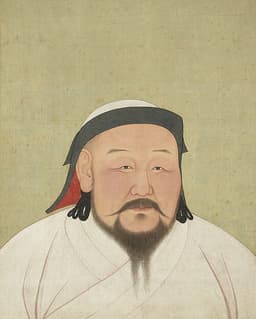
Kublai Khan
Emperor · Medieval
74.3Total
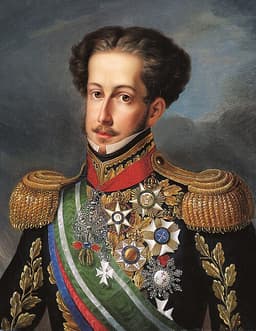
Pedro I of Brazil
Emperor · Modern
54.6Total
Basic Information
Born
1215
1798
Died
1294
1834
Era
Medieval
Modern
Nationality
Mongolia
Brazil
Occupation
Emperor
Emperor
Civilization
Eastern
Western
Score Comparison
Military (10%)
77.5
55.0
Political (20%)
79.2
62.7
Influence (20%)
75.0
59.0
Legacy (20%)
70.0
50.0
Leadership (15%)
72.0
53.2
Strategy (15%)
76.0
45.0
TOTAL
74.3
54.6
Kublai Khan — Complete Timeline
1260 AD
Adoption of Tibetan Buddhism as State ReligionCultural◆ Major
Kublai Khan appointed the Tibetan lama Drog
Tibetan BuddhismReligionMongol-Tibet Relations
Impact: regional
1271 AD
Proclamation of the Yuan DynastyPolitical Action◆ Major
Kublai Khan officially proclaimed the Yuan dynasty, adopting a Chinese-style dynastic name. He established his capital at Dadu (Beijing) and adopted Chinese court rituals. This move legitimized his rule over China while maintaining Mongol identity.
Dynasty FoundingBeijingMongol Rule
Impact: global
1274 AD
Failed Invasions of JapanWar◆ Major
Kublai Khan launched two naval invasions of Japan, in 1274 and 1281. Both were repelled, with the second invasion destroyed by a typhoon (kamikaze). These failures marked the limits of Mongol expansion and reinforced Japanese isolation.
Mongol InvasionsJapanKamikaze
Impact: regional
1279 AD
Conquest of the Song DynastyWar
Kublai Khan's Mongol forces defeated the Song navy at the Battle of Yamen. The last Song emperor drowned, ending the Song dynasty. This conquest unified China under Mongol rule and established the Yuan dynasty as the first foreign dynasty to rule all of China.
Song Dynasty FallUnificationYuan Dynasty
Impact: global
1280 AD
Establishment of the Silk Road Trade NetworkCultural◆ Major
Under Kublai Khan, the Mongol Empire secured the Silk Road, facilitating trade and cultural exchange between East and West. Marco Polo visited his court. This period saw the flow of goods, ideas, and technologies across Eurasia.
Silk RoadTradeCultural Exchange
Impact: globalconstructive
Pedro I of Brazil — Complete Timeline
1822 AD
Declaration of Independence of BrazilPolitical Action
Pedro I declared Brazil's independence from Portugal on September 7, 1822, at the Ipiranga River in S
Impact: globalprogressive
Coronation as Emperor of BrazilPolitical Action◆ Major
Pedro I was crowned Emperor of Brazil on December 1, 1822, in Rio de Janeiro. The coronation formalized the new imperial government, with Pedro I as constitutional monarch, though he retained significant executive powers.
Impact: nationalconstructive
1823 AD
War of Independence of BrazilWar◆ Major
Pedro I led Brazilian forces against Portuguese loyalists in the War of Independence. Key battles occurred in Bahia, Maranh
Impact: national
Dissolution of the Constituent AssemblyPolitical Action◆ Major
Pedro I dissolved the Constituent Assembly after conflicts over the constitution's limits on imperial power. He then imposed the 1824 Constitution, which granted the emperor extensive powers, including the Moderating Power, centralizing authority.
Impact: nationaldestructive
1831 AD
Abdication of the Brazilian ThronePolitical Action
Pedro I abdicated the Brazilian throne in favor of his five-year-old son Pedro II on April 7, 1831. He returned to Portugal to claim the Portuguese throne, leaving Brazil under a regency until his son came of age.
Impact: national
Expert Analysis
Kublai Khan vs Pedro I of Brazil
# The Emperor’s Mirror: Kublai Khan and Pedro I
In the winter of 1274, Kublai Khan’s fleet of nine hundred ships sailed toward the shores of Japan, a force so vast that chroniclers claimed the sea itself groaned under its weight. Half a millennium later, on a warm September morning in 1822, a young prince stood at the banks of the Ipiranga River in São Paulo, tore the Portuguese insignia from his uniform, and shouted, “Independence or Death!” Two emperors, two worlds apart—one ruled an empire that stretched from Korea to Hungary, the other a fledgling nation barely a decade old. Yet both faced the same fundamental question: How does a ruler forge unity from chaos?
Origins
Kublai Khan was born in 1215 into the saddle of the Mongol Empire, grandson of Genghis Khan. His childhood was nomadic, his education steeped in the harsh realities of steppe warfare. But unlike his grandfather, Kublai grew up surrounded by Chinese scholars and administrators, absorbing Confucian ideals alongside Mongol traditions. This dual inheritance would define him: a conqueror who sought not only to destroy but to build.
Pedro I of Brazil entered the world in 1798 as a Portuguese prince, but his cradle was a palace in exile. The Portuguese royal family had fled Napoleon’s armies to Rio de Janeiro, making Brazil the temporary heart of the empire. Pedro grew up in a court that was both European and American, learning to ride horses in tropical heat and to dance waltzes in gilded ballrooms. His father, King João VI, returned to Portugal in 1821, leaving young Pedro as regent—and the seeds of a break were sown.
Rise to Power
Kublai’s path to power was carved through blood and diplomacy. In 1260, after a bitter succession war with his brother Ariq Böke, he emerged as the Great Khan—but not undisputed. To consolidate his rule, he made a fateful decision: he adopted Tibetan Buddhism as the state religion, appointing the lama Drogön Chögyal Phagpa as his imperial preceptor. This was not mere piety; it was a political masterstroke, binding the fractious Mongol tribes to a unifying faith while earning legitimacy from the Buddhist world.
Pedro’s rise was swifter and more precarious. When Portuguese courts demanded Brazil’s return to colonial status, Pedro faced a choice: submit or rebel. He chose rebellion. On September 7, 1822, he declared independence, and by December he was crowned Emperor of Brazil. His legitimacy came not from centuries of tradition but from a single, audacious act of will.
Leadership & Governance
Kublai Khan governed as a pragmatist. In 1271, he proclaimed the Yuan Dynasty, adopting a Chinese dynastic name and moving his capital to what is now Beijing. He retained Mongol military structure but staffed his bureaucracy with Confucian scholars, built granaries, and standardized currency. His greatest achievement was the conquest of the Song Dynasty in 1279, when his fleet crushed the Song navy at the Battle of Yamen. Yet his rule was also marked by a rigid caste system that placed Mongols above Chinese, breeding resentment that would fester for generations.
Pedro I governed as a romantic autocrat. He fought the War of Independence in 1823, personally leading Brazilian forces against Portuguese loyalists in Bahia and Maranhão. But his political instincts were erratic. When a Constituent Assembly tried to limit his powers, he dissolved it by force in 1823 and imposed a constitution that preserved his authority. He was a liberator who chafed at the very liberty he had helped create.
Triumph & Tragedy
Kublai’s triumph was the Silk Road. Under his patronage, the trade routes that connected East and West flourished as never before. Marco Polo would later describe a realm of astonishing wealth and order, where caravans moved safely from China to Persia. Yet Kublai’s tragedy lay in the sea. His invasions of Japan in 1274 and 1281 were catastrophic failures, the second fleet destroyed by a typhoon—the *kamikaze*, or “divine wind”—that the Japanese interpreted as proof of their gods’ favor. The cost in lives and treasure was immense, and the dream of Pacific empire died.
Pedro’s triumph was independence itself. He had given Brazil a nation, and his son Pedro II would later forge it into a stable empire. But his tragedy was personal. His wife, Leopoldina, died after a miscarriage brought on by his public infidelities. Political opposition mounted. In 1831, after a series of crises, he abdicated in favor of his five-year-old son and sailed back to Portugal, leaving behind a country he had birthed but could not lead.
Character & Destiny
Kublai Khan was a builder who never forgot he was a conqueror. His personality was shaped by the tension between his Mongol heritage and his Chinese ambitions. He sought to be both steppe warrior and Son of Heaven, and this duality made him adaptable but also isolated. He trusted Chinese officials but never fully integrated his empire, and after his death in 1294, the Yuan Dynasty crumbled within a century.
Pedro I was a liberator who could not master peace. His character was impulsive and passionate—he composed sambas, fought duels, and loved too openly. He was a man of action, not administration, and his destiny was to be the spark, not the flame. His abdication was both a failure and a gift: by stepping aside, he allowed Brazil to grow under a regency that would produce his more capable son.
Legacy
Kublai Khan is remembered as a unifier and a cosmopolitan. The Yuan Dynasty, though short-lived, left a lasting imprint on Chinese governance, art, and religion. The Silk Road trade network he established facilitated exchanges that reshaped the world. Yet his legacy is also one of conquest and destruction—the Mongol Empire under his rule was a machine of war.
Pedro I is remembered as the father of Brazilian independence, his cry at the Ipiranga River a national myth. But his legacy is complicated: a hero who failed as a ruler, a liberator who crushed dissent. In Brazil, he is honored but not beloved; in Portugal, he returned to fight a civil war and died young, at thirty-five, a restless ghost.
Conclusion
What separates these two emperors is not ability but context. Kublai inherited an empire and expanded it; Pedro created a nation and lost it. One conquered with patience, the other with passion. Both understood that power is a mirror—it reflects not what the ruler sees, but what the world sees in him. Kublai’s empire endured for a time because he bent tradition to his will; Pedro’s nation endured because he knew when to let go. In the end, the difference between triumph and tragedy is often simply the distance between the dream and the day after.
Rankings
🥇
Kublai KhanLeader
Mil: 77.5Pol: 79.2Inf: 75.0
74.3
🥈
Pedro I of Brazil
Mil: 55.0Pol: 62.7Inf: 59.0
54.6
+19.7 behind
How This Comparison Works
Algorithm
Each figure is scored on 6 dimensions (0—100 scale) based on structured historical data: Military (10%), Political (20%), Influence (20%), Legacy (20%), Leadership (15%), Strategy (15%). The weighted total produces the final ranking.
Data Sources
Scores are computed from structured sub-indicators in the database. Scale factors adjust for era (Ancient ×0.85, Modern ×1.0) and civilization size (Eastern ×1.05, Other ×0.80) to account for differences in population and military scale.
Maximum 3 Figures
Comparisons are limited to 2—3 figures to ensure readability and statistical meaningfulness.
Error Margins
±5 points per dimension — Sub-scores are derived from historical records with inherent uncertainty. Two figures within 5 points on a dimension should be considered roughly equivalent in that area.
Total Score Accuracy
±3 points overall — The weighted combination of 6 dimensions produces a total score with approximately ±3 points of uncertainty. Differences of less than 3 points are not statistically significant— the figures are effectively tied.
Known Limitations
- Historical records are incomplete and uneven across civilizations
- Figures from oral-tradition societies may be underrepresented
- Occupation labels can misclassify multi-role figures
- Scores measure capability and impact, not moral character
- Quantitative scoring is a comparison tool, not absolute truth
Capability Radar
Military (10%) — Battles & Warfare
Battles
95
35
Win Rate
90
40
Expansion
95
30
Political (20%) — Governance & Reform
Reform
88
45
Diplomacy
85
50
Economy
90
30
Influence (20%) — Cultural & Global Reach
Cultural
85
40
Global
85
45
Legacy (20%) — Historical Impact
Historical
90
55
Longevity
80
50
Leadership (15%) — Power & Stability
Tenure
90
55
Stability
80
25
Strategy (15%) — Tactics & Innovation
Strategy
92
35
Tactics
85
30
Reform
88
20
Similar Comparisons
Comments & Discussion
LANCE-CARRIER OF THE EIGHT BAN6/16/2026
Pedro I was a romantic amateur playing dress-up; Kublai Khan commanded actual armies larger than Brazil's total population in 1822. The Mongol invasion of Japan in 1274 involved 23,000+ troops and 900 ships—a logistical miracle Pedro couldn't fathom. Pedro's "Independence or Death" was theater for a crowd of locals. Kublai's declaration of the Yuan Dynasty changed Eurasia. One built a postal system spanning continents; the other couldn't even keep his own empire united. Not comparable.
元史判官6/16/2026
佩德罗一世顶多算个殖民地的叛逆公子哥,忽必烈可是实打实改写世界史的男人。1279年崖山海战后,他终结了南宋三百年文明,把中国正式纳入蒙古体系。佩德罗呢?1825年承认巴西独立时,他签完字就跑回葡萄牙抢王位去了。忽必烈迁都大都、建太庙、颁《授时历》,哪个不是千年大计?拿巴西跟元朝比,好比拿独木舟比钢铁战舰。
THE BORROWERS OF GLORY6/16/2026
Pedro I's legacy is so thin you can read through it: an "Emperor" who ruled for nine years, bankrupted his treasury funding stupid wars in Uruguay, and abandoned his throne to chase a crown in Portugal. Meanwhile Kublai Khan conquered the Song Dynasty—the most advanced civilization on earth—and ruled for 34 years. The Mongols built an empire that connected East and West. Pedro built a grand palace, then fled it. Give me the steppe warlord who actually finished what he started.
逆流考证者6/16/2026
别被浪漫化叙事骗了。所谓"佩德罗一世"的独立,本质上是葡萄牙王室内部权力交接的副作用,和美国独立战争那种靠真实动员的解放运动有本质区别。他那一吼"独立或死亡"时,巴西靠的是英国海军撑腰和奴隶制经济支撑。忽必烈呢?他面对的南宋舰队是当时世界最强大海军之一,靠真刀真枪的战争拿下的。一个喊口号,一个干实事,输赢早定了。
EMPERORS OF EMPTY PAGEANTRY6/16/2026
Pedro I is remembered because he's a convenient founding myth for Brazil, not because he accomplished anything substantial. Compare policies: Kublai Khan created paper money, standardized weights and measures, and sponsored Marco Polo's travels—actual administrative innovations. Pedro I, after rushing back to Portugal to snatch a throne he didn't even keep, left Brazil saddled with debt. The only thing he unified was his own ego. Kublai forged a multicultural empire that lasted a century. Pedro