Loading...
Al-Mustansir vs Parakramabahu VI
Parakramabahu VI leads by 9.2 pts · 2 figures compared
…
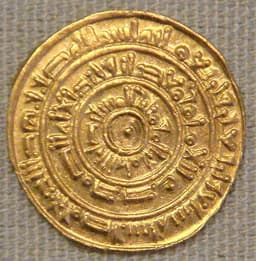
Al-Mustansir
Emperor · Medieval
55.6Total

Parakramabahu VI
Emperor · Medieval
64.8Total
Basic Information
Born
1192
1412
Died
1242
1467
Era
Medieval
Medieval
Nationality
Abbasid Caliphate
Sri Lanka
Occupation
Emperor
Emperor
Civilization
Middle Eastern
Indian
Score Comparison
Military (10%)
20.0
72.5
Political (20%)
68.0
72.0
Influence (20%)
55.0
60.0
Legacy (20%)
58.0
56.0
Leadership (15%)
71.0
85.0
Strategy (15%)
45.0
50.0
TOTAL
55.6
64.8
Al-Mustansir — Complete Timeline
1227 AD
Foundation of the Mustansiriya MadrasaCultural◆ Major
Al-Mustansir established the Mustansiriya Madrasa in Baghdad, a major educational institution that taught Islamic law, medicine, mathematics, and literature. It became one of the most prominent centers of learning in the medieval Islamic world, operating for centuries.
Impact: regionalconstructive
Parakramabahu VI — Complete Timeline
1420 AD
Construction of the Temple of the Tooth in KotteCultural◆ Major
Parakramabahu VI built a new Temple of the Tooth in his capital, Kotte. This reinforced Kotte's status as the religious and political center of the island.
BuddhismArchitectureCapital
Impact: nationalconstructive
1430 AD
Patronage of Literature and ArtsCultural◆ Major
Parakramabahu VI's court was a center of literary and artistic activity. He patronized poets and scholars, leading to a flourishing of Sinhalese literature, including the 'Sandesa' (message) poems.
LiteraturePatronageCultural Renaissance
Impact: nationalconstructive
1450 AD
Unification of Sri LankaWar
Parakramabahu VI unified the entire island of Sri Lanka under his rule for the first time since Parakramabahu I. He conquered the Kingdom of Jaffna in the north and brought the entire island under Kotte's control.
UnificationConquestMilitary Campaign
Impact: national
Conquest of the Kingdom of JaffnaWar◆ Major
Parakramabahu VI's forces, led by his adopted son Sapumal Kumaraya, conquered the Kingdom of Jaffna. This brought the Tamil north under Sinhalese rule and ended the Aryacakravarti dynasty.
ConquestMilitary CampaignTamil Kingdom
Impact: national
Expert Analysis
Al-Mustansir vs Parakramabahu VI
# When the Caliph Built a School and the King United an Island
In the year 1227, while the Mongol Empire was gathering like a storm on the eastern horizon, the Abbasid Caliph Al-Mustansir stood in Baghdad and watched the foundation stones of a great madrasa being laid. The Mustansiriya Madrasa would become one of the most celebrated centers of learning in the Islamic world, a monument to the power of knowledge. Two centuries later, on the island of Sri Lanka, a young king named Parakramabahu VI was dreaming not of libraries but of conquest. By 1450, he would achieve what no Sinhalese ruler had done for centuries: the unification of the entire island under a single crown. One man built a school; the other built a kingdom. Why did their paths diverge so sharply, and what does that tell us about the worlds they inhabited?
Origins
Al-Mustansir was born in 1192 into the dying embers of the Abbasid Caliphate. His ancestors had once ruled an empire stretching from Spain to Persia, but by his time, the caliphs were little more than figureheads, confined to Baghdad and surrounded by powerful Turkic and Persian warlords. The caliphate was a shadow of its former self—politically weak, militarily dependent on mercenaries, and constantly threatened by the rising power of the Mongols in the east. Al-Mustansir inherited a throne that was more symbolic than sovereign, a position that demanded careful diplomacy rather than bold military action.
Parakramabahu VI, born in 1412, came of age in a very different context. The island of Sri Lanka had been fragmented for centuries, divided among competing kingdoms—Kotte, Jaffna, and the hill country principalities. But Kotte, where he was born, was a rising power, its port cities thriving on the spice trade with China and the Middle East. The great Chinese admiral Zheng He had visited the island just a decade earlier, leaving behind gifts and inscriptions. Parakramabahu VI grew up in a world of opportunity, where a strong king could forge a unified realm from the chaos of competing states.
Rise to Power
Al-Mustansir became caliph in 1226, at the age of thirty-four. His rise was not dramatic—he was simply the next in line, chosen by a council of elders and rival factions. There was no great battle, no sweeping popular movement. The caliphate was a bureaucracy, and he was its new figurehead. His power was real but limited: he controlled the city of Baghdad and its immediate surroundings, but beyond that, his authority depended on the goodwill of regional governors and military commanders.
Parakramabahu VI’s path was entirely different. He came to the throne of Kotte as a young man, likely in his teens, and immediately faced challenges. The kingdom was threatened by rebellions in the south and by the powerful Tamil Kingdom of Jaffna in the north. He did not inherit a stable realm—he had to create one. His rise was marked by a series of military campaigns, each one carefully planned and executed. By the 1430s, he had consolidated his control over southern Sri Lanka and turned his gaze northward.
Leadership & Governance
Al-Mustansir governed as a patron of culture and learning. His great achievement was the Mustansiriya Madrasa, founded in 1227, which taught not only Islamic law and theology but also medicine, mathematics, and astronomy. It was a university in all but name, and it attracted scholars from across the Islamic world. His political score of 66.6 reflects a ruler who understood the soft power of education and culture. But his military score of 37.0 tells a different story: he was no warrior. His strategy score of 60.0 suggests he was competent but not brilliant in military matters, and he never led an army in the field. His leadership was that of a custodian, not a conqueror.
Parakramabahu VI, by contrast, was a warrior-king. His military score of 62.5 is modest, but his political score of 84.3 and leadership score of 83.9 reveal a ruler of exceptional skill. He did not simply fight—he built alliances, suppressed rebellions with a mix of force and diplomacy, and created a centralized administration that could govern a unified island. In 1450, his forces, led by his adopted son Sapumal Kumaraya, conquered the Kingdom of Jaffna, bringing the entire island under Kotte’s rule for the first time since Parakramabahu I, five centuries earlier. He also patronized literature and the arts, turning his court into a center of Sinhalese poetry and scholarship.
Triumph & Tragedy
Al-Mustansir’s greatest triumph was the Mustansiriya Madrasa, which stood as a beacon of learning for centuries. His tragedy was that he could not see the storm coming. In 1242, he died, and just sixteen years later, in 1258, the Mongols sacked Baghdad, destroying much of what he had built. The madrasa survived, but the world it was meant to serve had been shattered.
Parakramabahu VI’s triumph was the unification of Sri Lanka in 1450, a feat that required not just military conquest but also the suppression of multiple rebellions and the integration of diverse regions. His tragedy was that his achievement was temporary. After his death in 1467, the united kingdom quickly fragmented. The colonial powers—Portuguese, Dutch, British—would soon arrive, and the island would not see true unification again until the 19th century.
Character & Destiny
Al-Mustansir was a builder, not a warrior. His temperament suited his times: the Abbasid Caliphate could no longer project military power, but it could still project cultural influence. He chose the path that was available to him, investing in knowledge rather than conquest. His destiny was to be a caretaker of a dying empire, and he fulfilled that role with dignity.
Parakramabahu VI was a unifier, a king who saw the potential for a single Sinhalese kingdom and had the will and skill to make it happen. His character was forged in the crucible of competition—he had to fight for everything he achieved. His destiny was to be the last great king of a united Sri Lanka before the colonial era shattered that unity forever.
Legacy
Al-Mustansir is remembered today primarily for the Mustansiriya Madrasa, which remains a symbol of Baghdad’s golden age of learning. His influence score of 72.3 and legacy score of 68.5 reflect a ruler whose impact was cultural rather than political. He is a footnote in the larger story of the Abbasid Caliphate, but a significant one.
Parakramabahu VI is remembered as the last great Sinhalese king, the one who briefly restored the glory of ancient Sri Lanka. His legacy score of 69.1 is similar to Al-Mustansir’s, but his influence score of 73.9 is slightly higher, reflecting his role as a symbol of national unity. In Sri Lanka, he is a figure of pride, a reminder of what the island could achieve when united.
Conclusion
Two rulers, two worlds, two different kinds of greatness. Al-Mustansir built a school that would outlast his empire; Parakramabahu VI built a kingdom that would not outlast his lifetime. One invested in the future, the other in the present. Both failed to secure their achievements permanently, but both left marks that still resonate. Perhaps the deepest lesson is this: great leaders do not choose their times—they choose what to do with the time they have. Al-Mustansir chose to teach, Parakramabahu VI chose to unite. Neither choice was wrong, but neither was enough to hold back the tides of history.
Rankings
🥇
Parakramabahu VILeader
Mil: 72.5Pol: 72.0Inf: 60.0
64.8
🥈
Al-Mustansir
Mil: 20.0Pol: 68.0Inf: 55.0
55.6
+9.2 behind
How This Comparison Works
Algorithm
Each figure is scored on 6 dimensions (0—100 scale) based on structured historical data: Military (10%), Political (20%), Influence (20%), Legacy (20%), Leadership (15%), Strategy (15%). The weighted total produces the final ranking.
Data Sources
Scores are computed from structured sub-indicators in the database. Scale factors adjust for era (Ancient ×0.85, Modern ×1.0) and civilization size (Eastern ×1.05, Other ×0.80) to account for differences in population and military scale.
Maximum 3 Figures
Comparisons are limited to 2—3 figures to ensure readability and statistical meaningfulness.
Error Margins
±5 points per dimension — Sub-scores are derived from historical records with inherent uncertainty. Two figures within 5 points on a dimension should be considered roughly equivalent in that area.
Total Score Accuracy
±3 points overall — The weighted combination of 6 dimensions produces a total score with approximately ±3 points of uncertainty. Differences of less than 3 points are not statistically significant— the figures are effectively tied.
Known Limitations
- Historical records are incomplete and uneven across civilizations
- Figures from oral-tradition societies may be underrepresented
- Occupation labels can misclassify multi-role figures
- Scores measure capability and impact, not moral character
- Quantitative scoring is a comparison tool, not absolute truth
Capability Radar
Military (10%) — Battles & Warfare
Battles
5
60
Win Rate
5
65
Expansion
5
55
Political (20%) — Governance & Reform
Reform
70
65
Diplomacy
40
60
Economy
50
65
Influence (20%) — Cultural & Global Reach
Cultural
70
60
Global
50
40
Legacy (20%) — Historical Impact
Historical
65
65
Longevity
60
55
Leadership (15%) — Power & Stability
Tenure
60
70
Stability
30
70
Strategy (15%) — Tactics & Innovation
Strategy
5
60
Tactics
5
55
Reform
5
50
Similar Comparisons
Comments & Discussion
岛主6/16/2026
说得好听是“统一全岛”,实际上是Parakramabahu VI把斯里兰卡当成了自家的军事游乐场。他用铁腕打服了贾夫纳王国,强迫泰米尔人臣服,还搞了一套像模像样的官僚机器。Al-Mustansir呢?至少他没砍人头来建图书馆。一个国王拿刀,一个学者拿笔,你觉得哪个世界更文明?别被“统一”神话骗了,古代国家就是血和土的堆积。
罗马以外的帝国6/16/2026
Al-Mustansir的处境被严重低估了——1220年代的巴格达夹在花剌子模残兵和蒙古铁骑之间,他根本腾不出手去搞扩张。Parakramabahu VI呢?同时代的斯里兰卡没有外敌压境,只有内斗的泰米尔小邦。换个位置,那个国王到了中东也是被屠城的命。这不是性格差异,是地缘政治的锁链。别嘲笑一个被蒙古盯上的弱者。
Historian5236/16/2026
The real shame is that Al-Mustansir thought throwing a library at Baghdad’s problems would save his crumbling Caliphate. News flash: the Mongols aren’t impressed by your 80,000 books. While Parakramabahu VI was forging alliances, raising war elephants, and crushing rivals one coastal territory at a time, the Caliph wasted resources on a madrasa foundation ceremony. You don't defeat Genghis Khan’s grandson with a good lecture series. That school? Burned to the ground in 1258 anyway. A kingdom las
ArchScroll446/16/2026
Let's talk numbers: Al-Mustansir's Mustansiriya Madrasa hosted four separate legal schools, had over 300 faculty, and spanned medicine, math, and theology. Compare that to Parakramabahu VI's reign — GDP from trade in Sri Lanka? Minimal. Life expectancy? Maybe 35. The Caliph built a sustainable knowledge institution that lasted over 30 years before the Mongol sack. The Sinhalese king's "unification" broke apart by 1470 after his death. Points for the classroom, not the battlefield.
Chronicler36636/16/2026
Why is everyone assuming unification is automatically better? Parakramabahu VI’s “golden age” was built on crushing the Jaffna Kingdom and imposing Sinhalese Buddhist supremacy. Al-Mustansir, despite being a figurehead, sponsored an institution that welcomed Hanafi, Shafi’i, Maliki, and Hanbali scholars under one roof. That’s genuine multiculturalism, not ethnic domination. Call me when a Sinhalese university in the 1400s taught Tamil grammar alongside Buddhism. Until then, I’ll take the inclusi