Loading...
Charles de Gaulle vs Parakramabahu VI
Charles de Gaulle leads by 3.4 pts · 2 figures compared
…
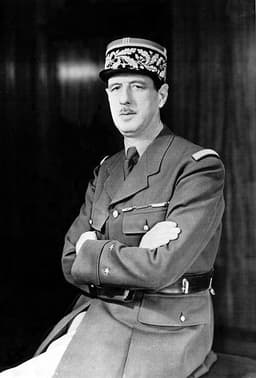
Charles de Gaulle
Politician · Modern
68.2Total

Parakramabahu VI
Emperor · Medieval
64.8Total
Basic Information
Born
1890
1412
Died
1970
1467
Era
Modern
Medieval
Nationality
France
Sri Lanka
Occupation
Politician
Emperor
Civilization
Western
Indian
Score Comparison
Military (10%)
55.0
72.5
Political (20%)
75.0
72.0
Influence (20%)
65.0
60.0
Legacy (20%)
68.0
56.0
Leadership (15%)
78.0
85.0
Strategy (15%)
65.0
50.0
TOTAL
68.2
64.8
Charles de Gaulle — Complete Timeline
1940 AD
Appeal of 18 June 1940Political Action
From London, de Gaulle broadcast a radio appeal urging French resistance against Nazi occupation. He called on French soldiers and citizens to continue the fight, founding the Free French Forces and becoming the symbol of French defiance.
World War IIResistanceLeadership
Impact: nationalconstructive
1958 AD
Founding of the Fifth RepublicPolitical Action
De Gaulle returned to power during the Algerian crisis and oversaw the drafting of a new constitution. The Fifth Republic established a strong executive presidency, replacing the unstable parliamentary system of the Fourth Republic.
ConstitutionGovernment ReformPolitical System
Impact: nationalconstructive
1962 AD
End of the Algerian WarPolitical Action◆ Major
De Gaulle negotiated the
DecolonizationPeace TreatyAlgeria
Impact: regionalconstructive
1968 AD
May 1968 CrisisPolitical Action◆ Major
Mass student protests and general strikes paralyzed France, challenging de Gaulle's government. De Gaulle briefly fled to Germany, then returned to dissolve the National Assembly and call elections, which his party won, but his authority was weakened.
ProtestPolitical CrisisSocial Unrest
Impact: nationaldestructive
1969 AD
Resignation as PresidentPolitical Action
De Gaulle resigned after losing a referendum on regional reform and Senate restructuring. The defeat marked the end of his political career, as he withdrew from public life and died the following year.
ResignationPolitical DefeatReferendum
Impact: nationaltragic
Parakramabahu VI — Complete Timeline
1420 AD
Construction of the Temple of the Tooth in KotteCultural◆ Major
Parakramabahu VI built a new Temple of the Tooth in his capital, Kotte. This reinforced Kotte's status as the religious and political center of the island.
BuddhismArchitectureCapital
Impact: nationalconstructive
1430 AD
Patronage of Literature and ArtsCultural◆ Major
Parakramabahu VI's court was a center of literary and artistic activity. He patronized poets and scholars, leading to a flourishing of Sinhalese literature, including the 'Sandesa' (message) poems.
LiteraturePatronageCultural Renaissance
Impact: nationalconstructive
1450 AD
Unification of Sri LankaWar
Parakramabahu VI unified the entire island of Sri Lanka under his rule for the first time since Parakramabahu I. He conquered the Kingdom of Jaffna in the north and brought the entire island under Kotte's control.
UnificationConquestMilitary Campaign
Impact: national
Conquest of the Kingdom of JaffnaWar◆ Major
Parakramabahu VI's forces, led by his adopted son Sapumal Kumaraya, conquered the Kingdom of Jaffna. This brought the Tamil north under Sinhalese rule and ended the Aryacakravarti dynasty.
ConquestMilitary CampaignTamil Kingdom
Impact: national
Expert Analysis
Charles de Gaulle vs Parakramabahu VI
# The Lonely Path to Power: Charles de Gaulle and Parakramabahu VI
On a June evening in 1940, a tall, awkward French general stood before a microphone in a BBC studio in London, his voice crackling across the English Channel to a defeated nation. Half a world away and five centuries earlier, a Sinhalese prince in the court of Kotte watched his king falter, plotting a unification that would restore the glory of an ancient civilization. Both men would reshape their nations, yet their paths diverged in ways that reveal the deepest chasms between Western modernity and medieval Asian kingship.
Origins
Charles de Gaulle was born in 1890 into a devoutly Catholic, patriotic family in Lille, northern France. His father taught philosophy and history, instilling in young Charles a sense of national destiny that bordered on mysticism. The humiliation of France’s defeat in the Franco-Prussian War (1870–71) hung over his childhood like a shadow. De Gaulle grew up believing that France could only be great through strength, discipline, and a leader who stood above petty politics.
Parakramabahu VI, born in 1412, came of age in a very different world—the medieval kingdom of Kotte, nestled in the lush southwestern coast of Sri Lanka. The island had not seen unified rule since the great Parakramabahu I three centuries earlier. Regional kingdoms—Jaffna in the north, Kandy in the highlands—competed for power, while the rising tide of South Indian influence threatened Sinhalese sovereignty. Parakramabahu VI was raised in a court where Buddhist kingship meant more than governance: it was a cosmic duty to protect the faith and the people.
Rise to Power
De Gaulle’s path was improbable. A junior tank commander in World War I, he was captured at Verdun and spent years as a prisoner of war. Between the wars, he wrote prophetic books on mechanized warfare that French generals ignored. When Germany invaded in 1940, France collapsed in six weeks. De Gaulle fled to London, a man without an army, without a country, but with a radio. On June 18, 1940, he broadcast his famous appeal: “France has lost a battle, but France has not lost the war.” He was a voice in the wilderness, yet that voice became the rallying point for the Free French forces.
Parakramabahu VI rose through inheritance and conquest. He became king of Kotte around 1412, inheriting a kingdom that was strong but not dominant. His genius lay in patience and alliance-building. He forged ties with local chieftains, consolidated his base, and waited. In 1450, his forces, led by his adopted son Sapumal Kumaraya, conquered the Kingdom of Jaffna, bringing the Tamil north under Sinhalese rule for the first time in centuries. This was not a desperate exile’s gamble but a calculated campaign of expansion.
Leadership & Governance
De Gaulle governed through sheer will and constitutional innovation. Returning to power during the 1958 Algerian crisis, he founded the Fifth Republic, crafting a constitution that gave the president sweeping executive powers—a stark departure from the weak, parliament-dominated Third and Fourth Republics. His leadership style was aloof, almost monarchical. He believed a leader must stand above the crowd, maintaining “a certain idea of France.” He ended the Algerian War in 1962 through the Évian Accords, a decision that enraged the army and French settlers but ultimately stabilized the nation. He pursued an independent foreign policy, pulling France out of NATO’s integrated command and vetoing British entry into the European Economic Community.
Parakramabahu VI ruled as a classical Buddhist monarch—a *dharmaraja* who combined military power with cultural patronage. He built the Temple of the Tooth in Kotte, making it the island’s religious center. His court became a literary renaissance, patronizing poets and scholars who wrote in both Sinhala and Pali. Unlike de Gaulle’s cold pragmatism, Parakramabahu VI’s governance was deeply intertwined with religion and ritual. He suppressed rebellions with force but also with ceremonies that reaffirmed his cosmic legitimacy.
Triumph & Tragedy
De Gaulle’s greatest triumph was the restoration of French pride. From the ashes of 1940, he led France back as a victor in World War II, a nuclear power, and a founding member of the United Nations Security Council. Yet his tragedy came in May 1968, when student protests and a general strike paralyzed France. De Gaulle, bewildered by a youth movement he could not understand, briefly fled to Baden-Baden, Germany, to consult with French generals. He returned, called new elections, and won, but the magic was broken. In 1969, he lost a referendum on regional reform and resigned—a quiet end for a man who had lived by grand gestures.
Parakramabahu VI’s triumph was the unification of Sri Lanka, a feat not achieved since the twelfth century. He brought peace, stability, and cultural flowering. But his tragedy was temporal: after his death in 1467, the unified kingdom fragmented. The Portuguese arrived in 1505, and within decades, the island fell under colonial rule. His achievement lasted barely a generation.
Character & Destiny
De Gaulle was a man of immense self-belief, bordering on arrogance. He once wrote, “Great men are those who, when faced with a task, find within themselves a force that exceeds their own strength.” This force drove him to defy Hitler, to create a new republic, to defy America. But it also made him inflexible. He could not adapt to the social changes of the 1960s, and his aloofness left him isolated.
Parakramabahu VI was a builder, not a rebel. His character was shaped by the Sinhalese Buddhist tradition of the *cakkavatti*—the wheel-turning monarch who conquers not for glory but to establish righteousness. He was patient, strategic, and culturally minded. Yet his very success—unification through conquest—sowed the seeds of later fragmentation, as regional identities were suppressed rather than integrated.
Legacy
De Gaulle’s legacy is the Fifth Republic, which still governs France today. His name adorns airports, aircraft carriers, and countless streets. He is remembered as the man who said “no” to the Nazis and “no” to American hegemony—a symbol of French independence. Yet his political style—imperious, distant—has been both admired and criticized by successors.
Parakramabahu VI is remembered as the last great Sinhalese king before colonialism. His literary patronage produced works like the *Kokila Sandesaya* (the Cuckoo Message), a masterpiece of Sinhala poetry. But his legacy is tragic: a golden sunset before the long night of European domination. Sri Lankans still invoke his name as a symbol of unity, but that unity proved fleeting.
Conclusion
Standing at the end of their stories, one sees two men who answered the same call—to restore national greatness—but in radically different contexts. De Gaulle’s France was a modern nation-state, his tools were radio waves and constitutions, his enemies were ideologies and empires. Parakramabahu VI’s Sri Lanka was a medieval kingdom, his tools were armies and temples, his enemies were rival kings and time itself. De Gaulle’s legacy endures in institutions; Parakramabahu’s endures in memory. Both understood that leadership is a lonely burden, but the worlds they sought to save were so different that the very meaning of “saving” changed. In the end, perhaps the most profound difference is this: de Gaulle built a structure that outlasted him, while Parakramabahu built a moment that still haunts his people with what might have been.
Rankings
🥇
Charles de GaulleLeader
Mil: 55.0Pol: 75.0Inf: 65.0
68.2
🥈
Parakramabahu VI
Mil: 72.5Pol: 72.0Inf: 60.0
64.8
+3.4 behind
How This Comparison Works
Algorithm
Each figure is scored on 6 dimensions (0—100 scale) based on structured historical data: Military (10%), Political (20%), Influence (20%), Legacy (20%), Leadership (15%), Strategy (15%). The weighted total produces the final ranking.
Data Sources
Scores are computed from structured sub-indicators in the database. Scale factors adjust for era (Ancient ×0.85, Modern ×1.0) and civilization size (Eastern ×1.05, Other ×0.80) to account for differences in population and military scale.
Maximum 3 Figures
Comparisons are limited to 2—3 figures to ensure readability and statistical meaningfulness.
Error Margins
±5 points per dimension — Sub-scores are derived from historical records with inherent uncertainty. Two figures within 5 points on a dimension should be considered roughly equivalent in that area.
Total Score Accuracy
±3 points overall — The weighted combination of 6 dimensions produces a total score with approximately ±3 points of uncertainty. Differences of less than 3 points are not statistically significant— the figures are effectively tied.
Known Limitations
- Historical records are incomplete and uneven across civilizations
- Figures from oral-tradition societies may be underrepresented
- Occupation labels can misclassify multi-role figures
- Scores measure capability and impact, not moral character
- Quantitative scoring is a comparison tool, not absolute truth
Capability Radar
Military (10%) — Battles & Warfare
Battles
60
60
Win Rate
55
65
Expansion
20
55
Political (20%) — Governance & Reform
Reform
95
65
Diplomacy
90
60
Economy
70
65
Influence (20%) — Cultural & Global Reach
Cultural
70
60
Global
80
40
Legacy (20%) — Historical Impact
Historical
85
65
Longevity
75
55
Leadership (15%) — Power & Stability
Tenure
85
70
Stability
75
70
Strategy (15%) — Tactics & Innovation
Strategy
85
60
Tactics
70
55
Reform
80
50
Similar Comparisons
Comments & Discussion
Generalissimo's Ghost6/16/2026
De Gaulle succeeded because he understood modern media and legitimacy. Parakramabahu VI conquered through brute force and palace intrigue. The Frenchman's genius was creating a narrative of resistance from exile, while the Sinhalese king's unification lasted barely a generation after his death. De Gaulle's legacy shaped France for decades; Parakramabahu’s is a footnote in Sri Lankan textbooks. Give me the BBC broadcast over a bloody coup any day.
数据侦探6/16/2026
这个对比完全不对等!De Gaulle领导的是20世纪工业国,有电台、国际联盟和核武器计划。Parakramabahu VI统治的是15世纪小王国,连正规地图都没人画过。把1940年的法国和1432年的Kotte放在一起比,就像拿坦克比战象——听着有趣,分析上站不住脚。至少该注明GDP和人口差异吧?
Lotus Throne6/16/2026
You Western-centric historians ignore Parakramabahu VI's cultural renaissance. While de Gaulle was writing memoirs, this king commissioned the Mahavamsa continuation, restored Buddhist order, and launched naval expeditions to Burma. His court produced the Sandesha poetry—think Milton for Sinhalese. De Gaulle saved France's pride; Parakramabahu rebuilt a civilization's soul. Different leagues entirely, and I'd argue the Asian one achieved more with less.
历史比较控6/16/2026
从孤独感切入很聪明,但忽略了关键:De Gaulle是自愿流亡,Parakramabahu必须在内斗中活下来。法国有自由法国运动做后盾,Kotte国王靠的是婚姻联盟和军事冒险。De Gaulle的孤独是策略,Parakramabahu的孤独是生存刚需。更讽刺的是,当代法国人纪念戴高乐机场,斯里兰卡人却把Parakramabahu的宫殿改成了旅游茶馆。
Crown of Kotte6/16/2026
Revisionist take: Parakramabahu VI actually undermines the "lonely leader" myth. He carefully cultivated a network of provincial governors, Buddhist monks, and Tamil mercenaries. Compare that to de Gaulle's aloofness—frequently despised by Allied leaders. The Sinhalese king understood patronage politics better than any French general. Power isn't about broadcasting to a nation; it's about controlling the men who control the land.