Loading...
Al-Mustansir vs Parakramabahu I
Parakramabahu I leads by 10.5 pts · 2 figures compared
…
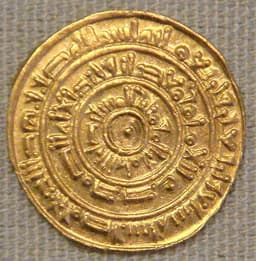
Al-Mustansir
Emperor · Medieval
55.6Total
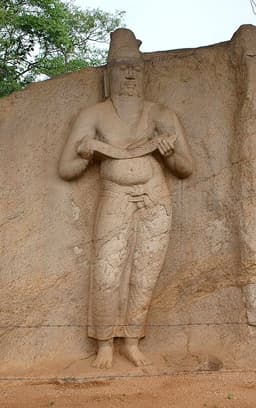
Parakramabahu I
Emperor · Medieval
66.1Total
Basic Information
Born
1192
1123
Died
1242
1186
Era
Medieval
Medieval
Nationality
Abbasid Caliphate
Sri Lanka
Occupation
Emperor
Emperor
Civilization
Middle Eastern
Indian
Score Comparison
Military (10%)
20.0
82.0
Political (20%)
68.0
72.0
Influence (20%)
55.0
61.0
Legacy (20%)
58.0
52.0
Leadership (15%)
71.0
82.0
Strategy (15%)
45.0
65.4
TOTAL
55.6
66.1
Al-Mustansir — Complete Timeline
1227 AD
Foundation of the Mustansiriya MadrasaCultural◆ Major
Al-Mustansir established the Mustansiriya Madrasa in Baghdad, a major educational institution that taught Islamic law, medicine, mathematics, and literature. It became one of the most prominent centers of learning in the medieval Islamic world, operating for centuries.
Impact: regionalconstructive
Parakramabahu I — Complete Timeline
1153 AD
Unification of Sri LankaWar
Parakramabahu I unified the entire island of Sri Lanka under his rule after a series of military campaigns. He defeated the rulers of Ruhuna and other regional kingdoms, ending a period of fragmentation.
Impact: national
1160 AD
Construction of Parakrama SamudraOther◆ Major
Parakramabahu I constructed the Parakrama Samudra, a massive man-made sea of interconnected tanks and canals near Polonnaruwa. This irrigation system, covering over 5,000 acres, was a major engineering achievement.
Impact: regionalconstructive
1165 AD
Invasion of BurmaWar◆ Major
Parakramabahu I launched a naval invasion of Burma (Pagan Kingdom) in retaliation for a trade dispute. The Sinhalese fleet captured the port of Kusumiya and sacked the city, demonstrating Sri Lanka's naval power.
Impact: regional
Reform of the Buddhist SanghaReform◆ Major
Parakramabahu I convened a council to purify the Buddhist Sangha. He expelled corrupt monks and re-established discipline, strengthening Theravada Buddhism in Sri Lanka.
Impact: nationalconstructive
1170 AD
Construction of Polonnaruwa VatadageCultural◆ Major
Parakramabahu I built the Polonnaruwa Vatadage, a circular relic house for the Tooth Relic of the Buddha. This structure is considered a masterpiece of Sinhalese architecture.
Impact: nationalconstructive
Expert Analysis
Al-Mustansir vs Parakramabahu I
# The Scholar and the Conqueror: Al-Mustansir and Parakramabahu I
In the year 1227, while the Mongol Empire was gathering like a storm on the horizon, the Abbasid Caliph Al-Mustansir laid the foundation stone of the Mustansiriya Madrasa in Baghdad. Nine decades earlier and three thousand miles away, Parakramabahu I stood on the shores of Polonnaruwa, watching workers dig the first channels of what would become the Parakrama Samudra—a man-made sea that would irrigate an entire kingdom. One man built a university; the other built an ocean. Both believed they were securing their civilization’s future. History would judge them very differently.
Origins
Al-Mustansir was born into the twilight of the Abbasid Caliphate in 1192, a time when the caliphs of Baghdad ruled more in name than in fact. The great empire of Harun al-Rashid had fractured into warring sultanates, and the caliphs had become spiritual figureheads presiding over a shrinking domain. Al-Mustansir’s father, Al-Zahir, had spent his reign trying to reclaim temporal authority, but the machinery of empire had rusted beyond easy repair. The young prince grew up in a palace where power was whispered about but rarely exercised—a world of scholars, poets, and theologians who debated fine points of law while the real world burned.
Parakramabahu I, born in 1123, emerged from a very different crucible. Sri Lanka had been divided for generations, with rival kingdoms squabbling over the island’s fertile plains. He was the son of a Sinhalese prince, raised not in a palace but in the shadow of war. From childhood, he learned that survival meant conquest, and that a king who could not unite his island would be remembered as a failure. Where Al-Mustansir inherited a fading legacy, Parakramabahu inherited a broken one—and he intended to fix it with steel.
Rise to Power
Al-Mustansir became caliph in 1226, largely through peaceful succession. There was no dramatic coup, no bloody purge. He simply stepped into the role his father had prepared for him, inheriting a court that valued stability over ambition. His path to power was a staircase, not a battlefield.
Parakramabahu’s rise was the opposite. He spent years fighting regional warlords, forging alliances, and crushing rebellions. In 1153, after a decade of warfare, he finally unified the entire island of Sri Lanka under his rule. His coronation was not a ceremony but a victory lap. Where Al-Mustansir’s legitimacy came from lineage, Parakramabahu’s came from blood and iron.
Leadership & Governance
The differences between these two rulers are most stark in how they governed. Al-Mustansir was a patron of learning, a builder of institutions. The Mustansiriya Madrasa, founded in 1227, was unprecedented: it taught not only Islamic law and theology but also medicine, mathematics, and astronomy. Students received stipends, housing, and access to one of the largest libraries in the Islamic world. Al-Mustansir believed that a civilization’s strength lay in its minds, not its walls. His political score of 66.6 and leadership score of 74.4 reflect a ruler who governed through consensus and culture rather than force.
Parakramabahu thought differently. His military score of 64.2 and strategy score of 72.0 tell only part of the story. He was a builder, yes—the Parakrama Samudra, completed around 1160, was a masterpiece of irrigation engineering, a network of reservoirs and canals that turned dry plains into rice fields. But he also reformed the Buddhist Sangha in 1165, purging corrupt monks and re-establishing discipline. He built the Polonnaruwa Vatadage in 1170 to house the Tooth Relic, blending governance with religion. His philosophy was holistic: a kingdom needed water, faith, and order. His political score of 67.1 and leadership score of 66.5 show a ruler who balanced construction with coercion.
Triumph & Tragedy
Parakramabahu’s greatest triumph was also his most audacious: the invasion of Burma in 1165. Responding to a trade dispute, he launched a naval expedition against the Pagan Kingdom, sending Sinhalese fleets across the Bay of Bengal. The campaign was a success, demonstrating that Sri Lanka was not merely an island kingdom but a regional power. It was the high point of his reign—the moment when medieval Sri Lankan civilization reached its zenith.
Al-Mustansir’s triumph was quieter but perhaps more enduring. The Mustansiriya Madrasa became the intellectual heart of Baghdad, attracting scholars from across the Islamic world. For fifteen years, the caliph presided over a golden age of learning, believing that culture could hold back the barbarians.
But tragedy came for both. Al-Mustansir died in 1242, just sixteen years before the Mongols sacked Baghdad in 1258. The Mustansiriya Madrasa survived the destruction, but the caliphate did not. His life’s work became a monument to a world that was about to vanish. Parakramabahu’s tragedy was different: after his death in 1186, the unified kingdom he had forged began to fracture. The irrigation systems fell into disrepair. The invasions he had launched ceased. His empire, like all empires, proved mortal.
Character & Destiny
Al-Mustansir was a scholar-king in an age of warriors. He chose to build libraries when he should have been building walls. His strategy score of 60.0 suggests a man who understood culture better than conflict. He believed that knowledge was the ultimate defense—a noble idea, but one that could not stop Mongol arrows.
Parakramabahu was a warrior-king in an age of builders. He understood that a kingdom must first be conquered before it can be cultivated. His strategy score of 72.0 reflects a man who thought in terms of logistics and campaigns. He built the Parakrama Samudra not out of love for engineering, but because he knew that water meant rice, and rice meant soldiers.
One man’s character was shaped by a civilization in decline; the other’s by a civilization on the rise. Al-Mustansir tried to preserve; Parakramabahu tried to create.
Legacy
Al-Mustansir’s legacy is the Mustansiriya Madrasa, which still stands in Baghdad—a testament to a caliph who believed in the power of the mind. His total score of 65.3 reflects a ruler who was competent but not transformative. He is remembered as a patron, not a conqueror.
Parakramabahu’s legacy is more complex. The Parakrama Samudra still irrigates Sri Lanka’s dry zone. The Vatadage still draws pilgrims. His total score of 69.0 places him slightly higher, but his real legacy is the idea that a small island could be a great power. He is remembered as a unifier, a builder, and a king who dared to cross the sea.
Conclusion
Two rulers, two philosophies, two fates. Al-Mustansir built a university and watched his world end. Parakramabahu built a sea and watched his kingdom fade. Neither could stop time. But the Madrasa still teaches, and the Samudra still waters the fields. In the end, perhaps that is what matters: not whether empires fall, but what they leave behind when they do.
Rankings
🥇
Parakramabahu ILeader
Mil: 82.0Pol: 72.0Inf: 61.0
66.1
🥈
Al-Mustansir
Mil: 20.0Pol: 68.0Inf: 55.0
55.6
+10.5 behind
How This Comparison Works
Algorithm
Each figure is scored on 6 dimensions (0—100 scale) based on structured historical data: Military (10%), Political (20%), Influence (20%), Legacy (20%), Leadership (15%), Strategy (15%). The weighted total produces the final ranking.
Data Sources
Scores are computed from structured sub-indicators in the database. Scale factors adjust for era (Ancient ×0.85, Modern ×1.0) and civilization size (Eastern ×1.05, Other ×0.80) to account for differences in population and military scale.
Maximum 3 Figures
Comparisons are limited to 2—3 figures to ensure readability and statistical meaningfulness.
Error Margins
±5 points per dimension — Sub-scores are derived from historical records with inherent uncertainty. Two figures within 5 points on a dimension should be considered roughly equivalent in that area.
Total Score Accuracy
±3 points overall — The weighted combination of 6 dimensions produces a total score with approximately ±3 points of uncertainty. Differences of less than 3 points are not statistically significant— the figures are effectively tied.
Known Limitations
- Historical records are incomplete and uneven across civilizations
- Figures from oral-tradition societies may be underrepresented
- Occupation labels can misclassify multi-role figures
- Scores measure capability and impact, not moral character
- Quantitative scoring is a comparison tool, not absolute truth
Capability Radar
Military (10%) — Battles & Warfare
Battles
5
75
Win Rate
5
80
Expansion
5
70
Political (20%) — Governance & Reform
Reform
70
80
Diplomacy
40
70
Economy
50
75
Influence (20%) — Cultural & Global Reach
Cultural
70
65
Global
50
40
Legacy (20%) — Historical Impact
Historical
65
70
Longevity
60
60
Leadership (15%) — Power & Stability
Tenure
60
85
Stability
30
80
Strategy (15%) — Tactics & Innovation
Strategy
5
75
Tactics
5
70
Reform
5
65
Similar Comparisons
Comments & Discussion
观星守夜人6/16/2026
拿军事工程比教育机构,这本身就不公平。Parakramabahu统一全岛靠的是实打实的刀兵,拆了Ruhuna的城墙,灭了一打小邦——史书说他"连狗都不敢对着他叫"。Al-Mustansir呢?一辈子没带过兵,1228年打退一次蒙古前锋,还是靠篡位的将军。修了个学校就敢叫"学者"?他那点书卷气,在战场上活不过三天。务实点吧,天rabin的遗产是斯里兰卡人会干活的水渠,不是巴格达一堆烧焦的羊皮纸。
持卷评古今6/16/2026
你们这些实用主义者,根本不懂文明的含义。Al-Mustansir的Madrasa不是农田,是思想的粮仓。那个时代,巴格达的学者在翻译亚里士多德、计算代数、编辑医学典籍——1258年蒙哥的骑兵把这一切溺死在底格里斯河里,不是因为它没用,而是因为它太耀眼。Parakramabahu的水库养活了人,但Al-Mustansir的建筑养活了文明的火种。三百年后欧洲的文艺复兴,源头在哪儿?在那些被你嘲笑的书卷里。工程不朽?思想才不朽。
Historian5026/16/2026
Parakramabahu didn't just outbuild—he outschemed. Sources show he spent his first 14 years in hiding, then married into the enemy's family, turned their civil war into his ladder, and once in power massacred every rival claimant. Al-M
Chronicler47256/16/2026
Numbers don't lie, and they're brutal for Mustansir. The Parakrama Samudra covers 2,500 hectares, holds 90 million cubic meters of water, and fed a 50-kilometer canal network—feeding an entire kingdom's rice production for centuries. Mustansiriya Madrasa? Four schools of law, a few hundred students max, burned down by Mongols in 31 years. ROI? Parakramabahu's project returned food and wealth for generations; Mustansir's building gave out diplomas for three decades before becoming ash. Efficiency
Chronicler26326/16/2026
Let's cut the romanticism. Al-Mustansir built a school; Parakramabahu built a sea. Sure, the Mustansiriya was impressive—It had four madrasas for four legal schools, a hospital, and a library. But it was a patch on a corpse. By 1227, Baghdad was a ticking clock, and the Mongols would erase it in 1258. Parakramabahu's giant reservoir? It still irrigates crops today. The scholar gave his civilization a funeral pyre; the conqueror gave his a lifeline. No contest.