Loading...
Napoleon Bonaparte vs Parakramabahu I
Napoleon Bonaparte leads by 4.8 pts · 2 figures compared
…

Napoleon Bonaparte
General · Modern
70.9Total
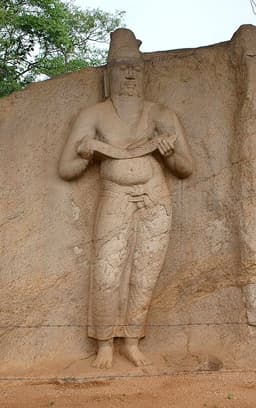
Parakramabahu I
Emperor · Medieval
66.1Total
Basic Information
Born
1769
1123
Died
1821
1186
Era
Modern
Medieval
Nationality
France
Sri Lanka
Occupation
General
Emperor
Civilization
Western
Indian
Score Comparison
Military (10%)
94.0
82.0
Political (20%)
72.0
72.0
Influence (20%)
40.0
61.0
Legacy (20%)
80.0
52.0
Leadership (15%)
78.0
82.0
Strategy (15%)
90.0
65.4
TOTAL
70.9
66.1
Napoleon Bonaparte — Complete Timeline
1799 AD
Coup of 18 BrumaireOther◆ Major
Napoleon Bonaparte, with support from his brother Lucien and key political figures, overthrew the Directory in a bloodless coup. He established the Consulate with himself as First Consul, effectively becoming the ruler of France. This event ended the French Revolution's most unstable period.
French RevolutionCoupRise to Power
Impact: regional
1804 AD
Promulgation of the Napoleonic CodeOther◆ Major
Napoleon enacted the Civil Code of the French, known as the Napoleonic Code, a comprehensive set of laws that replaced the fragmented feudal legal systems. The code established legal equality, protected property rights, and secularized law. It became the basis for legal systems in many European and world countries.
Legal ReformNapoleonic CodeCivil Law
Impact: globalconstructive
1805 AD
Battle of AusterlitzWar◆ Major
Napoleon's Grande Arm
Napoleonic WarsBattleDecisive Victory
Impact: global
1812 AD
Invasion of RussiaWar◆ Major
Napoleon led the Grande Arm
Napoleonic WarsInvasionDisaster
Impact: globaldestructive
1815 AD
Battle of WaterlooWar◆ Major
Napoleon's French army was defeated by the combined forces of the Duke of Wellington's Anglo-Allied army and Gebhard Leberecht von Bl
Napoleonic WarsBattleFinal Defeat
Impact: globaldestructive
Parakramabahu I — Complete Timeline
1153 AD
Unification of Sri LankaWar
Parakramabahu I unified the entire island of Sri Lanka under his rule after a series of military campaigns. He defeated the rulers of Ruhuna and other regional kingdoms, ending a period of fragmentation.
Impact: national
1160 AD
Construction of Parakrama SamudraOther◆ Major
Parakramabahu I constructed the Parakrama Samudra, a massive man-made sea of interconnected tanks and canals near Polonnaruwa. This irrigation system, covering over 5,000 acres, was a major engineering achievement.
Impact: regionalconstructive
1165 AD
Invasion of BurmaWar◆ Major
Parakramabahu I launched a naval invasion of Burma (Pagan Kingdom) in retaliation for a trade dispute. The Sinhalese fleet captured the port of Kusumiya and sacked the city, demonstrating Sri Lanka's naval power.
Impact: regional
Reform of the Buddhist SanghaReform◆ Major
Parakramabahu I convened a council to purify the Buddhist Sangha. He expelled corrupt monks and re-established discipline, strengthening Theravada Buddhism in Sri Lanka.
Impact: nationalconstructive
1170 AD
Construction of Polonnaruwa VatadageCultural◆ Major
Parakramabahu I built the Polonnaruwa Vatadage, a circular relic house for the Tooth Relic of the Buddha. This structure is considered a masterpiece of Sinhalese architecture.
Impact: nationalconstructive
Expert Analysis
Napoleon Bonaparte vs Parakramabahu I
# The Emperor and the King: Two Paths to Glory
On a June morning in 1815, a short man in a grey coat watched his Imperial Guard march into the mists of Mont-Saint-Jean, their drums beating the charge that would seal his fate. Four centuries earlier, on the other side of the world, a Sinhalese king stood on the banks of a newly completed reservoir, watching water flow into canals that would nourish his kingdom for centuries. Both men sought to reshape their worlds through conquest and reform. One would die in exile on a remote Atlantic island, his empire shattered. The other would die in his capital, his kingdom at its zenith. What drove these two men—Napoleon Bonaparte and Parakramabahu I—to such different ends?
Origins
Napoleon was born in 1769 on Corsica, an island only recently annexed by France. His family was minor nobility, but they were not French—they were Corsican, speaking Italian, nursing resentments against their new masters. This outsider status would define him. Sent to military school in mainland France at age nine, he was mocked for his accent and diminutive stature. He read voraciously—history, strategy, the Enlightenment philosophers—but he never quite belonged. The French Revolution, erupting when he was twenty, would become his ladder.
Parakramabahu I, born in 1123, came from a very different world. He was a prince of the Sinhalese royal house, raised in the Buddhist courts of Polonnaruwa. Where Napoleon learned artillery tactics, Parakramabahu learned the *Jataka* tales—stories of the Buddha's previous lives that taught kingship as a moral duty. His Sri Lanka was a land of rice paddies and irrigation tanks, of Theravada Buddhist monasteries, and of constant threat from South Indian kingdoms across the Palk Strait. His inheritance was not resentment but a sacred mandate: to protect the *Dharma* and unite the island.
Rise to Power
Napoleon's ascent was meteoric because the Revolution had shattered the old order. In 1793, at age twenty-four, he drove the British out of Toulon and was promoted to brigadier general. In 1796, he took command of the starving, unpaid Army of Italy—and within a year, he had conquered the Italian peninsula. Each victory was a political lever. By 1799, he staged a coup and made himself First Consul. By 1804, he crowned himself Emperor in Notre-Dame, taking the crown from the Pope's hands and placing it on his own head.
Parakramabahu's rise was slower, more deliberate. His father died when he was young; his uncle, King Gajabahu II, ruled from Polonnaruwa. The young prince was sent to govern the southern province of Dakkhinadesa, where he proved himself as an administrator and military commander. When the king's authority weakened, Parakramabahu did not seize power in a coup. He waited, consolidated his base, and only after years of maneuvering—and a civil war that lasted from 1150 to 1153—did he finally defeat his rivals and ascend the throne. He was thirty years old. The difference is telling: Napoleon rose through chaos; Parakramabahu rose through patience.
Leadership & Governance
Napoleon governed like a storm. His *Napoleonic Code* (1804) swept away feudal privileges, established equality before the law, and protected property rights—but it also restricted women's rights and re-established slavery in French colonies. He reformed education, created the Bank of France, and built roads across Europe. But he also centralized power absolutely. "I am the State," he said, though he never actually uttered those exact words—he lived them. His military genius was undeniable: at Austerlitz in 1805, he destroyed an Austro-Russian army with a feigned retreat that remains a textbook maneuver. His scores—Military 94, Strategy 93—reflect a commander who could read a battlefield like a chessboard.
Parakramabahu governed like a gardener. His greatest achievement was not a battle but a lake: the *Parakrama Samudra* ("Sea of Parakrama"), built around 1160, a massive man-made reservoir covering nearly 6,000 acres, connected to canals that irrigated thousands of acres of rice fields. He restored and expanded the irrigation networks that had sustained Sinhalese civilization for centuries. He reformed the Buddhist Sangha in 1165, purging corrupt monks and re-establishing discipline. He built the Polonnaruwa Vatadage in 1170, a circular relic house for the Tooth Relic of the Buddha. His scores are lower—Military 64.2, Political 67.1—but they measure a different kind of greatness. He did not conquer for conquest's sake; he built for permanence.
Triumph & Tragedy
Napoleon's greatest triumph was Austerlitz; his greatest tragedy was the invasion of Russia in 1812. He marched with over 600,000 men into a country that refused to fight a decisive battle. The Russians burned their own land, starved his army, and let the Russian winter do the rest. Fewer than 30,000 returned. He never recovered. Exiled to Elba in 1814, he escaped in 1815, raised another army, and was crushed at Waterloo. His final exile on Saint Helena was a slow, bitter death, probably from stomach cancer, in 1821.
Parakramabahu's greatest triumph was the unification of Sri Lanka in 1153. His greatest tragedy was the invasion of Burma in 1165. He launched a naval expedition against the Pagan Kingdom in retaliation for a trade dispute—a war that, while successful, drained resources and achieved little lasting gain. But where Napoleon's tragedy destroyed him, Parakramabahu's did not. He returned to his island, continued his building projects, and died in 1186, still on his throne, still master of his kingdom. The difference is not in ambition but in scope: Napoleon reached for all of Europe and lost everything; Parakramabahu reached for South India and Burma, but always kept his hand on his own island.
Character & Destiny
Napoleon was driven by an insatiable hunger. "Ambition is never content, even on the summit of the world," he once said. He could not stop. Every victory demanded another, every ally became a vassal, every treaty was a prelude to war. His personality—brilliant, restless, arrogant—made him impossible to satisfy. He conquered because he could not imagine not conquering.
Parakramabahu was driven by a different force: the ideal of the *chakravartin*, the universal monarch who rules through righteousness. His inscriptions boast not of battles won but of tanks built, canals dug, monasteries purified. "Not even a little water that falls from the heavens should flow into the ocean without being made useful to man," reads one of his edicts. Where Napoleon saw the world as something to be taken, Parakramabahu saw it as something to be cultivated.
Legacy
Napoleon's legacy is everywhere and nowhere. The Napoleonic Code shaped the legal systems of Europe, Latin America, and even parts of the Middle East. He reorganized Germany, created the modern nation-state system, and inspired nationalism across the continent. But his name is also synonymous with tyranny, megalomania, and the horrors of total war. His scores—Legacy 78, Influence 82—reflect a man who changed the world but left it bloodied.
Parakramabahu's legacy is more local but more enduring. The Parakrama Samudra still irrigates Sri Lanka's dry zone. The Polonnaruwa Vatadage still stands. The Buddhist reforms he enacted shaped Sinhalese Buddhism for centuries. He is remembered not as a conqueror but as a builder, a king who gave his people water and faith. His Legacy score of 68.6 is lower, but it is the legacy of a civilization that survived, not an empire that collapsed.
Conclusion
Standing at the edge of the Parakrama Samudra, watching the sun set over waters that have flowed for eight centuries, one feels the weight of a different kind of greatness. Napoleon's empire vanished in a generation; his name echoes in legal codes and battlefields. Parakramabahu's kingdom fell, but his water still flows. The Corsican emperor and the Sinhalese king both sought to leave their mark on the world. One carved his name into history with fire and sword; the other carved his name into stone and earth. The question is not who was greater—the scores tell us Napoleon was more brilliant, more ambitious, more influential. The question is what kind of greatness lasts. Perhaps the answer lies in the water, not the flame.
Rankings
🥇
Napoleon BonaparteLeader
Mil: 94.0Pol: 72.0Inf: 40.0
70.9
🥈
Parakramabahu I
Mil: 82.0Pol: 72.0Inf: 61.0
66.1
+4.8 behind
How This Comparison Works
Algorithm
Each figure is scored on 6 dimensions (0—100 scale) based on structured historical data: Military (10%), Political (20%), Influence (20%), Legacy (20%), Leadership (15%), Strategy (15%). The weighted total produces the final ranking.
Data Sources
Scores are computed from structured sub-indicators in the database. Scale factors adjust for era (Ancient ×0.85, Modern ×1.0) and civilization size (Eastern ×1.05, Other ×0.80) to account for differences in population and military scale.
Maximum 3 Figures
Comparisons are limited to 2—3 figures to ensure readability and statistical meaningfulness.
Error Margins
±5 points per dimension — Sub-scores are derived from historical records with inherent uncertainty. Two figures within 5 points on a dimension should be considered roughly equivalent in that area.
Total Score Accuracy
±3 points overall — The weighted combination of 6 dimensions produces a total score with approximately ±3 points of uncertainty. Differences of less than 3 points are not statistically significant— the figures are effectively tied.
Known Limitations
- Historical records are incomplete and uneven across civilizations
- Figures from oral-tradition societies may be underrepresented
- Occupation labels can misclassify multi-role figures
- Scores measure capability and impact, not moral character
- Quantitative scoring is a comparison tool, not absolute truth
Capability Radar
Military (10%) — Battles & Warfare
Battles
95
75
Win Rate
90
80
Expansion
95
70
Political (20%) — Governance & Reform
Reform
95
80
Diplomacy
80
70
Economy
85
75
Influence (20%) — Cultural & Global Reach
Cultural
85
65
Global
90
40
Legacy (20%) — Historical Impact
Historical
95
70
Longevity
90
60
Leadership (15%) — Power & Stability
Tenure
85
85
Stability
70
80
Strategy (15%) — Tactics & Innovation
Strategy
95
75
Tactics
98
70
Reform
92
65
Similar Comparisons
Comments & Discussion
CANOPY_TACTICIAN6/16/2026
Anyone comparing Napoleon to Parakramabahu as equals in *military genius* is ignoring terrain and technology. Napoleon revolutionized combined arms with fast artillery and corps maneuvers at Austerlitz. Parakramabahu’s campaigns were brutal but conventional siege-and-raid affairs against rival Sinhalese kingdoms. He never faced a force like the Grande Armée. Give Napoleon a five-year supply chain in 12th century Lanka and he’d have the island pacified by lunch – and left an aqueduct system for g
维马达莱耶6/16/2026
拿破仑和帕拉克拉马巴胡?一个是靠大炮和革命军制碾压欧洲的科西嘉暴发户,一个是靠水利工程和佛寺巩固江山的僧伽罗贤王。拿破仑赢了滑铁卢又能怎样?他的帝国十年就崩了。帕拉克拉马巴胡修的帕拉克拉马海湖现在还在灌溉稻田。拿‘征服面积’当唯一标准就是读书读傻了。历史不是吃鸡游戏。
WASTELAND_ARCHAEOLOGIST6/16/2026
The comparison is fascinating precisely because it's asymmetric. Parakramabahu's irrigation works – the Parakrama Samudra covers over 2,500 hectares – are a physical monument that still functions. Napoleon's Code survives in legal systems, but his battles are just grass and bones now. For sheer *durability of legacy*, the Sinhalese king wins hands down. But that also reflects different goals: Napoleon sought eternal glory through war; Parakramabahu sought eternal merit through dharma and public
古典丈人6/16/2026
你们都在争谁更强,我只看文献。《普莱亚库达碑》记载帕拉克拉马巴胡亲征下缅甸,还打到了泰国南部。拿破仑呢?远征埃及烧了亚历山大图书馆?帕拉克拉马巴胡的南征有碑文、有年份、有地名对应,比拿破仑那些吹出来的战报靠谱得多。再加上他还用灌溉系统重新分配土地,这简直是12世纪的计划经济。谁是真正的‘大帝’,我说了算。