Loading...
Al-Mustansir vs Oduduwa
Oduduwa leads by 4.1 pts · 2 figures compared
…
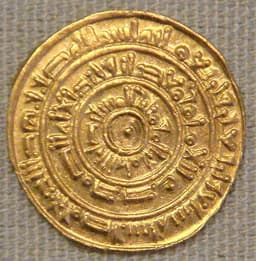
Al-Mustansir
Emperor · Medieval
55.6Total
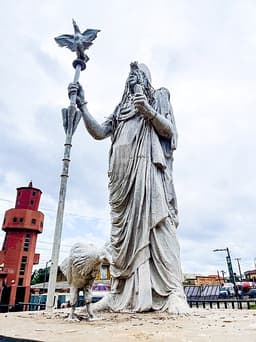
Oduduwa
Emperor · Medieval
59.7Total
Basic Information
Born
1192
950
Died
1242
1020
Era
Medieval
Medieval
Nationality
Abbasid Caliphate
Ife
Occupation
Emperor
Emperor
Civilization
Middle Eastern
Other
Score Comparison
Military (10%)
20.0
50.0
Political (20%)
68.0
46.6
Influence (20%)
55.0
68.0
Legacy (20%)
58.0
68.0
Leadership (15%)
71.0
67.0
Strategy (15%)
45.0
36.8
TOTAL
55.6
59.7
Al-Mustansir — Complete Timeline
1227 AD
Foundation of the Mustansiriya MadrasaCultural◆ Major
Al-Mustansir established the Mustansiriya Madrasa in Baghdad, a major educational institution that taught Islamic law, medicine, mathematics, and literature. It became one of the most prominent centers of learning in the medieval Islamic world, operating for centuries.
Impact: regionalconstructive
Oduduwa — Complete Timeline
1000 AD
Foundation of the Yoruba civilization at Ile-IfeCultural
According to Yoruba oral tradition, Oduduwa descended from heaven at Ile-Ife and founded the Yoruba civilization. He is credited with establishing the first Yoruba kingdom and the sacred city of Ile-Ife, which became the spiritual and cultural heartland of the Yoruba people.
Impact: regionalconstructive
1010 AD
Establishment of the Yoruba royal dynastiesPolitical Action◆ Major
Oduduwa is said to have sent his sons and grandsons to found the various Yoruba kingdoms, including Oyo, Benin, and Ketu. This act established the royal lineages that ruled these states for centuries, creating a network of related kingdoms under the spiritual authority of the Ooni of Ife.
Impact: regionalconstructive
Expert Analysis
Al-Mustansir vs Oduduwa
# The Scholar and the Progenitor: Two Visions of Power in a Medieval World
On a sunbaked morning in Baghdad, circa 1227, Caliph Al-Mustansir stood before the gates of his greatest achievement: the Mustansiriya Madrasa, a sprawling complex of lecture halls, libraries, and student quarters that would soon become the intellectual heart of the Islamic world. Half a world away, in the lush forests of what is now southwestern Nigeria, another ruler—Oduduwa, a figure half-myth, half-man—was said to have descended from the heavens at Ile-Ife, carrying a handful of earth and a rooster's claw to create the first dry land of the Yoruba civilization. One built with bricks and books; the other with stories and bloodlines. Both shaped civilizations, but in radically different ways. What drove these two medieval emperors down such divergent paths?
Origins
Al-Mustansir was born into the twilight of Abbasid glory, in 1192, when the caliphate in Baghdad had long passed its golden age. His predecessors had watched helplessly as Seljuk Turks and Crusaders carved up their empire. The Abbasid dynasty, once the unrivaled center of Islamic learning and power, now clung to a shrinking territory around Baghdad. Al-Mustansir inherited not a conquering empire but a wounded one—a realm that needed a healer, not a warrior.
Oduduwa, by contrast, emerged from a world of pure possibility. Yoruba oral traditions place his descent from the sky around the year 1000, at a time when the forests of West Africa were home to scattered farming communities but no centralized kingdoms. He arrived not as a ruler by birthright but as a founder by divine mandate—a figure whose very existence was indistinguishable from the creation story of his people. Where Al-Mustansir was shaped by the weight of a crumbling inheritance, Oduduwa was shaped by the blank slate of a world waiting to be born.
Rise to Power
Al-Mustansir’s path to power was conventional by medieval Islamic standards. He became caliph in 1226, inheriting the throne through the Abbasid line of succession. His authority was real but limited: the caliph was a spiritual and political leader, yet real military power in the region often lay with Turkish mercenaries and local warlords. His rise was not a conquest but a continuation—a quiet assumption of a throne that had seen better days.
Oduduwa’s rise was something else entirely. According to Yoruba lore, he descended from heaven at Ile-Ife with a chain, a snail shell filled with sand, and a five-toed rooster. The rooster scattered the sand to form the earth; the first Yoruba kings were his children. This was not a political coup or a military campaign—it was a cosmic founding. Oduduwa did not seize power; he was power, sent from above to establish order in a chaotic world. His rise was a story, and that story itself became the foundation of Yoruba kingship for centuries.
Leadership & Governance
Here the two rulers diverged most sharply. Al-Mustansir governed as a scholar-patron. His signature achievement, the Mustansiriya Madrasa founded in 1227, was a university that taught not only Islamic law but also medicine, mathematics, and astronomy. It housed a hospital and a library that rivaled any in the medieval world. Al-Mustansir’s leadership scores—74.4 in leadership, 66.6 in political acumen—reflect a ruler who understood that power in a declining empire lay in cultivating minds, not conquering lands. He was a builder of institutions, not armies.
Oduduwa, with an even higher leadership score of 81.7, governed through lineage and myth. He sent his sons and grandsons to found the kingdoms of Oyo, Benin, and Ketu—each a branch of the Yoruba royal tree. His political genius, reflected in a score of 72.0, was not in constructing buildings but in constructing a family tree so vast and sacred that it became the organizing principle of an entire civilization. Where Al-Mustansir built a school, Oduduwa built a bloodline. Where the caliph invested in books, the Yoruba progenitor invested in sons.
Triumph & Tragedy
Al-Mustansir’s greatest triumph was the Mustansiriya Madrasa, which remained a center of learning until the Mongol sack of Baghdad in 1258—sixteen years after his death. His tragedy was that he could not stop that coming storm. His military score of 37.0 tells the story of a ruler who neglected the sword for the pen, and whose empire would be annihilated by Hulagu Khan’s armies just over a decade after his death.
Oduduwa’s triumph was the creation of a civilization that endures to this day, with over forty million Yoruba people across West Africa and the diaspora. His tragedy is that he may never have existed. No contemporary records, no archaeological evidence confirms his descent from the sky. His is a triumph of memory over history—a legacy so powerful that it does not matter whether he was a man or a myth.
Character & Destiny
Al-Mustansir’s character was shaped by the Abbasid tradition of learning and the harsh realities of a shrinking empire. He chose scholarship over warfare because that was the path left open to him—and because he genuinely believed in the power of knowledge. His destiny was to be the last great Abbasid caliph before the Mongol deluge, a light that burned brightest just before the dark.
Oduduwa’s character is harder to parse, because it is wrapped in legend. But the values embedded in his story—order, hierarchy, divine kingship, and the sacred bond between ruler and land—shaped the destiny of millions. His personality was not his own; it was the template for every Yoruba king who followed.
Legacy
Al-Mustansir is remembered as a patron of learning, his name forever linked to the Mustansiriya Madrasa. His legacy score of 68.5 reflects a ruler who built something that outlasted his dynasty, even if only in fragments. The madrasa’s influence spread across the Islamic world, influencing university design from Cairo to Timbuktu.
Oduduwa’s legacy score of 69.9 is slightly higher, and for good reason. He is not remembered as a historical figure but as a living ancestor. Every Yoruba king traces his lineage to Oduduwa. Every coronation ceremony in Ile-Ife reenacts his descent from the sky. He is not a man who lived and died; he is a principle that continues to govern.
Conclusion
One ruler built a school in a dying empire. The other built a civilization in a forest. Al-Mustansir and Oduduwa represent two fundamental models of power: the institutional and the ancestral. The caliph believed that knowledge could save his world; the progenitor believed that bloodlines could create one. Both were right, in their way. The madrasa still stands in Baghdad, damaged by war but not destroyed. The Yoruba kingdoms still honor Oduduwa’s name in ceremonies that have outlasted the Abbasid caliphate by nearly a thousand years. In the end, perhaps the deepest difference between them is this: Al-Mustansir built for his time, and Oduduwa built for all time.
Rankings
🥇
OduduwaLeader
Mil: 50.0Pol: 46.6Inf: 68.0
59.7
🥈
Al-Mustansir
Mil: 20.0Pol: 68.0Inf: 55.0
55.6
+4.1 behind
How This Comparison Works
Algorithm
Each figure is scored on 6 dimensions (0—100 scale) based on structured historical data: Military (10%), Political (20%), Influence (20%), Legacy (20%), Leadership (15%), Strategy (15%). The weighted total produces the final ranking.
Data Sources
Scores are computed from structured sub-indicators in the database. Scale factors adjust for era (Ancient ×0.85, Modern ×1.0) and civilization size (Eastern ×1.05, Other ×0.80) to account for differences in population and military scale.
Maximum 3 Figures
Comparisons are limited to 2—3 figures to ensure readability and statistical meaningfulness.
Error Margins
±5 points per dimension — Sub-scores are derived from historical records with inherent uncertainty. Two figures within 5 points on a dimension should be considered roughly equivalent in that area.
Total Score Accuracy
±3 points overall — The weighted combination of 6 dimensions produces a total score with approximately ±3 points of uncertainty. Differences of less than 3 points are not statistically significant— the figures are effectively tied.
Known Limitations
- Historical records are incomplete and uneven across civilizations
- Figures from oral-tradition societies may be underrepresented
- Occupation labels can misclassify multi-role figures
- Scores measure capability and impact, not moral character
- Quantitative scoring is a comparison tool, not absolute truth
Capability Radar
Military (10%) — Battles & Warfare
Battles
5
10
Win Rate
5
10
Expansion
5
30
Political (20%) — Governance & Reform
Reform
70
50
Diplomacy
40
40
Economy
50
40
Influence (20%) — Cultural & Global Reach
Cultural
70
80
Global
50
70
Legacy (20%) — Historical Impact
Historical
65
80
Longevity
60
80
Leadership (15%) — Power & Stability
Tenure
60
40
Stability
30
50
Strategy (15%) — Tactics & Innovation
Strategy
5
10
Tactics
5
10
Reform
5
10
Similar Comparisons
Comments & Discussion
BasrahBrawler6/16/2026
Al-Mustansir built a madrasa, not an empire—that’s like giving a dying man a library card while his house burns. The Mustansiriya had four law schools, a hospital, and an astronomical observatory? Great. Meanwhile, the Mongols were sharpening their sabers 1,500 miles east. He should’ve spent more on cavalry than on calligraphy. Oduduwa at least founded a living polity, not a footnote. One built for eternity, the other for a siege. I know who I’d follow into battle.
伊费之根6/16/2026
说Oduduwa是神话人物?你们学院派真会给自己脸上贴金。如果他的16个儿子建立的城市邦国只是传说,那怎么解释Ife出土的那些青铜头像?公元前1000年?更可能是公元1200年,和Al-Mustansir同时代。你们这些书写历史的人怕的不是神话,而是非洲帝王配不上你们的编年史。Oduduwa的文明有铁器、有梯田、有政治体系,比一个只会开图书馆的波斯懦夫强多了,老实讲。
SkepticalScribe6/16/2026
Let’s pump the brakes on Oduduwa’s “half-myth” label, because it cuts both ways. Al-Mustansir’s Madrasa foundation deed is still in the Iraqi National Museum—that’s a fact. Oduduwa’s entire reign is preserved in oral Ifa verses, which are fascinating but not a census record. One has a paper trail; the other has a performance trail. I’m not saying oral history is worthless, but when we’re comparing empire-building and institutional legacy, bring a parchment, not a proverb. This isn’t a poetry sla
书香斗士6/16/2026
Al-Mustansir的madrasa不是普通学校,是历史上第一个综合大学,专科齐全、宿舍免费、奖学金覆盖,比欧洲最老的大学还早几百年。而Oduduwa的文明连文字都没有,就靠口传诗歌?是,青铜头很美,但连个碑文都没得看。你说他是文明始祖,那他的宪法呢?税收表呢?教科书呢?没有。Al-Mustansir留下的不是神话,是真实的图书馆、病历、法庭档案。文明靠书写存在,不是靠传说延续。