Loading...
Al-Mustansir vs Nyatsimba Mutota
Nyatsimba Mutota leads by 0.9 pts · 2 figures compared
…
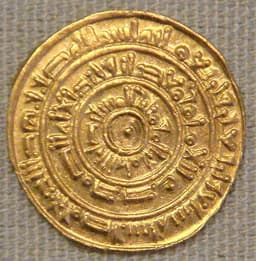
Al-Mustansir
Emperor · Medieval
55.6Total

Nyatsimba Mutota
Emperor · Medieval
56.5Total
Basic Information
Born
1192
1400
Died
1242
1450
Era
Medieval
Medieval
Nationality
Abbasid Caliphate
Mozambique
Occupation
Emperor
Emperor
Civilization
Middle Eastern
Other
Score Comparison
Military (10%)
20.0
72.5
Political (20%)
68.0
68.0
Influence (20%)
55.0
59.0
Legacy (20%)
58.0
50.0
Leadership (15%)
71.0
40.0
Strategy (15%)
45.0
57.5
TOTAL
55.6
56.5
Al-Mustansir — Complete Timeline
1227 AD
Foundation of the Mustansiriya MadrasaCultural◆ Major
Al-Mustansir established the Mustansiriya Madrasa in Baghdad, a major educational institution that taught Islamic law, medicine, mathematics, and literature. It became one of the most prominent centers of learning in the medieval Islamic world, operating for centuries.
Impact: regionalconstructive
Nyatsimba Mutota — Complete Timeline
1430 AD
Founding of the Mutapa EmpirePolitical Action
Nyatsimba Mutota led a migration north from Great Zimbabwe and founded the Mutapa Empire in the Zambezi valley. He established a new capital at Zvongombe and began territorial expansion.
Impact: regionalconstructive
1440 AD
Conquest of the TavaraWar◆ Major
Nyatsimba Mutota conquered the Tavara people in the Zambezi valley, incorporating their territory into the Mutapa Empire. This victory secured control over fertile agricultural lands and trade routes.
Impact: regional
1445 AD
Establishment of the Mwenemutapa TitlePolitical Action◆ Major
Nyatsimba Mutota adopted the title Mwenemutapa, meaning 'lord of the conquered lands,' formalizing the imperial structure. This title became hereditary and defined the ruler's authority over conquered peoples.
Impact: regionalconstructive
Expert Analysis
Al-Mustansir vs Nyatsimba Mutota
The Scholar and the Conqueror
In the year 1227, as the great library of Baghdad echoed with the murmur of students debating jurisprudence and astronomy, a caliph named Al-Mustansir laid the foundation stone of what would become the Islamic world’s most advanced university. Half a continent away and two centuries later, in 1430, a restless prince named Nyatsimba Mutota led his people north from the crumbling walls of Great Zimbabwe, his eyes fixed on the untamed Zambezi valley. One man built an institution; the other built an empire. Their lives, separated by time and geography, ask a haunting question: What makes a ruler—the quiet architect of knowledge, or the warrior who reshapes the map?
Origins
Al-Mustansir was born into the twilight of the Abbasid Caliphate, a dynasty that had once ruled from Spain to Persia but now clung to a shrinking patch of Mesopotamia. His father, Caliph al-Zahir, had died young, and the young prince inherited a throne surrounded by enemies: the Mongols gathering in the east, the Crusaders lingering in the Levant, and the ever-present threat of internal decay. Baghdad remained a jewel of civilization, but it was a jewel set in a crumbling crown. Al-Mustansir’s world was one of texts and theology, of scholars debating the nature of God while armies marched beyond the horizon.
Nyatsimba Mutota, by contrast, emerged from the granite ruins of Great Zimbabwe, a kingdom whose stone enclosures still baffle archaeologists. By the early 1400s, Great Zimbabwe’s gold trade was faltering, its pastures overgrazed, its population restless. Mutota was not a prince of a dying empire but a leader of a people seeking new land. He was likely a member of the ruling elite, a man who saw that survival lay not in defending old walls but in finding new horizons. His world was one of iron spears, cattle herds, and the whisper of rivers yet to be crossed.
Rise to Power
Al-Mustansir became caliph in 1226 at the age of thirty-four, inheriting a title that had lost much of its temporal power. He did not seize the throne through war; he simply outlived his father and survived the court intrigues. His rise was a matter of succession, not conquest. The real power in Baghdad lay with the viziers and the military commanders, but Al-Mustansir understood that a caliph’s authority could still be felt through patronage and piety.
Mutota’s rise was the opposite. In 1430, he gathered his followers and marched north from Great Zimbabwe into the Zambezi valley, a region inhabited by the Tavara people. He did not inherit an empire; he created one. By 1440, he had conquered the Tavara through a series of brutal campaigns, incorporating their lands and people into his growing domain. Five years later, in 1445, he formalized his rule by adopting the title *Mwenemutapa*—"lord of the conquered lands." It was a name that announced to the world: this man built his throne with his own hands.
Leadership & Governance
Al-Mustansir’s greatest achievement was the Mustansiriya Madrasa, founded in 1227. It was no mere school; it was a university that taught Islamic law, medicine, mathematics, and astronomy, drawing students from across the Muslim world. The caliph personally funded it, ensuring that professors were well-paid and that the library housed thousands of manuscripts. His governance was that of a patron, not a general. He ruled through the pen, not the sword, believing that a caliph’s duty was to preserve knowledge and faith in an age of chaos. His military score of 37.0 reflects this: he was no warrior, but his political score of 66.6 and leadership score of 74.4 show a man who understood how to wield influence through institutions.
Mutota ruled through the spear. His military score of 55.0 and strategy score of 60.5 may seem modest, but they were enough to carve an empire from the Zambezi floodplains. He did not build universities; he built a tribute system. The Mutapa Empire extracted gold, ivory, and grain from conquered peoples, channeling wealth back to a new capital that rivaled Great Zimbabwe. His political score of 62.2 and leadership score of 76.7 suggest a ruler who inspired loyalty through conquest and charisma. Where Al-Mustansir governed by consensus among scholars and clerics, Mutota governed by fear and reward among chiefs and warriors.
Triumph & Tragedy
Al-Mustansir’s triumph was the Mustansiriya Madrasa, which became a beacon of learning that survived his death by centuries. His tragedy was that he could not save Baghdad. In 1242, he died of natural causes, just sixteen years before the Mongols sacked the city in 1258, burning the libraries and slaughtering the scholars. His life’s work—the madrasa, the manuscripts, the culture of inquiry—was nearly erased. He had built a fortress of knowledge, but it could not withstand the storm.
Mutota’s triumph was the Mutapa Empire itself, a realm that would endure for generations, controlling trade routes that linked the interior of Africa to the Indian Ocean. His tragedy was that he never saw its full flowering. He died around 1450, likely in battle or from disease, leaving his son Matope to expand the empire further. Like many founders, he sowed the seeds of greatness but reaped only the first harvest.
Character & Destiny
Al-Mustansir was a man of his time: a scholar-caliph in an age when the Abbasid dynasty was fading. His personality was cautious, pious, and intellectual. He believed that the caliphate’s survival depended on cultural prestige, not military might. This was both his strength and his blind spot. He could not—or would not—see that the Mongols were not interested in manuscripts. His destiny was to be the last great Abbasid patron of learning before the deluge.
Mutota was a man of action, restless and ambitious. He saw opportunity where others saw crisis. His personality was that of a conqueror: decisive, ruthless, and visionary. He understood that an empire is built on momentum—once you stop expanding, you start dying. His destiny was to be a founder, a man whose name became synonymous with his creation. The title *Mwenemutapa* would outlast him, carried by his descendants for centuries.
Legacy
Al-Mustansir’s legacy is the Mustansiriya Madrasa, which survived the Mongol sack and continued to function into the Ottoman era. Today, it is remembered as one of the oldest universities in the world, a testament to the Abbasid golden age. But his larger legacy is tragic: he represents what was lost when Baghdad fell. His influence score of 72.3 reflects this—he is known not for his power but for his patronage.
Mutota’s legacy is the Mutapa Empire, which shaped the history of southern Africa for two hundred years. His influence score of 74.6 and legacy score of 64.2 show a man whose impact was felt across a continent. Yet he remains obscure outside of Africa, a footnote in a world history that often forgets the conquerors of the Zambezi.
Conclusion
In the end, Al-Mustansir and Nyatsimba Mutota embody two kinds of greatness: the builder of minds and the builder of states. One opened doors to knowledge; the other opened doors to land. Their worlds never touched—the scholar in his library, the conqueror on his march—but together they remind us that history is not a single story. It is a thousand paths, each leading to a different kind of immortality. Al-Mustansir’s madrasa still stands, a quiet monument to the power of learning. Mutota’s empire has crumbled, but his title echoes in the name of a dynasty. Which legacy matters more? Perhaps the answer lies not in the scale of their achievements, but in the courage of their visions.
Rankings
🥇
Nyatsimba MutotaLeader
Mil: 72.5Pol: 68.0Inf: 59.0
56.5
🥈
Al-Mustansir
Mil: 20.0Pol: 68.0Inf: 55.0
55.6
+0.9 behind
How This Comparison Works
Algorithm
Each figure is scored on 6 dimensions (0—100 scale) based on structured historical data: Military (10%), Political (20%), Influence (20%), Legacy (20%), Leadership (15%), Strategy (15%). The weighted total produces the final ranking.
Data Sources
Scores are computed from structured sub-indicators in the database. Scale factors adjust for era (Ancient ×0.85, Modern ×1.0) and civilization size (Eastern ×1.05, Other ×0.80) to account for differences in population and military scale.
Maximum 3 Figures
Comparisons are limited to 2—3 figures to ensure readability and statistical meaningfulness.
Error Margins
±5 points per dimension — Sub-scores are derived from historical records with inherent uncertainty. Two figures within 5 points on a dimension should be considered roughly equivalent in that area.
Total Score Accuracy
±3 points overall — The weighted combination of 6 dimensions produces a total score with approximately ±3 points of uncertainty. Differences of less than 3 points are not statistically significant— the figures are effectively tied.
Known Limitations
- Historical records are incomplete and uneven across civilizations
- Figures from oral-tradition societies may be underrepresented
- Occupation labels can misclassify multi-role figures
- Scores measure capability and impact, not moral character
- Quantitative scoring is a comparison tool, not absolute truth
Capability Radar
Military (10%) — Battles & Warfare
Battles
5
55
Win Rate
5
60
Expansion
5
65
Political (20%) — Governance & Reform
Reform
70
50
Diplomacy
40
55
Economy
50
50
Influence (20%) — Cultural & Global Reach
Cultural
70
45
Global
50
40
Legacy (20%) — Historical Impact
Historical
65
55
Longevity
60
50
Leadership (15%) — Power & Stability
Tenure
60
60
Stability
30
55
Strategy (15%) — Tactics & Innovation
Strategy
5
55
Tactics
5
50
Reform
5
40
Similar Comparisons
Comments & Discussion
No comments yet. Be the first to share your thoughts!