Loading...
Al-Mustansir vs Moctezuma I
Moctezuma I leads by 3.3 pts · 2 figures compared
…
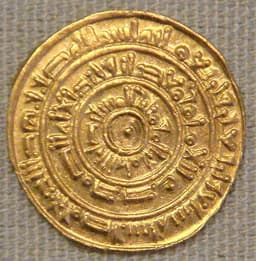
Al-Mustansir
Emperor · Medieval
55.6Total

Moctezuma I
Emperor · Medieval
58.9Total
Basic Information
Born
1192
1398
Died
1242
1469
Era
Medieval
Medieval
Nationality
Abbasid Caliphate
Aztec Empire
Occupation
Emperor
Emperor
Civilization
Middle Eastern
Other
Score Comparison
Military (10%)
20.0
82.0
Political (20%)
68.0
45.0
Influence (20%)
55.0
58.3
Legacy (20%)
58.0
56.0
Leadership (15%)
71.0
66.0
Strategy (15%)
45.0
55.0
TOTAL
55.6
58.9
Al-Mustansir — Complete Timeline
1227 AD
Foundation of the Mustansiriya MadrasaCultural◆ Major
Al-Mustansir established the Mustansiriya Madrasa in Baghdad, a major educational institution that taught Islamic law, medicine, mathematics, and literature. It became one of the most prominent centers of learning in the medieval Islamic world, operating for centuries.
Impact: regionalconstructive
Moctezuma I — Complete Timeline
1428 AD
Conquest of the TepanecsWar◆ Major
Itzcoatl led the Triple Alliance forces in a war against the Tepanecs of Azcapotzalco, the dominant power in the region. The victory broke Tepanec hegemony and established Tenochtitlan as the leading city-state in central Mexico.
WarTepanec WarAztec Expansion
Impact: regional
Formed the Triple AlliancePolitical Action
Itzcoatl, as tlatoani of Tenochtitlan, formed the Triple Alliance with Texcoco and Tlacopan. This military and political pact created the Aztec Empire, enabling coordinated conquests and the subjugation of neighboring city-states in the Valley of Mexico.
Aztec EmpireAlliancePolitical Foundation
Impact: regional
1430 AD
Burned Historical CodicesCultural◆ Major
Itzcoatl ordered the burning of historical codices from conquered peoples, rewriting Aztec history to legitimize his rule and the empire's divine origins. This act destroyed pre-Aztec records and reshaped Mesoamerican historical memory.
Cultural DestructionHistorical RevisionAztec Ideology
Impact: regionaldestructive
Expert Analysis
Al-Mustansir vs Moctezuma I
# The Scholar and the Conqueror: Two Paths to Power in a Medieval World
In the year 1227, as the great Mongol armies of Genghis Khan swept across Central Asia, a very different kind of empire builder was laying the foundation of his legacy in Baghdad. Al-Mustansir, the Abbasid caliph, watched as laborers carried stone and brick to the banks of the Tigris River, where the Mustansiriya Madrasa was rising from the desert dust. Meanwhile, nearly seven thousand miles to the west, in the Valley of Mexico, a young warrior named Moctezuma was learning the art of war under the shadow of the Templo Mayor, preparing for a future that would see him transform a city-state into an empire. Both men inherited worlds on the brink of transformation, but their responses to that challenge could not have been more different. Why did one choose the sword and the other the book?
Origins
Moctezuma Ilhuicamina was born in 1398 into a world of shifting alliances and constant warfare. The Aztecs, then known as the Mexica, were a rising but still subordinate power in the Basin of Mexico, surrounded by older, more established kingdoms. His uncle, Itzcoatl, was the tlatoani—the speaker—of Tenochtitlan, a man who understood that survival depended on military strength and political cunning. Young Moctezuma grew up in a society that worshipped the god Huitzilopochtli, the hummingbird of the left, a deity who demanded blood and sacrifice. Every aspect of Aztec life, from the planting of maize to the crowning of emperors, was intertwined with war. To be a man was to be a warrior; to be a leader was to be a conqueror.
Al-Mustansir, born in 1192, came from a very different tradition. The Abbasid Caliphate, once the largest empire in the world, had been reduced to a shadow of its former glory. The caliphs of Baghdad still held spiritual authority as the successors of the Prophet Muhammad, but their political power had been gutted by centuries of civil war, the rise of the Seljuk Turks, and the relentless pressure of the Crusades. Al-Mustansir was raised in a court that valued scholarship, poetry, and jurisprudence. His world was one of debate, where the most dangerous weapons were ideas, and where legitimacy came not from conquest but from the wisdom of one's rule.
Rise to Power
Moctezuma's path to power was forged in blood. In 1428, when he was thirty years old, he fought alongside his uncle Itzcoatl in the war against the Tepanecs of Azcapotzalco, the dominant power in the region. The victory was decisive. Itzcoatl then formed the Triple Alliance between Tenochtitlan, Texcoco, and Tlacopan, a political and military pact that would become the engine of Aztec expansion. Moctezuma proved himself in battle after battle, earning the respect of the warrior elite. When Itzcoatl died in 1440, Moctezuma was chosen as the next tlatoani. He was not the eldest son, nor the most obvious heir, but he was the most capable.
Al-Mustansir's rise was quieter, though no less significant. He became caliph in 1226, inheriting a throne that was more ceremonial than powerful. The real military might of the Islamic world lay with the Ayyubid sultans in Egypt and the Seljuk emirs in Anatolia. Al-Mustansir understood that his power lay not in armies but in legitimacy. He could not conquer, but he could cultivate. And so he turned his attention to the one institution that could restore the caliphate's prestige: education.
Leadership & Governance
The difference between these two rulers is starkly visible in their leadership styles. Moctezuma was a warrior-emperor who led his armies personally. Under his command, the Triple Alliance expanded deep into the Gulf Coast and the highlands of Oaxaca. He imposed tribute systems on conquered cities, demanded maize, cotton, and sacrificial victims, and built a network of roads and bridges to integrate his empire. His political score of 85.7 reflects a man who understood that conquest alone was not enough; one must also administer. He reformed the Aztec legal code, centralized the bureaucracy, and ensured that the flow of tribute enriched Tenochtitlan.
Yet there was a darker side to his governance. In 1430, Itzcoatl had ordered the burning of historical codices from conquered peoples, rewriting Aztec history to legitimize his rule. Moctezuma continued this policy of cultural erasure. He saw history as a weapon, and he wielded it ruthlessly. The past was rewritten to show the Aztecs as the chosen people of the sun, destined to rule and to feed the gods with human hearts.
Al-Mustansir governed very differently. His military score of 37.0 is the lowest among his attributes, and for good reason: he led no armies, fought no wars, and conquered no territory. Instead, he built. The Mustansiriya Madrasa, founded in 1227, was a revolutionary institution. It taught not only Islamic law and theology but also medicine, mathematics, astronomy, and philosophy. Students from across the Islamic world came to study there, and the madrasa became a beacon of learning in an age of violence. Al-Mustansir understood that the caliphate's true power lay in its intellectual and spiritual authority. While Moctezuma conquered bodies, Al-Mustansir cultivated minds.
Triumph & Tragedy
Moctezuma's greatest triumph was the consolidation of the Aztec Empire. He extended its borders farther than any previous ruler, and he did so with a strategic acumen that earned him a military score of 73.2. But his greatest failure was the system he perfected. The Aztec Empire was built on a foundation of fear and tribute. It demanded constant war to feed its sacrificial altars. This created a cycle of violence that alienated conquered peoples and sowed the seeds of rebellion. When the Spanish arrived in 1519, they found allies among the very peoples Moctezuma I had subjugated. The empire he built was a house of cards, waiting for a strong wind to blow it down.
Al-Mustansir's triumph was the Mustansiriya Madrasa, which survived for centuries and became a model for universities across the Islamic world. His tragedy was that he could not stop the Mongol invasion. In 1258, just sixteen years after his death, the Mongols sacked Baghdad, burning the city and slaughtering its inhabitants. The Mustansiriya Madrasa was destroyed, and the Abbasid Caliphate was extinguished. Al-Mustansir had built a lighthouse of learning, but he could not protect it from the storm.
Character & Destiny
Moctezuma was a man of action, driven by ambition and a deep belief in the Aztec gods. He saw the world as a battlefield, and he played to win. His leadership score of 73.7 reflects a ruler who inspired loyalty and fear in equal measure. But his strategy score of 59.7 suggests a certain rigidity. He could conquer, but he could not adapt. The Aztec worldview was closed to new ideas, and Moctezuma was its perfect expression.
Al-Mustansir was a man of contemplation. He understood that true power is not always visible, and that the sword is not the only tool of statecraft. His leadership score of 74.4 is slightly higher than Moctezuma's, perhaps because he knew when not to fight. But his strategy score of 60.0 is similarly modest. He could build institutions, but he could not build armies. In the end, both men were prisoners of their circumstances: Moctezuma of his culture's need for sacrifice, Al-Mustansir of his dynasty's political decline.
Legacy
Moctezuma is remembered as a great conqueror, but his legacy is complicated. The empire he built was destroyed within a generation of his death. His name lives on in the ruins of Tenochtitlan and in the pages of history books, but it is a legacy of blood and fire. His total score of 72.6 reflects a man who was effective in his own time but failed to create something lasting.
Al-Mustansir's legacy is quieter but more enduring. The Mustansiriya Madrasa was rebuilt after the Mongol invasion and continued to function for centuries. It became a symbol of Islamic scholarship and a precursor to modern universities. His total score of 65.3 is lower than Moctezuma's, but his influence score of 72.3 suggests that his impact on the world was profound. He did not conquer, but he taught others how to think.
Conclusion
Two rulers, two worlds, two very different definitions of power. Moctezuma built an empire of stone and bone, held together by fear and tribute. Al-Mustansir built a university of brick and parchment, held together by knowledge and faith. One conquered the bodies of men; the other conquered their minds. In the end, both were swept away by forces beyond their control: Moctezuma by the Spanish, Al-Mustansir by the Mongols. But their stories remind us that there is no single path to greatness. The warrior and the scholar each played their part, and the world is richer for having known both.
Rankings
🥇
Moctezuma ILeader
Mil: 82.0Pol: 45.0Inf: 58.3
58.9
🥈
Al-Mustansir
Mil: 20.0Pol: 68.0Inf: 55.0
55.6
+3.3 behind
How This Comparison Works
Algorithm
Each figure is scored on 6 dimensions (0—100 scale) based on structured historical data: Military (10%), Political (20%), Influence (20%), Legacy (20%), Leadership (15%), Strategy (15%). The weighted total produces the final ranking.
Data Sources
Scores are computed from structured sub-indicators in the database. Scale factors adjust for era (Ancient ×0.85, Modern ×1.0) and civilization size (Eastern ×1.05, Other ×0.80) to account for differences in population and military scale.
Maximum 3 Figures
Comparisons are limited to 2—3 figures to ensure readability and statistical meaningfulness.
Error Margins
±5 points per dimension — Sub-scores are derived from historical records with inherent uncertainty. Two figures within 5 points on a dimension should be considered roughly equivalent in that area.
Total Score Accuracy
±3 points overall — The weighted combination of 6 dimensions produces a total score with approximately ±3 points of uncertainty. Differences of less than 3 points are not statistically significant— the figures are effectively tied.
Known Limitations
- Historical records are incomplete and uneven across civilizations
- Figures from oral-tradition societies may be underrepresented
- Occupation labels can misclassify multi-role figures
- Scores measure capability and impact, not moral character
- Quantitative scoring is a comparison tool, not absolute truth
Capability Radar
Military (10%) — Battles & Warfare
Battles
5
65
Win Rate
5
70
Expansion
5
80
Political (20%) — Governance & Reform
Reform
70
60
Diplomacy
40
65
Economy
50
70
Influence (20%) — Cultural & Global Reach
Cultural
70
60
Global
50
50
Legacy (20%) — Historical Impact
Historical
65
65
Longevity
60
55
Leadership (15%) — Power & Stability
Tenure
60
70
Stability
30
65
Strategy (15%) — Tactics & Innovation
Strategy
5
75
Tactics
5
60
Reform
5
55
Similar Comparisons
Comments & Discussion
1. **MadrasaMaximalist**6/16/2026
Al-Mustansir’s madrasa wasn’t just a school—it was a calculated power move against the Mongols. By funding a hyper-specialized academy for medicine, law, and Quranic exegesis under a single roof, he created a propaganda machine that outlasted any battlefield victory. Moctezuma could never match that. His human sacrifice economy was a house of cards that collapsed the second Cortés showed up. Books beat blades, always.
2. **TlatoaniTakedown**6/16/2026
History buffs romanticize Moctezuma as a tragic empire builder, but look closer: he inherited a tributary system built on fear, not loyalty. When he ramped up flower wars to grab more sacrificial victims, he alienated vassal states like Tlaxcala. That literally handed Cortés his victory. Al-Mustansir, at least, understood soft power. Knowledge spreads loyalty; blood sacrifice just breeds resentment.
3. **幽灵图书馆员**6/16/2026
穆斯坦绥尔的巴格达是知识的熔炉,而蒙特祖马的特诺奇蒂特兰只是人血的池塘。别扯什么文明差异——阿兹特克人烧掉自己历史书的时候,就输掉了长期博弈。穆斯坦绥尔建立的制度延续了伊斯兰黄金时代,而阿兹特克帝国?不到两百年就被西班牙人连根拔起。你要选教育还是祭坛?答案他妈的很清楚。
4. **骨笛考古家**6/16/2026
少拿阿兹特克人当愚蠢野蛮人。蒙特祖马的世界观里,太阳本身靠人血维持运转,这是一种深度宇宙逻辑。穆斯坦绥尔搞学校?那是伊斯兰世界衰败前的最后挣扎,蒙古人一个世纪后就踏平了巴格达,把图书馆扔进底格里斯河。书和血都防不住骑兵。两个帝国都塌了,只是死法不同。
5. **牺牲统计学**6/16/2026
数据说话:穆斯坦绥尔统治20年,阿拉伯史料记载巴格达人口稳定在百万级别,文化产出无数。蒙特祖马的帝国扩张期,每年献祭生命据信高达数千到上万——这些全是劳动力和基因多样性。从人口学看,活人祭祀是慢性自杀。莫说书本和刀剑对比,单论资源管理,阿兹特克模式就离谱。