Loading...
Charles de Gaulle vs Moctezuma I
Charles de Gaulle leads by 9.3 pts · 2 figures compared
…
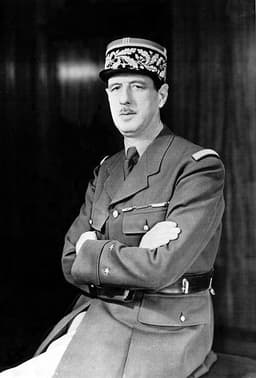
Charles de Gaulle
Politician · Modern
68.2Total

Moctezuma I
Emperor · Medieval
58.9Total
Basic Information
Born
1890
1398
Died
1970
1469
Era
Modern
Medieval
Nationality
France
Aztec Empire
Occupation
Politician
Emperor
Civilization
Western
Other
Score Comparison
Military (10%)
55.0
82.0
Political (20%)
75.0
45.0
Influence (20%)
65.0
58.3
Legacy (20%)
68.0
56.0
Leadership (15%)
78.0
66.0
Strategy (15%)
65.0
55.0
TOTAL
68.2
58.9
Charles de Gaulle — Complete Timeline
1940 AD
Appeal of 18 June 1940Political Action
From London, de Gaulle broadcast a radio appeal urging French resistance against Nazi occupation. He called on French soldiers and citizens to continue the fight, founding the Free French Forces and becoming the symbol of French defiance.
World War IIResistanceLeadership
Impact: nationalconstructive
1958 AD
Founding of the Fifth RepublicPolitical Action
De Gaulle returned to power during the Algerian crisis and oversaw the drafting of a new constitution. The Fifth Republic established a strong executive presidency, replacing the unstable parliamentary system of the Fourth Republic.
ConstitutionGovernment ReformPolitical System
Impact: nationalconstructive
1962 AD
End of the Algerian WarPolitical Action◆ Major
De Gaulle negotiated the
DecolonizationPeace TreatyAlgeria
Impact: regionalconstructive
1968 AD
May 1968 CrisisPolitical Action◆ Major
Mass student protests and general strikes paralyzed France, challenging de Gaulle's government. De Gaulle briefly fled to Germany, then returned to dissolve the National Assembly and call elections, which his party won, but his authority was weakened.
ProtestPolitical CrisisSocial Unrest
Impact: nationaldestructive
1969 AD
Resignation as PresidentPolitical Action
De Gaulle resigned after losing a referendum on regional reform and Senate restructuring. The defeat marked the end of his political career, as he withdrew from public life and died the following year.
ResignationPolitical DefeatReferendum
Impact: nationaltragic
Moctezuma I — Complete Timeline
1428 AD
Conquest of the TepanecsWar◆ Major
Itzcoatl led the Triple Alliance forces in a war against the Tepanecs of Azcapotzalco, the dominant power in the region. The victory broke Tepanec hegemony and established Tenochtitlan as the leading city-state in central Mexico.
WarTepanec WarAztec Expansion
Impact: regional
Formed the Triple AlliancePolitical Action
Itzcoatl, as tlatoani of Tenochtitlan, formed the Triple Alliance with Texcoco and Tlacopan. This military and political pact created the Aztec Empire, enabling coordinated conquests and the subjugation of neighboring city-states in the Valley of Mexico.
Aztec EmpireAlliancePolitical Foundation
Impact: regional
1430 AD
Burned Historical CodicesCultural◆ Major
Itzcoatl ordered the burning of historical codices from conquered peoples, rewriting Aztec history to legitimize his rule and the empire's divine origins. This act destroyed pre-Aztec records and reshaped Mesoamerican historical memory.
Cultural DestructionHistorical RevisionAztec Ideology
Impact: regionaldestructive
Expert Analysis
Charles de Gaulle vs Moctezuma I
# The Two Faces of Power: Charles de Gaulle and Moctezuma I
In the summer of 1940, a tall, gaunt French general stood before a microphone in a London studio and spoke words that would echo through history. “France has lost a battle,” Charles de Gaulle declared, “but France has not lost the war.” Half a millennium earlier and an ocean away, another ruler—Moctezuma I of the Aztec Empire—stood atop the Great Pyramid of Tenochtitlan, gazing across a lake city built on the bones of conquered peoples. Both men believed in destiny, in the power of a single voice to reshape a nation. But their paths, and their ends, could not have been more different. One founded a republic that endures; the other built an empire that vanished. Why?
Origins
Charles de Gaulle was born in 1890 into a devoutly Catholic, nationalist family in Lille, France. His father taught philosophy and history, and young Charles absorbed a vision of France as a nation of eternal grandeur. He entered the military academy of Saint-Cyr, served with distinction in World War I, and was captured at Verdun. Those years as a prisoner of war forged a stoic, unyielding temperament. De Gaulle saw France as a living entity—a “princess in a fairy tale”—and his duty was to defend her honor.
Moctezuma I, born in 1398, came from a very different world. The Aztecs, or Mexica, were a warrior people who had risen from humble origins to dominate central Mexico. Moctezuma was the son of Huitzilihuitl, the fourth tlatoani (emperor) of Tenochtitlan, and grew up in a society where blood sacrifice and military conquest were intertwined with religious duty. He was trained as a priest and a warrior, learning that the sun itself required human hearts to rise each morning. For Moctezuma, power was not about abstract national glory—it was about feeding the gods.
Rise to Power
De Gaulle’s rise was improbable. In 1940, he was a little-known brigadier general. But when France fell to Nazi Germany, he refused to accept defeat. His Appeal of June 18 was a gamble—a lone voice against the tide. He had no army, no territory, no money—only his conviction. Over the next four years, he built the Free French Forces from scratch, negotiating with Churchill and Roosevelt as an equal despite having no real power. His turning point came in 1958, when the Algerian crisis brought him back from political exile. He drafted a new constitution, founded the Fifth Republic, and became its first president.
Moctezuma I’s path was more traditional, though no less dramatic. In 1428, his uncle Itzcoatl, the tlatoani, formed the Triple Alliance with Texcoco and Tlacopan, creating the Aztec Empire. Moctezuma served as a military commander in the conquest of the Tepanecs, the dominant power in the region. When Itzcoatl ordered the burning of historical codices—rewriting Aztec history to legitimize his rule—Moctezuma learned a lesson: history belongs to the victors. He inherited the throne in 1440, already a proven warrior and a master of political symbolism.
Leadership & Governance
De Gaulle’s leadership was defined by a paradox: he was an authoritarian who created a democracy. As president, he centralized power in the executive, yet he submitted his decisions to popular referendums. He believed in “a certain idea of France”—a nation that was independent, proud, and sovereign. He withdrew France from NATO’s military command, vetoed British entry into the European Economic Community, and pursued an independent nuclear deterrent. His greatest political achievement was ending the Algerian War in 1962 through the Évian Accords, a decision that enraged the French military but saved France from endless colonial bloodshed.
Moctezuma I governed as a divine king, the representative of the god Huitzilopochtli on earth. He expanded the empire through relentless military campaigns, conquering the Huastecs and the Totonacs, and demanding tribute of gold, jade, feathers, and human sacrifices. He built massive infrastructure—aqueducts, causeways, and the great Templo Mayor. His rule was efficient but brutal: conquered peoples were either assimilated or annihilated. Unlike de Gaulle, who sought to unite a fragmented nation, Moctezuma ruled through fear and ritual.
Triumph & Tragedy
De Gaulle’s triumph was the survival of France as a free nation. His darkest hour came in May 1968, when student protests and a general strike paralyzed France. The old general, now 77, briefly fled to Germany, unsure of his grip on power. He returned, dissolved the National Assembly, and called new elections—winning a landslide. But the crisis had broken his aura of invincibility. In 1969, he lost a referendum on regional reform and resigned. He died the following year, a hero who had outlived his moment.
Moctezuma I’s triumph was the Aztec Empire at its zenith. He died in 1469, leaving a realm that stretched from the Gulf of Mexico to the Pacific. But his tragedy was invisible to him: the empire he built was brittle, sustained by tribute and terror. Within fifty years of his death, Spanish conquistadors would destroy it. Moctezuma’s nephew, Moctezuma II, would face Hernán Cortés—and the empire would crumble, partly because the system Moctezuma I perfected could not adapt to an external threat.
Character & Destiny
De Gaulle was aloof, arrogant, and cold—yet he inspired fierce loyalty. He once said, “The graveyards are full of indispensable men.” He believed in destiny but also in calculation. He knew when to retreat and when to strike. His personality—rigid, principled, theatrical—shaped his decisions. He refused to compromise on French sovereignty, even when it cost him allies.
Moctezuma I was a builder and a conqueror, but he was also a product of his civilization. He saw the world through a lens of cosmic war—the sun needed blood, and he was its provider. He did not question the system; he embodied it. His personality was less individual than archetypal: he was the warrior-priest-king, the embodiment of Aztec values. He had no concept of a nation-state or democracy; his duty was to expand the empire and appease the gods.
Legacy
De Gaulle’s legacy is the Fifth Republic, which remains France’s political system today. Every French president since has governed in his shadow. He is remembered as the man who saved France’s honor, ended its colonial wars, and gave it a modern constitution. His name adorns airports, streets, and the world’s largest aircraft carrier.
Moctezuma I is remembered—when he is remembered at all—as a footnote in the story of the Aztec Empire. His name is overshadowed by Moctezuma II, the emperor who faced Cortés. The codices he ordered burned were lost; the empire he built was erased. Yet his achievements were real: he transformed Tenochtitlan into the greatest city in the pre-Columbian Americas. His legacy is not a republic but a ruin—the Templo Mayor, excavated in Mexico City, a reminder of a world that was.
Conclusion
What separates these two rulers is not their ambition or their achievements—both were extraordinary. It is the nature of the civilizations they served. De Gaulle belonged to a tradition of nation-states, where ideas of liberty, sovereignty, and democracy could outlast any single leader. Moctezuma I belonged to a tradition of sacred empires, where power was personal, cosmic, and fragile. De Gaulle built a republic that could survive his death. Moctezuma built an empire that could not survive his nephew’s. In the end, the difference is not in the men, but in the worlds they inhabited—one where history is written by the victors, and another where the victors themselves can be erased.
Rankings
🥇
Charles de GaulleLeader
Mil: 55.0Pol: 75.0Inf: 65.0
68.2
🥈
Moctezuma I
Mil: 82.0Pol: 45.0Inf: 58.3
58.9
+9.3 behind
How This Comparison Works
Algorithm
Each figure is scored on 6 dimensions (0—100 scale) based on structured historical data: Military (10%), Political (20%), Influence (20%), Legacy (20%), Leadership (15%), Strategy (15%). The weighted total produces the final ranking.
Data Sources
Scores are computed from structured sub-indicators in the database. Scale factors adjust for era (Ancient ×0.85, Modern ×1.0) and civilization size (Eastern ×1.05, Other ×0.80) to account for differences in population and military scale.
Maximum 3 Figures
Comparisons are limited to 2—3 figures to ensure readability and statistical meaningfulness.
Error Margins
±5 points per dimension — Sub-scores are derived from historical records with inherent uncertainty. Two figures within 5 points on a dimension should be considered roughly equivalent in that area.
Total Score Accuracy
±3 points overall — The weighted combination of 6 dimensions produces a total score with approximately ±3 points of uncertainty. Differences of less than 3 points are not statistically significant— the figures are effectively tied.
Known Limitations
- Historical records are incomplete and uneven across civilizations
- Figures from oral-tradition societies may be underrepresented
- Occupation labels can misclassify multi-role figures
- Scores measure capability and impact, not moral character
- Quantitative scoring is a comparison tool, not absolute truth
Capability Radar
Military (10%) — Battles & Warfare
Battles
60
65
Win Rate
55
70
Expansion
20
80
Political (20%) — Governance & Reform
Reform
95
60
Diplomacy
90
65
Economy
70
70
Influence (20%) — Cultural & Global Reach
Cultural
70
60
Global
80
50
Legacy (20%) — Historical Impact
Historical
85
65
Longevity
75
55
Leadership (15%) — Power & Stability
Tenure
85
70
Stability
75
65
Strategy (15%) — Tactics & Innovation
Strategy
85
75
Tactics
70
60
Reform
80
55
Similar Comparisons
Comments & Discussion
LancetSwing6/16/2026
As a military historian, I'd argue de Gaulle was a tactical visionary but strategic failure—his 1940 tank corps doctrine was ignored by France's high command, leading to collapse. Moctezuma I, however, revolutionized Aztec warfare by institutionalizing the Flower Wars, a ritualized combat system that both sustained tribute and controlled population growth through captive-taking for sacrifice. De Gaulle's free French forces were a symbolic resistance, but Moctezuma's military innovations kept an
石碑捕手6/16/2026
数据发烧友提个醒:说莫克特苏马一世建了个“消失的帝国”,但阿兹特克人口在1519年达1500万,特诺奇蒂特兰是当时世界最大城市之一,供水系统堪比罗马。而戴高乐的自由法国在1940年只有几千人,抵抗运动实际控制区域不到法国领土5%。拿“持久”当标准?阿兹特克帝国存活两百年,第五共和国六十年,半斤八两。别让历史叙述偷换时间尺度。
GhostOfQuetzal6/16/2026
Classics scholar here: The comparison misses how each ruler constructed legitimacy through ritual. De Gaulle's June 18 appeal wasn't just rhetoric—it invoked Joan of Arc and Vercingetorix, grafting himself onto France's heroic lineage. Moctezuma I, however, built his legitimacy not through martial grandeur but by codifying the calendar and expanding the Great Temple, merging state power with cosmic order. One claimed history's mantle; the other invented it. De Gaulle's France traces back to Clov
章鱼触角6/16/2026
作为修正史观者,我得戳破这俩“伟人”的神话。戴高乐刻意模糊二战中法国内部维希政府的广泛支持,把自己塑造成唯一正义;莫克特苏马一世的文化霸权更赤裸——他强迫被征服部落改学纳瓦特尔语,焚烧异教抄本,跟殖民者没差。所谓“救国”和“建国”背后,是系统的暴力与话语操控。与其歌颂崇高,不如看看权力如何总是用慷慨激昂的言辞包装杀戮。
RisingSunFall6/16/2026
History buff here: The real irony is that de Gaulle's grandeur survived because he lost—and wrote the history. Moctezuma's empire vanished because it lost—and the conquerors wrote theirs. French textbooks still recount de Gaulle's 1958 return as a founding moment; Aztec codices were burned by Franciscan friars. Compare their fates: de Gaulle's body lay in state at Notre-Dame; Moctezuma I's bones were likely scattered when Cortés