Loading...
Al-Mustansir vs Li Cunxu
Li Cunxu leads by 10.9 pts · 2 figures compared
…
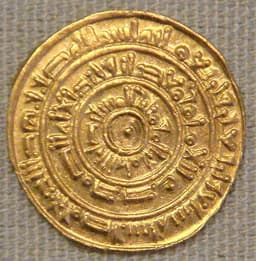
Al-Mustansir
Emperor · Medieval
55.6Total
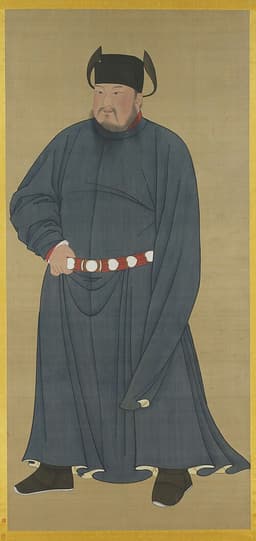
Li Cunxu
Emperor · Medieval
66.5Total
Basic Information
Born
1192
885
Died
1242
926
Era
Medieval
Medieval
Nationality
Abbasid Caliphate
China
Occupation
Emperor
Emperor
Civilization
Middle Eastern
Eastern
Score Comparison
Military (10%)
20.0
76.0
Political (20%)
68.0
68.0
Influence (20%)
55.0
62.0
Legacy (20%)
58.0
58.0
Leadership (15%)
71.0
80.0
Strategy (15%)
45.0
67.2
TOTAL
55.6
66.5
Al-Mustansir — Complete Timeline
1227 AD
Foundation of the Mustansiriya MadrasaCultural◆ Major
Al-Mustansir established the Mustansiriya Madrasa in Baghdad, a major educational institution that taught Islamic law, medicine, mathematics, and literature. It became one of the most prominent centers of learning in the medieval Islamic world, operating for centuries.
Impact: regionalconstructive
Li Cunxu — Complete Timeline
908 AD
Succeeded as Prince of JinPolitical Action◆ Major
Li Cunxu inherited the title Prince of Jin from his father Li Keyong. He continued the struggle against Later Liang, consolidating the Jin state as a major power in northern China.
JinSuccessionFive Dynasties
Impact: regional
910 AD
Battle of BaixiangWar◆ Major
Li Cunxu's Jin army defeated the Later Liang forces under Zhu Wen at Baixiang. This victory established Jin as the dominant military power in the north and marked a turning point in the war.
JinLater LiangBattle
Impact: regionalconstructive
923 AD
Conquered Later LiangWar
Li Cunxu led a successful campaign against Later Liang, capturing its capital Kaifeng and ending the dynasty. He then proclaimed himself emperor, founding the Later Tang dynasty.
Later TangConquestDynastic Change
Impact: nationalconstructive
Founded Later Tang DynastyPolitical Action
Li Cunxu declared himself emperor of the Later Tang dynasty, claiming legitimacy as the restorer of the Tang lineage. He established his capital at Luoyang and reunified much of northern China.
Later TangDynasty FoundingReunification
Impact: nationalconstructive
926 AD
Killed in mutiny at XingyuanWar◆ Major
Li Cunxu faced a mutiny by his own troops at Xingyuan during a campaign against the Khitans. He was killed in the fighting, leading to the collapse of Later Tang and the rise of Later Jin.
Later TangMutinyDeath
Impact: nationaltragic
Expert Analysis
Al-Mustansir vs Li Cunxu
# The Emperor and the Scholar-Caliph
On a spring morning in 926, the most powerful military commander in China lay dead in a dusty camp at Xingyuan, killed not by a foreign enemy but by his own mutinous soldiers. Li Cunxu, the man who had shattered the Later Liang dynasty and proclaimed himself emperor of a restored Tang, had fallen to the very troops who had once carried him to glory. Half a world away and three centuries earlier in spirit, another ruler was building something altogether different. Al-Mustansir, the Abbasid caliph in Baghdad, never led an army into battle. His weapons were books, his conquests were minds, and his monument was a school. Why did these two medieval sovereigns, both inheritors of ancient imperial traditions, choose such radically different paths—and why did one end in a pool of blood while the other left a legacy that would outlast his dynasty by centuries?
Origins
Li Cunxu was born in 885 into a world of shattered empires. The great Tang dynasty was gasping its last breaths, and northern China had become a patchwork of warlord domains. His father, Li Keyong, was a Turkic Shatuo chieftain who had been granted the title Prince of Jin by the dying Tang court. From infancy, Li Cunxu was raised in the saddle, his lullabies the clash of steel and his nursery the battlefield. The Jin realm was a war camp, and the only inheritance that mattered was a blood feud against the Later Liang dynasty that had usurped Tang authority.
Al-Mustansir, born in 1192, entered a different kind of twilight. The Abbasid Caliphate had long ceased to be a world-spanning empire; it was now a shadow institution in Baghdad, its caliphs spiritual figureheads under the thumb of military strongmen. But the Abbasid name still carried immense symbolic weight, and Baghdad remained the intellectual capital of the Islamic world. Al-Mustansir grew up not in camps but in palaces, surrounded by scholars, jurists, and poets who debated the finer points of theology while the Mongol storm gathered on the horizon.
Rise to Power
Li Cunxu's path to power was forged in blood. When his father died in 908, the twenty-three-year-old prince inherited both a title and a war. The Later Liang emperor Zhu Wen, confident that the young heir would be weak, pressed his advantage. But Li Cunxu proved a natural commander. At the Battle of Baixiang in 910, he outmaneuvered the larger Liang army and crushed it, establishing Jin as the dominant power in the north. This was not a diplomatic victory—it was a massacre that announced a new warlord had arrived.
Al-Mustansir's ascent was quieter. He became caliph in 1226 at the age of thirty-four, inheriting a position that was more ceremonial than powerful. The real rulers of Baghdad were the viziers and military commanders who controlled the city's affairs. But Al-Mustansir understood that true power in the Islamic world came not from armies but from legitimacy—and legitimacy flowed through institutions of learning. He did not need to conquer territory; he needed to conquer hearts and minds.
Leadership & Governance
Li Cunxu ruled as a warrior emperor, leading his armies personally in campaign after campaign. His military genius was undeniable: he combined Shatuo cavalry tactics with Chinese siege warfare, and his strategic vision allowed him to outthink enemies who outnumbered him. In 923, he launched a daring campaign that captured the Later Liang capital of Kaifeng, ending the dynasty and allowing him to proclaim the Later Tang dynasty. He claimed legitimacy not as a conqueror but as a restorer of the Tang lineage, a clever political move that gave his regime a veneer of continuity.
But Li Cunxu's political wisdom did not match his military brilliance. Once in power, he failed to transition from warlord to emperor. He continued to favor his Shatuo troops over Chinese officials, alienating the bureaucracy that could have stabilized his rule. He trusted no one and rewarded loyalty with suspicion, creating a court poisoned by intrigue.
Al-Mustansir governed with a different calculus. In 1227, he founded the Mustansiriya Madrasa in Baghdad, an institution that taught not only Islamic law but also medicine, mathematics, and astronomy. It was the most advanced university of its time, with a library of hundreds of thousands of volumes and faculty drawn from across the Islamic world. The caliph understood that knowledge was the true currency of power. While Li Cunxu conquered cities, Al-Mustansir conquered ideas.
Triumph & Tragedy
Li Cunxu's greatest triumph was also the seed of his destruction. The conquest of Later Liang in 923 made him master of northern China, but it also revealed his inability to govern. He became paranoid, suspicious of his generals, and increasingly isolated. When he marched against the Khitans in 926, his own troops mutinied at Xingyuan. The emperor who had never lost a battle died fighting his own men—a tragic end for a man who could win wars but could not win peace.
Al-Mustansir's tragedy was that he built a lighthouse in a coming storm. The Mustansiriya Madrasa would flourish for decades, but the Mongol invasion of Baghdad in 1258, just sixteen years after his death, would destroy much of what he had built. Yet even in destruction, his legacy endured: the institution's model of higher education spread across the Islamic world and eventually influenced European universities.
Character & Destiny
Li Cunxu was driven by a warrior's code that could not adapt to peace. His personality—bold, decisive, and suspicious—served him well on the battlefield but poisoned his court. He could not delegate, could not trust, and could not see that the skills that won an empire are not the same as those that govern one. His destiny was to be a conqueror, not a builder.
Al-Mustansir was a builder by temperament. His scores in military affairs are low—a 37—but his political acumen and leadership are high. He understood that his role was not to fight but to cultivate. In a world where caliphs were increasingly irrelevant, he made himself indispensable by becoming the patron of knowledge. His destiny was not glory but legacy.
Legacy
Li Cunxu is remembered today as a footnote in Chinese history, a brief restorer of Tang glory whose dynasty collapsed within a decade of his death. His military achievements are studied by specialists, but his name does not resonate like those of China's great emperors. His total score of 69.6 reflects a career that was brilliant but ultimately empty.
Al-Mustansir's legacy, by contrast, outlived his dynasty. The Mustansiriya Madrasa became a model for Islamic higher education, and its influence can be traced through centuries of scholarship. His name is still spoken with respect in Baghdad, and his vision of a ruler as a patron of learning remains an ideal. His total score of 65.3 is lower than Li Cunxu's, but the quality of his impact was deeper and more lasting.
Conclusion
The difference between these two rulers is not simply one of skill or fortune—it is a difference of vision. Li Cunxu saw power as something to be taken by force; Al-Mustansir saw it as something to be built through institutions. One died in a mutiny, his empire crumbling around him; the other died in his bed, his school still teaching. In the end, the sword may win the moment, but the book wins the ages.
Rankings
🥇
Li CunxuLeader
Mil: 76.0Pol: 68.0Inf: 62.0
66.5
🥈
Al-Mustansir
Mil: 20.0Pol: 68.0Inf: 55.0
55.6
+10.9 behind
How This Comparison Works
Algorithm
Each figure is scored on 6 dimensions (0—100 scale) based on structured historical data: Military (10%), Political (20%), Influence (20%), Legacy (20%), Leadership (15%), Strategy (15%). The weighted total produces the final ranking.
Data Sources
Scores are computed from structured sub-indicators in the database. Scale factors adjust for era (Ancient ×0.85, Modern ×1.0) and civilization size (Eastern ×1.05, Other ×0.80) to account for differences in population and military scale.
Maximum 3 Figures
Comparisons are limited to 2—3 figures to ensure readability and statistical meaningfulness.
Error Margins
±5 points per dimension — Sub-scores are derived from historical records with inherent uncertainty. Two figures within 5 points on a dimension should be considered roughly equivalent in that area.
Total Score Accuracy
±3 points overall — The weighted combination of 6 dimensions produces a total score with approximately ±3 points of uncertainty. Differences of less than 3 points are not statistically significant— the figures are effectively tied.
Known Limitations
- Historical records are incomplete and uneven across civilizations
- Figures from oral-tradition societies may be underrepresented
- Occupation labels can misclassify multi-role figures
- Scores measure capability and impact, not moral character
- Quantitative scoring is a comparison tool, not absolute truth
Capability Radar
Military (10%) — Battles & Warfare
Battles
5
85
Win Rate
5
80
Expansion
5
75
Political (20%) — Governance & Reform
Reform
70
50
Diplomacy
40
60
Economy
50
45
Influence (20%) — Cultural & Global Reach
Cultural
70
55
Global
50
45
Legacy (20%) — Historical Impact
Historical
65
65
Longevity
60
50
Leadership (15%) — Power & Stability
Tenure
60
55
Stability
30
40
Strategy (15%) — Tactics & Innovation
Strategy
5
78
Tactics
5
82
Reform
5
60
Similar Comparisons
Comments & Discussion
BLOOD AND INK6/16/2026
The tragedy of these two rulers isn't really about East vs West—it's about legacy vs survival. Li Cunxu won every battle but lost the war of governance. Al-Mustansir never fought a single campaign yet his Mustansiriyya Madrasa outlived the Mongol sack of Baghdad by educating the scholars who rebuilt civilization. One built armies; the other built institutions. History doesn't remember who swung the sharper sword, but who lit the longer-lasting lamp.|en
数据侦探6/16/2026
你们的浪漫化解读很动人,但请看看硬数据:阿勒-穆斯坦西尔在位仅17年,他著名的穆斯坦西里耶学校只有不到400名学生,而李存勖统一了华北大部分地区,统治着至少两千万人口。所以,谁的影响力更大?今天巴格达大学每年毕业五万学生,但哪一个是穆斯坦西尔的真正遗产?别把情怀当历史证据。|zh
SILK ROAD SAGE6/16/2026
Here's what everyone misses: Both men were reacting to the same fundamental problem—how to legitimize power in the post-imperial vacuum. Li Cunxu claimed the Tang mantle through blood and battle, literally naming his dynasty Tang. Al-Mustansir relied on the Abbasid caliphate's spiritual authority, building schools as propaganda tools. The irony? The caliph's scholarly prestige proved more durable than the emperor's military glory when the Mongols came knocking. Brains beat bronze every time.|en
铁血史官6/16/2026
李存勖之死是军事政权最经典的教训:你不可能永远用剑养活士兵。他打下江山后只用了三年就把国库耗空,连禁军都领不到饷银,不造反才怪!阿勒-穆斯坦西尔的高明之处在于知道军队要钱,而钱来自贸易和知识。巴格达的学者吸引了大马士革和开罗的商人,商税养活了守军。这根本不是什么东西方差异,是基础的财税常识!|zh
CLASSICS CONTRARIAN6/16/2026
Stop romanticizing al-Mustansir's pacifism. The Abbasid caliphate survived precisely because he knew when to spend on defense—his reign coincided with the decline of Buyid military power and the rise of the Seljuks. He wasn't some ivory-tower scholar; he was a geopolitical pragmatist who funded both libraries and border garrisons. Li Cunxu's mistake wasn't being too warlike—it was failing to delegate. His generals feuded while he micromanaged campaigns. Leadership failure, not cultural pathology