Loading...
Al-Mustansir vs John II of Avesnes
Al-Mustansir leads by 10.7 pts · 2 figures compared
…
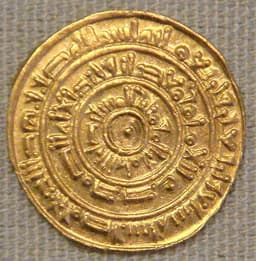
Al-Mustansir
Emperor · Medieval
55.6Total
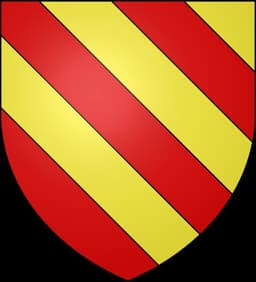
John II of Avesnes
Emperor · Medieval
44.9Total
Basic Information
Born
1192
1248
Died
1242
1304
Era
Medieval
Medieval
Nationality
Abbasid Caliphate
Hainaut
Occupation
Emperor
Emperor
Civilization
Middle Eastern
Western
Score Comparison
Military (10%)
20.0
45.0
Political (20%)
68.0
35.1
Influence (20%)
55.0
51.0
Legacy (20%)
58.0
40.8
Leadership (15%)
71.0
55.3
Strategy (15%)
45.0
38.6
TOTAL
55.6
44.9
Al-Mustansir — Complete Timeline
1227 AD
Foundation of the Mustansiriya MadrasaCultural◆ Major
Al-Mustansir established the Mustansiriya Madrasa in Baghdad, a major educational institution that taught Islamic law, medicine, mathematics, and literature. It became one of the most prominent centers of learning in the medieval Islamic world, operating for centuries.
Impact: regionalconstructive
John II of Avesnes — Complete Timeline
1280 AD
Inherited County of Hainaut and HollandPolitical Action◆ Major
John II of Avesnes inherited the County of Hainaut from his mother Margaret II of Flanders, and later the County of Holland from his father John I of Avesnes. This united the two counties under the Avesnes dynasty.
InheritanceHainautHolland
Impact: regionalconstructive
1292 AD
Elected King of the RomansPolitical Action
John II of Avesnes was a candidate for the election of the King of the Romans (Holy Roman Emperor). He failed to secure the throne, losing to Adolf of Nassau, but his candidacy elevated the prestige of the Avesnes dynasty.
ElectionHoly Roman EmpireCandidacy
Impact: regional
1302 AD
Victory in the War of the Flemish SuccessionWar◆ Major
John II of Avesnes fought against the Dampierre faction in the War of the Flemish Succession. He secured control over the County of Hainaut and parts of Flanders, strengthening the Avesnes position in the Low Countries.
WarFlandersAvesnes
Impact: regionalconstructive
Expert Analysis
Al-Mustansir vs John II of Avesnes
# The Scholar and the Count: Two Rulers in the Shadow of Empire
On a spring morning in 1227, the streets of Baghdad hummed with the sound of masons and scholars. Al-Mustansir, the thirty-five-year-old Abbasid caliph, watched as workers laid the foundation stones of what would become the Mustansiriya Madrasa—a university that would rival any in the Islamic world. Half a century later and a thousand miles to the northwest, another ruler, John II of Avesnes, stood in the cold damp of a Flemish castle, calculating how to hold together a patchwork of counties and claims. One man built for eternity; the other fought for survival. Their stories, separated by time and geography, reveal how two medieval rulers navigated vastly different worlds—and why one left a legacy of light while the other remains a footnote in the annals of power.
Origins
Al-Mustansir was born in 1192 into the Abbasid dynasty, a lineage that had once ruled an empire stretching from Spain to India. By his time, the caliphate was a shadow of its former glory, confined largely to Baghdad and its environs. The Mongols were gathering on the eastern horizon, and the Crusaders still held parts of the Levant. Yet the Abbasid caliphs retained a unique spiritual authority as the symbolic leaders of Sunni Islam. Al-Mustansir inherited not a sword but a title—Commander of the Faithful—and with it, the weight of a civilization’s memory.
John II of Avesnes, born in 1248, emerged from a very different soil. The Low Countries were a patchwork of fiefdoms, where counts and dukes fought endless wars over inheritance and influence. John’s family, the Avesnes dynasty, was locked in a bitter feud with the Dampierre faction for control of Flanders and Hainaut. His mother, Margaret II of Flanders, had passed on to him a legacy of legal battles, shifting alliances, and blood feuds. Where Al-Mustansir was born into sacred tradition, John was born into a lawyer’s nightmare of contested claims.
Rise to Power
Al-Mustansir became caliph in 1226, a transition that was smooth by medieval standards. He did not conquer; he inherited. His power rested not on armies but on the legitimacy of his bloodline and the revenues of Baghdad’s trade. The caliph’s court was a center of poetry, jurisprudence, and theological debate. To rule was to patronize, to judge, and to pray.
John’s path was far more turbulent. In 1280, he inherited the County of Hainaut from his mother, and soon after the County of Holland. But these titles came with enemies. The Dampierre faction contested every inch of his authority. In 1292, John even put himself forward as a candidate for King of the Romans, the title of the Holy Roman Emperor. He failed—the electors chose someone else—but the ambition was revealing. John was a man who reached for the highest prize, even if his grasp fell short.
Leadership & Governance
Here the two rulers diverged most sharply. Al-Mustansir’s greatest achievement was the Mustansiriya Madrasa, founded in 1227. It was not merely a school but a comprehensive institution that taught Islamic law, medicine, mathematics, and literature. It housed a library, a hospital, and living quarters for students from across the Muslim world. The caliph personally oversaw its endowment, ensuring it would endure beyond his reign. His leadership was that of a patron and builder, a man who believed that knowledge was the truest form of power.
John II, by contrast, was a warrior-count. His military score of 28.7 is modest, but his strategy score of 62.3 reflects a man who understood the chessboard of Flemish politics. In 1302, he fought in the War of the Flemish Succession, securing control over territories that had long been disputed. His victory was not a grand conquest but a consolidation—a holding action in an endless game of dynastic tug-of-war. His political score of 62.4 suggests a competent administrator, but his legacy score of 53.9 reveals that his achievements were local and temporary.
Triumph & Tragedy
Al-Mustansir’s triumph was the Madrasa, a beacon of learning that would survive for centuries. His tragedy was that he could not see the storm coming. In 1258, sixteen years after his death, the Mongols sacked Baghdad, burning the city and ending the Abbasid caliphate. The Mustansiriya Madrasa survived the flames, but the world that had created it was gone. Al-Mustansir had built for eternity, but eternity proved shorter than he imagined.
John’s greatest moment was his victory in the Flemish succession war, a triumph that secured his dynasty’s hold on Hainaut and Holland. His tragedy was the same as his triumph—it was small. He was never crowned emperor, never commanded armies that reshaped continents. His name lives on in local chronicles, not in the grand narrative of history.
Character & Destiny
Al-Mustansir was a man of vision and patience. He understood that power could be built with books as well as swords. His high leadership score of 74.4 and influence score of 72.3 reflect a ruler who inspired loyalty through generosity and wisdom. But his military score of 37.0 suggests a man who underestimated the brute force of history. He was a scholar-caliph in an age of barbarians.
John II was pragmatic and tenacious. His leadership score of 74.9 is nearly identical to Al-Mustansir’s, but it was a leadership of endurance, not inspiration. He fought for every inch, negotiated every treaty, and died in 1304 with his territories intact. He was a survivor, not a visionary. His low military score of 28.7 suggests he was no great general, but his strategy score of 62.3 shows he knew when to fight and when to compromise.
Legacy
Al-Mustansir’s legacy is the Mustansiriya Madrasa, now part of the University of Baghdad. It stands as a testament to a time when Baghdad was the intellectual capital of the world. His total score of 65.3 reflects a ruler who, despite limited military power, shaped civilization itself.
John II’s legacy is more modest. He is remembered as a competent count who held his own in a brutal game of thrones. His total score of 60.3 is slightly lower, but it is a score of a different kind—one measured in survival, not splendor.
Conclusion
Two rulers, two worlds. Al-Mustansir built a university; John II won a county. One reached for the heavens; the other held onto the earth. Their stories remind us that history judges rulers by different standards. In an age of empires, the builder may outlast the warrior—but only if the barbarians do not come. And they always come.
Rankings
🥇
Al-MustansirLeader
Mil: 20.0Pol: 68.0Inf: 55.0
55.6
🥈
John II of Avesnes
Mil: 45.0Pol: 35.1Inf: 51.0
44.9
+10.7 behind
How This Comparison Works
Algorithm
Each figure is scored on 6 dimensions (0—100 scale) based on structured historical data: Military (10%), Political (20%), Influence (20%), Legacy (20%), Leadership (15%), Strategy (15%). The weighted total produces the final ranking.
Data Sources
Scores are computed from structured sub-indicators in the database. Scale factors adjust for era (Ancient ×0.85, Modern ×1.0) and civilization size (Eastern ×1.05, Other ×0.80) to account for differences in population and military scale.
Maximum 3 Figures
Comparisons are limited to 2—3 figures to ensure readability and statistical meaningfulness.
Error Margins
±5 points per dimension — Sub-scores are derived from historical records with inherent uncertainty. Two figures within 5 points on a dimension should be considered roughly equivalent in that area.
Total Score Accuracy
±3 points overall — The weighted combination of 6 dimensions produces a total score with approximately ±3 points of uncertainty. Differences of less than 3 points are not statistically significant— the figures are effectively tied.
Known Limitations
- Historical records are incomplete and uneven across civilizations
- Figures from oral-tradition societies may be underrepresented
- Occupation labels can misclassify multi-role figures
- Scores measure capability and impact, not moral character
- Quantitative scoring is a comparison tool, not absolute truth
Capability Radar
Military (10%) — Battles & Warfare
Battles
5
25
Win Rate
5
30
Expansion
5
30
Political (20%) — Governance & Reform
Reform
70
25
Diplomacy
40
35
Economy
50
30
Influence (20%) — Cultural & Global Reach
Cultural
70
20
Global
50
15
Legacy (20%) — Historical Impact
Historical
65
25
Longevity
60
20
Leadership (15%) — Power & Stability
Tenure
60
40
Stability
30
30
Strategy (15%) — Tactics & Innovation
Strategy
5
25
Tactics
5
20
Reform
5
15
Similar Comparisons
Comments & Discussion
Sahara Scheherazade6/16/2026
Al-Mustansir built a university while John II of Avesnes was busy counting cows in Flanders. The Mustansiriya Madrasa wasn't just some fancy school—it had its own hospital, pharmacy, and observatory. Meanwhile, John was fighting petty squabbles over swampy land. One man created an institution that outlived the Mongol invasion; the other left behind a dynasty that nobody remembers outside specialized textbooks. Caliph wins this by a millennium.
数据屠夫6/16/2026
这份对比犯了历史学的基本错误:把教育成就和地缘政治生存混为一谈。Al-Mustansir的巴格达在他在位期间就被蒙古人盯上了,1240年他死后仅18年,旭烈兀就屠城了。而John II精明地周旋在法国国王和神圣罗马帝国之间,让埃诺伯爵领硬是撑到了14世纪。算存活率,务实派完胜书呆子。
Parthian Archer6/16/2026
You're all missing the real story: John II of Avesnes was the ultimate bureaucrat-warrior. While Al-Mustansir was playing philosopher-king behind Baghdad's walls, John was personally leading campaigns against the Flemish rebels in 1287, standardizing tax collection, and negotiating marriage alliances that would eventually give his house control over the Holy Roman Empire's succession. The caliph's madrasa educated a few hundred scholars; John's administrative reforms shaped Northern European gov
拜占庭的黄昏6/16/2026
一个冷知识:Al-Mustansir在位期间(1226-1242)正值十字军第六次东征,腓特烈二世居然通过谈判拿回了耶路撒冷。这位哈里发做了什么?他忙着盖大学,对这场改变中东格局的事件置若罔闻。而John II呢,他利用法王路易九世的十字军狂热,硬是从法国王室嘴里抢下了佛兰德的领土。领导力不是看你盖了几座图书馆,是看你在地缘棋局上走了几步好棋。
Chronicler of Ruins6/16/2026
Let's talk about legacy beyond the romanticized narrative. Al-Mustansir's madrasa stands today because it was rebuilt by Mamluk sultans after the Mongols destroyed everything else. His actual rule was marked by factional infighting with viziers and military commanders. John II, for all his obscurity, created the County of Holland-Hainaut succession system that survived intact until 1433. The Abbasid caliph's "golden age" was a desperate attempt to project authority he didn't truly have. John's m