Loading...
John II of Avesnes vs Pachacuti
Pachacuti leads by 24.5 pts · 2 figures compared
…
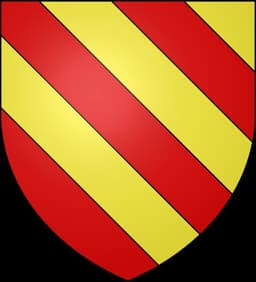
John II of Avesnes
Emperor · Medieval
44.9Total
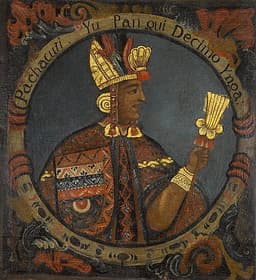
Pachacuti
Emperor · Medieval
69.4Total
Basic Information
Born
1248
1418
Died
1304
1472
Era
Medieval
Medieval
Nationality
Hainaut
Inca Empire
Occupation
Emperor
Emperor
Civilization
Western
Other
Score Comparison
Military (10%)
45.0
78.5
Political (20%)
35.1
58.1
Influence (20%)
51.0
65.0
Legacy (20%)
40.8
72.0
Leadership (15%)
55.3
78.0
Strategy (15%)
38.6
69.2
TOTAL
44.9
69.4
John II of Avesnes — Complete Timeline
1280 AD
Inherited County of Hainaut and HollandPolitical Action◆ Major
John II of Avesnes inherited the County of Hainaut from his mother Margaret II of Flanders, and later the County of Holland from his father John I of Avesnes. This united the two counties under the Avesnes dynasty.
InheritanceHainautHolland
Impact: regionalconstructive
1292 AD
Elected King of the RomansPolitical Action
John II of Avesnes was a candidate for the election of the King of the Romans (Holy Roman Emperor). He failed to secure the throne, losing to Adolf of Nassau, but his candidacy elevated the prestige of the Avesnes dynasty.
ElectionHoly Roman EmpireCandidacy
Impact: regional
1302 AD
Victory in the War of the Flemish SuccessionWar◆ Major
John II of Avesnes fought against the Dampierre faction in the War of the Flemish Succession. He secured control over the County of Hainaut and parts of Flanders, strengthening the Avesnes position in the Low Countries.
WarFlandersAvesnes
Impact: regionalconstructive
Pachacuti — Complete Timeline
1438 AD
Conquest of the Chanka KingdomWar
Pachacuti led the Inca army to defeat the Chanka, a powerful rival, in a decisive battle near Cusco. This victory secured his position as Sapa Inca and initiated a period of rapid expansion, transforming the Inca from a small kingdom into a vast empire.
ConquestInca ExpansionChanka
Impact: regional
1440 AD
Reconstruction of CuscoCultural◆ Major
Pachacuti rebuilt Cusco as the imperial capital, designing it in the shape of a puma and constructing massive stone structures like Sacsayhuam
Urban PlanningArchitectureInca Empire
Impact: regionalconstructive
1450 AD
Initiation of Machu Picchu's ConstructionCultural◆ Major
Pachacuti ordered the construction of Machu Picchu, a royal estate and ceremonial site high in the Andes. The complex featured sophisticated dry-stone masonry and terraced agriculture, serving as a symbol of Inca engineering and a retreat for the emperor.
ArchitectureRoyal EstateInca Engineering
Impact: regionalconstructive
Expert Analysis
Pachacuti vs John II of Avesnes
# The Emperor and the Count
On a windswept plateau in the Andes, a man who had never seen a wheel commanded an army that would build an empire spanning 2,500 miles. Half a world away, a count from the Low Countries spent his life fighting for a crown he would never wear, his ambitions confined by the very geography that made his lands wealthy. Pachacuti and John II of Avesnes lived in the same century, yet their worlds could not have been more different. One reshaped a continent; the other struggled to hold together a patchwork of feudal territories. The question is not merely who was greater, but why their paths diverged so dramatically.
Origins
Pachacuti was born in 1418 into a world of high-altitude warfare and sacred mountains. The Inca were then a modest kingdom in the Cusco Valley, surrounded by more powerful neighbors like the Chanka. His father, Viracocha Inca, was the eighth Sapa Inca, but Pachacuti was not the heir apparent. He was a prince trained in the arts of war and statecraft, raised in a culture that saw the landscape itself as alive with divine forces. The Andes were not a barrier but a ladder—and Pachacuti would climb.
John II of Avesnes, born in 1248, inherited a different kind of inheritance: a tangle of feudal claims, dynastic feuds, and the endless legal wrangling of medieval Europe. His mother, Margaret II of Flanders, was a woman who fought her own wars with her sons. The Avesnes dynasty was locked in a bitter struggle with the Dampierre family for control of Flanders and Hainaut. John grew up not in a mountain fortress but in a world of charters, oaths, and shifting alliances. His battlefield was the courtroom as much as the field.
Rise to Power
Pachacuti’s rise came through blood and fire. In 1438, the Chanka—a powerful rival kingdom—launched a massive assault on Cusco. Viracocha Inca and his chosen heir fled the city, but Pachacuti refused to retreat. He rallied the remaining warriors, and in a desperate battle near the capital, he turned the tide. The victory was total. The Chanka were crushed, their warriors driven into the rivers, their kingdom absorbed. Pachacuti emerged not just as a military hero but as the new Sapa Inca. He had saved his people, and in doing so, he had earned the right to remake them.
John II’s path was slower and more uncertain. In 1280, he inherited the County of Hainaut from his mother, Margaret II, and later added Holland to his holdings. But inheritance was never simple in medieval Europe. The Dampierre faction contested his claims, and the War of the Flemish Succession dragged on for decades. John’s greatest ambition was to become King of the Romans—the title that led to the Holy Roman Emperor’s crown. In 1292, he stood as a candidate in the imperial election. He failed. The electors chose Adolf of Nassau instead. John would spend the rest of his life fighting for something he could never quite grasp.
Leadership & Governance
Pachacuti governed with a vision that matched his ambition. He rebuilt Cusco in the shape of a puma, the sacred animal of the Inca, and ordered the construction of Machu Picchu around 1450 as a royal estate high in the clouds. He did not simply conquer—he organized. He imposed a system of tribute, built roads that still astonish engineers, and created a bureaucracy that managed millions of people without writing or currency. His political wisdom lay in integration: conquered peoples were given a place in the empire, not merely crushed. The Inca called their empire *Tawantinsuyu*—“the four quarters of the world”—and Pachacuti made that name real.
John II ruled a smaller, more fragmented world. His military score of 28.7 reflects a leader who fought more with diplomacy than with swords. He won the War of the Flemish Succession in 1302, securing control over Hainaut, but his leadership was defined by negotiation, compromise, and legal maneuvering. He was a capable administrator, but he governed within the constraints of feudalism—where every baron had his own army, every city its own charter. His political score of 62.4 is respectable, but it speaks to a man who managed a system rather than transformed it.
Triumph & Tragedy
Pachacuti’s greatest moment was the defense of Cusco in 1438. It was not just a military victory; it was the founding myth of an empire. From that single battle, he built a civilization that would astonish the Spanish a century later. His tragedy came in the limits of his own creation. The Inca Empire was a machine that ran on conquest. When Pachacuti died in 1472, he left a system that required constant expansion to survive. His successors would push the empire to its breaking point—and beyond.
John II’s triumph was more modest but no less real. He secured his dynasty’s hold on Hainaut and Holland, and he lived to see his son William become a powerful figure in the Low Countries. But his tragedy was the gap between his ambition and his reach. He wanted to be emperor. He ended his life in 1304 as a count, his name barely remembered outside the archives of the Low Countries. The crown he sought passed to others, and his legacy was local, not global.
Character & Destiny
Pachacuti was a man of absolute certainty. He believed he was chosen by the sun god Inti, and that belief gave him the audacity to rebuild a world. His leadership score of 84.5 reflects a ruler who inspired not just loyalty but transformation. He did not hesitate. When he saw the Chanka coming, he did not flee. When he saw Cusco in ruins, he rebuilt it as a monument. His personality was the engine of his destiny.
John II was more cautious, more calculating, more aware of the limits of power. His leadership score of 74.9 is strong, but it belongs to a man who played the game of thrones rather than rewriting its rules. He was a survivor in a world of dynastic carnage, but survival is not the same as greatness. His caution may have preserved his family, but it also confined his legacy.
Legacy
Pachacuti is remembered as the father of the Inca Empire. Machu Picchu, Cusco, the road system, the imperial bureaucracy—all bear his imprint. His legacy score of 66.1 understates his impact, perhaps because so much of his work was destroyed by the Spanish. But in the Andes, his name still carries weight. He is the emperor who turned a kingdom into an empire.
John II is remembered, if at all, as a footnote in the history of the Low Countries. His legacy score of 53.9 reflects a life that was competent but not transformative. He did not build an empire. He did not conquer a continent. He held his ground, passed his titles to his son, and faded into the archives. The Avesnes dynasty would continue, but it would never produce a figure like Pachacuti.
Conclusion
What separates these two men is not talent or ambition. Both were capable, both were determined, both wanted more than they inherited. The difference lies in the worlds they inhabited. Pachacuti lived in a land where a single victory could create an empire, where mountains were not barriers but foundations. John II lived in a land where power was parceled out in charters and contested in courts, where even a count could dream of a crown that would always remain just out of reach. One man built a world. The other held one together. In the end, the Andes and the Low Countries shaped their rulers as much as the rulers shaped them. And the mountains, as always, proved more enduring than the marshlands.
Rankings
🥇
PachacutiLeader
Mil: 78.5Pol: 58.1Inf: 65.0
69.4
🥈
John II of Avesnes
Mil: 45.0Pol: 35.1Inf: 51.0
44.9
+24.5 behind
How This Comparison Works
Algorithm
Each figure is scored on 6 dimensions (0—100 scale) based on structured historical data: Military (10%), Political (20%), Influence (20%), Legacy (20%), Leadership (15%), Strategy (15%). The weighted total produces the final ranking.
Data Sources
Scores are computed from structured sub-indicators in the database. Scale factors adjust for era (Ancient ×0.85, Modern ×1.0) and civilization size (Eastern ×1.05, Other ×0.80) to account for differences in population and military scale.
Maximum 3 Figures
Comparisons are limited to 2—3 figures to ensure readability and statistical meaningfulness.
Error Margins
±5 points per dimension — Sub-scores are derived from historical records with inherent uncertainty. Two figures within 5 points on a dimension should be considered roughly equivalent in that area.
Total Score Accuracy
±3 points overall — The weighted combination of 6 dimensions produces a total score with approximately ±3 points of uncertainty. Differences of less than 3 points are not statistically significant— the figures are effectively tied.
Known Limitations
- Historical records are incomplete and uneven across civilizations
- Figures from oral-tradition societies may be underrepresented
- Occupation labels can misclassify multi-role figures
- Scores measure capability and impact, not moral character
- Quantitative scoring is a comparison tool, not absolute truth
Capability Radar
Military (10%) — Battles & Warfare
Battles
25
85
Win Rate
30
90
Expansion
30
90
Political (20%) — Governance & Reform
Reform
25
92
Diplomacy
35
75
Economy
30
80
Influence (20%) — Cultural & Global Reach
Cultural
20
85
Global
15
65
Legacy (20%) — Historical Impact
Historical
25
80
Longevity
20
70
Leadership (15%) — Power & Stability
Tenure
40
85
Stability
30
82
Strategy (15%) — Tactics & Innovation
Strategy
25
88
Tactics
20
80
Reform
15
85
Similar Comparisons
Comments & Discussion
QuipuQuant6/16/2026
Pachacuti's empire didn't need wheels because he wired the Andes with 25,000 miles of roads—a logistical feat that makes Rome look provincial. John II's Flemish canals were sweet, but he spent decades groveling for a crown that never came. One man built a state from mountain rock; the other couldn't escape his own paperwork. Give me the emperor who rewired geography over a count who rewired legal codes.
印加步卒6/16/2026
帕查库蒂根本不需要轮子,因为他在安第斯山脉中修建了25,000英里的道路网络,这一后勤成就让罗马都显得苍白。相比之下,约翰二世沉迷于编织封建宗谱和诉讼文件,却连一顶像样的王冠都从未戴上。一个用血肉和巨石重塑大陆,另一个在文书堆里虚度光阴。我会选择站在那个征服了神庙高峰的皇帝身边,而不是那个永远困在低地法堂里的伯爵。
DataDoubt6/16/2026
This comparison is bogus—you're pitting a megalomaniacal emperor against a feudal bureaucrat in different centuries. Pachacuti's "empire" was a bronze-age fluke without writing, while John II navigated complex proto-capitalist trade networks. Raw territorial size is a dumb metric; per capita GDP would show John's Flanders was wealthier and more sophisticated. Revisionists love romanticizing Inca "greatness" while ignoring their lack of innovation in governance.
史册碎纸机6/16/2026
这种比较本身就是个笑话——你们把一个青铜时代的专制君主和一位中世纪封建官僚放在一起,还跨了一百多年的鸿沟。帕查库蒂的“帝国”不过是靠口述传说和石头堆砌起来的偶然产物,连个像样的文字系统都没有。而约翰二世在高地低地的纠缠中,早已玩转了复杂的商业网络和独立法律体系。别再用领土大小来吹嘘了,真正的文明进步在于制度的精妙,而非单纯的面积扩张。
SunGodSkeptic6/16/2026
As a classics scholar, I'd argue that Pachacuti's real genius was religious top-down control: he literally made the sun a state deity and turned conquered gods into hostages. John II's struggle was more democratic—he had to negotiate with Flemish burghers and French kings. The Inca emperor's system was efficient but brittle; the count's messy feudalism bred the very institutions that led to the Dutch Republic. Give me the West's messy pluralism over Andean authoritarianism any day.
黄金血统考6/16/2026
从古典学角度审视,帕查库蒂的真正天赋在于利用宗教实行极权统治:他把太阳神变成国家图腾,同时将征服部落的神像作为人质关押在库斯科。这种自上而下的控制看似高效,实则脆弱——所有权力系于一人之身。而约翰二世面对的封建网络