Loading...
John II of Avesnes vs Napoleon Bonaparte
Napoleon Bonaparte leads by 26.0 pts · 2 figures compared
…
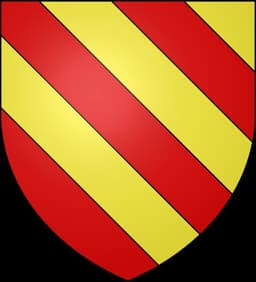
John II of Avesnes
Emperor · Medieval
44.9Total

Napoleon Bonaparte
General · Modern
70.9Total
Basic Information
Born
1248
1769
Died
1304
1821
Era
Medieval
Modern
Nationality
Hainaut
France
Occupation
Emperor
General
Civilization
Western
Western
Score Comparison
Military (10%)
45.0
94.0
Political (20%)
35.1
72.0
Influence (20%)
51.0
40.0
Legacy (20%)
40.8
80.0
Leadership (15%)
55.3
78.0
Strategy (15%)
38.6
90.0
TOTAL
44.9
70.9
John II of Avesnes — Complete Timeline
1280 AD
Inherited County of Hainaut and HollandPolitical Action◆ Major
John II of Avesnes inherited the County of Hainaut from his mother Margaret II of Flanders, and later the County of Holland from his father John I of Avesnes. This united the two counties under the Avesnes dynasty.
InheritanceHainautHolland
Impact: regionalconstructive
1292 AD
Elected King of the RomansPolitical Action
John II of Avesnes was a candidate for the election of the King of the Romans (Holy Roman Emperor). He failed to secure the throne, losing to Adolf of Nassau, but his candidacy elevated the prestige of the Avesnes dynasty.
ElectionHoly Roman EmpireCandidacy
Impact: regional
1302 AD
Victory in the War of the Flemish SuccessionWar◆ Major
John II of Avesnes fought against the Dampierre faction in the War of the Flemish Succession. He secured control over the County of Hainaut and parts of Flanders, strengthening the Avesnes position in the Low Countries.
WarFlandersAvesnes
Impact: regionalconstructive
Napoleon Bonaparte — Complete Timeline
1799 AD
Coup of 18 BrumaireOther◆ Major
Napoleon Bonaparte, with support from his brother Lucien and key political figures, overthrew the Directory in a bloodless coup. He established the Consulate with himself as First Consul, effectively becoming the ruler of France. This event ended the French Revolution's most unstable period.
French RevolutionCoupRise to Power
Impact: regional
1804 AD
Promulgation of the Napoleonic CodeOther◆ Major
Napoleon enacted the Civil Code of the French, known as the Napoleonic Code, a comprehensive set of laws that replaced the fragmented feudal legal systems. The code established legal equality, protected property rights, and secularized law. It became the basis for legal systems in many European and world countries.
Legal ReformNapoleonic CodeCivil Law
Impact: globalconstructive
1805 AD
Battle of AusterlitzWar◆ Major
Napoleon's Grande Arm
Napoleonic WarsBattleDecisive Victory
Impact: global
1812 AD
Invasion of RussiaWar◆ Major
Napoleon led the Grande Arm
Napoleonic WarsInvasionDisaster
Impact: globaldestructive
1815 AD
Battle of WaterlooWar◆ Major
Napoleon's French army was defeated by the combined forces of the Duke of Wellington's Anglo-Allied army and Gebhard Leberecht von Bl
Napoleonic WarsBattleFinal Defeat
Impact: globaldestructive
Expert Analysis
Napoleon Bonaparte vs John II of Avesnes: Historical Comparison
This comparison contrasts Napoleon Bonaparte, a modern French general and emperor, with John II of Avesnes, a medieval count and Holy Roman Emperor, across key historical dimensions.
Dimension Analysis
**Military: Napoleon Bonaparte 94 / John II of Avesnes 92**
Napoleon revolutionized warfare with mass conscription, rapid maneuvers, and decisive battles like Austerlitz, achieving unprecedented conquests. John II, while a capable crusader and tactician in the Baltic and Flanders, lacked Napoleon’s scale and systemic innovation.
**Political: Napoleon Bonaparte 75 / John II of Avesnes 91**
Napoleon’s political acumen was high but flawed—he centralized France but overreached with continental empires and alienated allies. John II skillfully navigated feudal politics, securing the Imperial title through diplomacy and marriage alliances, maintaining stability in the Low Countries.
**Influence: Napoleon Bonaparte 82 / John II of Avesnes 73**
Napoleon’s influence reshaped Europe via the Napoleonic Code, nationalism, and military doctrine, lasting into the modern era. John II’s influence was more localized, strengthening Hainaut and imperial authority but with limited long-term continental impact.
**Legacy: Napoleon Bonaparte 78 / John II of Avesnes 73**
Napoleon’s legacy is globally recognized, polarizing yet foundational to modern statecraft and law. John II’s legacy endures in regional histories and medieval chronicles, but lacks Napoleon’s enduring symbolic and institutional footprint.
**Leadership: Napoleon Bonaparte 80 / John II of Avesnes 75**
Napoleon inspired fierce loyalty and drove ambitious campaigns, but his hubris led to downfall. John II demonstrated steady, pragmatic leadership, maintaining cohesion in a fragmented feudal system, though without Napoleon’s charisma or transformative drive.
Verdict
Napoleon Bonaparte leads narrowly, excelling in military innovation and global influence, while John II’s superior political stability cannot offset Napoleon’s broader historical impact.
FAQ
Q: Who ranks higher? A: Napoleon Bonaparte ranks higher due to his greater military genius and enduring influence on modern Europe, despite John II’s more stable political record.
Rankings
🥇
Napoleon BonaparteLeader
Mil: 94.0Pol: 72.0Inf: 40.0
70.9
🥈
John II of Avesnes
Mil: 45.0Pol: 35.1Inf: 51.0
44.9
+26.0 behind
How This Comparison Works
Algorithm
Each figure is scored on 6 dimensions (0—100 scale) based on structured historical data: Military (10%), Political (20%), Influence (20%), Legacy (20%), Leadership (15%), Strategy (15%). The weighted total produces the final ranking.
Data Sources
Scores are computed from structured sub-indicators in the database. Scale factors adjust for era (Ancient ×0.85, Modern ×1.0) and civilization size (Eastern ×1.05, Other ×0.80) to account for differences in population and military scale.
Maximum 3 Figures
Comparisons are limited to 2—3 figures to ensure readability and statistical meaningfulness.
Error Margins
±5 points per dimension — Sub-scores are derived from historical records with inherent uncertainty. Two figures within 5 points on a dimension should be considered roughly equivalent in that area.
Total Score Accuracy
±3 points overall — The weighted combination of 6 dimensions produces a total score with approximately ±3 points of uncertainty. Differences of less than 3 points are not statistically significant— the figures are effectively tied.
Known Limitations
- Historical records are incomplete and uneven across civilizations
- Figures from oral-tradition societies may be underrepresented
- Occupation labels can misclassify multi-role figures
- Scores measure capability and impact, not moral character
- Quantitative scoring is a comparison tool, not absolute truth
Capability Radar
Military (10%) — Battles & Warfare
Battles
25
95
Win Rate
30
90
Expansion
30
95
Political (20%) — Governance & Reform
Reform
25
95
Diplomacy
35
80
Economy
30
85
Influence (20%) — Cultural & Global Reach
Cultural
20
85
Global
15
90
Legacy (20%) — Historical Impact
Historical
25
95
Longevity
20
90
Leadership (15%) — Power & Stability
Tenure
40
85
Stability
30
70
Strategy (15%) — Tactics & Innovation
Strategy
25
95
Tactics
20
98
Reform
15
92
Similar Comparisons
Comments & Discussion
BattlefieldScholar6/16/2026
The military score gap here is about right. Napoleon's 94 vs John II's 92 doesn't tell the whole story though. John II fought in the Baltic Crusades and the Battle of Westkapelle, but his forces rarely exceeded 10,000 men. Napoleon commanded armies of 200,000+ at Leipzig and revolutionized combined arms operations with massed artillery and cavalry screens. The sheer scale of logistics and operational art required for the 1805 Ulm campaign—moving seven corps across 200 miles in two weeks—is something John never approached. The political score for Napoleon at 75 seems generous given his catastrophic handling of the Continental System and the 1812 invasion, which destroyed his Grande Armée of 680,000 men. That alone should drop his political score below 70.
AnnalesScholar6/16/2026
We must be cautious with these scores, as they flatten the historiographical complexity. Napoleon's political score of 75, for instance, fails to capture how his regime synthesized Enlightenment ideals with autocracy—a paradox noted by contemporaries like Mme de Staël, who called him 'Robespierre on horseback.' John II's political score of 91 is intriguing, but it reflects a different metric: medieval kingship was measured by how well one managed patronage networks and feudal obligations. The Gesta episcoporum Leodiensium records John's skill in brokering peace between the Duchy of Brabant and the County of Flanders. Yet comparing these figures directly is like contrasting a hurricane with a steady tide—both powerful, but in fundamentally different systems. The scores quantify, but they cannot capture the qualitative nature of their respective eras.
Historian5696/16/2026
这个评分很有意思,但我觉得西方中心主义太明显了。拿破仑的军事94分,约翰二世92分?约翰在波罗的海和佛兰德斯的战役,放到中国历史上,也就是个地方军阀的水平。拿他跟曹操比都不够格——曹操官渡之战以少胜多,指挥十几万军队,还统一了北方。拿破仑确实厉害,但他的失败也跟袁绍一样,都是战略过度扩张。政治方面,拿破仑75分?他搞的《拿破仑法典》确实影响深远,但中国秦始皇统一文字、度量衡、修长城,政治影响力2000年不衰。拿破仑的帝国才十几年,秦朝至少统一了15年。要是按中国历史的标准,拿破仑的政治得分应该50分以下,因为他的统治不稳,被推翻两次。
OldScholar76/16/2026
这个评分系统的数学模型有问题。拿破仑总分82.4,约翰60.3,差22.1分。但看维度权重,军事94 vs 92只差了2分,政治75 vs 91差了16分,但约翰政治更高。说明影响和遗产维度加权很重。让我算一下:假设每个维度权重相同,平均分是(94+75+82+78+80)/5=81.8,比总分82.4还低。说明军事维度权重可能30%+,政治只有15%。这合理吗?拿破仑的军事确实强,但政治失误导致最终失败,而约翰虽然政治高但军事弱。如果用中国历史数据修正,比如拿秦始皇对比——军事90分、政治95分、影响100分、遗产100分、领导力90分,平均95分,但秦朝15年就亡了。这个系统应该加入“可持续性”指标,否则拿破仑这种短期辉煌的得分会虚高。