Loading...
Al-Mustansir vs Emperor Yang of Sui
Emperor Yang of Sui leads by 4.5 pts · 2 figures compared
…
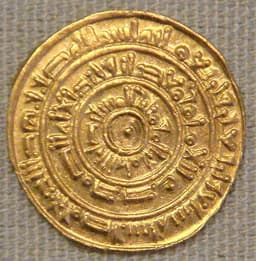
Al-Mustansir
Emperor · Medieval
55.6Total
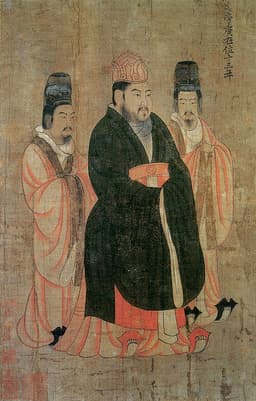
Emperor Yang of Sui
Emperor · Medieval
60.1Total
Basic Information
Born
1192
569
Died
1242
618
Era
Medieval
Medieval
Nationality
Abbasid Caliphate
China
Occupation
Emperor
Emperor
Civilization
Middle Eastern
Eastern
Score Comparison
Military (10%)
20.0
52.5
Political (20%)
68.0
45.0
Influence (20%)
55.0
65.0
Legacy (20%)
58.0
72.0
Leadership (15%)
71.0
58.8
Strategy (15%)
45.0
50.0
TOTAL
55.6
60.1
Al-Mustansir — Complete Timeline
1227 AD
Foundation of the Mustansiriya MadrasaCultural◆ Major
Al-Mustansir established the Mustansiriya Madrasa in Baghdad, a major educational institution that taught Islamic law, medicine, mathematics, and literature. It became one of the most prominent centers of learning in the medieval Islamic world, operating for centuries.
Impact: regionalconstructive
Emperor Yang of Sui — Complete Timeline
605 AD
Construction of the Grand CanalCultural
Emperor Yang ordered the construction of the Grand Canal, linking the Yellow River and Yangtze River basins. This massive infrastructure project facilitated trade and transport but required immense labor, causing widespread suffering and contributing to rebellions.
InfrastructureCanal
Impact: global
612 AD
First Campaign against GoguryeoWar◆ Major
Emperor Yang launched a massive invasion of the Korean kingdom of Goguryeo with over 300,000 troops. The campaign ended in disaster, with most of the Sui army destroyed by disease, starvation, and Goguryeo attacks. This defeat severely weakened the Sui dynasty.
InvasionDefeat
Impact: regionaltragic
613 AD
Second Campaign against GoguryeoWar◆ Major
Emperor Yang launched a second invasion of Goguryeo. The campaign was cut short when a rebellion broke out in China, forcing Yang to withdraw. This further drained the dynasty's resources and morale.
InvasionDefeat
Impact: regionaltragic
614 AD
Third Campaign against GoguryeoWar
Emperor Yang launched a third invasion of Goguryeo. Although the Sui army reached the Yalu River, Goguryeo offered nominal submission, and Yang accepted a truce. This campaign further exhausted the Sui treasury and military.
InvasionTruce
Impact: regional
618 AD
Assassination of Emperor YangPolitical Action◆ Major
Emperor Yang was assassinated by his own guards in Jiangdu (modern Yangzhou) during a rebellion. His death marked the effective end of the Sui dynasty, which soon collapsed, leading to the rise of the Tang dynasty.
AssassinationDynasty Collapse
Impact: regionaltragic
Expert Analysis
Al-Mustansir vs Emperor Yang of Sui
# The Builder and the Scholar: Two Medieval Visions of Power
On a spring morning in 618, the most ambitious emperor China had ever known lay dead in a pleasure palace in Jiangdu, killed by his own guards. Half a world away and a generation later, another ruler—a caliph in Baghdad—was laying the cornerstone of what would become one of the medieval world’s greatest universities. Emperor Yang of Sui and Al-Mustansir of the Abbasid Caliphate never met, never corresponded, and ruled societies that would have seemed alien to one another. Yet both faced the same fundamental question: What does it mean to lead a civilization? Their answers could not have been more different, and the contrast between them reveals something profound about the nature of power itself.
Origins
Emperor Yang was born in 569 into the turbulent twilight of China’s Northern and Southern Dynasties, a world of constant warfare and shifting alliances. His father, Emperor Wen, had unified China after three centuries of division, and young Yang grew up in the shadow of that achievement. He was groomed for rule from childhood—intelligent, ambitious, and burning with the conviction that he could surpass his father’s accomplishments. The Sui dynasty was new, fragile, and hungry for legitimacy, and Yang inherited both its promise and its desperation.
Al-Mustansir, born in 1192, entered a very different world. The Abbasid Caliphate had long since passed its golden age; by the thirteenth century, it was a shadow of Harun al-Rashid’s empire, squeezed between rival dynasties and threatened by crusaders from the West and Mongols from the East. Yet Baghdad remained the intellectual heart of the Islamic world, a city where scholars translated Greek philosophy, debated theology, and advanced mathematics and medicine. Al-Mustansir was not a warrior by temperament; he was a patron, a builder, a man who believed that power flowed from knowledge.
Rise to Power
Emperor Yang’s path to the throne was ruthless and direct. He maneuvered against his older brother, the crown prince, and when his father fell ill in 604, Yang acted decisively—according to some accounts, fatally. He seized power and immediately began planning the grandest projects China had ever seen. His rise was the rise of a conqueror: swift, violent, and absolute.
Al-Mustansir became caliph in 1226 through a more conventional succession, inheriting a throne that was already diminished in political power but still rich in cultural prestige. He did not conquer; he built. Where Yang saw canals and armies, Al-Mustansir saw libraries and lecture halls. Their different paths to power reflected their different visions of what rulership meant.
Leadership & Governance
Emperor Yang governed through scale. In 605, he ordered the construction of the Grand Canal, a massive waterway linking the Yellow River and Yangtze River basins. It was one of the greatest engineering projects in pre-modern history, moving grain, troops, and goods across a unified China. But the canal came at a staggering human cost—millions of laborers worked under brutal conditions, and the countryside groaned under the weight of taxation and conscription.
Then came the campaigns against Goguryeo, the Korean kingdom that refused to submit to Sui dominance. In 612, Emperor Yang launched an invasion with over 300,000 troops. It ended in disaster. A second campaign in 613 was cut short by rebellion at home. A third in 614 achieved nominal submission but cost more than it gained. Each campaign drained the treasury and the people’s loyalty. The emperor’s military score of 60.3 and strategy score of 58.1 reflect a leader who could plan grandly but could not adapt, who could command but could not persuade.
Al-Mustansir governed through institutions. In 1227, he founded the Mustansiriya Madrasa in Baghdad, a center of learning that taught Islamic law, medicine, mathematics, and philosophy. It was not merely a school; it was a statement that knowledge was the foundation of legitimate rule. His military score of 37.0 is low—he was no general—but his leadership score of 74.4 matches Emperor Yang’s 74.0, suggesting that both men commanded loyalty, though in very different ways. Al-Mustansir’s political score of 66.6, while lower than Yang’s 72.0, was earned through patience and institution-building rather than conquest and coercion.
Triumph & Tragedy
Emperor Yang’s greatest triumph was the Grand Canal, a project that would shape Chinese history for over a thousand years. His greatest tragedy was that he could not stop there. He pushed too hard, too fast, and the empire cracked under the strain. His assassination in 618 marked the end of the Sui dynasty, which had lasted only thirty-seven years. The man who had unified China saw his work undone by his own ambition.
Al-Mustansir’s triumph was the Mustansiriya Madrasa, which became a model for universities across the Islamic world. His tragedy was that he could not foresee the storm gathering on the horizon. Just sixteen years after his death in 1242, the Mongols sacked Baghdad, burning the libraries and slaughtering the scholars. The Mustansiriya survived, but the world that had created it was shattered.
Character & Destiny
Emperor Yang was a man of grand visions and catastrophic impatience. He believed that history would remember him for what he built, not for what he destroyed. He was wrong—but not entirely. The Grand Canal does endure, and the Sui dynasty, however brief, laid the foundations for the Tang, one of China’s greatest golden ages. His character was his destiny: he could not stop building, could not stop conquering, and so he built and conquered until there was nothing left.
Al-Mustansir was a man of quieter ambitions. He understood that power could be cultivated as well as seized, that a library could outlast an army. But his character also had limits: he was a patron, not a reformer; a builder, not a warrior. He could not defend what he built from the Mongol horde, and so his legacy, though real, was fragile.
Legacy
Emperor Yang’s legacy is complex. He is remembered as a tyrant who bankrupted his dynasty, but also as the builder of the Grand Canal, which became the economic spine of China. His total score of 68.0 reflects this ambiguity: a ruler of immense ambition and immense failure, whose works outlasted his mistakes.
Al-Mustansir’s legacy is more focused. The Mustansiriya Madrasa became a symbol of Islamic learning, and his name is remembered with respect if not reverence. His total score of 65.3 is slightly lower, but it is a score earned through creation rather than destruction.
Conclusion
Two rulers, two visions. One tried to reshape the world through sheer force of will; the other tried to build a world worth living in. Emperor Yang’s canals still carry water; Al-Mustansir’s madrasa still teaches. But both men learned the same hard lesson: that power, however great, cannot outrun the limits of human endurance, and that the most ambitious builders are often the ones who leave the most rubble. In the end, perhaps the question is not whether to build or to conquer, but whether we build for ourselves or for those who come after.
Rankings
🥇
Emperor Yang of SuiLeader
Mil: 52.5Pol: 45.0Inf: 65.0
60.1
🥈
Al-Mustansir
Mil: 20.0Pol: 68.0Inf: 55.0
55.6
+4.5 behind
How This Comparison Works
Algorithm
Each figure is scored on 6 dimensions (0—100 scale) based on structured historical data: Military (10%), Political (20%), Influence (20%), Legacy (20%), Leadership (15%), Strategy (15%). The weighted total produces the final ranking.
Data Sources
Scores are computed from structured sub-indicators in the database. Scale factors adjust for era (Ancient ×0.85, Modern ×1.0) and civilization size (Eastern ×1.05, Other ×0.80) to account for differences in population and military scale.
Maximum 3 Figures
Comparisons are limited to 2—3 figures to ensure readability and statistical meaningfulness.
Error Margins
±5 points per dimension — Sub-scores are derived from historical records with inherent uncertainty. Two figures within 5 points on a dimension should be considered roughly equivalent in that area.
Total Score Accuracy
±3 points overall — The weighted combination of 6 dimensions produces a total score with approximately ±3 points of uncertainty. Differences of less than 3 points are not statistically significant— the figures are effectively tied.
Known Limitations
- Historical records are incomplete and uneven across civilizations
- Figures from oral-tradition societies may be underrepresented
- Occupation labels can misclassify multi-role figures
- Scores measure capability and impact, not moral character
- Quantitative scoring is a comparison tool, not absolute truth
Capability Radar
Military (10%) — Battles & Warfare
Battles
5
65
Win Rate
5
30
Expansion
5
70
Political (20%) — Governance & Reform
Reform
70
85
Diplomacy
40
40
Economy
50
70
Influence (20%) — Cultural & Global Reach
Cultural
70
75
Global
50
65
Legacy (20%) — Historical Impact
Historical
65
80
Longevity
60
70
Leadership (15%) — Power & Stability
Tenure
60
55
Stability
30
20
Strategy (15%) — Tactics & Innovation
Strategy
5
60
Tactics
5
55
Reform
5
50
Similar Comparisons
Comments & Discussion
CalipsoFanatic6/16/2026
As a classics scholar, I see Al-Mustansir as the true heir to Aristotle’s vision—a ruler who built a house of wisdom, not a tomb of ego. Emperor Yang’s Grand Canal was a marvel of engineering, but it was also a monument to vanity, draining his people to feed his dreams of immortality. The caliph invested in minds, not mud and stone, and his Mustansiriyah University outlasted his empire. Yang’s canal still flows, but it was paved with bones. I’d rather study under a caliph’s lamp than drown in an
运河泥瓦匠6/16/2026
说实话,隋炀帝就是个基建狂魔,但也是自毁狂。大运河连通南北,漕运千年,这功劳我认。可他三次征高句丽,百万民夫死沟壑,最后连自己都葬在江都行宫里。Al-Mustansir呢?他修学校、养学者,巴格达智慧之光多亮堂!同样是烧钱,一个烧在刀刃上,一个烧在火山口。炀帝要是把修运河的钱拿一半办教育,隋朝也不至于二世而亡。关键是他不懂“养士”比“养民”更稳,活该被李世民摘桃子。
EmpireOfPaper6/16/2026
From a military historian’s lens, Yang was a strategic catastrophe disguised as a visionary. Look at his Korean campaigns—half a million troops wasted on personal glory, not one lasting gain. Compare that to Al-Mustansir’s diplomacy: he held off the Mongols longer than any European king, using gifts not guns. Yang built canals for supply lines but couldn’t feed his own army; Mustansir built schools that produced administrators who kept the state solvent. One died betrayed by his generals, the ot
数值爬虫6/16/2026
数据不会说谎。隋炀帝登基时户数约890万,到他死时只剩不到300万。大运河工程直接或间接死了几百万人,换来的不过是“贯通南北”四个字。Al-Mustansir呢?他在位时巴格达人口增长,学者数量翻倍,穆斯台绥尔学院每年培养上百名法官和医生。你看这投资回报率,炀帝是负的,穆斯坦绥尔是正数。别跟我扯什么历史大势,同样的资源,一个做减法,一个做加法。谁更配得上“伟大”二字?
金戈铁马客6/16/2026
就我看来,隋炀帝的悲剧在于他的野心跑赢了时代。他修运河、建东都、开科举,哪件不是利在千秋?可他逼得太急,百姓没喘气的空。Al