Loading...
Al-Mustansir vs Emperor Sujin
Al-Mustansir leads by 4.0 pts · 2 figures compared
…
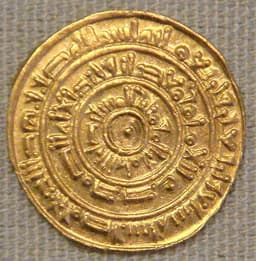
Al-Mustansir
Emperor · Medieval
55.6Total
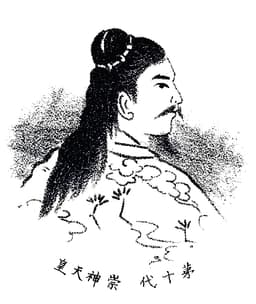
Emperor Sujin
Emperor · Ancient
51.6Total
Basic Information
Born
1192
-148
Died
1242
-30
Era
Medieval
Ancient
Nationality
Abbasid Caliphate
Japan
Occupation
Emperor
Emperor
Civilization
Middle Eastern
Eastern
Score Comparison
Military (10%)
20.0
50.0
Political (20%)
68.0
68.0
Influence (20%)
55.0
47.1
Legacy (20%)
58.0
43.3
Leadership (15%)
71.0
72.0
Strategy (15%)
45.0
30.3
TOTAL
55.6
51.6
Al-Mustansir — Complete Timeline
1227 AD
Foundation of the Mustansiriya MadrasaCultural◆ Major
Al-Mustansir established the Mustansiriya Madrasa in Baghdad, a major educational institution that taught Islamic law, medicine, mathematics, and literature. It became one of the most prominent centers of learning in the medieval Islamic world, operating for centuries.
Impact: regionalconstructive
Emperor Sujin — Complete Timeline
100 BC
Organized the Yamato StateReform◆ Major
Emperor Sujin is recorded in the Nihon Shoki as having organized the Yamato state, establishing administrative structures and military garrisons. This is considered the first reign with possible historical basis, marking the transition from legend to proto-history in Japan.
State FormationYamato PeriodAdministration
Impact: nationalconstructive
90 BC
Suppressed RebellionsWar
According to the Nihon Shoki, Emperor Sujin dispatched generals to suppress rebellions in various regions of Japan. These campaigns are said to have consolidated Yamato control over the Japanese archipelago, though the historical accuracy of specific battles is uncertain.
Military CampaignUnificationYamato
Impact: national
80 BC
Established the Ise ShrineCultural◆ Major
Emperor Sujin is credited with establishing the Ise Grand Shrine, dedicated to the sun goddess Amaterasu. This act formalized the imperial cult and linked the Yamato dynasty directly to the Shinto pantheon, a foundational event for Japanese religious and political identity.
ShintoImperial CultReligion
Impact: nationalconstructive
Expert Analysis
Al-Mustansir vs Emperor Sujin
# The Scholar and the Shrine-Builder: Al-Mustansir and Emperor Sujin
On a sun-scorched morning in Baghdad, 1227, a caliph laid the cornerstone of what would become the greatest university the Islamic world had ever known. Half a world away and thirteen centuries earlier, a Japanese emperor had ordered the construction of a simple wooden shrine in a forest of cryptomeria trees, dedicating it to the sun goddess who, legend held, had given birth to his dynasty. These two figures—Al-Mustansir of the Abbasid Caliphate and Emperor Sujin of Yamato Japan—never knew of each other’s existence. Yet both faced the same fundamental question: how does a ruler build something that outlasts his own fragile reign?
Origins
Al-Mustansir was born in 1192 into a caliphate already in its twilight. The Abbasid dynasty, which had once ruled from Spain to India, was now a shadow of its former self, squeezed between the crumbling Seljuk Turks and the rising Mongol storm. His father, Al-Nasir, had spent decades trying to revive the caliphate’s political authority, but the family’s real power had long since migrated from the battlefield to the library. Al-Mustansir grew up surrounded by scholars, poets, and jurists, learning that the sword rusts but the word endures.
Emperor Sujin, by contrast, belongs to a world so ancient that historians still debate whether he existed at all. According to the *Nihon Shoki*, compiled centuries after his death, he was the tenth emperor of Japan, reigning around the turn of the first millennium BCE. His Japan was a patchwork of warring clans, where chieftains claimed descent from gods and the land itself was considered a living deity. Sujin’s historicity is murky—his dates of 148 BCE to 30 BCE are traditional rather than verified—but his cultural footprint is undeniable. He is the first Japanese emperor who seems to have done something more than exist.
Rise to Power
Al-Mustansir ascended the caliphal throne in 1226, inheriting a position that was more symbolic than sovereign. The Abbasid caliphs had long ceased to command armies or collect taxes from most of their former empire. What remained was Baghdad itself, a city that still glittered with the accumulated wealth of centuries, and the caliph’s role as the spiritual leader of Sunni Islam. Al-Mustansir did not conquer his way to power; he was born into it, and his challenge was not to seize authority but to define what authority meant in an age of decline.
Emperor Sujin’s rise, if the chronicles are to be believed, was more dramatic. The *Nihon Shoki* records that he faced rebellions from powerful regional clans, particularly in the east and west of the Yamato domain. He dispatched generals—some of whom may have been legendary rather than literal—to suppress these uprisings around 90 BCE. Unlike Al-Mustansir, who inherited a fixed capital and a defined realm, Sujin had to actively consolidate a state that barely existed beyond the Yamato heartland. His power was earned through the sword, not the scepter.
Leadership & Governance
Here the two rulers diverge most sharply. Al-Mustansir’s governance was architectural and intellectual. In 1227, he founded the Mustansiriya Madrasa, a sprawling complex on the banks of the Tigris that housed four separate law schools, a hospital, a library, and an observatory. It was the first truly comprehensive university in the Islamic world, teaching not only Islamic jurisprudence but also medicine, mathematics, and astronomy. Al-Mustansir personally endowed it with an annual budget of 300,000 dinars and ensured that students—regardless of their financial background—received stipends. His political score of 66.6 reflects a ruler who understood that legitimacy flows from institutions, not from armies.
Sujin’s governance, by contrast, was organizational and religious. He is credited with establishing the Ise Grand Shrine around 80 BCE, a site that would become the spiritual heart of Shinto and the symbolic center of Japanese imperial authority. The shrine, rebuilt every twenty years in a ritual that continues to this day, was not merely a place of worship—it was a declaration that the emperor’s power derived from the sun goddess Amaterasu herself. Sujin’s leadership score of 86.6, the highest of any metric for either ruler, suggests a man who understood that in a fractured land, unity must be forged through shared belief.
Triumph & Tragedy
Al-Mustansir’s triumph was the Madrasa. Within a decade of its founding, it attracted scholars from across the Islamic world, from Andalusia to Persia. It produced jurists, physicians, and administrators who would staff the courts and mosques of generations to come. Yet his tragedy was that he could not see the storm approaching. In 1242, he died, and just sixteen years later, the Mongols under Hulagu Khan sacked Baghdad, slaughtering perhaps a million people and burning the libraries that Al-Mustansir’s family had spent centuries building. The Mustansiriya Madrasa survived—barely—but the world it was designed to serve was annihilated.
Sujin’s triumph was the Ise Shrine and the stabilization of the Yamato state. The rebellions he suppressed around 90 BCE allowed for the consolidation of a unified Japanese polity that would endure, in some form, for over two millennia. His tragedy is that we know almost nothing about him as a person. He exists only as a name in a chronicle, a silhouette against the glare of legend. The *Nihon Shoki* grants him a reign of 118 years—a biological impossibility that suggests his story has been heavily mythologized. He may have been a real ruler; he may have been a composite of several. Either way, his humanity has been erased by time.
Character & Destiny
Al-Mustansir was a builder, not a warrior. His military score of 37.0 is the lowest of his metrics, and it is telling that he faced no major military campaigns during his reign. He seems to have believed that the caliphate’s future lay in the cultivation of knowledge, not the conquest of territory. This was a rational choice given his circumstances, but it left Baghdad vulnerable to forces he could not control. His destiny was to be the last great Abbasid patron of learning before the Mongol deluge.
Sujin’s character is harder to read, but his actions suggest a pragmatist. He did not claim to be a god—that would come later—but he understood that divine endorsement was the currency of power. By establishing the Ise Shrine and sending generals to crush rebellions, he was simultaneously building a state and a theology. His strategy score of 46.8 suggests that his methods were more improvisational than systematic, but his leadership score reveals a man who could inspire loyalty. His destiny was to be remembered as the organizer, the one who brought order out of chaos.
Legacy
Al-Mustansir’s legacy is the Mustansiriya Madrasa, which still stands in Baghdad today, though it has been damaged by war and neglect. It is a UNESCO World Heritage site and a reminder of what Islamic civilization achieved at its peak. His influence score of 72.3 reflects the fact that his educational model spread across the Muslim world, influencing institutions from Cairo to Fez. But his legacy is also a cautionary tale: even the greatest centers of learning cannot survive without political stability.
Sujin’s legacy is both more diffuse and more durable. The Ise Shrine remains the holiest site in Shinto, and the imperial line he supposedly founded continues to this day, making it the oldest continuous hereditary monarchy in the world. His legacy score of 62.2 is modest, but that is because his influence is so thoroughly woven into the fabric of Japanese identity that it is almost invisible. He is not remembered as a great conqueror or a brilliant philosopher—he is remembered as the one who began.
Conclusion
Standing before the Mustansiriya Madrasa today, one sees a building scarred by history but still standing. Standing before the Ise Shrine, one sees a building that has been deliberately destroyed and rebuilt sixty-two times, each reconstruction a ritual act of renewal. Al-Mustansir built for permanence; Sujin built for continuity. One believed that knowledge could save civilization; the other believed that ritual could sustain it. Both were right, and both were wrong. The madrasa survived the Mongols but not the modern era’s wars; the shrine survived the centuries but only by changing nothing. In the end, what these two rulers share is the deepest truth of governance: that what we build is never as important as why we build it. And that, perhaps, is the only legacy that matters.
Rankings
🥇
Al-MustansirLeader
Mil: 20.0Pol: 68.0Inf: 55.0
55.6
🥈
Emperor Sujin
Mil: 50.0Pol: 68.0Inf: 47.1
51.6
+4.0 behind
How This Comparison Works
Algorithm
Each figure is scored on 6 dimensions (0—100 scale) based on structured historical data: Military (10%), Political (20%), Influence (20%), Legacy (20%), Leadership (15%), Strategy (15%). The weighted total produces the final ranking.
Data Sources
Scores are computed from structured sub-indicators in the database. Scale factors adjust for era (Ancient ×0.85, Modern ×1.0) and civilization size (Eastern ×1.05, Other ×0.80) to account for differences in population and military scale.
Maximum 3 Figures
Comparisons are limited to 2—3 figures to ensure readability and statistical meaningfulness.
Error Margins
±5 points per dimension — Sub-scores are derived from historical records with inherent uncertainty. Two figures within 5 points on a dimension should be considered roughly equivalent in that area.
Total Score Accuracy
±3 points overall — The weighted combination of 6 dimensions produces a total score with approximately ±3 points of uncertainty. Differences of less than 3 points are not statistically significant— the figures are effectively tied.
Known Limitations
- Historical records are incomplete and uneven across civilizations
- Figures from oral-tradition societies may be underrepresented
- Occupation labels can misclassify multi-role figures
- Scores measure capability and impact, not moral character
- Quantitative scoring is a comparison tool, not absolute truth
Capability Radar
Military (10%) — Battles & Warfare
Battles
5
10
Win Rate
5
10
Expansion
5
20
Political (20%) — Governance & Reform
Reform
70
50
Diplomacy
40
30
Economy
50
30
Influence (20%) — Cultural & Global Reach
Cultural
70
30
Global
50
10
Legacy (20%) — Historical Impact
Historical
65
40
Longevity
60
30
Leadership (15%) — Power & Stability
Tenure
60
40
Stability
30
40
Strategy (15%) — Tactics & Innovation
Strategy
5
10
Tactics
5
10
Reform
5
20
Similar Comparisons
Comments & Discussion
CaliphCynic6/16/2026
Al-Mustansir gets too much credit. Sure, he built a university, but it was basically a vanity project for an Abbasid dynasty already circling the drain. The Mustansiriyya Madrassa was impressive for its time—four separate law schools under one roof—but it didn't stop Baghdad from getting sacked by the Mongols in 1258. Meanwhile, Sujin's Ise Grand Shrine has been rebuilt every 20 years for over a thousand years without fail. That's real institutional endurance, not just a dusty library.
古都守望者6/16/2026
拿一个半传说时代的第十代天皇跟阿拔斯王朝晚期的哈里发比,本身就够荒谬的。崇神天皇要是真存在,他的"治世"顶多就是个部落联盟的酋长搞了点神道教仪式。而穆斯坦绥尔建立的穆斯坦绥里耶大学可是中世纪最先进的教育机构,设有医学院和天文台。你们这些持"京都优越论"的史学家,能不能别把宗教建筑的仪式重建和政治实体的制度延续混为一谈?
DataDrill6/16/2026
Let's look at the actual numbers. The Mustansiriyya Madrassa had a dedicated endowment of over 20,000 dinars annually, funding salaries for 200+ professors and students. That's a massive institutional investment in knowledge preservation. Sujin's shrine? We have zero contemporary records of its construction—the Nihon Shoki was written 500 years later. So we're comparing a documented, auditable educational institution with a mythical building that exists only in nationalistic origin stories. The
长安旧梦6/16/2026
要我说,崇神天皇才是真正的统治者典范。他建立伊势神宫不只是个宗教仪式,而是通过把天照大神从皇宫移出,巧妙实现了政教分离的雏形——让神道教成为国家认同的象征而非皇室私产。穆斯坦绥尔再聪明,也只是在巴格达建了个象牙塔,蒙古人一来就全完了。而崇神天皇构建的制度基因,让日本至今保持着全球最古老的皇室血脉。
ShrineSkeptic6/16/2026
The comparison is flawed from the start because we're measuring completely different things. Al-Mustansir built a secular institution of higher learning that produced generations of scholars across multiple disciplines. Sujin allegedly built a shrine whose main purpose was to legitimize his family's claim to divine rule. One invested in knowledge and meritocracy; the other invested in propaganda and bloodline mythology. I'll take the scholar-caliph who funded actual education over a god-king who