Loading...
Al-Mustansir vs Dantidurga
Dantidurga leads by 3.1 pts · 2 figures compared
…
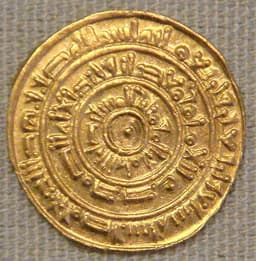
Al-Mustansir
Emperor · Medieval
55.6Total
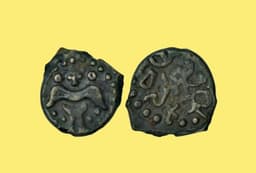
Dantidurga
Emperor · Medieval
58.7Total
Basic Information
Born
1192
735
Died
1242
756
Era
Medieval
Medieval
Nationality
Abbasid Caliphate
India
Occupation
Emperor
Emperor
Civilization
Middle Eastern
Indian
Score Comparison
Military (10%)
20.0
67.5
Political (20%)
68.0
68.0
Influence (20%)
55.0
56.4
Legacy (20%)
58.0
50.0
Leadership (15%)
71.0
65.7
Strategy (15%)
45.0
52.5
TOTAL
55.6
58.7
Al-Mustansir — Complete Timeline
1227 AD
Foundation of the Mustansiriya MadrasaCultural◆ Major
Al-Mustansir established the Mustansiriya Madrasa in Baghdad, a major educational institution that taught Islamic law, medicine, mathematics, and literature. It became one of the most prominent centers of learning in the medieval Islamic world, operating for centuries.
Impact: regionalconstructive
Dantidurga — Complete Timeline
753 AD
Founding of the Rashtrakuta DynastyPolitical Action
Dantidurga overthrew his overlord, the Chalukya king Kirtivarman II, in a coup. He established the Rashtrakuta dynasty as the dominant power in the Deccan, with Manyakheta as his capital. This marked the beginning of a new imperial era.
Impact: regionalconstructive
754 AD
Performance of the Hiranyagarbha RitualCultural
Dantidurga performed the Hiranyagarbha (golden womb) ritual, a Vedic ceremony that symbolically rebirthed him as a Kshatriya. This legitimized his rule by claiming a higher caste status, as the Rashtrakutas were originally of humble origin.
Impact: nationalconstructive
755 AD
Conquest of MalwaWar◆ Major
Dantidurga led a military campaign into Malwa, defeating the Gurjara-Pratihara ruler Nagabhata I. He annexed the region, expanding Rashtrakuta territory northward. This victory established Rashtrakuta influence in central India.
Impact: regionaldestructive
Expert Analysis
Al-Mustansir vs Dantidurga
### The Scholar and the Sword: Al-Mustansir and Dantidurga
In the year 1227, while the Mongol hordes were sharpening their blades on the steppes of Asia, the Abbasid Caliph Al-Mustansir laid the first brick of a different kind of fortress in Baghdad. His Mustansiriya Madrasa would become a sanctuary of ink and parchment, a place where Islamic law, medicine, and astronomy were debated under vaulted ceilings. But just five centuries earlier and a thousand miles to the southeast, another emperor was building his legacy not with libraries, but with blood. Dantidurga, a chieftain of obscure origin, had just shattered the Chalukya dynasty and performed a Vedic ritual that symbolically rebirthed him as a Kshatriya warrior. One man sought to conquer the mind; the other, the earth. What drove them to such different paths, and why did their empires meet such divergent fates?
### Origins
Al-Mustansir was born into the twilight of a grand dynasty. The Abbasid Caliphate, which had once ruled from Spain to Persia, was by 1192 a shadow of its former self. Its caliphs were figureheads, trapped in Baghdad while Mamluk generals and Turkish warlords held the real power. Al-Mustansir inherited a throne that was more a symbol than a sword, a world where the caliph’s authority rested on religious legitimacy, not military might. His upbringing was steeped in the intricate politics of court intrigue and the preservation of Islamic scholarship—a world where a caliph’s pen could be mightier than any sword, because the swords were held by others.
Dantidurga’s world was the opposite. In the Deccan plateau of 8th-century India, power was raw, physical, and up for grabs. He was likely a feudatory chieftain of the Chalukyas of Badami, a dynasty that had ruled for two centuries but was now rotting from within. His origins are murky—some inscriptions claim he was of the Rashtrakuta clan, a farming and warrior community that had long served the Chalukyas. There was no grand legacy to inherit; only the opportunity to seize one. The era was one of dynastic flux, where the Gurjara-Pratiharas in the north and the Pallavas in the south were all jostling for supremacy. Dantidurga’s formative years were spent watching a decaying overlord, learning that loyalty was a luxury only the strong could afford.
### Rise to Power
Al-Mustansir’s ascent was a matter of bloodline, not battlefield. He became caliph in 1226, after the death of his father, Al-Zahir. The transition was smooth, almost ceremonial. His path to power required no rebellion, no coup—only the patience to outlive his predecessor. The real test was not winning the throne, but holding it without an army. His power came from his name, his lineage, and his ability to navigate the treacherous currents of Baghdad’s political elite, where the caliph was a pawn of the military class.
Dantidurga’s rise was a violent break with the past. In 753, he orchestrated a coup against his overlord, the Chalukya king Kirtivarman II. This was not a gradual ascent but a sudden, decisive stroke. He did not inherit a throne; he carved one out of the corpse of a dynasty. The following year, in 754, he performed the Hiranyagarbha ritual—a Vedic ceremony where a golden womb was constructed, and the king was symbolically reborn as a Kshatriya, the warrior caste. This was a masterstroke of political theater, legitimizing his rule in the eyes of a society obsessed with caste and ritual purity. He was not just a conqueror; he was a self-made aristocrat, rewriting his own genealogy.
### Leadership & Governance
As caliph, Al-Mustansir governed through institutions, not armies. His great achievement, the Mustansiriya Madrasa founded in 1227, was a university that taught the four Sunni schools of law, along with medicine, mathematics, and literature. It was open to all, with dormitories for students and a library that rivaled any in the Islamic world. His leadership was that of a patron, not a general. He understood that in a fragmented empire, the caliph’s role was to be the guardian of knowledge and faith, the moral compass in a world of swords. His political wisdom lay in avoiding conflict, in bending to the power of the Mamluks and the Ayyubids, preserving the caliphate as a spiritual institution even as its temporal power withered.
Dantidurga ruled through conquest and ritual. After founding the Rashtrakuta dynasty in 753, he launched a campaign into Malwa in 755, defeating the Gurjara-Pratihara ruler Nagabhata I and annexing the region. His governance was militaristic, expansionist, and personal. He led his armies from the front, and his legitimacy rested on victory, not tradition. But his political score (52.3) suggests he was less a builder of systems than a conqueror. He did not found universities or libraries; he founded a dynasty. His leadership was the raw charisma of a warlord, not the subtle craft of a statesman.
### Triumph & Tragedy
Al-Mustansir’s triumph was the Mustansiriya Madrasa, a beacon of learning that would survive for centuries. It was his answer to a world descending into chaos, a monument to the idea that the mind could outlast empires. But his tragedy was that he could not stop the coming storm. Just sixteen years after his death, in 1258, the Mongols would sack Baghdad, slaughter its scholars, and burn the libraries he had cherished. His legacy of ink was drowned in blood.
Dantidurga’s triumph was the creation of the Rashtrakuta dynasty, which would go on to rule much of western and central India for over two centuries. His defeat of the Chalukyas was a seismic shift in Indian politics. But his tragedy was that he died young, in 756, just three years after his greatest victory. He never saw the full flowering of his empire, never built the great temples or patronized the arts that later Rashtrakuta kings would. He was a founder, not a finisher.
### Character & Destiny
Al-Mustansir’s character was shaped by his era’s impotence. He was cautious, intellectual, and deeply conservative—a man who believed that the caliphate’s salvation lay in preserving its traditions, not in conquering new lands. His destiny was to be a caretaker of a dying institution, a librarian in a world of barbarians. He could not have been a conqueror; the times did not permit it, and his personality did not crave it.
Dantidurga was a product of a world that rewarded audacity. He was ambitious, ruthless, and ritually shrewd. His performance of the Hiranyagarbha ritual shows a man who understood that power was not just about swords, but about symbols. He was a gambler who staked everything on a coup and won. His destiny was to be a founder, a breaker of old chains, but also a man who burned too brightly and too briefly.
### Legacy
Al-Mustansir’s legacy is the Mustansiriya Madrasa, which survived the Mongol sack and remained a center of learning into the Ottoman era. He is remembered as a scholar-caliph, a man who chose books over battles in an age of iron. His influence score of 72.3 reflects his impact on Islamic education, but his military score (37.0) is a stark reminder of his powerlessness.
Dantidurga’s legacy is the Rashtrakuta dynasty itself, which produced the magnificent Kailasa temple at Ellora and ruled for over 200 years. He is remembered as a founder, a man who turned a coup into an empire. His influence score of 73.4 is slightly higher than Al-Mustansir’s, but his total score (57.2) is lower, perhaps because his achievements were more ephemeral, tied to a single dynasty that would eventually fall.
### Conclusion
One built a library; the other built a dynasty. Al-Mustansir’s ink has outlasted Dantidurga’s swords, but both men were prisoners of their times. The caliph could not stop the Mongols; the warlord could not stop death. Their stories remind us that history rewards both the scholar and the soldier, but in different currencies. Al-Mustansir bought time for knowledge; Dantidurga bought space for an empire. Which is more valuable? The answer depends on whether you are reading this in a library, or defending your home from invaders.
Rankings
🥇
DantidurgaLeader
Mil: 67.5Pol: 68.0Inf: 56.4
58.7
🥈
Al-Mustansir
Mil: 20.0Pol: 68.0Inf: 55.0
55.6
+3.1 behind
How This Comparison Works
Algorithm
Each figure is scored on 6 dimensions (0—100 scale) based on structured historical data: Military (10%), Political (20%), Influence (20%), Legacy (20%), Leadership (15%), Strategy (15%). The weighted total produces the final ranking.
Data Sources
Scores are computed from structured sub-indicators in the database. Scale factors adjust for era (Ancient ×0.85, Modern ×1.0) and civilization size (Eastern ×1.05, Other ×0.80) to account for differences in population and military scale.
Maximum 3 Figures
Comparisons are limited to 2—3 figures to ensure readability and statistical meaningfulness.
Error Margins
±5 points per dimension — Sub-scores are derived from historical records with inherent uncertainty. Two figures within 5 points on a dimension should be considered roughly equivalent in that area.
Total Score Accuracy
±3 points overall — The weighted combination of 6 dimensions produces a total score with approximately ±3 points of uncertainty. Differences of less than 3 points are not statistically significant— the figures are effectively tied.
Known Limitations
- Historical records are incomplete and uneven across civilizations
- Figures from oral-tradition societies may be underrepresented
- Occupation labels can misclassify multi-role figures
- Scores measure capability and impact, not moral character
- Quantitative scoring is a comparison tool, not absolute truth
Capability Radar
Military (10%) — Battles & Warfare
Battles
5
60
Win Rate
5
65
Expansion
5
65
Political (20%) — Governance & Reform
Reform
70
45
Diplomacy
40
55
Economy
50
50
Influence (20%) — Cultural & Global Reach
Cultural
70
40
Global
50
30
Legacy (20%) — Historical Impact
Historical
65
55
Longevity
60
50
Leadership (15%) — Power & Stability
Tenure
60
40
Stability
30
45
Strategy (15%) — Tactics & Innovation
Strategy
5
60
Tactics
5
55
Reform
5
40
Similar Comparisons
Comments & Discussion
**The Caliph's Cathedral Build6/16/2026
Al-Mustansir understood something crucial: when your empire is crumbling, you build cathedrals of the mind. That madrasa wasn't just a school; it was a political statement. By investing in knowledge production, he created a bureaucracy loyal to Baghdad, not to Turkic warlords. The Mongols eventually demolished his walls, but al-Mustansir's intellectual infrastructure survived—the madrasa system became the template for Islamic education for centuries. Dantidurga built with stone and blood. Guess
**广场上的数据狂**6/16/2026
别被“求知与征服”的漂亮对比迷惑了。事实是:al-Mustansir在位22年,留下的是一座几百年后就被蒙古人烧成灰的建筑;Dantidurga在位约15年,却彻底颠覆了德干高原的权力结构。一个玩学术政治的学者型统治者,一个在铁与火中重塑种姓制度的军事天才。我问你,哪个帝国真正改变了历史进程?答案显而易见。
**The Battlefield Scholar**6/16/2026
Here's what both analyses get wrong: Dantidurga's Vedic ritual wasn't just about caste legitimacy—it was a declaration of war on the Chalukya social order. By performing the ashvamedha horse sacrifice, he claimed sovereignty over the entire subcontinent's ritual hierarchy. Meanwhile, al-Mustansir's madrasa wasn't just about learning; it was a spy network. Every scholar graduated with a debt to the caliph. Both men knew that power needs performance. Dantidurga used horses and fire; al-Mustansir u
**黄沙里的逻辑学家**6/16/2026
最讽刺的是这个“对比”:一个在文明巅峰期建图书馆,一个在文明衰退期撕碎种姓。但你都放在一起比较——这不是历史分析,是鸡汤科普。Al-Mustansir的madrasa培养的是宗教法学家,不是科学家;Dantidurga的血祭仪式宣扬的是暴力合法化,不是社会革命。真正的问题是:为什么今天我们能记住一个建筑家的名字,却忘了那个用剑重塑印度中世纪的征服者?历史记忆终究是权力的史官。
**The Skeptic's Scalpel**6/16/2026
Let's talk about survivorship bias in this comparison. Al-Mustansir's madrasa survived because it was made of paper—and because the Mongols, ironically, knew how to count. They used its astronomical instruments. Dantidurga's empire dissolved because it was made of conquest without administration. His grandson Govinda III couldn't hold it together. So really, this isn't about "scholar vs. sword." It's about which type of power leaves physical traces that future historians romanticize. Give me Dan