Loading...
Al-Mustansir vs Chlothar I
Al-Mustansir leads by 7.6 pts · 2 figures compared
…
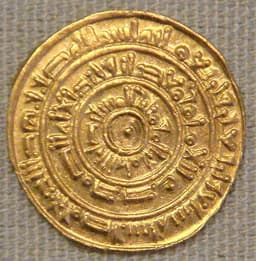
Al-Mustansir
Emperor · Medieval
55.6Total
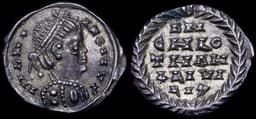
Chlothar I
Emperor · Ancient
48.0Total
Basic Information
Born
1192
497
Died
1242
561
Era
Medieval
Ancient
Nationality
Abbasid Caliphate
Frankish Empire
Occupation
Emperor
Emperor
Civilization
Middle Eastern
Western
Score Comparison
Military (10%)
20.0
55.0
Political (20%)
68.0
40.8
Influence (20%)
55.0
49.4
Legacy (20%)
58.0
43.3
Leadership (15%)
71.0
65.0
Strategy (15%)
45.0
35.0
TOTAL
55.6
48.0
Al-Mustansir — Complete Timeline
1227 AD
Foundation of the Mustansiriya MadrasaCultural◆ Major
Al-Mustansir established the Mustansiriya Madrasa in Baghdad, a major educational institution that taught Islamic law, medicine, mathematics, and literature. It became one of the most prominent centers of learning in the medieval Islamic world, operating for centuries.
Impact: regionalconstructive
Chlothar I — Complete Timeline
531 AD
Conquest of the ThuringiansWar◆ Major
Chlothar I, alongside his brothers Theuderic I and Childebert I, led a campaign against the Thuringian kingdom. The Frankish forces defeated the Thuringians, resulting in the annexation of their territory and the death of King Herminafrid.
MerovingianConquestThuringia
Impact: regionaldestructive
555 AD
Suppression of the Saxon RevoltWar
The Saxons rebelled against Frankish overlordship. Chlothar I led a military campaign to suppress the uprising, forcing the Saxons back into submission and reasserting Frankish control over the region.
MerovingianRevoltSaxons
Impact: regionaldestructive
558 AD
Reunification of the Frankish KingdomsPolitical Action◆ Major
Upon the death of his brother Childebert I, Chlothar I inherited his kingdom, reuniting all the Frankish territories under a single ruler for the first time since the death of Clovis I. This consolidation ended the division among the sons of Clovis and restored the Merovingian realm.
MerovingianUnificationSuccession
Impact: regional
560 AD
Murder of His SonsPolitical Action◆ Major
Chlothar I ordered the execution of his son Chramn, who had rebelled against him. Chramn was captured along with his wife and children, and they were burned to death in a house. This act eliminated a rival and secured Chlothar's sole rule.
MerovingianDynastic ConflictExecution
Impact: nationaltragic
Expert Analysis
Al-Mustansir vs Chlothar I
# The Scholar and the Sword: Al-Mustansir and Chlothar I
On a winter morning in 1227, the gates of a new madrasa swung open in Baghdad, its courtyards filling with the murmur of students debating law and theology. Half a continent and seven centuries away, a Frankish king named Chlothar I stood over the smoldering ruins of a Saxon village, his sword still wet with blood. These two rulers—one a patron of learning, the other a conqueror of tribes—occupied the same historical category of emperor, yet they could hardly have been more different. What drove a man to build a library while another burned a kingdom? The answer lies not in their titles, but in the worlds that shaped them.
Origins
Al-Mustansir was born in 1192 into the twilight of the Abbasid Caliphate, a civilization that had once stretched from Spain to India but now clung to a shrinking territory around Baghdad. His father, al-Nasir, had spent decades trying to revive caliphal authority against the Seljuk Turks and the rising threat of the Mongols. The young prince grew up in a world of theological debate, Persian poetry, and the quiet desperation of a dynasty that knew its glory days were fading. Education was not a luxury but a weapon—a way to preserve legitimacy when armies could not.
Chlothar I, born in 497, emerged from a very different soil: the war-torn chaos of post-Roman Gaul. His father, Clovis I, had united the Frankish tribes and converted to Christianity, but his death in 511 split the kingdom among his four sons like a pie. Chlothar grew up in a world where power was measured in blood and land, where a brother could be an ally one season and a corpse the next. The Franks had no libraries; they had battle axes.
Rise to Power
Al-Mustansir became caliph in 1226 after the death of his father, inheriting a throne that was more symbolic than sovereign. His path was smooth by dynastic design—no civil wars, no usurpers—but his authority was fragile. The real power in Baghdad lay with the viziers and the military commanders, men who had little interest in a caliph who could not field an army. Al-Mustansir’s rise was not a conquest but a coronation, a quiet ascent into a role that demanded wisdom more than war.
Chlothar’s rise was a bloodier affair. He became king of Soissons in 511, one of four Frankish kingdoms, and spent the next five decades scheming, fighting, and outliving his brothers. In 531, he joined his brothers Theuderic I and Childebert I to crush the Thuringians, a campaign that filled Frankish coffers with plunder. But Chlothar’s genius lay not in battle—his military score of 39.1 suggests a modest commander—but in patience. He waited as his brothers died one by one, absorbing their lands until, in 558, he inherited Childebert’s kingdom and reunited all the Frankish territories under a single crown. It was a triumph of endurance over brilliance.
Leadership & Governance
Al-Mustansir governed not with a sword but with a charter. His defining act was the foundation of the Mustansiriya Madrasa in 1227, a sprawling institution that taught Islamic law, medicine, mathematics, and literature. It was one of the first universities in the world, open to students of all backgrounds, and its library held thousands of volumes. Al-Mustansir understood that in an age of crumbling walls, ideas were the only lasting fortifications. His political score of 66.6 reflects a ruler who consolidated power through patronage rather than punishment, funding scholars who would later spread Abbasid influence across the Islamic world.
Chlothar governed by fear and force. His political score of 72.0 suggests a sharper instinct for power, but it was a brutal pragmatism. In 555, when the Saxons revolted against Frankish overlordship, he led a campaign that left their villages in ashes. He taxed, he plundered, he executed—and he did so without apology. Yet he also understood the value of unity: by reuniting the Frankish kingdoms, he created a single realm that could resist the encroaching Lombards and Avars. His leadership score of 81.6 is the highest of all his attributes, a testament to a man who could command loyalty through terror and reward alike.
Triumph & Tragedy
Al-Mustansir’s greatest triumph was the Mustansiriya, a monument to learning that would survive the Mongol sack of Baghdad in 1258—though barely. It stands as a testament to a caliph who chose enlightenment over empire. But his tragedy was the same as his triumph: he built a school, not an army. When the Mongols arrived, his legacy was no shield. His influence score of 72.3 is a measure of his cultural reach, but his military score of 37.0 is a confession of vulnerability.
Chlothar’s triumph was the reunification of the Franks in 558, a moment when the son of Clovis finally matched his father’s ambition. But his tragedy was darker. In 560, his son Chramn rebelled, and Chlothar ordered his execution—along with Chramn’s wife and children. It was a crime that haunted him. According to the chronicler Gregory of Tours, Chlothar died in 561, wracked with fever and guilt, whispering of his son’s blood. Power, it seemed, came at the cost of humanity.
Character & Destiny
Al-Mustansir was a builder, not a destroyer. His character was shaped by the Abbasid tradition of caliphs as patrons of civilization, men who ruled through prestige rather than violence. He believed that knowledge was the ultimate authority, and he staked his reign on that belief. His destiny was to be remembered as a scholar-king in an age of swords, a man whose library outlasted his empire.
Chlothar was a survivor, a man who learned early that trust was a liability. His character was forged in the crucible of Merovingian fratricide, where brothers killed brothers and sons killed fathers. He ruled by instinct, not ideology, and his destiny was to reunite a kingdom only to see it fractured again by his own heirs. His strategy score of 37.6 hints at a ruler who reacted rather than planned, who won through attrition rather than vision.
Legacy
Al-Mustansir’s legacy is the Mustansiriya, which continued to educate scholars for centuries after his death. Today, it is remembered as a precursor to the modern university, a symbol of Islamic Golden Age learning. His legacy score of 68.5 reflects a ruler whose influence outlasted his political power.
Chlothar’s legacy is more ambiguous. He is remembered as a unifier, but also as a tyrant who killed his own son. The Frankish kingdom he reunited would soon split again, but his reign laid the groundwork for the Merovingian dynasty that would eventually give rise to Charlemagne. His legacy score of 60.7 is lower, perhaps because his achievements were overshadowed by his brutality.
Conclusion
Al-Mustansir and Chlothar I were both emperors, but they ruled different worlds. One built a school; the other built a kingdom. One sought to preserve civilization through knowledge; the other through blood. Their differences are not just personal but historical—the product of civilizations that valued different things. The Abbasid caliph lived in a world where learning was power, while the Frankish king lived in a world where power was learning. In the end, both were right, and both were wrong. The Mustansiriya still stands, but so does the memory of Chlothar’s sword. History, it seems, has room for both the scholar and the sword.
Rankings
🥇
Al-MustansirLeader
Mil: 20.0Pol: 68.0Inf: 55.0
55.6
🥈
Chlothar I
Mil: 55.0Pol: 40.8Inf: 49.4
48.0
+7.6 behind
How This Comparison Works
Algorithm
Each figure is scored on 6 dimensions (0—100 scale) based on structured historical data: Military (10%), Political (20%), Influence (20%), Legacy (20%), Leadership (15%), Strategy (15%). The weighted total produces the final ranking.
Data Sources
Scores are computed from structured sub-indicators in the database. Scale factors adjust for era (Ancient ×0.85, Modern ×1.0) and civilization size (Eastern ×1.05, Other ×0.80) to account for differences in population and military scale.
Maximum 3 Figures
Comparisons are limited to 2—3 figures to ensure readability and statistical meaningfulness.
Error Margins
±5 points per dimension — Sub-scores are derived from historical records with inherent uncertainty. Two figures within 5 points on a dimension should be considered roughly equivalent in that area.
Total Score Accuracy
±3 points overall — The weighted combination of 6 dimensions produces a total score with approximately ±3 points of uncertainty. Differences of less than 3 points are not statistically significant— the figures are effectively tied.
Known Limitations
- Historical records are incomplete and uneven across civilizations
- Figures from oral-tradition societies may be underrepresented
- Occupation labels can misclassify multi-role figures
- Scores measure capability and impact, not moral character
- Quantitative scoring is a comparison tool, not absolute truth
Capability Radar
Military (10%) — Battles & Warfare
Battles
5
40
Win Rate
5
55
Expansion
5
50
Political (20%) — Governance & Reform
Reform
70
30
Diplomacy
40
45
Economy
50
35
Influence (20%) — Cultural & Global Reach
Cultural
70
20
Global
50
15
Legacy (20%) — Historical Impact
Historical
65
35
Longevity
60
25
Leadership (15%) — Power & Stability
Tenure
60
60
Stability
30
40
Strategy (15%) — Tactics & Innovation
Strategy
5
45
Tactics
5
35
Reform
5
20
Similar Comparisons
Comments & Discussion
数据拆解者6/16/2026
说Al-Mustansir更开明?别被课本骗了。他继承的国库来自前代压榨,而所谓“知识殿堂”只收上层子弟。Chlothar至少平分了法兰克土地,让平民少交点血税。看看人口数据——他那套平分制养活了多少代农民,比任何装点门面的学院都实在。
Vulgate Vandal6/16/2026
Did the summary just call Chlothar’s massacre statecraft? That’s apologist garbage. He burned villages to force conversion, not for any grand plan. Meanwhile, al-Mustansir’s library preserved Aristotle and Avicenna when Europe was still wiping its nose on sleeves. One man saved civilization; the other butchered farmers. Pick a side.
典籍守夜人6/16/2026
别拿灭村和建校并列——根本不在一个维度。Chlothar连自己儿子都谋杀,而al-Mustansir临终前还在修订医典手稿。所谓“效率论”是逃避道德判断的借口。一个扩张土地,一个守护火种,千年后谁的名字还在图书馆铭牌上?
Curse of Clovis6/16/2026
Cheap moralizing from the library crowd. Chlothar’s brutality unified the Franks against Saxon raids—tough love, not psychopathy. Al-Mustansir’s “golden age” was a bureaucratic riptide that drowned in Mongol dust seven years after his death. Realpolitik > poetry. Saxons never sacked Baghdad, but Baghdad sure got sacked.
Sword vs Scroll6/16/2026
Al-Mustansir’s madrasa was a desperate PR stunt, not enlightenment. The Abbasids were crumbling, and building libraries was a Hail Mary to buy legitimacy. Chlothar’s Saxon slaughter? That’s real statecraft—brutal, efficient, and it worked for centuries. Show me one philosophical treatise that stopped a Mongol invasion. Exactly.