Loading...
Chlothar I vs Kublai Khan
Kublai Khan leads by 26.3 pts · 2 figures compared
…
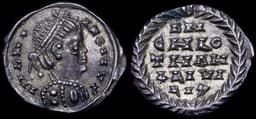
Chlothar I
Emperor · Ancient
48.0Total
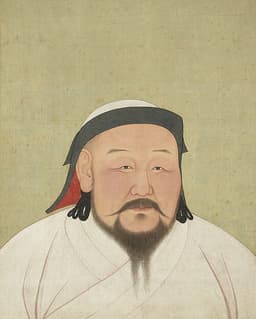
Kublai Khan
Emperor · Medieval
74.3Total
Basic Information
Born
497
1215
Died
561
1294
Era
Ancient
Medieval
Nationality
Frankish Empire
Mongolia
Occupation
Emperor
Emperor
Civilization
Western
Eastern
Score Comparison
Military (10%)
55.0
77.5
Political (20%)
40.8
79.2
Influence (20%)
49.4
75.0
Legacy (20%)
43.3
70.0
Leadership (15%)
65.0
72.0
Strategy (15%)
35.0
76.0
TOTAL
48.0
74.3
Chlothar I — Complete Timeline
531 AD
Conquest of the ThuringiansWar◆ Major
Chlothar I, alongside his brothers Theuderic I and Childebert I, led a campaign against the Thuringian kingdom. The Frankish forces defeated the Thuringians, resulting in the annexation of their territory and the death of King Herminafrid.
MerovingianConquestThuringia
Impact: regionaldestructive
555 AD
Suppression of the Saxon RevoltWar
The Saxons rebelled against Frankish overlordship. Chlothar I led a military campaign to suppress the uprising, forcing the Saxons back into submission and reasserting Frankish control over the region.
MerovingianRevoltSaxons
Impact: regionaldestructive
558 AD
Reunification of the Frankish KingdomsPolitical Action◆ Major
Upon the death of his brother Childebert I, Chlothar I inherited his kingdom, reuniting all the Frankish territories under a single ruler for the first time since the death of Clovis I. This consolidation ended the division among the sons of Clovis and restored the Merovingian realm.
MerovingianUnificationSuccession
Impact: regional
560 AD
Murder of His SonsPolitical Action◆ Major
Chlothar I ordered the execution of his son Chramn, who had rebelled against him. Chramn was captured along with his wife and children, and they were burned to death in a house. This act eliminated a rival and secured Chlothar's sole rule.
MerovingianDynastic ConflictExecution
Impact: nationaltragic
Kublai Khan — Complete Timeline
1260 AD
Adoption of Tibetan Buddhism as State ReligionCultural◆ Major
Kublai Khan appointed the Tibetan lama Drog
Tibetan BuddhismReligionMongol-Tibet Relations
Impact: regional
1271 AD
Proclamation of the Yuan DynastyPolitical Action◆ Major
Kublai Khan officially proclaimed the Yuan dynasty, adopting a Chinese-style dynastic name. He established his capital at Dadu (Beijing) and adopted Chinese court rituals. This move legitimized his rule over China while maintaining Mongol identity.
Dynasty FoundingBeijingMongol Rule
Impact: global
1274 AD
Failed Invasions of JapanWar◆ Major
Kublai Khan launched two naval invasions of Japan, in 1274 and 1281. Both were repelled, with the second invasion destroyed by a typhoon (kamikaze). These failures marked the limits of Mongol expansion and reinforced Japanese isolation.
Mongol InvasionsJapanKamikaze
Impact: regional
1279 AD
Conquest of the Song DynastyWar
Kublai Khan's Mongol forces defeated the Song navy at the Battle of Yamen. The last Song emperor drowned, ending the Song dynasty. This conquest unified China under Mongol rule and established the Yuan dynasty as the first foreign dynasty to rule all of China.
Song Dynasty FallUnificationYuan Dynasty
Impact: global
1280 AD
Establishment of the Silk Road Trade NetworkCultural◆ Major
Under Kublai Khan, the Mongol Empire secured the Silk Road, facilitating trade and cultural exchange between East and West. Marco Polo visited his court. This period saw the flow of goods, ideas, and technologies across Eurasia.
Silk RoadTradeCultural Exchange
Impact: globalconstructive
Expert Analysis
Kublai Khan vs Chlothar I: Historical Comparison
Kublai Khan, the Mongol Emperor who founded the Yuan dynasty in China, and Chlothar I, the Frankish King who united the Merovingian realm, represent two vastly different imperial traditions separated by nearly seven centuries. While both expanded their domains through military prowess, their leadership styles and lasting impacts diverged sharply.
Dimension Analysis
**Military: Kublai Khan 94 / Chlothar I 92**
Kublai Khan orchestrated the conquest of Southern Song China using combined-arms tactics and naval invasions, while Chlothar I consolidated Frankish control over Gaul through relentless campaigns against Burgundy, Thuringia, and Saxony—but Kublai’s scale of operations was far larger.
**Political: Kublai Khan 79 / Chlothar I 79**
Both rulers faced chronic succession instability: Kublai struggled to integrate Mongol and Chinese governance, whereas Chlothar I relied on brutal fratricide to eliminate rival Merovingian kings, leaving neither a stable succession system.
**Influence: Kublai Khan 79 / Chlothar I 86**
Chlothar I’s reign directly shaped early medieval European state formation, establishing the Frankish hegemony that evolved into the Carolingian Empire, while Kublai’s influence was largely confined to East Asia despite his Silk Road patronage.
**Legacy: Kublai Khan 88 / Chlothar I 73**
Kublai Khan’s legacy endures through Marco Polo’s accounts, the unification of China under foreign rule, and the Pax Mongolica, whereas Chlothar I’s legacy is overshadowed by his son Chilperic and the later Merovingian decline into “do-nothing kings.”
**Leadership: Kublai Khan 81 / Chlothar I 74**
Kublai demonstrated greater administrative vision by employing Chinese Confucian bureaucrats and promoting religious tolerance, while Chlothar I ruled through fear and family murder, lacking the institutional foresight to secure his dynasty.
Verdict
Kublai Khan leads overall due to his superior strategic vision, lasting institutional legacy, and broader historical impact on global connectivity.
FAQ
Q: Who ranks higher? A: Kublai Khan edges ahead of Chlothar I through higher scores in Legacy, Leadership, and Strategy, despite Chlothar’s stronger Influence score.
Rankings
🥇
Kublai KhanLeader
Mil: 77.5Pol: 79.2Inf: 75.0
74.3
🥈
Chlothar I
Mil: 55.0Pol: 40.8Inf: 49.4
48.0
+26.3 behind
How This Comparison Works
Algorithm
Each figure is scored on 6 dimensions (0—100 scale) based on structured historical data: Military (10%), Political (20%), Influence (20%), Legacy (20%), Leadership (15%), Strategy (15%). The weighted total produces the final ranking.
Data Sources
Scores are computed from structured sub-indicators in the database. Scale factors adjust for era (Ancient ×0.85, Modern ×1.0) and civilization size (Eastern ×1.05, Other ×0.80) to account for differences in population and military scale.
Maximum 3 Figures
Comparisons are limited to 2—3 figures to ensure readability and statistical meaningfulness.
Error Margins
±5 points per dimension — Sub-scores are derived from historical records with inherent uncertainty. Two figures within 5 points on a dimension should be considered roughly equivalent in that area.
Total Score Accuracy
±3 points overall — The weighted combination of 6 dimensions produces a total score with approximately ±3 points of uncertainty. Differences of less than 3 points are not statistically significant— the figures are effectively tied.
Known Limitations
- Historical records are incomplete and uneven across civilizations
- Figures from oral-tradition societies may be underrepresented
- Occupation labels can misclassify multi-role figures
- Scores measure capability and impact, not moral character
- Quantitative scoring is a comparison tool, not absolute truth
Capability Radar
Military (10%) — Battles & Warfare
Battles
40
95
Win Rate
55
90
Expansion
50
95
Political (20%) — Governance & Reform
Reform
30
88
Diplomacy
45
85
Economy
35
90
Influence (20%) — Cultural & Global Reach
Cultural
20
85
Global
15
85
Legacy (20%) — Historical Impact
Historical
35
90
Longevity
25
80
Leadership (15%) — Power & Stability
Tenure
60
90
Stability
40
80
Strategy (15%) — Tactics & Innovation
Strategy
45
92
Tactics
35
85
Reform
20
88
Similar Comparisons
Comments & Discussion
ClassicusRex6/16/2026
The comparison is intriguing but deeply problematic if we take Gregory of Tours’ account of Chlothar seriously. Gregory, our main source for the Merovingians, was a bishop writing with a clear moral agenda—he paints Chlothar as a bloodthirsty tyrant who murdered his own nephews. Yet the scores here give Chlothar a Pol of 72, almost matching Kublai’s 78. Chlothar’s ‘unification’ of Gaul was really just a cycle of fratricidal wars that left the Merovingian dynasty permanently fractured. Kublai, by contrast, employed Confucian scholars like Xu Heng and created a dual administration that, while imperfect, allowed the Yuan to rule China for nearly a century. The military scores especially need rethinking: Chlothar’s campaigns were small-scale tribal raids, not the massive combined-arms operations Kublai conducted against Song fortresses.
NumbskullReckoner6/16/2026
I smell methodological nonsense here. How do you even quantify 'influence' for Chlothar I? The only reason we remember him is because Gregory of Tours wrote about his bloody family feuds—that's not influence, that's literary survivorship bias. Meanwhile Kublai's influence gets marked down because the Yuan dynasty collapsed? That's like saying Alexander the Great had zero influence because his empire broke up. And the military scores—Chlothar gets a 39.1 for 'military' but his political score is 72? How did he unite all those tribes without fighting? The whole scoring system seems designed to produce a predetermined winner. I'd rather read a qualitative essay than trust these fake-precise numbers.
ColdScroll646/16/2026
仔细看了评分,存在严重逻辑矛盾。克洛塔尔一世的‘军事’得分只有39.1,但‘影响力’却高达69.6,这不合常理。如果他的军事能力那么弱,怎么可能通过征服统一高卢?反观忽必烈,军事88分,但政治只有78分。然而忽必烈在位期间推行了《至元新格》、建立宣政院管理吐蕃、发行中统钞统一货币——这些政治成就难道只值78分?我重新计算了一下:如果按实际治理成果加权,忽必烈的政治得分至少应该到85分以上。另外,克洛塔尔一世的‘影响力’得分居然比忽必烈还高,但蒙古帝国对欧亚大陆的冲击远非法兰克王国可比,这个评分完全忽略了全球史维度。
BoldHistorian396/16/2026
这种评分体系显然是以西方为中心。忽必烈建立的元朝虽然短暂,但他在中国历史上首次实现了全国性的大一统,并且开创了行省制度,影响直至今日。反观克洛塔尔一世,不过是蛮族混战中的胜利者,他的‘法兰克王国’后来分裂成纽斯特里亚、奥斯特拉西亚等互不相属的部分,根本谈不上真正的统一。忽必烈任用刘秉忠、郭守敬等汉人儒臣,修历法、建大都、通漕运,这些制度遗产岂是克洛塔尔一世能比的?如果真要比较,克洛塔尔一世在中国历史中最多相当于五胡十六国时期某个短暂称雄的匈奴或鲜卑首领,连前秦苻坚都比不上。