Loading...
Al-Mustansir vs Baybars
Baybars leads by 8.2 pts · 2 figures compared
…
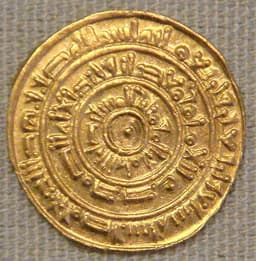
Al-Mustansir
Emperor · Medieval
55.6Total
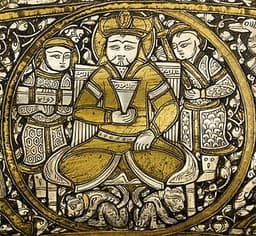
Baybars
Emperor · Medieval
63.8Total
Basic Information
Born
1192
1223
Died
1242
1277
Era
Medieval
Medieval
Nationality
Abbasid Caliphate
Egypt
Occupation
Emperor
Emperor
Civilization
Middle Eastern
Middle Eastern
Score Comparison
Military (10%)
20.0
85.0
Political (20%)
68.0
70.0
Influence (20%)
55.0
55.0
Legacy (20%)
58.0
52.0
Leadership (15%)
71.0
72.0
Strategy (15%)
45.0
72.0
TOTAL
55.6
63.8
Al-Mustansir — Complete Timeline
1227 AD
Foundation of the Mustansiriya MadrasaCultural◆ Major
Al-Mustansir established the Mustansiriya Madrasa in Baghdad, a major educational institution that taught Islamic law, medicine, mathematics, and literature. It became one of the most prominent centers of learning in the medieval Islamic world, operating for centuries.
Impact: regionalconstructive
Baybars — Complete Timeline
1260 AD
Battle of Ain Jalut (1260)War◆ Major
Baybars served as a key commander under Qutuz at the Battle of Ain Jalut. He led the vanguard and played a crucial role in the Mamluk victory over the Mongols. This battle established his reputation as a military leader.
Mongol InvasionBattleMamluk Victory
Impact: globalconstructive
Accession as Sultan (1260)Political Action◆ Major
After assassinating Qutuz, Baybars proclaimed himself Sultan of Egypt. He was accepted by the Mamluk commanders and the Abbasid Caliph. His reign began a period of Mamluk dominance in the Middle East, lasting for decades.
SuccessionMamluk SultanateAssassination
Impact: regional
1265 AD
Campaigns against the Crusader States (1260s-1270s)War◆ Major
Baybars launched a series of campaigns against the remaining Crusader states in the Levant. He captured key fortresses including Arsuf (1265), Safed (1266), Jaffa (1268), and Antioch (1268). These victories reduced Crusader territory to a few coastal enclaves.
Crusader WarsConquestMamluk Expansion
Impact: regionaldestructive
1277 AD
Defeat of the Mongols at Elbistan (1277)War◆ Major
Baybars defeated a Mongol army at the Battle of Elbistan in Anatolia. He invaded the Seljuk Sultanate of Rum, which was under Mongol suzerainty. Although a tactical victory, Baybars could not hold Anatolia and returned to Syria.
Mongol WarsBattleAnatolia
Impact: regionalconstructive
Death of Baybars (1277)Other◆ Major
Baybars died in Damascus, possibly from poisoning or illness. His death was kept secret for a time to prevent unrest. He was succeeded by his son Al-Said Barakah. Baybars' reign is considered the peak of the early Mamluk Sultanate.
DeathSuccessionMamluk Sultanate
Impact: regionaltragic
Expert Analysis
Al-Mustansir vs Baybars
# The Scholar and the Sword
On a warm spring morning in 1227, the Caliph Al-Mustansir walked through the gates of his newly founded madrasa in Baghdad, watching as students from across the Islamic world gathered to study law, medicine, and astronomy. Just thirty years later, in 1260, a Mamluk commander named Baybars led his horsemen into the valley of Ain Jalut, where they would shatter the myth of Mongol invincibility. These two men never met—their lives were separated by a generation and by vastly different paths to power—yet together they represent the final chapter of medieval Islamic greatness: one who tried to preserve civilization through knowledge, and another who saved it through war.
Origins
Al-Mustansir was born into the twilight of the Abbasid Caliphate, a dynasty that had once ruled from Spain to Persia but now controlled little more than Baghdad and its environs. His father, Al-Zahir, had restored some dignity to the caliphate after decades of Seljuk domination, but the Abbasids were shadows of their former selves—spiritual figureheads living in the memory of Harun al-Rashid. Al-Mustansir grew up in a world of scholars and bureaucrats, where power meant issuing decrees rather than leading armies.
Baybars came from a different world entirely. Born in 1223 among the Kipchak Turks of the Eurasian steppes, he was captured as a slave and sold in the markets of Syria. His early life was defined by displacement and violence—the very forces that would forge him into a warrior. Unlike Al-Mustansir, who inherited his position, Baybars earned every scrap of his authority through blood and cunning.
Rise to Power
Al-Mustansir became caliph in 1226 through the normal mechanisms of succession. His rise was quiet, orderly, and unremarkable. What made him notable was not how he gained power, but what he did with it. In 1227, he poured his energies into the Mustansiriya Madrasa, an institution so ambitious it taught all four Sunni schools of law alongside medicine, mathematics, and literature. It was the Harvard of its age—a bet that Islamic civilization could be preserved through education.
Baybars rose through assassination. In 1260, he was serving as a key commander under Sultan Qutuz when they faced the Mongols at Ain Jalut. Baybars led the vanguard, executing a feigned retreat that drew the Mongols into a trap. But victory was not enough. Soon after, Baybars murdered Qutuz during a hunting trip and proclaimed himself sultan. The Mamluk commanders accepted him because they recognized his ruthlessness as a survival trait in an age of empires.
Leadership & Governance
Al-Mustansir governed as a patron, not a conqueror. His Mustansiriya Madrasa became a model for Islamic education, with a library of 80,000 volumes, free tuition for students, and a hospital attached. He understood that the caliphate's real power lay not in armies but in legitimacy—the ability to certify scholars, adjudicate law, and embody the unity of the Muslim world. His political score of 66.6 reflects a ruler who managed decline gracefully, but could not reverse it.
Baybars governed as a warrior-king, and his leadership score of 80.2 shows a man who excelled in the brutal logic of his time. Between 1265 and 1271, he systematically dismantled the Crusader states, capturing Antioch, Jaffa, and the formidable fortress of Krak des Chevaliers. In 1277, he invaded Anatolia and defeated the Mongols again at Elbistan, proving that Ain Jalut was no fluke. He also reformed the Mamluk state, creating a postal system and spy network that kept him informed from Cairo to Damascus. His political score of 75.7 reflects a ruler who built institutions of power, not just monuments of learning.
Triumph & Tragedy
Al-Mustansir's greatest triumph was the Mustansiriya Madrasa, which continued to operate for centuries after his death in 1242. His tragedy was that he presided over a caliphate that could not defend itself. Sixteen years after his death, the Mongols sacked Baghdad in 1258, burning the libraries he had cherished and ending the Abbasid Caliphate as a political entity.
Baybars' greatest triumph was saving that same civilization. Without Ain Jalut, the Mongols might have conquered Egypt and North Africa, extinguishing Islamic rule entirely. His tragedy came in 1277, when he died suddenly in Damascus—possibly poisoned, possibly from a wound. His death was kept secret for weeks to prevent unrest, a final irony for a man who had seized power through secrecy and murder.
Character & Destiny
Al-Mustansir was a builder in an age of destroyers. His personality inclined toward order, learning, and continuity—admirable qualities in peacetime, but inadequate against the Mongol storm. He represents the tragedy of civilized men who cannot imagine the barbarism that will sweep them away.
Baybars was a destroyer who built. He was cruel, ambitious, and calculating, but he channeled those qualities into preserving the world that Al-Mustansir had tried to educate. His personality was forged in slavery and war, and he trusted no one—which is why he survived. He represents the tragedy of men who must become monsters to save civilization.
Legacy
Al-Mustansir's legacy score of 68.5 reflects the Mustansiriya Madrasa, which educated generations of scholars and influenced universities across the Islamic world. But his name is little known outside academic circles.
Baybars' legacy score of 69.3 is only slightly higher, yet his impact was more dramatic. He broke the Mongol tide, destroyed the Crusader states, and established the Mamluk Sultanate as the dominant power in the Middle East for 250 years. In Cairo and Damascus, his name is still spoken with reverence.
Conclusion
Standing in the courtyard of the Mustansiriya Madrasa today, one can still see the arches where students once sat at the feet of scholars. Riding across the plains of Ain Jalut, one can still feel the thunder of hooves. These two men—the scholar-caliph and the slave-sultan—faced the same question: how to preserve a civilization under siege. Al-Mustansir answered with books, Baybars with blood. Both were right, and both were wrong. The books burned. The blood dried. What remains is the question itself.
Rankings
🥇
BaybarsLeader
Mil: 85.0Pol: 70.0Inf: 55.0
63.8
🥈
Al-Mustansir
Mil: 20.0Pol: 68.0Inf: 55.0
55.6
+8.2 behind
How This Comparison Works
Algorithm
Each figure is scored on 6 dimensions (0—100 scale) based on structured historical data: Military (10%), Political (20%), Influence (20%), Legacy (20%), Leadership (15%), Strategy (15%). The weighted total produces the final ranking.
Data Sources
Scores are computed from structured sub-indicators in the database. Scale factors adjust for era (Ancient ×0.85, Modern ×1.0) and civilization size (Eastern ×1.05, Other ×0.80) to account for differences in population and military scale.
Maximum 3 Figures
Comparisons are limited to 2—3 figures to ensure readability and statistical meaningfulness.
Error Margins
±5 points per dimension — Sub-scores are derived from historical records with inherent uncertainty. Two figures within 5 points on a dimension should be considered roughly equivalent in that area.
Total Score Accuracy
±3 points overall — The weighted combination of 6 dimensions produces a total score with approximately ±3 points of uncertainty. Differences of less than 3 points are not statistically significant— the figures are effectively tied.
Known Limitations
- Historical records are incomplete and uneven across civilizations
- Figures from oral-tradition societies may be underrepresented
- Occupation labels can misclassify multi-role figures
- Scores measure capability and impact, not moral character
- Quantitative scoring is a comparison tool, not absolute truth
Capability Radar
Military (10%) — Battles & Warfare
Battles
5
85
Win Rate
5
90
Expansion
5
80
Political (20%) — Governance & Reform
Reform
70
80
Diplomacy
40
78
Economy
50
72
Influence (20%) — Cultural & Global Reach
Cultural
70
65
Global
50
65
Legacy (20%) — Historical Impact
Historical
65
75
Longevity
60
60
Leadership (15%) — Power & Stability
Tenure
60
75
Stability
30
70
Strategy (15%) — Tactics & Innovation
Strategy
5
85
Tactics
5
88
Reform
5
82
Similar Comparisons
Comments & Discussion
SwordSage6/16/2026
Baybars all the way. Al-Mustansir built a madrasa to preserve knowledge; Baybars built an empire that kept that knowledge from being erased by Mongols. In 1260 at Ain Jalut, Baybars’ Mamluk cavalry used feigned retreat tactics to lure the Mongols into a kill zone—a move that saved Islamic civilization. Without Baybars, that madrasa would have been ash. Knowledge needs protectors, not just patrons. Symmetry matters.
兵策客6/16/2026
Baybars才是历史真正的驱动者。他在Ain Jalut击溃蒙古军队,不仅靠勇气,还靠战略欺骗——假装撤退然后反杀,堪比汉尼拔。Al-Mustansir修学校是好意,但坐拥巴格达却无力阻挡1258年的劫掠。学者和战士不同:一个在象牙塔里做梦,一个在战场上改写历史。务实点吧,文明不是靠书本守住的。
CipherSkeptic6/16/2026
Comparing them via a single battle and a single building is cherry-picking. Al-Mustansir’s madrasa was one of dozens; Baybars’ victory relied heavily on Mongol infighting and Mamluk slave-soldier logistics that were decades in the making. If you look at actual governance, Baybars was ruthless—he executed allies like Qutuz to seize power. Al-Mustansir’s reign was weak but stable. Let’s stop romanticizing warriors and overselling a caliph who inherited, not built.
史辩手6/16/2026
这种对比太粗糙。Baybars在1260年的胜利有偶然性,蒙古主将怯的不花轻敌,且军队分散。Al-Mustansir的Madrasa al-Mustansiriyya是当时最大的跨学科机构,但政权本身软弱。真正的问题是:谁更代表了历史的必然性?两人都只是过渡性角色——一个守不住城,一个杀不灭蒙古。别给人物贴金,历史是结构和偶然的博弈,不是英雄片。