Loading...
Al-Mustansir vs Albert III of Austria
Al-Mustansir leads by 2.2 pts · 2 figures compared
…
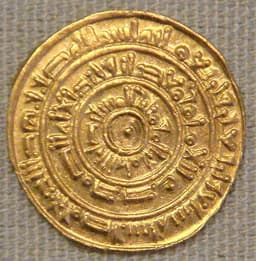
Al-Mustansir
Emperor · Medieval
55.6Total
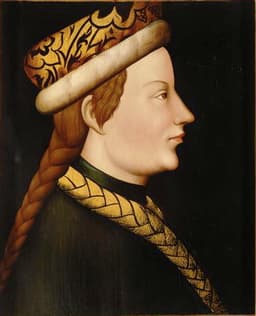
Albert III of Austria
Emperor · Medieval
53.4Total
Basic Information
Born
1192
1349
Died
1242
1395
Era
Medieval
Medieval
Nationality
Abbasid Caliphate
Austria
Occupation
Emperor
Emperor
Civilization
Middle Eastern
Western
Score Comparison
Military (10%)
20.0
50.0
Political (20%)
68.0
54.7
Influence (20%)
55.0
53.3
Legacy (20%)
58.0
44.2
Leadership (15%)
71.0
80.0
Strategy (15%)
45.0
38.6
TOTAL
55.6
53.4
Al-Mustansir — Complete Timeline
1227 AD
Foundation of the Mustansiriya MadrasaCultural◆ Major
Al-Mustansir established the Mustansiriya Madrasa in Baghdad, a major educational institution that taught Islamic law, medicine, mathematics, and literature. It became one of the most prominent centers of learning in the medieval Islamic world, operating for centuries.
Impact: regionalconstructive
Albert III of Austria — Complete Timeline
1379 AD
Founded the Albertinian Line of the HabsburgsPolitical Action◆ Major
Albert III, along with his brother Leopold III, divided the Habsburg territories in the Treaty of Neuberg. Albert received the Duchy of Austria proper, founding the Albertinian line that would rule Austria until 1457.
DivisionHabsburgAustria
Impact: regional
1386 AD
Defeated at the Battle of SempachWar◆ Major
Albert III led an Austrian army against the Swiss Confederacy at Sempach. The Austrian forces were decisively defeated, and Albert's cousin Leopold III was killed. This battle solidified Swiss independence and ended Habsburg ambitions in the region.
BattleSwiss ConfederacyDefeat
Impact: regionaltragic
Expert Analysis
Al-Mustansir vs Albert III of Austria
# The Scholar and the Soldier: Two Paths to Medieval Power
In the year 1227, as the great library and university complex of the Mustansiriya Madrasa opened its doors in Baghdad, students from across the Islamic world flocked to study law, medicine, mathematics, and astronomy under the patronage of Caliph Al-Mustansir. Half a continent away and more than a century later, in 1379, Duke Albert III of Austria signed the Treaty of Neuberg, dividing the Habsburg lands with his brother and founding a dynasty that would shape Central Europe for centuries. One man built an institution of learning; the other built a ruling house. Both wielded power, but their legacies could hardly have been more different. What drove these two medieval rulers—one a caliph in the fading glory of Baghdad, the other a Habsburg duke in the rising tide of Austrian power—to such divergent outcomes?
Origins
Al-Mustansir was born in 1192 into the Abbasid Caliphate, a dynasty that had once ruled an empire stretching from Spain to India but now controlled little more than Baghdad and its environs. The Abbasids had long since lost their temporal power to military dynasties like the Seljuks, yet the caliph remained the spiritual leader of Sunni Islam. Al-Mustansir inherited a throne that was more symbol than sword, a position that demanded political finesse rather than military might. His world was one of theological debate, bureaucratic administration, and the careful management of a city that still prided itself as the center of Islamic civilization.
Albert III, born in 1349, came of age in a very different Europe. The Habsburgs were an ambitious noble family clawing their way upward through marriage, war, and shrewd diplomacy. The Holy Roman Empire was a patchwork of principalities, bishoprics, and free cities, and a duke’s power depended on his ability to hold his lands together against rivals, external enemies, and even his own relatives. Albert’s Austria was a frontier state, perpetually at odds with the Swiss Confederacy, the Hungarian kingdom, and the burgeoning power of the Swiss cantons. Where Al-Mustansir’s Baghdad was a city of scholars and merchants, Albert’s Vienna was a fortress and a staging ground for campaigns.
Rise to Power
Al-Mustansir became caliph in 1226, succeeding his father Al-Zahir. His path was smooth—the Abbasid succession was well-established, and he faced no significant challenge to his rule. But smooth succession did not mean easy rule. The caliph’s authority was circumscribed by the powerful viziers and military commanders who had effectively run Baghdad for generations. Al-Mustansir’s challenge was not to conquer but to govern, to project influence without armies, to be a leader in a system designed to limit his power.
Albert III, by contrast, rose through a crucible of family conflict. When his father died in 1365, he ruled jointly with his brother Leopold III, a partnership that quickly soured. The Treaty of Neuberg in 1379 formalized their division: Albert took Austria proper, while Leopold received Styria, Carinthia, and Tyrol. This was not a peaceful abdication but a bitter settlement that left Albert with the core of Habsburg power but also with the knowledge that his own family could fracture his domain. His rise was a story of negotiation, compromise, and the hard calculus of territorial politics.
Leadership & Governance
Al-Mustansir’s greatest achievement was the Mustansiriya Madrasa, founded in 1227. This was not merely a school but a comprehensive university that taught the four Sunni schools of law, along with medicine, mathematics, astronomy, and literature. It housed a library of over 80,000 volumes and provided free education, lodging, and stipends to students. In an era when Baghdad’s political power was waning, Al-Mustansir invested in intellectual capital. His political wisdom lay in understanding that a caliph’s influence came not from conquest but from cultural and religious authority. He patronized scholars, settled theological disputes, and maintained Baghdad as a beacon of learning even as Mongol armies gathered on the horizon.
Albert III governed differently. His reign was defined by consolidation and defense. He strengthened the administration of his duchy, reformed the coinage, and supported the growth of Vienna as a commercial center. But his military record was mixed. In 1386, he led an army against the Swiss Confederacy at the Battle of Sempach. The result was a disaster: the Austrian knights, weighed down by armor and overconfidence, were routed by Swiss pikemen fighting on difficult terrain. Albert’s leadership could not overcome the tactical superiority of his enemies. He spent the rest of his reign recovering from this blow, focusing on internal stability rather than external expansion.
Triumph & Tragedy
Al-Mustansir’s triumph was the Mustansiriya Madrasa, a monument to learning that would survive for centuries. His tragedy was that he could not see the storm coming. In 1242, the year of his death, the Mongol Empire was advancing westward. Within sixteen years, Baghdad would fall to Hulagu Khan, the city sacked, its libraries burned, and the Abbasid Caliphate extinguished. Al-Mustansir’s legacy of scholarship could not withstand the horsemen of the steppe.
Albert III’s triumph was the Albertinian line of the Habsburgs, a dynasty that would go on to produce emperors, kings, and rulers of vast territories. His tragedy was personal and immediate: the defeat at Sempach, which cost him prestige and lives, and the constant threat of fragmentation from his own family. He died in 1395, his duchy intact but his ambitions checked.
Character & Destiny
Al-Mustansir was a builder, not a warrior. His scores in military and strategy—37 and 60 respectively—reflect a ruler who understood that his power lay in patronage and piety, not in the clash of armies. He was a man of his era, but also of his city: Baghdad had always been a place of ideas, and he honored that tradition. His character was defined by a quiet determination to preserve what remained of Abbasid glory, even as the world around him shifted.
Albert III was a pragmatist, a consolidator. His military score of 41.5 and strategy of 62.3 show a competent but not brilliant commander. His political score of 57.6 suggests a leader who could negotiate but not dominate. He was shaped by the brutal realities of medieval European politics: land was power, family was both ally and threat, and a single lost battle could undo years of work. His character was forged in the crucible of dynastic survival.
Legacy
Al-Mustansir is remembered today for the Mustansiriya Madrasa, which remained a center of learning for centuries, even after Baghdad’s decline. His name is synonymous with intellectual patronage in the Islamic Golden Age. His influence score of 72.3 and legacy of 68.5 reflect a ruler whose impact outlasted his political power. He is a symbol of what a caliph could achieve without an empire.
Albert III’s legacy is more diffuse. The Albertinian line he founded would eventually produce rulers like Frederick III and Maximilian I, but his own reign is overshadowed by the defeat at Sempach and the division of Habsburg lands. His influence score of 71.0 and legacy of 58.4 suggest a figure whose importance is historical rather than iconic. He is remembered by specialists, not by the general public.
Conclusion
Al-Mustansir and Albert III both ruled in the shadow of larger forces—the Mongol Empire and the Swiss Confederacy, respectively. One chose to build a library; the other chose to build a dynasty. One invested in ideas; the other in land. Their different outcomes were not a matter of intelligence or ambition but of circumstance. Al-Mustansir’s Baghdad was a city of the mind; Albert’s Austria was a land of the sword. Each ruler did what his world demanded. And in the end, the scholar’s legacy proved more durable than the soldier’s. The Mustansiriya Madrasa still stands in Baghdad, a testament to a caliph who understood that the most lasting power is the power to teach. Albert III’s dynasty, for all its later glory, began with a treaty and a defeat—a reminder that even the greatest houses are built on fragile foundations.
Rankings
🥇
Al-MustansirLeader
Mil: 20.0Pol: 68.0Inf: 55.0
55.6
🥈
Albert III of Austria
Mil: 50.0Pol: 54.7Inf: 53.3
53.4
+2.2 behind
How This Comparison Works
Algorithm
Each figure is scored on 6 dimensions (0—100 scale) based on structured historical data: Military (10%), Political (20%), Influence (20%), Legacy (20%), Leadership (15%), Strategy (15%). The weighted total produces the final ranking.
Data Sources
Scores are computed from structured sub-indicators in the database. Scale factors adjust for era (Ancient ×0.85, Modern ×1.0) and civilization size (Eastern ×1.05, Other ×0.80) to account for differences in population and military scale.
Maximum 3 Figures
Comparisons are limited to 2—3 figures to ensure readability and statistical meaningfulness.
Error Margins
±5 points per dimension — Sub-scores are derived from historical records with inherent uncertainty. Two figures within 5 points on a dimension should be considered roughly equivalent in that area.
Total Score Accuracy
±3 points overall — The weighted combination of 6 dimensions produces a total score with approximately ±3 points of uncertainty. Differences of less than 3 points are not statistically significant— the figures are effectively tied.
Known Limitations
- Historical records are incomplete and uneven across civilizations
- Figures from oral-tradition societies may be underrepresented
- Occupation labels can misclassify multi-role figures
- Scores measure capability and impact, not moral character
- Quantitative scoring is a comparison tool, not absolute truth
Capability Radar
Military (10%) — Battles & Warfare
Battles
5
20
Win Rate
5
25
Expansion
5
20
Political (20%) — Governance & Reform
Reform
70
40
Diplomacy
40
45
Economy
50
40
Influence (20%) — Cultural & Global Reach
Cultural
70
30
Global
50
20
Legacy (20%) — Historical Impact
Historical
65
35
Longevity
60
30
Leadership (15%) — Power & Stability
Tenure
60
60
Stability
30
35
Strategy (15%) — Tactics & Innovation
Strategy
5
25
Tactics
5
20
Reform
5
15
Similar Comparisons
Comments & Discussion
BaghdadLibrarian6/16/2026
Al-Mustansir was a delusional overbuilder. He poured the caliphate's remaining fortunes into a literal ivory tower while the Mongol storm gathered. The Mustansiriya was gorgeous, sure, but within 30 years Hulagu's hordes would drown its libraries in the Tigris. Albert III at least understood survival meant consolidating territory and bloodlines. A madrasa doesn't defend a city. A dynasty does.
哈布斯堡书吏6/16/2026
拿一位末世哈里发和一位建国公爵比,本身就是刻舟求剑。穆斯坦绥尔建书院名垂青史,但阿尔布雷希特三世才是真正的赢家:他的联统策略让哈布斯堡后来拿到了波西米亚和匈牙利。知识固然值得传颂,但权力必须靠联姻、条约和分封来延续。穆斯坦绥尔只是个文化赞助人,阿尔布雷希特是个帝国的建筑师。
GladiusDelendaEst6/16/2026
Everyone romanticizes the Mustansiriya, but let's talk military realities. Albert III's Treaty of Neuberg wasn't just paperwork—it stabilized Austrian defenses during the Habsburg succession crisis of the 1370s. Meanwhile Al-Mustansir spent on professors while Baghdad's walls rotted. You don't need astronomy when the Mongols are at your gate. Albert knew the sword mattered more than the scroll.
墨笔残阳6/16/2026
别被教育的光环骗了。穆斯坦绥尔治下的巴格达是个萎缩的城邦,空有文化幻想,连底格里斯河对岸的敌人都不敢直面。阿尔布雷希特三世虽然分裂了领地,却为哈布斯堡家族奠定了纵向的分支继承体系——这是欧洲近代王权的先声。一个为死水添墨,一个为长河开渠。高下立判。
NumismaticNerd6/16/2026
Hard disagree with the "Al-Mustansir wasted money" crowd. The Mustansiriya minted intellectual prestige that lasted long after the Abbasids fell. Its curriculum influenced Cairo and Istanbul for centuries. Albert III's treaty just postponed the inevitable Habsburg infighting. Compare their coins: Al-Mustansir's dirhams show a caliph holding a book; Albert's pfennigs show a shield. One invested in minds, the other in borders. I know which legacy I respect more.