Loading...
Al-Mustanjid vs Arduin of Ivrea
Arduin of Ivrea leads by 4.9 pts · 2 figures compared
…
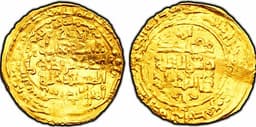
Al-Mustanjid
Emperor · Medieval
37.0Total
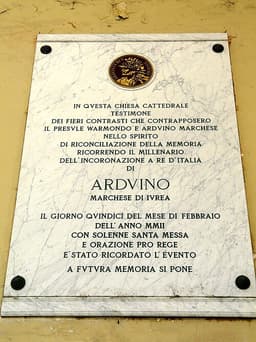
Arduin of Ivrea
Emperor · Medieval
41.9Total
Basic Information
Born
1124
955
Died
1170
1015
Era
Medieval
Medieval
Nationality
Abbasid Caliphate
Italy
Occupation
Emperor
Emperor
Civilization
Middle Eastern
Western
Score Comparison
Military (10%)
20.0
50.0
Political (20%)
30.7
33.6
Influence (20%)
46.3
47.1
Legacy (20%)
35.0
35.8
Leadership (15%)
31.2
49.9
Strategy (15%)
54.3
36.8
TOTAL
37.0
41.9
Al-Mustanjid — Complete Timeline
1164 AD
Conflict with the FatimidsWar◆ Major
Al-Mustanjid sent military aid to the Zengid ruler Nur al-Din against the Fatimid caliphate in Egypt. This intervention contributed to the weakening of Fatimid power and the eventual rise of Saladin.
Fatimid DeclineZengid AllianceEgypt
Impact: regional
1168 AD
Assassination of VizierPolitical Action
Al-Mustanjid ordered the assassination of his powerful vizier, Ibn Hubayra, who had become too influential. This act demonstrated the caliph's desire to control his administration but also created instability.
AssassinationVizierPower Struggle
destructive
1170 AD
Death During CampaignOther
Al-Mustanjid died while on a military campaign against the Seljuks. His death was sudden and possibly due to illness or poisoning, ending his brief reign without major achievements.
DeathCampaignSeljuk War
tragic
Arduin of Ivrea — Complete Timeline
1002 AD
Proclaimed King of ItalyPolitical Action◆ Major
After the death of Emperor Otto III, Arduin of Ivrea was proclaimed King of Italy by the Lombard nobility in Pavia. This act challenged the authority of the German king Henry II, who claimed the Italian throne.
CoronationItalyRivalry
Impact: regional
1004 AD
Defeated by Henry II at the Battle of the Po RiverWar◆ Major
Arduin was defeated by Henry II's forces near the Po River. This military loss forced Arduin to retreat to his margraviate of Ivrea, effectively ending his claim to the Italian throne and allowing Henry II to be crowned King of Italy.
BattleHenry IIDefeat
Impact: regionaltragic
1014 AD
Excommunication by Pope Benedict VIIIPolitical Action
Arduin was excommunicated by Pope Benedict VIII for his continued resistance against Henry II. This ecclesiastical condemnation isolated Arduin politically and religiously, contributing to his eventual surrender and retirement.
ExcommunicationPapacyConflict
Impact: regionaldestructive
1015 AD
Retirement to a MonasteryOther
After years of failed resistance, Arduin retired to the Abbey of Fruttuaria, where he died as a monk. His retirement marked the end of the last major Italian challenge to German rule in the early 11th century.
RetirementItalyEnd of Resistance
Impact: regional
Expert Analysis
Origins
Al-Mustanjid (born 1124) was the son of Caliph al-Muqtafi, ascending to the Abbasid caliphate in 1160. He received a traditional Islamic education and was groomed for leadership in Baghdad. His early life was marked by the declining power of the caliphate, which had become a figurehead under Seljuk sultans. Arduin of Ivrea (born c. 955) was a Lombard noble from the House of Ivrea, a margrave in northwestern Italy. He inherited the March of Ivrea from his father and was raised in the turbulent politics of the Holy Roman Empire, where local lords vied for autonomy.
Rise to Power
Al-Mustanjid became caliph upon his father's death in 1160, but his authority was limited by the powerful vizier Ibn Hubayra, who controlled administration. To assert independence, Al-Mustanjid ordered Ibn Hubayra's assassination in 1164, reclaiming some power. He also intervened in Egypt, sending aid to Nur al-Din against the Fatimids, which extended Abbasid influence. Arduin rose after the death of Emperor Otto III in 1002. The Lombard nobility proclaimed him King of Italy in Pavia, challenging the German candidate Henry II. Arduin's claim was based on his military strength and local support, but he lacked imperial recognition.
Leadership & Governance
Al-Mustanjid's governance was reactive: he focused on eliminating internal threats (vizier) and supporting external allies (Nur al-Din). His reign saw little administrative reform, and he relied on military campaigns against the Seljuks and Fatimids. His leadership score of 31.2 reflects his limited impact. Arduin, with a leadership score of 49.9, was more hands-on. He mobilized Lombard nobles and fought to secure his kingship, but his rule was contested. He failed to establish a stable administration, partly due to excommunication by Pope Benedict VIII, which undermined his legitimacy.
Triumph & Tragedy
Al-Mustanjid's triumph was his successful intervention in Egypt, which weakened the Fatimid caliphate and strengthened Sunni influence. His tragedy was his sudden death in 1170 during a campaign against the Seljuks, possibly poisoned, ending his brief consolidation. Arduin's triumph was his proclamation as king, a rare assertion of Lombard independence. His tragedy was his defeat by Henry II at the Battle of the Po River (1004), which led to his retreat and eventual retirement to a monastery. Both leaders saw their ambitions cut short.
Character & Destiny
Al-Mustanjid was decisive but ruthless, as shown by the assassination of his vizier. His character aimed to restore caliphal power, but he died before achieving lasting change. Arduin was stubborn and ambitious, refusing to submit to Henry II even after excommunication. His character led to isolation and failure. Historical assessments note that Al-Mustanjid's political score of 30.7 and Arduin's 33.6 reflect their limited maneuvering.
Legacy
Al-Mustanjid's legacy is tied to the decline of the Abbasid caliphate and the rise of the Zengids. His support for Nur al-Din helped pave the way for Saladin. He is remembered as a brief restorer of caliphal authority. Arduin is seen as the last major Lombard king to challenge German rule, symbolizing Italian resistance. His influence score of 47.1 slightly exceeds Al-Mustanjid's 46.3, but both have minimal long-term impact.
Conclusion
Arduin of Ivrea had a higher total score (41.9 vs 37.0) due to stronger military (50.0 vs 20.0) and leadership (49.9 vs 31.2). While Al-Mustanjid's political actions had regional effects, Arduin's brief kingship represented a significant challenge to imperial authority. However, neither achieved lasting power. Arduin's greater impact on Italian history gives him the edge.
Rankings
🥇
Arduin of IvreaLeader
Mil: 50.0Pol: 33.6Inf: 47.1
41.9
🥈
Al-Mustanjid
Mil: 20.0Pol: 30.7Inf: 46.3
37.0
+4.9 behind
How This Comparison Works
Algorithm
Each figure is scored on 6 dimensions (0—100 scale) based on structured historical data: Military (10%), Political (20%), Influence (20%), Legacy (20%), Leadership (15%), Strategy (15%). The weighted total produces the final ranking.
Data Sources
Scores are computed from structured sub-indicators in the database. Scale factors adjust for era (Ancient ×0.85, Modern ×1.0) and civilization size (Eastern ×1.05, Other ×0.80) to account for differences in population and military scale.
Maximum 3 Figures
Comparisons are limited to 2—3 figures to ensure readability and statistical meaningfulness.
Error Margins
±5 points per dimension — Sub-scores are derived from historical records with inherent uncertainty. Two figures within 5 points on a dimension should be considered roughly equivalent in that area.
Total Score Accuracy
±3 points overall — The weighted combination of 6 dimensions produces a total score with approximately ±3 points of uncertainty. Differences of less than 3 points are not statistically significant— the figures are effectively tied.
Known Limitations
- Historical records are incomplete and uneven across civilizations
- Figures from oral-tradition societies may be underrepresented
- Occupation labels can misclassify multi-role figures
- Scores measure capability and impact, not moral character
- Quantitative scoring is a comparison tool, not absolute truth
Capability Radar
Military (10%) — Battles & Warfare
Battles
5
15
Win Rate
5
20
Expansion
5
10
Political (20%) — Governance & Reform
Reform
10
5
Diplomacy
15
15
Economy
10
5
Influence (20%) — Cultural & Global Reach
Cultural
10
5
Global
5
5
Legacy (20%) — Historical Impact
Historical
10
10
Longevity
10
5
Leadership (15%) — Power & Stability
Tenure
20
10
Stability
15
5
Strategy (15%) — Tactics & Innovation
Strategy
5
10
Tactics
5
15
Reform
5
5
Similar Comparisons
Comments & Discussion
No comments yet. Be the first to share your thoughts!