Loading...
Al-Mustanjid vs Napoleon Bonaparte
Napoleon Bonaparte leads by 33.9 pts · 2 figures compared
…
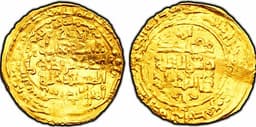
Al-Mustanjid
Emperor · Medieval
37.0Total

Napoleon Bonaparte
General · Modern
70.9Total
Basic Information
Born
1124
1769
Died
1170
1821
Era
Medieval
Modern
Nationality
Abbasid Caliphate
France
Occupation
Emperor
General
Civilization
Middle Eastern
Western
Score Comparison
Military (10%)
20.0
94.0
Political (20%)
30.7
72.0
Influence (20%)
46.3
40.0
Legacy (20%)
35.0
80.0
Leadership (15%)
31.2
78.0
Strategy (15%)
54.3
90.0
TOTAL
37.0
70.9
Al-Mustanjid — Complete Timeline
1164 AD
Conflict with the FatimidsWar◆ Major
Al-Mustanjid sent military aid to the Zengid ruler Nur al-Din against the Fatimid caliphate in Egypt. This intervention contributed to the weakening of Fatimid power and the eventual rise of Saladin.
Fatimid DeclineZengid AllianceEgypt
Impact: regional
1168 AD
Assassination of VizierPolitical Action
Al-Mustanjid ordered the assassination of his powerful vizier, Ibn Hubayra, who had become too influential. This act demonstrated the caliph's desire to control his administration but also created instability.
AssassinationVizierPower Struggle
destructive
1170 AD
Death During CampaignOther
Al-Mustanjid died while on a military campaign against the Seljuks. His death was sudden and possibly due to illness or poisoning, ending his brief reign without major achievements.
DeathCampaignSeljuk War
tragic
Napoleon Bonaparte — Complete Timeline
1799 AD
Coup of 18 BrumaireOther◆ Major
Napoleon Bonaparte, with support from his brother Lucien and key political figures, overthrew the Directory in a bloodless coup. He established the Consulate with himself as First Consul, effectively becoming the ruler of France. This event ended the French Revolution's most unstable period.
French RevolutionCoupRise to Power
Impact: regional
1804 AD
Promulgation of the Napoleonic CodeOther◆ Major
Napoleon enacted the Civil Code of the French, known as the Napoleonic Code, a comprehensive set of laws that replaced the fragmented feudal legal systems. The code established legal equality, protected property rights, and secularized law. It became the basis for legal systems in many European and world countries.
Legal ReformNapoleonic CodeCivil Law
Impact: globalconstructive
1805 AD
Battle of AusterlitzWar◆ Major
Napoleon's Grande Arm
Napoleonic WarsBattleDecisive Victory
Impact: global
1812 AD
Invasion of RussiaWar◆ Major
Napoleon led the Grande Arm
Napoleonic WarsInvasionDisaster
Impact: globaldestructive
1815 AD
Battle of WaterlooWar◆ Major
Napoleon's French army was defeated by the combined forces of the Duke of Wellington's Anglo-Allied army and Gebhard Leberecht von Bl
Napoleonic WarsBattleFinal Defeat
Impact: globaldestructive
Expert Analysis
al-mustanjid-vs-napoleon-bonaparte
The Shadow and the Sun
In the winter of 1815, Napoleon Bonaparte stood on the deck of a British ship, the *Northumberland*, watching the coast of Europe dissolve into the gray Atlantic. He was forty-five years old, a man who had crowned himself emperor, rewritten the laws of a continent, and led armies from Madrid to Moscow. Six hundred years earlier, in the spring of 1170, another ruler—Al-Mustanjid, the Abbasid caliph of Baghdad—died suddenly on a dusty campaign against the Seljuks. His body was carried back to the city he had barely governed, and within a generation, his name was all but forgotten. Why did one man reshape the world while the other vanished into the margins of history? The answer lies not merely in their actions, but in the worlds that made them.
Origins
Napoleon Bonaparte was born in 1769 on the island of Corsica, a Mediterranean backwater that had just been sold to France by Genoa. His family was minor nobility, poor enough that Napoleon entered a French military academy at age nine, mocked for his accent and small stature. The world he grew into was a powder keg: the French Revolution had shattered the old order, and a young artillery officer could rise not by birth but by brilliance. Europe was in flux, its kingdoms crumbling, its armies desperate for leaders. Napoleon’s era was one of possibility—a time when a Corsican outsider could become the master of a continent.
Al-Mustanjid was born in 1124 into the Abbasid Caliphate, a dynasty that had once ruled from Spain to India but now presided over a ghost of its former glory. By the twelfth century, the caliphs of Baghdad were spiritual figureheads, their political power long since seized by Turkish military commanders and Persian viziers. Al-Mustanjid’s father, al-Muqtafi, had clawed back some authority, but the caliphate was a theater of shadows. The real powers were the Seljuk sultans in the east and the Zengid rulers in Syria. Al-Mustanjid inherited a throne that commanded respect but not armies, a title that could bless wars but not win them. His world was one of decline, where survival meant navigating a web of stronger neighbors.
Rise to Power
Napoleon’s ascent was a story of audacity. In 1793, at age twenty-four, he drove the British out of Toulon with a brilliant artillery barrage. By 1796, he was commanding the Army of Italy, where he turned a starving, ragged force into a conquering machine. He won battles not by overwhelming numbers but by speed, deception, and the ruthless exploitation of enemy mistakes. His victory at Austerlitz in 1805—where he crushed the combined armies of Russia and Austria—cemented his reputation as a military genius. Political power followed naturally: in 1799, he overthrew the French Directory in a coup, and by 1804, he crowned himself emperor in Notre Dame. Every step was a gamble, and every gamble paid off.
Al-Mustanjid’s rise was far quieter. He became caliph in 1160 upon his father’s death, inheriting a role that was more ceremonial than commanding. His power was not won on battlefields but maintained through alliances and assassinations. In 1164, he sent military aid to the Zengid ruler Nur al-Din against the Fatimid caliphate in Egypt—a war he did not lead but supported. In 1168, he ordered the assassination of his own vizier, Ibn Hubayra, who had grown too powerful. These were the moves of a man fighting not to expand an empire but to keep his throne. His rise was not a conquest; it was a survival.
Leadership & Governance
Napoleon governed with the same energy he brought to war. He reformed France’s legal system with the Napoleonic Code, standardizing laws across a fragmented nation. He centralized education, built roads, and established the Bank of France. His military genius was matched by a political instinct that understood propaganda: he controlled the press, created a new aristocracy, and presented himself as the embodiment of the Revolution’s ideals—even as he crushed dissent. His leadership was absolute, efficient, and personal. He knew the names of his soldiers, the details of his logistics, and the weaknesses of every enemy.
Al-Mustanjid governed from the shadows. His political score of 38.2 and leadership score of 35.1 reflect a ruler who could not command armies or shape institutions. He relied on his vizier until that vizier became a threat; then he eliminated him. His military score of 37.0 tells the same story: he died on a campaign against the Seljuks, but he did not win it. His reign was a holding action, a desperate attempt to preserve the caliphate’s dwindling authority in a world of sultans and emirs. Where Napoleon built, Al-Mustanjid merely survived.
Triumph & Tragedy
Napoleon’s greatest moment was Austerlitz, where he destroyed a larger enemy army in a single day. His greatest tragedy was the invasion of Russia in 1812—a campaign that began with 600,000 men and ended with fewer than 100,000. He was exiled to Elba in 1814, returned to power for a Hundred Days, and was finally defeated at Waterloo in 1815. His fall was as dramatic as his rise, a Shakespearean arc of pride and overreach.
Al-Mustanjid’s triumphs were modest: he kept the caliphate alive, sent aid to Nur al-Din, and maintained Baghdad’s prestige. His tragedy was his death—sudden, possibly from illness, while on a campaign that achieved nothing. He left no code, no empire, no legend. His total score of 45.5 is not a judgment of his character but a measure of his impact: he was a caretaker in an age of giants.
Character & Destiny
Napoleon was driven by an insatiable ambition. “Impossible is a word to be found only in the dictionary of fools,” he once said. His personality—restless, calculating, charismatic—shaped every decision. He believed in destiny but forged it himself. His downfall came from the same ambition that lifted him: he could not stop, could not consolidate, could not accept limits.
Al-Mustanjid was a man of his time—cautious, pragmatic, and aware of his constraints. He ordered an assassination to protect his power, but he could not command a great army. His character was forged not by opportunity but by limitation. Destiny for him was not a path to glory but a narrow corridor of survival.
Legacy
Napoleon’s legacy is immense. The Napoleonic Code influenced legal systems across Europe and the world. His military tactics are still studied. He reshaped national boundaries, inspired nationalism, and left a shadow that stretches into the present. His influence score of 82.0 and legacy score of 78.0 reflect a man who changed history.
Al-Mustanjid’s legacy is a footnote. He appears in histories of the Abbasid Caliphate as a minor figure, a brief reign between more notable rulers. His influence score of 58.5 and legacy score of 43.9 are generous for a caliph who did little more than hold his ground.
Conclusion
The difference between Napoleon and Al-Mustanjid is not one of talent or will. It is the difference between a world in revolution and a world in decline. Napoleon rode the wave of a new era; Al-Mustanjid swam against the current of an old one. One man had the fortune to be born into chaos that rewarded brilliance; the other was born into order that rewarded patience. History remembers the conqueror, not the caretaker. But both were prisoners of their time—Napoleon of his ambition, Al-Mustanjid of his limits. In the end, the stage matters as much as the actor.
Rankings
🥇
Napoleon BonaparteLeader
Mil: 94.0Pol: 72.0Inf: 40.0
70.9
🥈
Al-Mustanjid
Mil: 20.0Pol: 30.7Inf: 46.3
37.0
+33.9 behind
How This Comparison Works
Algorithm
Each figure is scored on 6 dimensions (0—100 scale) based on structured historical data: Military (10%), Political (20%), Influence (20%), Legacy (20%), Leadership (15%), Strategy (15%). The weighted total produces the final ranking.
Data Sources
Scores are computed from structured sub-indicators in the database. Scale factors adjust for era (Ancient ×0.85, Modern ×1.0) and civilization size (Eastern ×1.05, Other ×0.80) to account for differences in population and military scale.
Maximum 3 Figures
Comparisons are limited to 2—3 figures to ensure readability and statistical meaningfulness.
Error Margins
±5 points per dimension — Sub-scores are derived from historical records with inherent uncertainty. Two figures within 5 points on a dimension should be considered roughly equivalent in that area.
Total Score Accuracy
±3 points overall — The weighted combination of 6 dimensions produces a total score with approximately ±3 points of uncertainty. Differences of less than 3 points are not statistically significant— the figures are effectively tied.
Known Limitations
- Historical records are incomplete and uneven across civilizations
- Figures from oral-tradition societies may be underrepresented
- Occupation labels can misclassify multi-role figures
- Scores measure capability and impact, not moral character
- Quantitative scoring is a comparison tool, not absolute truth
Capability Radar
Military (10%) — Battles & Warfare
Battles
5
95
Win Rate
5
90
Expansion
5
95
Political (20%) — Governance & Reform
Reform
10
95
Diplomacy
15
80
Economy
10
85
Influence (20%) — Cultural & Global Reach
Cultural
10
85
Global
5
90
Legacy (20%) — Historical Impact
Historical
10
95
Longevity
10
90
Leadership (15%) — Power & Stability
Tenure
20
85
Stability
15
70
Strategy (15%) — Tactics & Innovation
Strategy
5
95
Tactics
5
98
Reform
5
92
Similar Comparisons
Comments & Discussion
AbbasidWhisperer6/17/2026
This comparison is facile. Napoleon was a self-made titan of raw ambition and military genius, while Al-Mustanjid was a puppet caliph suffocated by his own court. Look at the facts: Al-Mustanjid spent his reign fighting the Seljuks, but the Abbasids were already ceremonial figureheads by his time; his real power was nil. Napoleon seized control of France and reshaped Europe with the Napoleonic Code. The contrast is between a man who led armies and a man who followed processions. Apples to orange
NapoleonCodeBreaker6/17/2026
Let's get to the numbers. Napoleon raised nearly 3 million soldiers over his campaigns, fighting 60 battles and winning most of them. Al-Mustanjid commanded maybe a few thousand in a single dusty skirmish against the Seljuks. The analysis waxes poetic about "worlds," but the hard truth is scale: Napoleon's wars involved armies numbering hundreds of thousands, and his innovations in logistics and artillery changed military doctrine forever. Al-Mustanjid's "campaign" barely qualifies as a footnote
黄昏骑士6/17/2026
把拿破仑和穆斯坦吉德比较,简直是对历史的侮辱。拿破仑用滑铁卢定义了战争,穆斯坦吉德连自己首都都管不好。资料显示,1170年他死时,巴格达的哈里发不过是个宗教吉祥物,实权早被塞尔柱人掏空了。拿破仑不同,他亲手解散了神圣罗马帝国,重新划分了德意志。一个在废墟上建立帝国,一个在旧梦里腐烂。不是同时代的人,别放在一个天平上。
墨守成规者6/17/2026
这个分析想用“时代背景”当借口,但忽略了核心:个人意志力。拿破仑被流放到厄尔巴岛后不到一年,就带着几百人卷土重来,重掌法国。穆斯坦吉德呢?他面对塞尔柱人入侵,连一场像样的反击都没组织过,最后死在帐篷里。历史学家总爱说“时代的塑造”,但别忘了一个人也可以逆时代而战。拿破仑做到了,穆斯坦吉德只是历史的尘埃。别为平庸找借口。
铁骑记事6/17/2026
你们都在吹捧拿破仑的宏大,却忘了穆斯坦吉德的文化遗产。阿拔斯王朝末期,巴格达仍是知识中心,穆斯坦吉德赞助过诗集和天文观测,而拿破仑虽搞了法典,但欧洲的战争机器碾碎了无数文化。量尺不同:拿破仑用军旗丈量领土,穆斯坦吉德用书卷度量时间。两个人都没输给时代,只是赢的定义不同。别急着盖章谁更伟大,先看看你衡量的是什么。