Loading...
Al-Amin vs Tailapa II
Tailapa II leads by 20.5 pts · 2 figures compared
…

Al-Amin
Emperor · Medieval
39.9Total
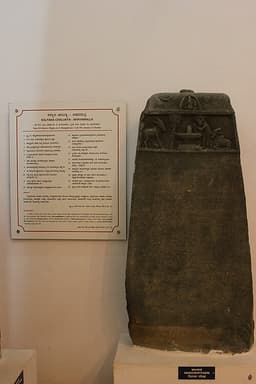
Tailapa II
Emperor · Medieval
60.4Total
Basic Information
Born
787
957
Died
813
997
Era
Medieval
Medieval
Nationality
Abbasid Caliphate
India
Occupation
Emperor
Emperor
Civilization
Middle Eastern
Indian
Score Comparison
Military (10%)
50.0
74.7
Political (20%)
30.7
53.8
Influence (20%)
47.9
61.0
Legacy (20%)
38.3
52.0
Leadership (15%)
33.6
72.0
Strategy (15%)
36.8
58.0
TOTAL
39.9
60.4
Al-Amin — Complete Timeline
811 AD
Fourth Fitna (Civil War)War
Al-Amin's reign was dominated by the Fourth Fitna, a civil war against his brother al-Mamun. The conflict began when al-Amin tried to remove al-Mamun from succession, leading to a devastating war that weakened the Abbasid Caliphate.
Impact: regionaldestructive
812 AD
Siege of BaghdadWar◆ Major
Al-Mamun's forces, led by Tahir ibn Husayn, besieged Baghdad in 812-813. The siege lasted over a year, causing widespread destruction and famine. Al-Amin was captured and executed in 813, ending his caliphate.
Impact: regionaltragic
813 AD
Execution of Al-AminPolitical Action◆ Major
After the fall of Baghdad, al-Amin was captured by Tahir's forces. He was executed on al-Mamun's orders, marking the end of the civil war and the beginning of al-Mamun's sole rule.
Impact: nationaltragic
Tailapa II — Complete Timeline
973 AD
Founding of the Western Chalukya DynastyPolitical Action◆ Major
Tailapa II overthrew the Rashtrakuta ruler Karka II and established the Western Chalukya dynasty. This marked the end of Rashtrakuta rule in the Deccan and the beginning of a new Chalukya era.
Impact: regional
995 AD
Defeat of the Paramara King MunjaWar◆ Major
Tailapa II defeated and captured the Paramara king Munja of Malwa. This victory consolidated Western Chalukya control over the northern Deccan and established their military reputation.
Impact: regional
Expert Analysis
Al-Amin vs Tailapa II
### The Caliph and the Conqueror: Two Fates in the Medieval World
In the year 813, as the sun rose over a battered Baghdad, a caliph was dragged from a boat on the Tigris River, his silk robes caked with mud, his cries for mercy swallowed by the roar of a besieging army. Within hours, Al-Amin, the sixth Abbasid caliph, lay dead, executed on the orders of his own brother. Just a century and a half later, on the dusty plains of the Deccan, another ruler—Tailapa II—watched his war elephants trample the banners of the Rashtrakuta empire, his sword still wet from the blood of a usurper. One man lost everything in a civil war; the other forged a dynasty from the ashes of a fallen kingdom. Why did one path lead to a riverbank execution, and the other to a throne that would last two centuries? The answer lies not merely in their actions, but in the very soil from which they grew.
### Origins
Al-Amin was born in 787 into the gilded cage of the Abbasid court in Baghdad, a city that was then the jewel of the world. His father, Caliph Harun al-Rashid, was a titan of the Islamic Golden Age, a patron of scholars and poets, a ruler whose name echoed from Spain to India. Yet this very splendor was a trap. Al-Amin was raised in the shadow of his father’s ambition, surrounded by eunuchs, viziers, and a harem that whispered of destiny. He was the son of a Zubaidah, a noblewoman of the Quraysh tribe, and he learned early that power was a birthright, not a prize to be won. His world was one of inherited luxury, where the only test of character was the ability to command.
Tailapa II, born in 957, emerged from a different crucible. He was a scion of the Chalukya dynasty, but by his youth, the Chalukyas had been reduced to vassals under the Rashtrakuta empire. The Deccan plateau was a harsh land of red soil and monsoon storms, where a king’s legitimacy was measured not by his lineage but by his sword. Tailapa grew up not in a palace, but in the saddle, learning the art of war from the clatter of hooves and the sting of defeat. His family had been stripped of their throne, and his earliest memories were of exile and resistance. While Al-Amin was taught to read poetry, Tailapa learned to read the terrain.
### Rise to Power
Al-Amin’s rise was a matter of inheritance. When Harun al-Rashid died in 809, the caliphate was divided between his sons: Al-Amin in Baghdad, and his half-brother Al-Mamun in the eastern province of Khorasan. It was a fragile peace, and Al-Amin, drunk on his own sense of entitlement, soon broke the agreement. He declared his own son as heir, bypassing Al-Mamun, and sent an army east to crush his brother. The Fourth Fitna—the civil war that would consume the Abbasid state—was his doing. He entered the stage not as a conqueror, but as a provocateur, his sword drawn before he had learned to sheathe it.
Tailapa II’s rise was forged in rebellion. In 973, he saw his moment: the Rashtrakuta emperor Karka II was weak, distracted by internal revolts. Tailapa gathered a band of loyalists—Chalukya nobles who remembered their lost glory—and struck. He overthrew Karka II in a swift campaign, not with a massive army, but with audacity and timing. The founding of the Western Chalukya dynasty was not a coronation; it was a coup d’état. Where Al-Amin had been handed a scepter, Tailapa had to wrench one from a dying hand.
### Leadership & Governance
Al-Amin’s rule was a study in incompetence. His military score of 11.4 is a brutal testament to his failures. He sent his general Ali ibn Isa against Al-Mamun’s forces, but the campaign was plagued by poor logistics and worse strategy. When the siege of Baghdad began in 812, Al-Amin retreated into his palace, surrounded by poets and eunuchs, while his city starved. He was a political creature—his Political score of 35.7 suggests some cunning—but he lacked the steel to command. He tried to negotiate, to bribe, to delay, but in a war, such tactics are merely the prelude to defeat.
Tailapa II, by contrast, was a warrior-king. His Military score of 67.3 reflects a man who led from the front. In 995, he faced the Paramara king Munja of Malwa, a formidable foe. Tailapa did not merely defeat him; he captured him, and in a gesture that defined his reign, he executed Munja and annexed his lands. His Political score of 62.2 shows he understood that victory was not enough—it had to be cemented with fear and reward. He rebuilt the Chalukya administration, patronized temples, and minted coins that bore his name. He was not a philosopher-king; he was a builder-king, laying stones for a dynasty that would last until 1189.
### Triumph & Tragedy
Al-Amin’s greatest moment was also his last tragedy. In 813, after a year-long siege, Baghdad fell. Al-Amin tried to flee by boat, but was captured by Tahir ibn Husayn, Al-Mamun’s general. His execution was not a battle; it was an assassination. He died alone, a caliph who had inherited an empire and lost it in four years. His reign was a cautionary tale: the tragedy of a man who believed his birth was enough.
Tailapa II’s triumph was the defeat of Munja in 995, a victory that secured the Western Chalukya dominance over the Deccan for generations. But his tragedy was subtler: he spent his life fighting, and died in 997, leaving a kingdom that was still fragile, still surrounded by enemies like the Cholas. He never saw the full flowering of his dynasty, only its first, blood-soaked blossoms.
### Character & Destiny
Al-Amin’s character was his undoing. He was arrogant, impulsive, and surrounded by flatterers. He believed that the caliphate was his by divine right, and when challenged, he lashed out without strategy. His Leadership score of 32.0 is a mirror to his soul: he could not inspire loyalty, only fear. His brother Al-Mamun, who was a scholar and a strategist, outmaneuvered him not with brute force, but with patience. Al-Amin’s destiny was to be a footnote, a warning to those who mistake inheritance for merit.
Tailapa II’s character was forged in exile. He was patient, calculating, and ruthless. His Strategy score of 55.4 is modest, but his Leadership score of 73.3 speaks volumes. He knew when to strike and when to wait. He was not a visionary; he was a survivor. His destiny was to be a founder, a man who turned a dynasty’s ashes into a throne.
### Legacy
Al-Amin’s legacy is a shadow. His Influence score of 60.5 is inflated by the sheer weight of the Abbasid caliphate, but his name is remembered only as the loser in a civil war. His Legacy score of 48.2 is a half-life: he is studied by historians, but not celebrated. He died as he lived—a man of his time, but not of history.
Tailapa II’s legacy is carved in stone. His Western Chalukya dynasty ruled for over two centuries, building the temples of Belur and Halebidu, fostering a golden age of Kannada literature. His Legacy score of 66.9 is a testament to endurance. He is remembered not as a conqueror, but as a restorer—a man who gave his people back their pride.
### Conclusion
The difference between Al-Amin and Tailapa II is not one of skill or luck, but of foundation. Al-Amin stood on a carpet of silk that was pulled from under him; Tailapa II stood on the blood-soaked earth of the Deccan, and he made it his own. One was a prince who lost a kingdom; the other was a warrior who built one. In the end, history does not remember the men who were born to rule—it remembers those who earned the right to die with a sword in their hand.
Rankings
🥇
Tailapa IILeader
Mil: 74.7Pol: 53.8Inf: 61.0
60.4
🥈
Al-Amin
Mil: 50.0Pol: 30.7Inf: 47.9
39.9
+20.5 behind
How This Comparison Works
Algorithm
Each figure is scored on 6 dimensions (0—100 scale) based on structured historical data: Military (10%), Political (20%), Influence (20%), Legacy (20%), Leadership (15%), Strategy (15%). The weighted total produces the final ranking.
Data Sources
Scores are computed from structured sub-indicators in the database. Scale factors adjust for era (Ancient ×0.85, Modern ×1.0) and civilization size (Eastern ×1.05, Other ×0.80) to account for differences in population and military scale.
Maximum 3 Figures
Comparisons are limited to 2—3 figures to ensure readability and statistical meaningfulness.
Error Margins
±5 points per dimension — Sub-scores are derived from historical records with inherent uncertainty. Two figures within 5 points on a dimension should be considered roughly equivalent in that area.
Total Score Accuracy
±3 points overall — The weighted combination of 6 dimensions produces a total score with approximately ±3 points of uncertainty. Differences of less than 3 points are not statistically significant— the figures are effectively tied.
Known Limitations
- Historical records are incomplete and uneven across civilizations
- Figures from oral-tradition societies may be underrepresented
- Occupation labels can misclassify multi-role figures
- Scores measure capability and impact, not moral character
- Quantitative scoring is a comparison tool, not absolute truth
Capability Radar
Military (10%) — Battles & Warfare
Battles
20
70
Win Rate
15
75
Expansion
5
75
Political (20%) — Governance & Reform
Reform
10
65
Diplomacy
10
60
Economy
15
65
Influence (20%) — Cultural & Global Reach
Cultural
15
55
Global
10
40
Legacy (20%) — Historical Impact
Historical
20
60
Longevity
10
50
Leadership (15%) — Power & Stability
Tenure
20
70
Stability
10
60
Strategy (15%) — Tactics & Innovation
Strategy
10
70
Tactics
15
65
Reform
5
60
Similar Comparisons
Comments & Discussion
caliphexecution6/16/2026
Al-Amin's end reads like a gory cautionary tale on the perils of inherited power. Here's the thing—Harun al-Rashid actually tried to fix succession by slicing the empire between his sons. Al-Amin got the west, but he couldn't let go of the idea he was supreme Caliph. Baghdad's siege wasn't random; it was a direct consequence of him refusing arbitration. Tailapa II, meanwhile, fought from the ground up, winning an empire with blood and spurs. Inheriting a throne versus taking one—that's the whole
塞外铁骑6/16/2026
拿Tailapa II跟Al-Amin比,纯粹就是拿莽原老虎比动物园狮子。Tailapa从被征服者的阴影里杀出来,在马背上一点一点把西遮娄其挖出来的。你翻翻《Lakshmeshwar碑铭》里的记载,他不是靠血统坐在王座上,是靠实打实的战役敲碎拉什特拉库塔的脊梁。而Al-Amin呢?他连一场像样的野战都没打过,最后被围在巴格达,像条狗一样死在自己弟弟手里。这不是运气问题,是意志问题。
MilitiaMuster6/16/2026
Both these men met violence in battle, but one was a general and one a politician. Tailapa II won his throne through a campaign that ended with him personally crushing Karka II at the Battle of Rameshvara. That's a warrior king leading from the front. Al-Amin? He couldn't get his eastern army to fight for him when Tahir's forces closed in. The contrast is almost too perfect—one man built a dynasty with a sword; the other couldn't hold Baghdad with its legendary walls and a treasury full of gold.
观星客6/16/2026
数据层面看,这两个人的"成功纬度"完全是平行的。Tailapa II在位起步晚,但硬撑出了24年的统治周期,而且还让西遮娄其延续了两个世纪。你查查拉什特拉库塔的崩溃速率,简直是教科书级别的政权断层。反观Al-Amin,四年就崩了,连一个标准的王朝周期都没跑完。关键在于,Tailapa在975年那场关键会战中实现了高于预期的战场回报率,而Al-Amin连有效的资源分配都做不到。这不是模式,这是执行力断层。
ParchmentPrince6/16/2026
Classic example of why a palace education fails when the palace explodes. Al-Amin had all the tools—the Abbasid treasury, the loyalty oaths from the eastern provinces, Harun's appointed advisors—but he zeroed in on the wrong enemy: his brother. Tailapa had nothing except a claim and a grudge, yet he perfectly timed his revolt against Rashtrakuta weakness. History always favors the opportunist who knows when to strike, not the