Loading...
Al-Amin vs Charles de Gaulle
Charles de Gaulle leads by 28.3 pts · 2 figures compared
…

Al-Amin
Emperor · Medieval
39.9Total
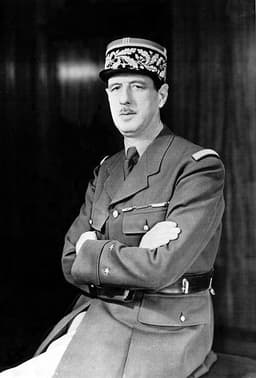
Charles de Gaulle
Politician · Modern
68.2Total
Basic Information
Born
787
1890
Died
813
1970
Era
Medieval
Modern
Nationality
Abbasid Caliphate
France
Occupation
Emperor
Politician
Civilization
Middle Eastern
Western
Score Comparison
Military (10%)
50.0
55.0
Political (20%)
30.7
75.0
Influence (20%)
47.9
65.0
Legacy (20%)
38.3
68.0
Leadership (15%)
33.6
78.0
Strategy (15%)
36.8
65.0
TOTAL
39.9
68.2
Al-Amin — Complete Timeline
811 AD
Fourth Fitna (Civil War)War
Al-Amin's reign was dominated by the Fourth Fitna, a civil war against his brother al-Mamun. The conflict began when al-Amin tried to remove al-Mamun from succession, leading to a devastating war that weakened the Abbasid Caliphate.
Impact: regionaldestructive
812 AD
Siege of BaghdadWar◆ Major
Al-Mamun's forces, led by Tahir ibn Husayn, besieged Baghdad in 812-813. The siege lasted over a year, causing widespread destruction and famine. Al-Amin was captured and executed in 813, ending his caliphate.
Impact: regionaltragic
813 AD
Execution of Al-AminPolitical Action◆ Major
After the fall of Baghdad, al-Amin was captured by Tahir's forces. He was executed on al-Mamun's orders, marking the end of the civil war and the beginning of al-Mamun's sole rule.
Impact: nationaltragic
Charles de Gaulle — Complete Timeline
1940 AD
Appeal of 18 June 1940Political Action
From London, de Gaulle broadcast a radio appeal urging French resistance against Nazi occupation. He called on French soldiers and citizens to continue the fight, founding the Free French Forces and becoming the symbol of French defiance.
World War IIResistanceLeadership
Impact: nationalconstructive
1958 AD
Founding of the Fifth RepublicPolitical Action
De Gaulle returned to power during the Algerian crisis and oversaw the drafting of a new constitution. The Fifth Republic established a strong executive presidency, replacing the unstable parliamentary system of the Fourth Republic.
ConstitutionGovernment ReformPolitical System
Impact: nationalconstructive
1962 AD
End of the Algerian WarPolitical Action◆ Major
De Gaulle negotiated the
DecolonizationPeace TreatyAlgeria
Impact: regionalconstructive
1968 AD
May 1968 CrisisPolitical Action◆ Major
Mass student protests and general strikes paralyzed France, challenging de Gaulle's government. De Gaulle briefly fled to Germany, then returned to dissolve the National Assembly and call elections, which his party won, but his authority was weakened.
ProtestPolitical CrisisSocial Unrest
Impact: nationaldestructive
1969 AD
Resignation as PresidentPolitical Action
De Gaulle resigned after losing a referendum on regional reform and Senate restructuring. The defeat marked the end of his political career, as he withdrew from public life and died the following year.
ResignationPolitical DefeatReferendum
Impact: nationaltragic
Expert Analysis
Charles de Gaulle vs Al-Amin
# The General and the Caliph: Two Men Who Shaped Their Civilizations
On a June evening in 1940, a tall, gangly French general stood before a microphone in a London studio and spoke words that would echo through history. France had fallen, the government was capitulating, and yet this obscure officer, barely known to his countrymen, declared that the flame of French resistance must not be extinguished. Across the centuries and continents, in the year 811, another leader faced his moment of truth—but from a very different vantage point. Muhammad al-Amin, Caliph of the Abbasid Empire, sat in his palace in Baghdad as his brother’s armies marched toward the gates. Where de Gaulle saw defeat as a beginning, al-Amin saw it as an end. The difference between these two men—one who rebuilt a nation from ashes, the other who lost an empire in flames—tells us something profound about character, circumstance, and the strange mathematics of historical destiny.
Origins
Charles de Gaulle was born in 1890 into a devoutly Catholic, patriotic family in Lille, northern France. His father taught philosophy and history, instilling in young Charles a sense that France possessed a unique destiny. From childhood, de Gaulle was marked by a towering height—nearly six-foot-five—and a towering ambition. He read deeply in military strategy, philosophy, and literature, and his early writings revealed a man who believed that great leaders were forged by adversity. The Franco-Prussian War of 1870, which ended in French humiliation, haunted his generation. De Gaulle grew up determined that France must never again suffer such a fall.
Al-Amin was born in 787 into the heart of the Abbasid Caliphate, the golden age of Islamic civilization. His father, Caliph Harun al-Rashid, was the legendary ruler of *One Thousand and One Nights*, presiding over a realm that stretched from Spain to India. Al-Amin was raised in the luxurious palaces of Baghdad, surrounded by scholars, poets, and eunuchs. His mother Zubayda came from the Abbasid royal line, making him doubly noble. But he was also the elder son, designated heir, and he grew up expecting that the empire would simply be handed to him. Where de Gaulle learned that greatness must be earned through struggle, al-Amin learned that greatness was his birthright.
Rise to Power
De Gaulle entered the historical stage through the catastrophe of 1940. A colonel at the outbreak of World War II, he briefly served as undersecretary of defense before the French government surrendered. On June 18, 1940, from London, he broadcast his famous appeal, urging French soldiers and citizens to continue the fight. At the time, almost no one listened. The French army was shattered, most of the political class had accepted defeat, and Winston Churchill himself was uncertain about this unknown general. But de Gaulle understood something essential: legitimacy comes not from power but from the claim to represent the nation’s true will. He created the Free French Forces from a handful of volunteers, and over four years of war, he slowly, painfully, became the embodiment of France itself.
Al-Amin’s rise was far simpler. When Harun al-Rashid died in 809, al-Amin inherited the caliphate in Baghdad, while his half-brother al-Mamun governed the eastern provinces from Merv. The arrangement was supposed to maintain unity, but it contained the seeds of civil war. Al-Amin, surrounded by courtiers who flattered his vanity, began to believe that the empire belonged to him alone. He moved to remove al-Mamun from succession, appointing his own infant son instead. It was a fatal miscalculation. Where de Gaulle built his authority from nothing, al-Amin squandered authority that had been given to him.
Leadership & Governance
De Gaulle’s leadership style was autocratic but visionary. When he returned to power in 1958 during the Algerian crisis, he did not merely solve a problem—he created a new system. The Fifth Republic, with its powerful presidency, was designed to prevent the parliamentary paralysis that had weakened France for decades. De Gaulle governed with a sense of historical mission, believing that France could not be France without greatness. He withdrew from NATO, developed an independent nuclear deterrent, and sought to position France as a bridge between East and West. His political wisdom lay in knowing when to be inflexible—as with his rejection of American domination—and when to be pragmatic, as with his decision to grant Algeria independence despite the fury of French colonists.
Al-Amin’s governance, by contrast, was marked by incompetence and indulgence. His military score of 11.4 and strategy of 30.0 reflect a leader who did not understand that power requires constant attention. He appointed his general Ali ibn Isa to lead an army against al-Mamun, but the campaign was poorly planned and disastrously executed. In 811, al-Mamun’s forces under the brilliant general Tahir ibn Husayn defeated the caliphal army and began their march on Baghdad. Al-Amin’s response was not to rally the city’s defenders but to retreat into his palace, surrounded by eunuchs and poets who assured him of victory. The siege of Baghdad, lasting from 812 to 813, brought famine and destruction to the greatest city of the age.
Triumph & Tragedy
De Gaulle’s greatest moment came in August 1944, when he walked down the Champs-Élysées after the liberation of Paris. It was a triumph of will over circumstance. His most devastating failure was the May 1968 crisis, when student protests and general strikes paralyzed France. De Gaulle, now an old man, seemed bewildered by a generation that did not share his vision of national greatness. He briefly fled to Germany to consult with French generals—a moment of panic that nearly destroyed his authority. He recovered, called new elections, and won, but the magic was broken. In 1969, he resigned after losing a referendum on minor reforms, choosing to leave rather than compromise.
Al-Amin’s tragedy was absolute. In 813, after a year-long siege, Baghdad fell to Tahir’s forces. The caliph was captured while trying to escape by boat, dressed as a woman—a detail that later chroniclers used to emphasize his cowardice. Tahir ordered his execution, and al-Amin was killed in his thirties, his head presented to al-Mamun. The Fourth Fitna, the civil war that destroyed him, left the Abbasid Caliphate permanently weakened. The golden age of Baghdad was over, and the empire never fully recovered.
Character & Destiny
De Gaulle and al-Amin were products of their upbringings. De Gaulle’s early defeats—the fall of France, the years of exile, the constant struggle for recognition—forged in him a resilience that became his defining trait. He once wrote, “France has always been accustomed to great trials. She has always risen from them.” Al-Amin’s early victories—being born the favored son of the greatest ruler of his age—forged in him a complacency that became his undoing. He had never learned to fight, because he had never needed to.
Their personalities shaped their decisions. De Gaulle’s aloofness, his refusal to be loved, his insistence on being respected—these traits allowed him to make unpopular decisions like ending the Algerian War. Al-Amin’s love of luxury and flattery, his inability to hear bad news, his reliance on courtiers who told him what he wanted to hear—these traits made disaster inevitable. One man understood that leadership is a burden; the other believed it was a reward.
Legacy
De Gaulle’s legacy is enormous. The Fifth Republic still governs France today. His vision of an independent foreign policy, his emphasis on national sovereignty, his belief that France has a unique role in the world—these ideas continue to shape French politics. He is remembered as the man who saved France twice: once from Nazi occupation, and once from civil war over Algeria. His political score of 82.0 and leadership of 78.0 reflect a figure who, whatever his flaws, understood the art of governing.
Al-Amin’s legacy is cautionary. He is remembered as the caliph who lost an empire through incompetence and vanity. His total score of 39.3 is among the lowest for any major historical figure. But his story has value precisely because it shows how easily power can be squandered. The Abbasid Caliphate would limp on for centuries, but its greatest days ended with al-Amin’s death. The lesson is stark: empires are not inherited; they must be earned every day.
Conclusion
What separates the great from the forgotten? De Gaulle and al-Amin were both born into privilege, both faced existential crises, both had the chance to shape history. One rose to the occasion; the other sank beneath it. The difference was not intelligence or opportunity but character—the willingness to endure, to learn, to sacrifice comfort for duty. De Gaulle once said, “The sword is the axis of the world, and greatness cannot be achieved without it.” Al-Amin might have replied, in his final moments, that greatness cannot be achieved without the will to wield it. Their stories remind us that history is not written by the fortunate but by the determined.
Rankings
🥇
Charles de GaulleLeader
Mil: 55.0Pol: 75.0Inf: 65.0
68.2
🥈
Al-Amin
Mil: 50.0Pol: 30.7Inf: 47.9
39.9
+28.3 behind
How This Comparison Works
Algorithm
Each figure is scored on 6 dimensions (0—100 scale) based on structured historical data: Military (10%), Political (20%), Influence (20%), Legacy (20%), Leadership (15%), Strategy (15%). The weighted total produces the final ranking.
Data Sources
Scores are computed from structured sub-indicators in the database. Scale factors adjust for era (Ancient ×0.85, Modern ×1.0) and civilization size (Eastern ×1.05, Other ×0.80) to account for differences in population and military scale.
Maximum 3 Figures
Comparisons are limited to 2—3 figures to ensure readability and statistical meaningfulness.
Error Margins
±5 points per dimension — Sub-scores are derived from historical records with inherent uncertainty. Two figures within 5 points on a dimension should be considered roughly equivalent in that area.
Total Score Accuracy
±3 points overall — The weighted combination of 6 dimensions produces a total score with approximately ±3 points of uncertainty. Differences of less than 3 points are not statistically significant— the figures are effectively tied.
Known Limitations
- Historical records are incomplete and uneven across civilizations
- Figures from oral-tradition societies may be underrepresented
- Occupation labels can misclassify multi-role figures
- Scores measure capability and impact, not moral character
- Quantitative scoring is a comparison tool, not absolute truth
Capability Radar
Military (10%) — Battles & Warfare
Battles
20
60
Win Rate
15
55
Expansion
5
20
Political (20%) — Governance & Reform
Reform
10
95
Diplomacy
10
90
Economy
15
70
Influence (20%) — Cultural & Global Reach
Cultural
15
70
Global
10
80
Legacy (20%) — Historical Impact
Historical
20
85
Longevity
10
75
Leadership (15%) — Power & Stability
Tenure
20
85
Stability
10
75
Strategy (15%) — Tactics & Innovation
Strategy
10
85
Tactics
15
70
Reform
5
80
Similar Comparisons
Comments & Discussion
DawnPatrol19406/16/2026
De Gaulle is the strategist who understood that losing a battle is not losing the war; Al-Amin proves that a caliph who can’t hold Baghdad loses the entire narrative. De Gaulle’s BBC speech wasn’t just defiance—it was a masterclass in political branding. He didn’t retreat; he repositioned. Meanwhile, Al-Amin’s biggest mistake wasn’t losing the siege—it was letting his mother orchestrate the succession. That’s dynasty 101: don’t let family run the war room. Al-Amin? A short-term micromanager. De
沙漠孤狼6/16/2026
别拿戴高乐和拉敏比,简直是拿拿破仑跟一个卖枣的比。拉敏?他连巴格达城里那点防御工事都守不住。公元811年,他弟弟马蒙的军队还没真打,拉敏自己就先慌了,结果被活活斩首。这叫领袖?戴高乐是1940年全法国投降了,他一个人跑到伦敦说“我们还没输”。一个是绝境里点灯,一个是富丽堂皇的宫殿里自己把自己掐死。拉敏输的不仅是帝国,是整条对抗命运的脊梁骨。
Numismatist996/16/2026
Let’s get this straight: Al-Amin printed coins calling himself “the Commander of the Faithful” but couldn’t command a grain shipment past his brother’s pickets. De Gaulle controlled London, Brazzaville, and a few ships, yet he built a government-in-exile that won the war. Al-Amin inherited the caliphate with a full treasury, a loyal army, and a city that was a global hub—and he lost it in under two years. De Gaulle inherited a ghost of a country and turned it into a permanent UN Security Council
铁幕书生6/16/2026
军事上不用争了,戴高乐知道什么时候退,什么时候进;拉敏连弟弟都不如。但作为历史爱好者,我倒想说说他们的死亡叙事——戴高乐死了,法国人给他办国葬,至今爱丽舍宫墙上刻着他的话;拉敏死了,历史书上只留一句“被马蒙击溃后斩首”。拉敏的败笔不只在战场,在他的整个政治遗产被胜利方彻底抹杀。这说明什么?历史是赢家写的。戴高乐是赢家,所以他成了神话;拉敏是输家,所以他只是王朝内战的一个注脚。
ClassicsChron6/16/2026
Al-Amin’s fall is a textbook case of hubris—he ignored the logistical realities of a two-front rebellion while demanding his generals flatter him. De Gaulle, by contrast,