Loading...
Al-Amin vs Al-Mustansir
Al-Mustansir leads by 15.7 pts · 2 figures compared
…

Al-Amin
Emperor · Medieval
39.9Total
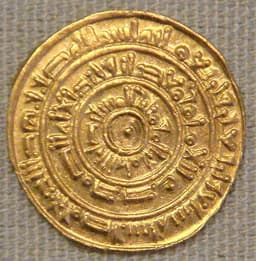
Al-Mustansir
Emperor · Medieval
55.6Total
Basic Information
Born
787
1192
Died
813
1242
Era
Medieval
Medieval
Nationality
Abbasid Caliphate
Abbasid Caliphate
Occupation
Emperor
Emperor
Civilization
Middle Eastern
Middle Eastern
Score Comparison
Military (10%)
50.0
20.0
Political (20%)
30.7
68.0
Influence (20%)
47.9
55.0
Legacy (20%)
38.3
58.0
Leadership (15%)
33.6
71.0
Strategy (15%)
36.8
45.0
TOTAL
39.9
55.6
Al-Amin — Complete Timeline
811 AD
Fourth Fitna (Civil War)War
Al-Amin's reign was dominated by the Fourth Fitna, a civil war against his brother al-Mamun. The conflict began when al-Amin tried to remove al-Mamun from succession, leading to a devastating war that weakened the Abbasid Caliphate.
Impact: regionaldestructive
812 AD
Siege of BaghdadWar◆ Major
Al-Mamun's forces, led by Tahir ibn Husayn, besieged Baghdad in 812-813. The siege lasted over a year, causing widespread destruction and famine. Al-Amin was captured and executed in 813, ending his caliphate.
Impact: regionaltragic
813 AD
Execution of Al-AminPolitical Action◆ Major
After the fall of Baghdad, al-Amin was captured by Tahir's forces. He was executed on al-Mamun's orders, marking the end of the civil war and the beginning of al-Mamun's sole rule.
Impact: nationaltragic
Al-Mustansir — Complete Timeline
1227 AD
Foundation of the Mustansiriya MadrasaCultural◆ Major
Al-Mustansir established the Mustansiriya Madrasa in Baghdad, a major educational institution that taught Islamic law, medicine, mathematics, and literature. It became one of the most prominent centers of learning in the medieval Islamic world, operating for centuries.
Impact: regionalconstructive
Expert Analysis
Al-Mustansir vs Al-Amin
### The Brothers Who Broke the Caliphate
On a spring morning in 813, the caliph of the world’s greatest empire huddled in a boat on the Tigris River, disguised as a woman. His capital, Baghdad, was in flames, his armies shattered. Within hours, al-Amin—the son of Harun al-Rashid, the legendary caliph of *One Thousand and One Nights*—was dragged from his hiding place and beheaded. His brother, al-Mamun, had won. The Abbasid Caliphate would never be the same.
Just over four centuries later, another Abbasid caliph, al-Mustansir, walked through the courtyards of a magnificent new building in the same city. It was a madrasa, a school of higher learning, and it would bear his name for centuries. While al-Amin had died in a civil war he started, al-Mustansir died in his bed, having built an institution that outlasted his dynasty. Both men ruled the same empire, yet their fates could not have been more different. What explains the gulf between them?
### Origins
Al-Amin was born in 787 to the most powerful woman in the Abbasid court: Zubayda, a princess of the ruling family in her own right. His father, Harun al-Rashid, doted on him. He was raised in the gilded cage of the palace, surrounded by flatterers who told him he was destined for greatness. The chronicles describe him as impulsive, generous, and dangerously naive—a man who believed that being the caliph’s son was enough to make him a great caliph.
Al-Mustansir, born in 1192, inherited a very different world. The Abbasid Caliphate had shrunk. The Seljuk Turks, and later the Khwarazmian Empire, had stripped the caliphs of real power. By the time al-Mustansir took the throne in 1226, the caliph was a religious figurehead, a puppet master in a cage. He had learned to rule not by commanding armies, but by building alliances, managing bureaucrats, and spending money wisely. His upbringing was one of survival, not entitlement.
### Rise to Power
Al-Amin’s rise was a foregone conclusion. His father had designated him as the first heir, with al-Mamun as the second. When Harun died in 809, al-Amin became caliph without a struggle. The problem was that he immediately tried to disinherit his brother, stripping al-Mamun of his governorship of Khurasan. This was not ambition; it was petulance. He had no plan, no strategy, only the certainty that his brother should obey him.
Al-Mustansir’s rise was quieter. He was the son of Caliph al-Zahir, and when his father died in 1226, the transition was smooth. There was no civil war, no rival claimant. The Abbasid court had learned the hard way that fratricide weakened the dynasty. Al-Mustansir did not need to fight for the throne; he needed to keep it.
### Leadership & Governance
Al-Amin’s leadership was a disaster. The Fourth Fitna, the civil war that began in 811, was his making and his undoing. He sent an army against al-Mamun, which was crushed. Then he sat in Baghdad, convinced that his brother could never reach the capital. When Tahir ibn Husayn’s forces besieged the city in 812, al-Amin panicked. He tried to negotiate, then to fight, then to flee. His military score of 11.4 and political score of 35.7 tell the story: he was a man who could neither command an army nor manage a crisis.
Al-Mustansir was the opposite. His military score of 37.0 was modest, but his political score of 66.6 and leadership score of 74.4 were formidable. He understood that the caliph’s power now lay in cultural and religious authority, not swords. In 1227, he founded the Mustansiriya Madrasa, a vast complex that taught law, medicine, mathematics, and theology. It was the Harvard of its age, attracting scholars from across the Islamic world. By investing in knowledge, he invested in legitimacy. While al-Amin tried to rule by force, al-Mustansir ruled by influence.
### Triumph & Tragedy
Al-Amin’s greatest moment was also his worst. The siege of Baghdad was a tragedy in every sense: a year of starvation, disease, and street fighting that destroyed the city his father had built. When al-Amin was captured and executed in 813, his body was displayed in public. The caliph who had once commanded the richest empire on earth ended as a cautionary tale.
Al-Mustansir’s triumph was his madrasa. It survived the Mongol sack of Baghdad in 1258, when Hulagu Khan’s armies destroyed everything else. The building still stands today, a testament to the idea that bricks and books outlast bronze and blood. Al-Mustansir died peacefully in 1242, his legacy intact. He had not expanded the empire, but he had preserved its soul.
### Character & Destiny
Al-Amin’s character was his fate. He was arrogant, reckless, and incapable of listening to advice. The chronicles record that when his generals warned him of al-Mamun’s strength, he dismissed them. He believed that his birthright would protect him. It did not. His personality—a mix of entitlement and incompetence—turned a manageable succession dispute into a civil war that cost the caliphate its unity and prestige.
Al-Mustansir was patient, pragmatic, and clear-eyed. He knew he could not match the Seljuks or Khwarazmians in battle, so he chose a different arena. His personality—cautious, intellectual, and strategic—allowed him to rule for sixteen years without major crisis. He understood that in a world of crumbling empires, survival was a victory.
### Legacy
Al-Amin’s legacy is a warning. His name is remembered, if at all, as the caliph who lost the caliphate. His reign lasted only four years, and his total score of 39.3 reflects a life of wasted potential. He is a footnote in the history of a dynasty that produced giants.
Al-Mustansir’s legacy is a monument. His madrasa became a model for universities across the Islamic world. His influence score of 72.3 and legacy score of 68.5 show that he shaped the culture of his civilization long after his death. He is remembered not as a conqueror, but as a builder.
### Conclusion
The difference between al-Amin and al-Mustansir is the difference between power and wisdom. Al-Amin inherited an empire and threw it away; al-Mustansir inherited a shadow and gave it substance. One died in a boat, the other in a bed. One is remembered for a war, the other for a school. In the end, the caliph who built nothing left nothing, while the caliph who built a library left a world.
Rankings
🥇
Al-MustansirLeader
Mil: 20.0Pol: 68.0Inf: 55.0
55.6
🥈
Al-Amin
Mil: 50.0Pol: 30.7Inf: 47.9
39.9
+15.7 behind
How This Comparison Works
Algorithm
Each figure is scored on 6 dimensions (0—100 scale) based on structured historical data: Military (10%), Political (20%), Influence (20%), Legacy (20%), Leadership (15%), Strategy (15%). The weighted total produces the final ranking.
Data Sources
Scores are computed from structured sub-indicators in the database. Scale factors adjust for era (Ancient ×0.85, Modern ×1.0) and civilization size (Eastern ×1.05, Other ×0.80) to account for differences in population and military scale.
Maximum 3 Figures
Comparisons are limited to 2—3 figures to ensure readability and statistical meaningfulness.
Error Margins
±5 points per dimension — Sub-scores are derived from historical records with inherent uncertainty. Two figures within 5 points on a dimension should be considered roughly equivalent in that area.
Total Score Accuracy
±3 points overall — The weighted combination of 6 dimensions produces a total score with approximately ±3 points of uncertainty. Differences of less than 3 points are not statistically significant— the figures are effectively tied.
Known Limitations
- Historical records are incomplete and uneven across civilizations
- Figures from oral-tradition societies may be underrepresented
- Occupation labels can misclassify multi-role figures
- Scores measure capability and impact, not moral character
- Quantitative scoring is a comparison tool, not absolute truth
Capability Radar
Military (10%) — Battles & Warfare
Battles
20
5
Win Rate
15
5
Expansion
5
5
Political (20%) — Governance & Reform
Reform
10
70
Diplomacy
10
40
Economy
15
50
Influence (20%) — Cultural & Global Reach
Cultural
15
70
Global
10
50
Legacy (20%) — Historical Impact
Historical
20
65
Longevity
10
60
Leadership (15%) — Power & Stability
Tenure
20
60
Stability
10
30
Strategy (15%) — Tactics & Innovation
Strategy
10
5
Tactics
15
5
Reform
5
5
Similar Comparisons
Comments & Discussion
TigrisTactician6/16/2026
History buff here, and this comparison is gold. Al-Amin’s fatal flaw wasn’t his personality—it was his strategic blindness to the Persian military network. He dismissed his brother al-Mamun’s hold over Khorasan, ignoring that al-Fadl ibn Sahl was building a war machine there. By 811, al-Mamun controlled the Silk Road tax routes, choking Baghdad’s economy. Al-Amin thought his golden cradle made him invincible. Nope. Al-Mustansir, by contrast, knew soft power: building a madrasa funded by waqf end
哈立德之眼6/16/2026
数据派来戳一戳。别吹什么“不同命运”了——al-Amin的统治只持续了不到四年(809-813),而al-Mustansir在位十四年(1226-1242),这可比性在哪?一个是在帝国全盛期跳进兄弟内斗的泥潭,另一个是在蒙古威胁逼近时苟延残喘搞建筑。比较他们的统治效果,等于拿奥运会短跑冠军和残奥会马拉松选手比。更关键的是,al-Mustansir的巴格达在1258年就被旭烈兀屠城了,他的madrasa也没挡住子弹。历史光环就是给幸存者贴金的愚蠢把戏。