Loading...
Ahmad Zia Massoud vs Nikolai Bulganin
Nikolai Bulganin leads by 2.6 pts · 2 figures compared
…
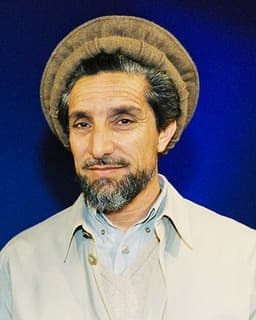
Ahmad Zia Massoud
Politician · Modern
39.5Total
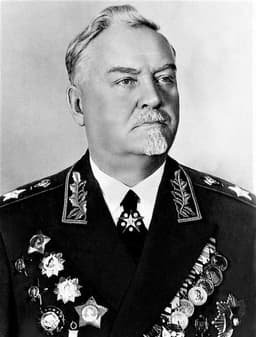
Nikolai Bulganin
Politician · Modern
42.1Total
Basic Information
Born
1956
1895
Died
—
1975
Era
Modern
Modern
Nationality
Afghanistan
Russia
Occupation
Politician
Politician
Civilization
Middle Eastern
Western
Score Comparison
Military (10%)
50.0
12.6
Political (20%)
25.0
48.0
Influence (20%)
47.1
48.6
Legacy (20%)
37.5
38.3
Leadership (15%)
34.6
53.2
Strategy (15%)
44.1
39.7
TOTAL
39.5
42.1
Ahmad Zia Massoud — Complete Timeline
2005 AD
Served as Ambassador to RussiaPolitical Action
Ahmad Zia Massoud served as Afghanistan's ambassador to Russia from 2005 to 2010. He worked to strengthen bilateral relations and secure Russian support for Afghanistan's reconstruction and counter-terrorism efforts.
AfghanistanDiplomacyRussia
Impact: nationalconstructive
2009 AD
Ran for Afghan Presidency in 2009Political Action
Ahmad Zia Massoud ran as a candidate in the 2009 Afghan presidential election. He received a small percentage of the vote and later withdrew, endorsing Abdullah Abdullah in the runoff against Hamid Karzai.
AfghanistanElectionPresidential
Impact: national
2014 AD
Appointed First Vice President of AfghanistanPolitical Action◆ Major
Ahmad Zia Massoud was appointed First Vice President of Afghanistan under President Ashraf Ghani in 2014. He served in this role until 2020, focusing on security and reconciliation efforts, drawing on his Northern Alliance background.
AfghanistanVice PresidencyGovernment
Impact: nationalconstructive
Nikolai Bulganin — Complete Timeline
1955 AD
Appointment as Premier of the Soviet UnionPolitical Action◆ Major
Bulganin succeeded Malenkov as Chairman of the Council of Ministers (Premier) in February 1955. He served as a figurehead leader while Khrushchev held real power, representing the Soviet Union in diplomatic engagements during the early Cold War.
Soviet LeadershipAppointmentCold War
Impact: national
1956 AD
Role in the Hungarian Revolution of 1956Political Action◆ Major
As Premier, Bulganin supported the Soviet decision to crush the Hungarian Revolution in November 1956. He authorized the military intervention that suppressed the uprising, resulting in thousands of deaths and the installation of a pro-Soviet government.
Cold WarHungarian RevolutionIntervention
Impact: regionaldestructive
1958 AD
Removal from Power and ExpulsionPolitical Action◆ Major
Bulganin was removed from the premiership in March 1958 and replaced by Khrushchev. He was later expelled from the Communist Party in 1961 for his involvement in the 'Anti-Party Group' that opposed Khrushchev, ending his political career.
Power StruggleKhrushchevExpulsion
Impact: nationaldestructive
Expert Analysis
Origins
Ahmad Zia Massoud, born in 1956 in the Panjshir Valley, Afghanistan, is the younger brother of the legendary mujahideen commander Ahmad Shah Massoud. He was educated in Afghanistan and later in France, where he studied political science. His family background deeply influenced his political aspirations, as the Massoud family is a prominent political dynasty in Afghanistan, known for resistance against Soviet occupation and later the Taliban.
Nikolai Bulganin was born in 1895 in Nizhny Novgorod, Russia, into a middle-class family. He joined the Bolshevik Party in 1917 and worked his way up through the Soviet bureaucracy. He served in the Cheka (secret police) and later held various economic and administrative posts, including chairman of the State Bank and deputy premier. His rise was marked by loyalty to Stalin and later Khrushchev.
Rise to Power
Ahmad Zia Massoud's rise to power was largely due to his family name and his brother's legacy. After the fall of the Taliban in 2001, he served as Afghanistan's ambassador to Russia from 2005 to 2010, where he worked to secure Russian support for Afghanistan. In 2009, he ran for president but received only 1.5% of the vote and withdrew to endorse Hamid Karzai. In 2014, he was appointed First Vice President under Ashraf Ghani, a position he held until 2020. His political career relied heavily on his brother's reputation and the Panjshiri power base.
Nikolai Bulganin rose through the Soviet party apparatus. He became a member of the Central Committee in 1937 and later served as chairman of the Council of People's Commissars of the Russian SFSR. During World War II, he was a political commissar. After Stalin's death, he became a key ally of Nikita Khrushchev, and in 1955, he succeeded Malenkov as Premier (Chairman of the Council of Ministers). His rise was a result of bureaucratic maneuvering and loyalty to Khrushchev.
Leadership & Governance
Ahmad Zia Massoud's leadership style was largely ceremonial as vice president. He focused on representing the Panjshiri community and maintaining the Massoud legacy. He had limited influence on policy, as President Ghani centralized power. His governance approach was traditional, relying on patronage networks. He scored 34.6 in leadership and 25.0 in political, reflecting his limited political impact.
Nikolai Bulganin, as Premier, was a figurehead. Real power lay with Khrushchev, the First Secretary. Bulganin oversaw the implementation of Khrushchev's policies, including de-Stalinization and economic reforms. He supported the suppression of the Hungarian Revolution in 1956, authorizing military intervention. His leadership score of 53.2 reflects his administrative competence, but his political score of 48.0 indicates his subordinate role. He lacked independent decision-making power.
Triumph & Tragedy
Ahmad Zia Massoud's greatest success was serving as vice president for six years, maintaining stability in a turbulent period. His failure was his inability to influence policy or unite the Afghan factions. His presidential run in 2009 was a failure, winning minimal votes. His legacy is tied to his brother's, not his own achievements.
Nikolai Bulganin's triumph was his role in stabilizing the Soviet leadership after Stalin's death and supporting Khrushchev's early reforms. His tragedy was his removal and expulsion from the party, as he was scapegoated for the failures of Khrushchev's policies. He was removed in 1958 and expelled in 1961, dying in obscurity in 1975.
Character & Destiny
Ahmad Zia Massoud is seen as a cautious politician, relying on family legacy rather than personal ambition. His character was shaped by his brother's shadow, leading to a lack of independent initiative. His destiny was to be a placeholder, not a transformative leader.
Nikolai Bulganin was a loyal bureaucrat, willing to serve stronger leaders. He lacked the ruthlessness to survive in Soviet politics. His character led to his downfall when Khrushchev no longer needed him. He is often remembered as a transitional figure.
Legacy
Ahmad Zia Massoud's legacy is minimal. He is remembered as the brother of a national hero and a vice president during a period of instability. His scores: military 50.0 (due to his family's military background), political 25.0, influence 47.1, legacy 37.5. His impact on Afghanistan is negligible.
Nikolai Bulganin's legacy is tied to the Khrushchev era. He played a role in de-Stalinization and the Hungarian crisis. His scores: military 12.6, political 48.0, influence 48.6, legacy 38.3, leadership 53.2, strategy 39.7. He is a footnote in Soviet history, remembered as a figurehead premier.
Conclusion
Nikolai Bulganin had greater impact than Ahmad Zia Massoud. Despite being a figurehead, Bulganin was part of significant historical events: the post-Stalin transition, de-Stalinization, and the Hungarian Revolution. His total score of 42.1 versus Massoud's 39.5 reflects his slightly higher influence and leadership. While both were secondary figures, Bulganin operated on a global stage affecting millions, whereas Massoud's influence was confined to Afghanistan's internal politics. Bulganin's role in the Hungarian intervention alone had lasting consequences for the Cold War. Massoud, by contrast, failed to leave a distinct mark. The data supports Bulganin as the more consequential figure.
Rankings
🥇
Nikolai BulganinLeader
Mil: 12.6Pol: 48.0Inf: 48.6
42.1
🥈
Ahmad Zia Massoud
Mil: 50.0Pol: 25.0Inf: 47.1
39.5
+2.6 behind
How This Comparison Works
Algorithm
Each figure is scored on 6 dimensions (0—100 scale) based on structured historical data: Military (10%), Political (20%), Influence (20%), Legacy (20%), Leadership (15%), Strategy (15%). The weighted total produces the final ranking.
Data Sources
Scores are computed from structured sub-indicators in the database. Scale factors adjust for era (Ancient ×0.85, Modern ×1.0) and civilization size (Eastern ×1.05, Other ×0.80) to account for differences in population and military scale.
Maximum 3 Figures
Comparisons are limited to 2—3 figures to ensure readability and statistical meaningfulness.
Error Margins
±5 points per dimension — Sub-scores are derived from historical records with inherent uncertainty. Two figures within 5 points on a dimension should be considered roughly equivalent in that area.
Total Score Accuracy
±3 points overall — The weighted combination of 6 dimensions produces a total score with approximately ±3 points of uncertainty. Differences of less than 3 points are not statistically significant— the figures are effectively tied.
Known Limitations
- Historical records are incomplete and uneven across civilizations
- Figures from oral-tradition societies may be underrepresented
- Occupation labels can misclassify multi-role figures
- Scores measure capability and impact, not moral character
- Quantitative scoring is a comparison tool, not absolute truth
Capability Radar
Military (10%) — Battles & Warfare
Battles
24
20
Win Rate
25
27
Expansion
27
25
Political (20%) — Governance & Reform
Reform
10
40
Diplomacy
20
50
Economy
10
30
Influence (20%) — Cultural & Global Reach
Cultural
10
10
Global
10
20
Legacy (20%) — Historical Impact
Historical
15
20
Longevity
10
10
Leadership (15%) — Power & Stability
Tenure
15
60
Stability
5
40
Strategy (15%) — Tactics & Innovation
Strategy
28
32
Tactics
33
33
Reform
38
39
Similar Comparisons
Comments & Discussion
No comments yet. Be the first to share your thoughts!