Loading...
Ahmad Zia Massoud vs Todor Zhivkov
Todor Zhivkov leads by 15.4 pts · 2 figures compared
…
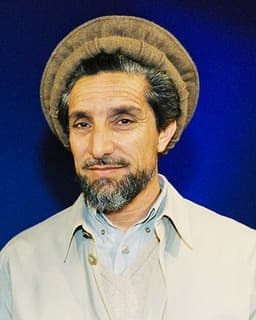
Ahmad Zia Massoud
Politician · Modern
39.5Total

Todor Zhivkov
Politician · Modern
54.9Total
Basic Information
Born
1956
1911
Died
—
1998
Era
Modern
Modern
Nationality
Afghanistan
Bulgaria
Occupation
Politician
Politician
Civilization
Middle Eastern
Western
Score Comparison
Military (10%)
50.0
50.0
Political (20%)
25.0
68.0
Influence (20%)
47.1
51.0
Legacy (20%)
37.5
44.2
Leadership (15%)
34.6
78.0
Strategy (15%)
44.1
41.5
TOTAL
39.5
54.9
Ahmad Zia Massoud — Complete Timeline
2005 AD
Served as Ambassador to RussiaPolitical Action
Ahmad Zia Massoud served as Afghanistan's ambassador to Russia from 2005 to 2010. He worked to strengthen bilateral relations and secure Russian support for Afghanistan's reconstruction and counter-terrorism efforts.
AfghanistanDiplomacyRussia
Impact: nationalconstructive
2009 AD
Ran for Afghan Presidency in 2009Political Action
Ahmad Zia Massoud ran as a candidate in the 2009 Afghan presidential election. He received a small percentage of the vote and later withdrew, endorsing Abdullah Abdullah in the runoff against Hamid Karzai.
AfghanistanElectionPresidential
Impact: national
2014 AD
Appointed First Vice President of AfghanistanPolitical Action◆ Major
Ahmad Zia Massoud was appointed First Vice President of Afghanistan under President Ashraf Ghani in 2014. He served in this role until 2020, focusing on security and reconciliation efforts, drawing on his Northern Alliance background.
AfghanistanVice PresidencyGovernment
Impact: nationalconstructive
Todor Zhivkov — Complete Timeline
1954 AD
Appointment as First Secretary of the Bulgarian Communist PartyPolitical Action◆ Major
Zhivkov became First Secretary of the Bulgarian Communist Party, succeeding Vulko Chervenkov. He would hold this position for 35 years, making him the longest-serving leader of any Eastern Bloc country.
Communist leadership
Impact: national
1979 AD
Introduction of the New Economic MechanismReform
Zhivkov introduced limited market-oriented reforms to the Bulgarian economy, allowing some private enterprise and decentralization. The reforms aimed to improve efficiency but were constrained by the communist system and ultimately had limited impact.
Economic reformMarket socialism
Impact: nationalconstructive
1984 AD
Forced Assimilation of Ethnic TurksPolitical Action◆ Major
Zhivkov's regime launched a campaign to forcibly assimilate Bulgaria's ethnic Turkish minority, requiring them to adopt Slavic names and banning Turkish language and cultural practices. This led to widespread protests and a mass exodus of Turks from Bulgaria.
AssimilationHuman rights
Impact: nationaldestructive
1989 AD
Resignation from PowerPolitical Action◆ Major
Facing mass protests and the collapse of communist regimes across Eastern Europe, Zhivkov was forced to resign as party leader and head of state. He was later arrested and tried for corruption and abuse of power.
Fall of communismRegime change
Impact: national
Expert Analysis
Origins
Ahmad Zia Massoud was born in 1956 in the Panjshir Valley of Afghanistan, into a prominent Tajik family. His father, Dost Mohammad Khan, was a local police commander, and his older brother, Ahmad Shah Massoud, would become a legendary mujahideen commander. Ahmad Zia studied at the Habibia High School in Kabul and later attended the Polytechnic University of Kabul, but his education was interrupted by the Soviet invasion in 1979. He joined his brother's resistance movement, the Jamiat-e Islami, and became involved in political and organizational tasks.
Todor Zhivkov was born on September 7, 1911, in the village of Pravets, Bulgaria, into a poor peasant family. He had little formal education, attending primary school and later a trade school in Sofia. He became a typographer and joined the Bulgarian Communist Party in 1932. During World War II, he participated in the resistance against the Nazi-allied government, organizing partisan activities. His humble origins and lack of higher education contrasted with his later political acumen.
Rise to Power
Ahmad Zia Massoud rose to prominence primarily through his association with his brother, Ahmad Shah Massoud. After the Soviet withdrawal, he served as a diplomat, becoming Afghanistan's ambassador to Russia from 2005 to 2010, where he worked to secure Russian support for the Afghan government. In 2009, he ran for the Afghan presidency, but received only about 1% of the vote and withdrew, endorsing Hamid Karzai. His major political breakthrough came in 2014 when President Ashraf Ghani appointed him as First Vice President, a position he held until 2020. This role placed him at the center of Afghan politics, though his influence was limited.
Todor Zhivkov's rise was more systematic. He joined the Communist Party as a young man and climbed the ranks through loyalty and organizational skills. After World War II, he held various party positions, becoming First Secretary of the Bulgarian Communist Party in 1954, succeeding Vulko Chervenkov. He consolidated power by purging rivals and aligning with Soviet leader Nikita Khrushchev. Over the next 35 years, he became the longest-serving leader of the Eastern Bloc, surviving multiple leadership changes in Moscow by adapting his policies to Soviet expectations.
Leadership & Governance
Ahmad Zia Massoud's leadership style was diplomatic and behind-the-scenes. As vice president, he focused on mediating between factions and representing Afghanistan internationally. He advocated for a unified government but had limited executive authority. His governance approach was consensus-oriented, reflecting the complex ethnic and political landscape of Afghanistan. However, his political score of 25.0 reflects his inability to secure widespread support or implement significant policies.
Todor Zhivkov's leadership was authoritarian and pragmatic. He maintained strict control over Bulgaria, suppressing dissent through the security services. His governance included both repression and limited reforms. In the 1960s, he introduced the New Economic Mechanism, allowing some market-oriented changes and private enterprise, which boosted economic growth. However, his regime also enforced a forced assimilation campaign against ethnic Turks in the 1980s, requiring them to adopt Slavic names and banning Turkish language and customs. This policy, which affected over 800,000 people, led to international condemnation and internal unrest. His leadership score of 78.0 reflects his ability to stay in power for decades, but his strategy score of 41.5 indicates flawed long-term planning.
Triumph & Tragedy
Ahmad Zia Massoud's greatest success was his role in stabilizing the Afghan government during his vice presidency, particularly in managing relations with Russia and other regional powers. He also helped preserve the legacy of his brother, Ahmad Shah Massoud, a national hero. However, his political career was marked by tragedy: he failed to win the presidency in 2009, and his tenure as vice president coincided with the Taliban's resurgence and the eventual collapse of the Afghan government in 2021. His influence score of 47.1 reflects his limited impact on Afghanistan's trajectory.
Todor Zhivkov's triumphs include overseeing decades of relative stability and modernization in Bulgaria. Under his rule, Bulgaria experienced industrialization, urbanization, and improved living standards compared to pre-communist times. He also managed to maintain a degree of independence from the Soviet Union, pursuing economic ties with the West. However, his greatest tragedy was the forced assimilation campaign, which damaged Bulgaria's international reputation and created lasting ethnic tensions. His downfall came in 1989, when mass protests and the collapse of communist regimes forced him to resign. He was later tried for embezzlement and sentenced to seven years in prison, though he was released due to ill health. His legacy score of 44.2 reflects the mixed assessment of his rule.
Character & Destiny
Ahmad Zia Massoud was a cautious and diplomatic figure, often overshadowed by his brother's charisma. He lacked the political ambition or ruthlessness to seize power, preferring to work within established structures. His destiny was tied to the fate of Afghanistan's fragile democracy, which ultimately failed. His character, marked by loyalty and moderation, limited his ability to navigate the country's violent politics.
Todor Zhivkov was a shrewd and adaptable survivor. He cultivated an image of a simple, down-to-earth leader, but was capable of brutal repression. His ability to outlast other Eastern Bloc leaders stemmed from his pragmatism and willingness to change course when necessary. However, his lack of strategic vision led to policies that ultimately destabilized his regime. His destiny was to be overthrown by the very forces of change he tried to manage.
Legacy
Ahmad Zia Massoud's legacy is primarily as a symbol of the Massoud family's political influence. He is remembered as a moderate figure who sought to unite Afghanistan, but his impact was minimal compared to his brother. His legacy score of 37.5 reflects his limited lasting influence.
Todor Zhivkov's legacy is complex. He is criticized for his authoritarian rule and human rights abuses, particularly the assimilation campaign. However, some Bulgarians view him as a leader who brought stability and development. His economic reforms influenced later transitions, but the fall of communism largely erased his achievements. His total score of 54.9, compared to Massoud's 39.5, indicates a more significant historical footprint.
Conclusion
While both figures operated in different contexts, Todor Zhivkov had a greater impact on his country and the world. His 35-year rule shaped Bulgaria's modern history, for better or worse, and his scores in political (68.0), leadership (78.0), and overall total (54.9) far exceed Massoud's. Massoud, despite his family name, was a secondary figure in Afghan politics, with a political score of 25.0 and a total of 39.5. Zhivkov's influence, though tarnished, was more substantial and enduring. Therefore, Zhivkov is the more significant historical figure.
Rankings
🥇
Todor ZhivkovLeader
Mil: 50.0Pol: 68.0Inf: 51.0
54.9
🥈
Ahmad Zia Massoud
Mil: 50.0Pol: 25.0Inf: 47.1
39.5
+15.4 behind
How This Comparison Works
Algorithm
Each figure is scored on 6 dimensions (0—100 scale) based on structured historical data: Military (10%), Political (20%), Influence (20%), Legacy (20%), Leadership (15%), Strategy (15%). The weighted total produces the final ranking.
Data Sources
Scores are computed from structured sub-indicators in the database. Scale factors adjust for era (Ancient ×0.85, Modern ×1.0) and civilization size (Eastern ×1.05, Other ×0.80) to account for differences in population and military scale.
Maximum 3 Figures
Comparisons are limited to 2—3 figures to ensure readability and statistical meaningfulness.
Error Margins
±5 points per dimension — Sub-scores are derived from historical records with inherent uncertainty. Two figures within 5 points on a dimension should be considered roughly equivalent in that area.
Total Score Accuracy
±3 points overall — The weighted combination of 6 dimensions produces a total score with approximately ±3 points of uncertainty. Differences of less than 3 points are not statistically significant— the figures are effectively tied.
Known Limitations
- Historical records are incomplete and uneven across civilizations
- Figures from oral-tradition societies may be underrepresented
- Occupation labels can misclassify multi-role figures
- Scores measure capability and impact, not moral character
- Quantitative scoring is a comparison tool, not absolute truth
Capability Radar
Military (10%) — Battles & Warfare
Battles
24
29
Win Rate
25
30
Expansion
27
34
Political (20%) — Governance & Reform
Reform
10
40
Diplomacy
20
55
Economy
10
45
Influence (20%) — Cultural & Global Reach
Cultural
10
20
Global
10
25
Legacy (20%) — Historical Impact
Historical
15
35
Longevity
10
30
Leadership (15%) — Power & Stability
Tenure
15
85
Stability
5
60
Strategy (15%) — Tactics & Innovation
Strategy
28
38
Tactics
33
40
Reform
38
42
Similar Comparisons
Comments & Discussion
No comments yet. Be the first to share your thoughts!