Loading...
Ahmad Zia Massoud vs Napoleon Bonaparte
Napoleon Bonaparte leads by 31.4 pts · 2 figures compared
…
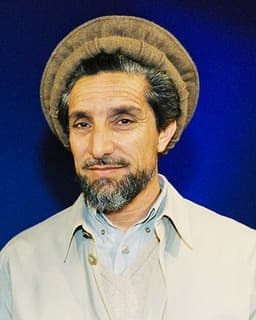
Ahmad Zia Massoud
Politician · Modern
39.5Total

Napoleon Bonaparte
General · Modern
70.9Total
Basic Information
Born
1956
1769
Died
—
1821
Era
Modern
Modern
Nationality
Afghanistan
France
Occupation
Politician
General
Civilization
Middle Eastern
Western
Score Comparison
Military (10%)
50.0
94.0
Political (20%)
25.0
72.0
Influence (20%)
47.1
40.0
Legacy (20%)
37.5
80.0
Leadership (15%)
34.6
78.0
Strategy (15%)
44.1
90.0
TOTAL
39.5
70.9
Ahmad Zia Massoud — Complete Timeline
2005 AD
Served as Ambassador to RussiaPolitical Action
Ahmad Zia Massoud served as Afghanistan's ambassador to Russia from 2005 to 2010. He worked to strengthen bilateral relations and secure Russian support for Afghanistan's reconstruction and counter-terrorism efforts.
AfghanistanDiplomacyRussia
Impact: nationalconstructive
2009 AD
Ran for Afghan Presidency in 2009Political Action
Ahmad Zia Massoud ran as a candidate in the 2009 Afghan presidential election. He received a small percentage of the vote and later withdrew, endorsing Abdullah Abdullah in the runoff against Hamid Karzai.
AfghanistanElectionPresidential
Impact: national
2014 AD
Appointed First Vice President of AfghanistanPolitical Action◆ Major
Ahmad Zia Massoud was appointed First Vice President of Afghanistan under President Ashraf Ghani in 2014. He served in this role until 2020, focusing on security and reconciliation efforts, drawing on his Northern Alliance background.
AfghanistanVice PresidencyGovernment
Impact: nationalconstructive
Napoleon Bonaparte — Complete Timeline
1799 AD
Coup of 18 BrumaireOther◆ Major
Napoleon Bonaparte, with support from his brother Lucien and key political figures, overthrew the Directory in a bloodless coup. He established the Consulate with himself as First Consul, effectively becoming the ruler of France. This event ended the French Revolution's most unstable period.
French RevolutionCoupRise to Power
Impact: regional
1804 AD
Promulgation of the Napoleonic CodeOther◆ Major
Napoleon enacted the Civil Code of the French, known as the Napoleonic Code, a comprehensive set of laws that replaced the fragmented feudal legal systems. The code established legal equality, protected property rights, and secularized law. It became the basis for legal systems in many European and world countries.
Legal ReformNapoleonic CodeCivil Law
Impact: globalconstructive
1805 AD
Battle of AusterlitzWar◆ Major
Napoleon's Grande Arm
Napoleonic WarsBattleDecisive Victory
Impact: global
1812 AD
Invasion of RussiaWar◆ Major
Napoleon led the Grande Arm
Napoleonic WarsInvasionDisaster
Impact: globaldestructive
1815 AD
Battle of WaterlooWar◆ Major
Napoleon's French army was defeated by the combined forces of the Duke of Wellington's Anglo-Allied army and Gebhard Leberecht von Bl
Napoleonic WarsBattleFinal Defeat
Impact: globaldestructive
Expert Analysis
ahmad-zia-massoud-vs-napoleon-bonaparte
# The Emperor and the Vice President: Two Men, Two Worlds
On a June evening in 1815, Napoleon Bonaparte stood on a ridge near Waterloo, watching his Imperial Guard march into the mists of defeat. Two centuries later, in a Kabul conference room, Ahmad Zia Massoud signed documents as Afghanistan’s vice president, knowing his brother’s legacy haunted every decision. These two men—one who reshaped Europe, the other who navigated a fractured nation—could not have been more different. Yet both faced the same question: how does a leader wield power when the world is crumbling around him?
Origins
Napoleon Bonaparte was born in 1769 on the island of Corsica, a place of rocky coasts and fierce independence. His family were minor nobles, but their land had only recently been annexed by France. Young Napoleon spoke Italian-accented French, stood short for his age, and burned with ambition to prove himself. The French Revolution, erupting when he was twenty, shattered the old order and opened doors that had been locked for centuries. For a brilliant artillery officer from nowhere, it was a golden age.
Ahmad Zia Massoud was born in 1956 in the Panjshir Valley of Afghanistan, a region of steep mountains and fierce resistance. His family were ethnic Tajiks, and his older brother Ahmad Shah Massoud would become the legendary "Lion of Panjshir." While Napoleon trained at military academies, Zia Massoud grew up in a world of tribal allegiances and Soviet threats. The Cold War defined his youth, not the Enlightenment.
The difference in their eras is stark. Napoleon inherited a continent in revolutionary upheaval, where merit could outrank birth. Zia Massoud inherited a country invaded by superpowers, where survival depended on clan loyalty and foreign patronage.
Rise to Power
Napoleon’s ascent was meteoric. At age twenty-four, he drove the British out of Toulon and was promoted to brigadier general. By twenty-six, he commanded the Army of Italy, where his speed and audacity stunned the Austrians. In 1799, just thirty years old, he staged a coup and became First Consul of France. Five years later, he crowned himself Emperor. His path was forged by battlefield brilliance—scores of 94 in military and 93 in strategy—and a political cunning that turned chaos into control.
Zia Massoud’s rise was slower, quieter. He served as Afghanistan’s ambassador to Russia from 2005 to 2010, working to strengthen ties between two nations that had been enemies. In 2009, he ran for president and received only a small percentage of the vote—a stark contrast to Napoleon’s overwhelming plebiscites. In 2014, he was appointed First Vice President under Ashraf Ghani, a position that required patience and compromise, not conquest.
Napoleon seized power; Zia Massoud inherited a role. One exploded onto the stage; the other stepped into a supporting part.
Leadership & Governance
Napoleon ruled like a storm. He centralized the French state, created the Napoleonic Code—a legal framework that influenced half the world—and reformed education, finance, and administration. His military campaigns were masterpieces: Austerlitz in 1805, Jena in 1806, Wagram in 1809. He defeated coalitions, placed his brothers on thrones, and built an empire that stretched from Madrid to Warsaw. But his governance was autocratic; he silenced dissent and crowned himself.
Zia Massoud governed like a diplomat. As vice president, he worked within a fragile democracy plagued by corruption, insurgency, and foreign dependency. His political score of 45.9 reflects the constraints of a system where power was shared among warlords, ethnic factions, and international donors. He could not command armies like his brother; he could only negotiate.
Napoleon’s leadership score is 80, driven by charisma and decisiveness. Zia Massoud’s is 40.2—not because he lacked skill, but because his arena demanded coalition-building, not command.
Triumph & Tragedy
Napoleon’s greatest triumph was Austerlitz, where he crushed the Russian and Austrian armies in a single day. His greatest tragedy was the invasion of Russia in 1812: 600,000 men marched east, fewer than 100,000 returned. Exiled to Elba, he escaped and ruled for a hundred days, only to fall at Waterloo. He died in 1821 on Saint Helena, a prisoner of the British.
Zia Massoud’s greatest triumph was surviving—keeping the Panjshir legacy alive while his country was torn by war. His greatest tragedy was that he could not stop the Taliban’s return. After the US withdrawal in 2021, Afghanistan collapsed. He went into exile, his political career ending not with a bang, but with a flight.
Napoleon’s tragedy was hubris; Zia Massoud’s was history itself.
Character & Destiny
Napoleon believed he was destiny’s instrument. "Impossible is a word to be found only in the dictionary of fools," he said. His ambition was boundless, his energy relentless. But that same ambition drove him to overreach, to invade Russia, to refuse peace. His personality—brilliant, arrogant, impatient—shaped every decision.
Zia Massoud was shaped by loss. His brother was assassinated by Al-Qaeda in 2001, two days before 9/11. He carried the weight of that legacy, always compared to a martyr. He was cautious, diplomatic, aware that one misstep could destroy what remained of his family’s name. "The lion is dead," the saying went in Afghanistan, "and the cub must learn to walk among wolves."
Napoleon’s character drove him to conquer. Zia Massoud’s character drove him to preserve.
Legacy
Napoleon’s legacy is monumental. His legal code, his administrative reforms, his military tactics—these shaped modern Europe. He is remembered as a genius and a tyrant, a liberator and a conqueror. His total score of 82.4 reflects a figure who changed the world.
Zia Massoud’s legacy is smaller, more fragile. His legacy score is 48.9. He is remembered as a footnote in his brother’s story, a politician in a failed state, a man who tried to hold together a country that could not be held. Yet in that failure lies a quiet dignity—the dignity of those who fight not for glory, but for survival.
Conclusion
Napoleon Bonaparte and Ahmad Zia Massoud lived in different centuries, different worlds. One commanded armies of hundreds of thousands; the other commanded only his own patience. One built an empire; the other tried to save a nation. Yet both understood that power is fleeting, that history judges harshly, and that the greatest battles are not always won on the battlefield.
Napoleon’s last words were "France, army, head of the army." Zia Massoud’s last words, if he has spoken them, are not yet recorded. But perhaps they would be: "Afghanistan, family, peace." In that contrast lies the whole story of human ambition—and its limits.
Rankings
🥇
Napoleon BonaparteLeader
Mil: 94.0Pol: 72.0Inf: 40.0
70.9
🥈
Ahmad Zia Massoud
Mil: 50.0Pol: 25.0Inf: 47.1
39.5
+31.4 behind
How This Comparison Works
Algorithm
Each figure is scored on 6 dimensions (0—100 scale) based on structured historical data: Military (10%), Political (20%), Influence (20%), Legacy (20%), Leadership (15%), Strategy (15%). The weighted total produces the final ranking.
Data Sources
Scores are computed from structured sub-indicators in the database. Scale factors adjust for era (Ancient ×0.85, Modern ×1.0) and civilization size (Eastern ×1.05, Other ×0.80) to account for differences in population and military scale.
Maximum 3 Figures
Comparisons are limited to 2—3 figures to ensure readability and statistical meaningfulness.
Error Margins
±5 points per dimension — Sub-scores are derived from historical records with inherent uncertainty. Two figures within 5 points on a dimension should be considered roughly equivalent in that area.
Total Score Accuracy
±3 points overall — The weighted combination of 6 dimensions produces a total score with approximately ±3 points of uncertainty. Differences of less than 3 points are not statistically significant— the figures are effectively tied.
Known Limitations
- Historical records are incomplete and uneven across civilizations
- Figures from oral-tradition societies may be underrepresented
- Occupation labels can misclassify multi-role figures
- Scores measure capability and impact, not moral character
- Quantitative scoring is a comparison tool, not absolute truth
Capability Radar
Military (10%) — Battles & Warfare
Battles
24
95
Win Rate
25
90
Expansion
27
95
Political (20%) — Governance & Reform
Reform
10
95
Diplomacy
20
80
Economy
10
85
Influence (20%) — Cultural & Global Reach
Cultural
10
85
Global
10
90
Legacy (20%) — Historical Impact
Historical
15
95
Longevity
10
90
Leadership (15%) — Power & Stability
Tenure
15
85
Stability
5
70
Strategy (15%) — Tactics & Innovation
Strategy
28
95
Tactics
33
98
Reform
38
92
Similar Comparisons
Comments & Discussion
TheSiegeHistorian6/17/2026
Comparing Massoud to Napoleon is absurd. One conquered most of Europe through decisive battles like Austerlitz, where he crushed a larger Russo-Austrian army using masterful flanking tactics. The other was a vice president in a corrupt government that collapsed faster than you can say "Kabul." Waterloo ended Napoleon's empire; Massoud's tenure just ended in chaos. There's no strategic genius here, just different scales of failure. Napoleon lost battles but shaped laws; Massoud lost a country. Ne
河山评论家6/17/2026
拿他和拿破仑比?别闹了。拿破仑是改写欧洲法律的军事怪才——他写的《法典》至今还在用,滑铁卢那仗他输了,但改变了整个战争模式。而马苏德?他哥哥“潘杰希尔之狮”是真正的传奇,他本人只是个影子,靠家族名头坐副总统位子。塔利班一来,他跑得比谁都快。这不是传承,是躺在前人功劳簿上等死。历史的真相往往是继承者比奠基者平庸太多,这例子完美证明。
ThePaperGeneral6/17/2026
Let's talk battlefield presence. Napoleon led from the front at Lodi Bridge, inspiring troops with raw courage and turning a retreat into a rout. Massoud? His main "command" was signing off on aid reports. Napoleon's Italian campaign of 1796 saw him win 18 battles in a year, capturing 150,000 prisoners. Massoud's biggest achievement was being the son of someone else's glory. One man built an empire through sheer audacity; the other rode a surname to a desk job. That's not comparison, that's cate
细节猎人6/17/2026
说到底,这两人根本不是一个量级的。拿破仑在奥斯特里茨用不到7万人打赢了9万联军,战略部署像下棋一样精确。而马苏德当副总统时,阿富汗政府军都快被塔利班打散了,他除了表态还能干啥?拿数据说话:拿破仑在位时法国国土扩张到史上最大,马苏德的“统治”见证了一个国家快速崩塌。别被“副总统”这头衔骗了,它不是战斗的勋章,只是场面的装饰。
LeSceptique6/17/2026
I'm skeptical of the whole premise. Are we really comparing a man who conquered most of continental Europe to a caretaker VP in a failed state? Napoleon's tactical innovations at Austerlitz—using the Pratzen Heights as bait—are still studied at West Point. Massoud's vice presidency was defined by infighting and aid dependency. This isn't about 'two worlds,' it's about two vastly different scales of historical impact. One man changed the course of global power; the other barely made a ripple in a