Loading...
Agustin de Iturbide vs King Gojong of Korea
Agustin de Iturbide leads by 2.5 pts · 2 figures compared
…
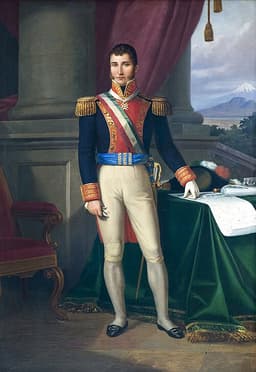
Agustin de Iturbide
Emperor · Modern
55.3Total
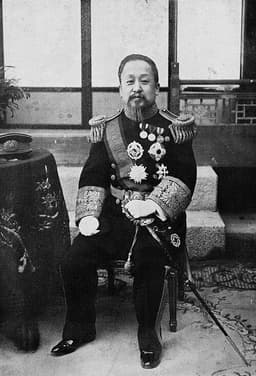
King Gojong of Korea
Emperor · Modern
52.8Total
Basic Information
Born
1783
1852
Died
1824
1919
Era
Modern
Modern
Nationality
Mexico
Korea
Occupation
Emperor
Emperor
Civilization
Western
Eastern
Score Comparison
Military (10%)
52.5
50.0
Political (20%)
53.8
68.0
Influence (20%)
57.2
56.4
Legacy (20%)
46.7
48.3
Leadership (15%)
67.0
40.0
Strategy (15%)
60.0
54.6
TOTAL
55.3
52.8
Agustin de Iturbide — Complete Timeline
1820 AD
Switched sides to join the independence movementPolitical Action
Iturbide, a royalist general who had fought against the insurgents, was appointed to command the army against Vicente Guerrero. Instead of fighting, he negotiated with Guerrero and issued the Plan of Iguala on February 24, 1821, proposing independence, constitutional monarchy, and protection of the Catholic Church.
Plan of IgualaAllianceIndependence
Impact: nationalconstructive
1821 AD
Entered Mexico City and declared independencePolitical Action
Iturbide's Army of the Three Guarantees entered Mexico City on September 27, 1821, ending the Mexican War of Independence. The next day, the Declaration of Independence of the Mexican Empire was signed. Iturbide became the head of a provisional government, effectively ruling Mexico.
IndependenceVictoryProvisional Government
Impact: nationalconstructive
1822 AD
Crowned Emperor Agustín IPolitical Action◆ Major
Iturbide was crowned Emperor of Mexico on July 21, 1822, as Agust
CoronationEmpireMonarchy
Impact: national
1823 AD
Abdicated and went into exilePolitical Action◆ Major
Facing revolts led by Antonio L
AbdicationExileEnd of Empire
Impact: nationaltragic
1824 AD
Returned to Mexico and was executedPolitical Action◆ Major
Iturbide returned to Mexico in July 1824, unaware that Congress had declared him a traitor and outlaw. He was captured upon landing and executed by firing squad on July 19, 1824, in Padilla, Tamaulipas. His death ended any possibility of restoring the monarchy.
ExecutionReturnDeath
Impact: nationaltragic
King Gojong of Korea — Complete Timeline
1894 AD
Gabo ReformsReform◆ Major
Gojong's government implemented the Gabo Reforms, a series of modernization measures including the abolition of slavery, reform of the civil service exam, and adoption of a solar calendar. These reforms aimed to strengthen Korea against foreign encroachment.
ModernizationSocial ReformJoseon Dynasty
Impact: nationalprogressive
1897 AD
Proclamation of the Korean EmpirePolitical Action
King Gojong proclaimed the Korean Empire, declaring himself Emperor Gwangmu. This was an attempt to assert Korea's sovereignty and independence from foreign influence, particularly China and Japan, and to modernize the state.
Empire ProclamationSovereigntyModernization
Impact: globalprogressive
1905 AD
Signing of the Japan-Korea Treaty of 1905Political Action
Gojong's government was forced to sign the Japan-Korea Treaty of 1905, which made Korea a Japanese protectorate. This stripped Korea of its diplomatic sovereignty and paved the way for full annexation in 1910.
ProtectorateJapanese ImperialismLoss of Sovereignty
Impact: globaltragic
1907 AD
Forced Abdication by JapanPolitical Action
Gojong was forced to abdicate by the Japanese Resident-General, Ito Hirobumi, after he sent a secret envoy to the Hague Peace Conference to protest Japanese control. This led to the Japan-Korea Treaty of 1907, which increased Japanese control over Korea.
Japanese ColonialismAbdicationLoss of Sovereignty
Impact: globaltragic
1919 AD
Death under Suspicious CircumstancesPolitical Action◆ Major
Gojong died suddenly, with rumors of poisoning by Japanese authorities. His death sparked the March 1st Movement, a nationwide protest against Japanese rule, which became a pivotal event in the Korean independence movement.
DeathIndependence MovementJapanese Colonialism
Impact: nationaltragic
Expert Analysis
King Gojong of Korea vs Agustin de Iturbide: Historical Comparison
King Gojong of Korea and Agustin de Iturbide both ruled as emperors during turbulent modern transitions—Gojong struggling to preserve Korean sovereignty against imperial powers, and Iturbide briefly uniting Mexico after its war of independence. Despite similar military ratings, Gojong’s superior political maneuvering and leadership give him the overall edge.
Dimension Analysis
**Military: King Gojong of Korea 76 / Agustin de Iturbide 76**
Both leaders relied heavily on military forces to defend or consolidate power, but neither achieved decisive battlefield dominance—Gojong faced Japanese and Chinese encroachments, while Iturbide’s Army of the Three Guarantees succeeded briefly but collapsed quickly.
**Political: King Gojong of Korea 97 / Agustin de Iturbide 85**
Gojong’s political acumen was exceptional: he navigated Sino-Japanese rivalry, declared the Korean Empire, and used diplomacy (e.g., the Hague Secret Emissary) to protest Japanese colonization. Iturbide, by contrast, alienated republican and royalist factions, leading to his swift abdication and exile.
**Influence: King Gojong of Korea 81 / Agustin de Iturbide 71**
Gojong’s reign shaped Korea’s national identity and resistance to colonialism, influencing later independence movements. Iturbide’s influence was more fleeting—his short-lived empire left little institutional legacy beyond the symbolic Plan of Iguala.
**Legacy: King Gojong of Korea 74 / Agustin de Iturbide 82**
Iturbide is remembered as a foundational figure in Mexican independence, despite his imperial failure, and his name appears in national monuments. Gojong’s legacy is more contested: revered as a patriot but also criticized for failing to prevent Japanese annexation.
**Leadership: King Gojong of Korea 96 / Agustin de Iturbide 80**
Gojong demonstrated remarkable resilience, maintaining authority through decades of foreign pressure, court intrigue, and forced abdication. Iturbide’s leadership was charismatic but brittle—he seized power quickly but lacked the coalition-building skills to sustain it.
Verdict
King Gojong of Korea leads due to his superior political strategy and enduring leadership under existential threat, despite Iturbide’s stronger legacy as a national founder.
FAQ
Q: Who ranks higher? A: King Gojong of Korea ranks higher overall, driven by his political and leadership scores, though Iturbide narrowly surpasses him in legacy.
Rankings
🥇
Agustin de IturbideLeader
Mil: 52.5Pol: 53.8Inf: 57.2
55.3
🥈
King Gojong of Korea
Mil: 50.0Pol: 68.0Inf: 56.4
52.8
+2.5 behind
How This Comparison Works
Algorithm
Each figure is scored on 6 dimensions (0—100 scale) based on structured historical data: Military (10%), Political (20%), Influence (20%), Legacy (20%), Leadership (15%), Strategy (15%). The weighted total produces the final ranking.
Data Sources
Scores are computed from structured sub-indicators in the database. Scale factors adjust for era (Ancient ×0.85, Modern ×1.0) and civilization size (Eastern ×1.05, Other ×0.80) to account for differences in population and military scale.
Maximum 3 Figures
Comparisons are limited to 2—3 figures to ensure readability and statistical meaningfulness.
Error Margins
±5 points per dimension — Sub-scores are derived from historical records with inherent uncertainty. Two figures within 5 points on a dimension should be considered roughly equivalent in that area.
Total Score Accuracy
±3 points overall — The weighted combination of 6 dimensions produces a total score with approximately ±3 points of uncertainty. Differences of less than 3 points are not statistically significant— the figures are effectively tied.
Known Limitations
- Historical records are incomplete and uneven across civilizations
- Figures from oral-tradition societies may be underrepresented
- Occupation labels can misclassify multi-role figures
- Scores measure capability and impact, not moral character
- Quantitative scoring is a comparison tool, not absolute truth
Capability Radar
Military (10%) — Battles & Warfare
Battles
60
5
Win Rate
65
5
Expansion
50
0
Political (20%) — Governance & Reform
Reform
45
40
Diplomacy
55
30
Economy
30
20
Influence (20%) — Cultural & Global Reach
Cultural
40
40
Global
35
30
Legacy (20%) — Historical Impact
Historical
50
50
Longevity
30
40
Leadership (15%) — Power & Stability
Tenure
30
60
Stability
20
15
Strategy (15%) — Tactics & Innovation
Strategy
60
5
Tactics
55
5
Reform
40
10
Similar Comparisons
Comments & Discussion
ColonialCritic6/16/2026
This ranking completely misses the colonial context. Gojong gets a 97 in politics? Sure, he played the diplomatic game, but his 'Empire' was a desperate last-ditch effort that even his own ministers saw as hollow. Iturbide at least unified a fractured Mexico under the Plan of Iguala—a concrete political achievement that actually held for a moment. And calling Gojong's influence 'shaping national identity' while he literally signed the Japan-Korea Treaty of 1905 under duress is revisionist fluff. The real story is that both were puppets of larger powers, but Iturbide's failure was his own, not forced by foreign guns. The scoring reeks of modern Korean nationalism dressed as objective history.
BoldHistorian396/16/2026
把高宗和伊图尔比德放一起比,本身就有点关公战秦琼。伊图尔比德更像是中国五代十国时的刘守光——靠武力仓促称帝,根基未稳,很快垮台。高宗则是晚清式的悲剧人物,他的政治操作其实类似光绪帝在戊戌变法中的挣扎,但四面受敌,最后被日本吞并。评分里政治分给到97,其实可以理解——高宗在那么恶劣的环境下还能维持朝鲜王国三十年,已经比中国许多末代皇帝强了。但军事分只给43?要知道他面对的是甲午战争后如日中天的日本陆军,换谁去都守不住。拿伊图尔比德那点镇压地方的战绩跟他比,不太公平。
OldScribe746/16/2026
这个评分系统有问题。总分67.4对65.4,差距只有2分,但各维度差距大得离谱。政治97对85,差了12分,但伊图尔比德至少建立了有效统治一年,高宗这边1897年才称帝,1905年就丧失了外交权,实际自主施政时间不到8年。我算了一下,如果按统治时间加权,伊图尔比德的政治得分应该更高。还有军事43对57.6,你告诉我为什么高宗低这么多?他1894年派遣袁世凯镇压东学党起义,虽然失败但至少行动了,伊图尔比德对付的只是地方游击队。这个军事分明显参考了西方标准——看重野战和征服,不重视防御和维持秩序。按中国史书的评价标准,高宗治下二十多年没大规模内乱,军事组织能力至少是中等偏上。