Loading...
Agostinho Neto vs Li Zicheng
Agostinho Neto leads by 4.2 pts · 2 figures compared
…

Agostinho Neto
Revolutionary · Modern
47.7Total
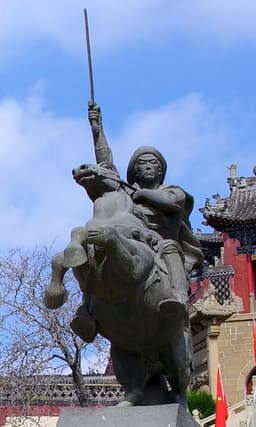
Li Zicheng
Revolutionary · Modern
43.5Total
Basic Information
Born
1922
1606
Died
—
1645
Era
Modern
Modern
Nationality
Angola
China
Occupation
Revolutionary
Revolutionary
Civilization
Other
Eastern
Score Comparison
Military (10%)
50.0
50.0
Political (20%)
43.7
27.9
Influence (20%)
53.3
52.5
Legacy (20%)
43.3
44.2
Leadership (15%)
55.3
39.0
Strategy (15%)
36.8
43.3
TOTAL
47.7
43.5
Agostinho Neto — Complete Timeline
1975 AD
Outbreak of the Angolan Civil WarWar◆ Major
Immediately after independence, the MPLA faced a civil war against UNITA and the FNLA, backed by the US and South Africa. Neto's government relied on Cuban troops and Soviet arms to survive, initiating a devastating conflict that lasted until 2002.
Civil WarCold War ProxyCuban Intervention
Impact: nationaltragic
Leadership of MPLA and IndependencePolitical Action
Agostinho Neto led the Popular Movement for the Liberation of Angola (MPLA) to victory in the Angolan War of Independence. He became the first President of independent Angola on November 11, 1975, declaring a Marxist-Leninist state and receiving support from Cuba and the Soviet Union.
IndependenceMPLASocialist State
Impact: nationalprogressive
1976 AD
Consolidation of One-Party RulePolitical Action◆ Major
Neto's government suppressed internal dissent within the MPLA, purging rivals like Nito Alves after a failed coup attempt in 1977. He established a one-party state, centralizing power and eliminating political opposition, which set the pattern for future MPLA rule.
PurgeOne-Party StateAuthoritarianism
Impact: nationaldestructive
1979 AD
Death in MoscowOther◆ Major
Neto died in a Moscow hospital following surgery for cancer. His death removed a unifying figure from the MPLA and the civil war, leading to a power struggle within the party. He was succeeded by Jos
DeathSuccessionDos Santos
Impact: nationaltragic
Li Zicheng — Complete Timeline
1644 AD
Captured Beijing and Ended the Ming DynastyWar
Li Zicheng led his rebel army to capture Beijing. The Chongzhen Emperor committed suicide, ending the Ming dynasty. Li Zicheng proclaimed the Shun dynasty and briefly ruled from the Forbidden City before being defeated by Qing forces.
Ming-Qing TransitionRebellionBeijing
Impact: globaldestructive
Defeated at the Battle of Shanhai PassWar◆ Major
Li Zicheng's army was defeated by the combined forces of Wu Sangui and the Manchus at the Battle of Shanhai Pass. The defeat forced him to abandon Beijing and retreat westward, effectively ending his control over northern China.
Ming-Qing TransitionBattleDefeat
Impact: globaltragic
Proclaimed the Shun DynastyPolitical Action◆ Major
After capturing Beijing, Li Zicheng formally proclaimed the establishment of the Shun dynasty in Xi'an. He adopted the title of emperor and began implementing his own administrative policies, though his rule was short-lived.
Shun DynastyProclamationRebellion
Impact: nationalconstructive
1645 AD
Killed in Jiugong MountainWar◆ Major
Li Zicheng was killed by a local militia while fleeing through Jiugong Mountain in Hubei province. His death marked the end of the Shun dynasty and the collapse of his rebellion, though some accounts claim he survived and became a monk.
Shun DynastyDeathRebellion
Impact: nationaltragic
Expert Analysis
Origins
Agostinho Neto was born on September 17, 1922, in the village of Kaxikane, Angola, to a Protestant pastor and a teacher. He studied medicine at the University of Lisbon, where he became involved in anti-colonial activism. His early exposure to Portuguese colonialism and his family's relatively privileged background shaped his nationalist ideology. Neto's poetry and medical practice made him a symbol of resistance.
Li Zicheng was born in 1606 in Mizhi County, Shaanxi, China, into a poor peasant family. He worked as a horse herder and later a local courier. After his father's death, he joined rebel groups due to famine and government corruption. Unlike Neto's formal education, Li's upbringing was marked by hardship and a lack of institutional learning, driving his desire to overthrow the Ming dynasty.
Rise to Power
Neto rose to prominence as a leader of the Popular Movement for the Liberation of Angola (MPLA). In 1962, he became the president of the MPLA, uniting various nationalist factions. The turning point came with the Carnation Revolution in Portugal (1974), which accelerated Angola's independence. Neto declared independence on November 11, 1975, becoming the first president. His rise was supported by the Soviet Union and Cuba, providing military aid against rival groups UNITA and FNLA.
Li Zicheng's rise began in the 1630s during the Ming dynasty's decline. He joined the rebel forces of Gao Yingxiang and later formed his own army. By 1643, he had captured Xi'an and proclaimed the Shun dynasty. In 1644, his army besieged Beijing; the Chongzhen Emperor committed suicide, ending the Ming. Li's capture of Beijing was a swift triumph, but his rule was short-lived due to his inability to consolidate power and secure alliances.
Leadership & Governance
Neto's leadership style was centralizing and authoritarian. He established a one-party state, suppressing dissent within the MPLA, as seen in the 1977 purge of Nito Alves. Neto focused on building a socialist state, nationalizing industries, and aligning with the Eastern Bloc. His governance prioritized the MPLA's control, leading to a civil war that lasted decades. Neto scored 55.3 in leadership, reflecting his ability to maintain power despite internal and external pressures.
Li Zicheng's governance was chaotic and short-lived. After capturing Beijing, he failed to establish effective administration or secure food supplies. His soldiers looted the city, alienating the populace. Li's political score of 27.9 reflects his poor statecraft. He attempted to win over Ming officials but was undermined by his army's indiscipline. Unlike Neto's structured party rule, Li's governance was ad hoc, contributing to his rapid downfall.
Triumph & Tragedy
Neto's greatest triumph was leading Angola to independence and becoming its first president. He successfully mobilized international support from Cuba and the USSR, securing a Soviet-backed regime. However, his tragedy was the immediate onset of the Angolan Civil War, which killed hundreds of thousands and devastated the country. Neto's death in 1979 from cancer left a power vacuum, exacerbating the conflict. His military score of 50.0 reflects his reliance on foreign troops rather than domestic strength.
Li Zicheng's triumph was ending the Ming dynasty, a feat that reshaped Chinese history. His capture of Beijing demonstrated the vulnerability of the imperial system. Yet his tragedy was his failure to consolidate power. Defeated at the Battle of Shanhai Pass by Wu Sangui and Manchu forces, he fled Beijing. He was killed by militia in 1645, ending his dynasty. His legacy score of 44.2 is mixed: he is remembered as a rebel but also as a cautionary tale of hubris.
Character & Destiny
Neto was a poet and intellectual, combining revolutionary zeal with artistic sensitivity. His character was shaped by his medical background, emphasizing discipline and ideology. He was pragmatic in seeking foreign aid but ruthless in internal purges. His death at 56 cut short his vision, leaving Angola to decades of war. Neto's destiny was tied to the Cold War, as Angola became a proxy battleground.
Li Zicheng was a charismatic peasant leader, known for his generosity to followers but also for his strategic naivety. He trusted defectors like Wu Sangui, which led to his defeat. His character was impulsive; he failed to secure the borders or build alliances. His destiny was sealed by his inability to transition from rebel to ruler. The Manchus exploited his weaknesses, leading to the Qing dynasty's rise.
Legacy
Neto's legacy is profound in Angola. He is revered as the founding father, with his image on currency and streets. The MPLA has ruled Angola continuously since independence, though his socialist policies gave way to a mixed economy. His influence score of 53.3 reflects his symbolic importance. However, his legacy is tarnished by the civil war he initiated. Neto's poetry remains a cultural touchstone, embodying Angolan nationalism.
Li Zicheng's legacy is more ambiguous. In China, he is often portrayed as a heroic rebel who fought against corrupt officials, but also as a failed ruler. The Shun dynasty lasted only a few months, but his rebellion accelerated the Qing takeover. His legacy score of 44.2 indicates moderate historical impact. He is studied as a classic example of peasant revolt, but his lack of enduring institutions limits his influence.
Conclusion
While both men were revolutionary leaders who challenged established orders, Neto had a greater long-term impact. His total score of 47.7 exceeds Li's 43.5, reflecting sustained influence. Neto founded a nation and a ruling party that persists today, whereas Li's dynasty collapsed within a year. Neto's legacy is institutionalized in Angola's government and culture, while Li's is more symbolic. Despite the civil war, Neto's ability to establish a durable regime outweighs Li's brief triumph. The data supports Neto as the more impactful figure.
Rankings
🥇
Agostinho NetoLeader
Mil: 50.0Pol: 43.7Inf: 53.3
47.7
🥈
Li Zicheng
Mil: 50.0Pol: 27.9Inf: 52.5
43.5
+4.2 behind
How This Comparison Works
Algorithm
Each figure is scored on 6 dimensions (0—100 scale) based on structured historical data: Military (10%), Political (20%), Influence (20%), Legacy (20%), Leadership (15%), Strategy (15%). The weighted total produces the final ranking.
Data Sources
Scores are computed from structured sub-indicators in the database. Scale factors adjust for era (Ancient ×0.85, Modern ×1.0) and civilization size (Eastern ×1.05, Other ×0.80) to account for differences in population and military scale.
Maximum 3 Figures
Comparisons are limited to 2—3 figures to ensure readability and statistical meaningfulness.
Error Margins
±5 points per dimension — Sub-scores are derived from historical records with inherent uncertainty. Two figures within 5 points on a dimension should be considered roughly equivalent in that area.
Total Score Accuracy
±3 points overall — The weighted combination of 6 dimensions produces a total score with approximately ±3 points of uncertainty. Differences of less than 3 points are not statistically significant— the figures are effectively tied.
Known Limitations
- Historical records are incomplete and uneven across civilizations
- Figures from oral-tradition societies may be underrepresented
- Occupation labels can misclassify multi-role figures
- Scores measure capability and impact, not moral character
- Quantitative scoring is a comparison tool, not absolute truth
Capability Radar
Military (10%) — Battles & Warfare
Battles
25
55
Win Rate
30
60
Expansion
20
65
Political (20%) — Governance & Reform
Reform
40
15
Diplomacy
50
20
Economy
30
10
Influence (20%) — Cultural & Global Reach
Cultural
45
40
Global
45
35
Legacy (20%) — Historical Impact
Historical
50
55
Longevity
40
30
Leadership (15%) — Power & Stability
Tenure
45
20
Stability
25
5
Strategy (15%) — Tactics & Innovation
Strategy
25
55
Tactics
20
50
Reform
15
30
Similar Comparisons
Comments & Discussion
No comments yet. Be the first to share your thoughts!