Loading...
Agim Ceku vs Louis Botha
Louis Botha leads by 13.8 pts · 2 figures compared
…
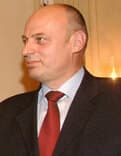
Agim Ceku
General · Modern
47.3Total
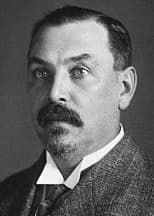
Louis Botha
General · Modern
61.1Total
Basic Information
Born
1960
1862
Died
—
1919
Era
Modern
Modern
Nationality
Kosovo
South Africa
Occupation
General
General
Civilization
Western
Other
Score Comparison
Military (10%)
38.3
61.7
Political (20%)
43.7
70.0
Influence (20%)
51.8
56.7
Legacy (20%)
41.7
50.0
Leadership (15%)
61.1
79.8
Strategy (15%)
43.3
58.0
TOTAL
47.3
61.1
Agim Ceku — Complete Timeline
1999 AD
KLA Chief of StaffWar◆ Major
Ceku served as the Chief of Staff of the Kosovo Liberation Army during the final phase of the Kosovo War. He was a key military strategist and commander.
Kosovo WarMilitary Command
Impact: regional
2006 AD
Elected Prime Minister of KosovoPolitical Action◆ Major
Ceku became Prime Minister of Kosovo under UN administration, succeeding Bajram Kosumi. He led the government during the final status negotiations and the run-up to independence.
Kosovo StatusGovernment
Impact: regional
2008 AD
Resigned as Prime MinisterPolitical Action
Ceku resigned after failing to form a coalition government following the 2007 elections. He was succeeded by Hashim Thaci.
Kosovo PoliticsTransition
Impact: regional
Louis Botha — Complete Timeline
1899 AD
Battle of ColensoWar◆ Major
Botha commanded Boer forces at the Battle of Colenso during the Second Boer War. His troops repelled a British attack under General Buller, inflicting heavy casualties and boosting Boer morale.
Second Boer WarBattleVictory
Impact: regional
1900 AD
Boer War Guerrilla CommanderWar◆ Major
After the British captured Pretoria, Botha led Boer guerrilla forces in the Transvaal. He conducted hit-and-run attacks against British columns, prolonging the war and becoming a symbol of Afrikaner resistance.
Second Boer WarGuerrillaResistance
Impact: regional
1902 AD
Signed the Treaty of VereenigingPolitical Action
Botha, as a leading Boer general, signed the Treaty of Vereeniging which ended the Second Boer War. The treaty granted the Boer republics self-government under British sovereignty and promised eventual self-rule.
TreatyPeaceSecond Boer War
Impact: regional
1910 AD
First Prime Minister of the Union of South AfricaPolitical Action
Botha became the first Prime Minister of the newly formed Union of South Africa. He led a coalition government that sought to reconcile Afrikaners and English-speaking whites, while implementing segregationist policies.
Prime MinisterUnion of South AfricaFounding
Impact: nationalconstructive
1914 AD
Suppressed the 1914 RebellionWar◆ Major
Botha personally led government forces to suppress the Maritz Rebellion, an Afrikaner uprising against South Africa's entry into World War I. He defeated the rebels, asserting state authority and maintaining support for the British Empire.
RebellionWorld War ISuppression
Impact: national
1915 AD
Conquered German South West AfricaWar◆ Major
Botha commanded South African forces in the invasion and conquest of German South West Africa. The campaign succeeded, and the territory was later administered by South Africa under a League of Nations mandate.
World War IConquestGerman South West Africa
Impact: regional
Expert Analysis
Louis Botha vs Agim Ceku
# The General Who Became a Statesman: Louis Botha and Agim Ceku
On a sweltering December afternoon in 1899, a Boer farmer named Louis Botha watched from a hillside as British soldiers marched into a killing field near the Tugela River. By nightfall, the British had suffered over a thousand casualties, and Botha—who had never commanded a major battle before—had earned his place in military history. A century later, in the spring of 1999, another guerrilla commander, Agim Ceku, sat in a bunker in the mountains of Kosovo, coordinating attacks against Serbian forces with satellite phones and smuggled weapons. Both men would rise from battlefields to prime minister’s offices. But their journeys—and what they left behind—could not have been more different.
Origins
Louis Botha was born in 1862 on a farm in the Orange Free State, the son of Voortrekker parents who had fled British rule. He grew up speaking Afrikaans, riding horses across the highveld, and learning the rhythms of a frontier life where a man’s word was his bond and his rifle his most trusted possession. The Boer Republics were young, fiercely independent, and deeply suspicious of British imperialism. Botha absorbed this world completely—he would later say that he “never knew a day without a gun.”
Agim Ceku was born in 1960 in the village of Ćuša, in what was then Yugoslavia. His family were ethnic Albanians in a province where Albanians were second-class citizens. He grew up under Tito’s communist regime, where nationalism was suppressed and Kosovo’s Albanian majority was systematically marginalized. Ceku chose a different path from Botha’s rural farm life: he joined the Yugoslav People’s Army, studied at military academies, and became an officer. When Yugoslavia began to fracture, he found himself on the wrong side of the ethnic divide.
Rise to Power
Botha’s rise was swift and improbable. He was elected to the Volksraad (parliament) of the South African Republic in 1897, a quiet farmer who spoke little in debates. But when war came in 1899, his calm demeanor and natural tactical instincts propelled him. After Colenso, he became a national hero. When the British captured Pretoria in 1900, Botha took command of the remaining Boer forces in the Transvaal, turning a conventional war into a guerrilla campaign that would frustrate the British for two more years. His hit-and-run attacks, his ability to keep his men fed and armed in the veld, and his refusal to surrender made him the symbol of Boer resistance.
Ceku’s path was more deliberate. He fought in the Croatian War of Independence in the early 1990s, gaining experience in guerrilla tactics and small-unit warfare. When the Kosovo Liberation Army (KLA) emerged in the late 1990s, Ceku brought his military training and connections. By 1999, he was the KLA’s Chief of Staff, coordinating with NATO air forces and directing operations against Serbian troops. Unlike Botha, who inherited a conventional army and adapted to guerrilla war, Ceku built a guerrilla force from scratch, using the chaos of Yugoslavia’s collapse to arm and train his men.
Leadership & Governance
Botha’s military score of 62.0 reflects a competent but not brilliant commander—his real genius was political. After the Treaty of Vereeniging in 1902, which ended the Boer War, Botha understood that the Boers could not win through arms alone. He became the architect of reconciliation, working with British imperialists like Lord Milner to create the Union of South Africa in 1910. As the first Prime Minister, he governed with a political score of 83.0, balancing the interests of Boers and Britons, Afrikaners and English speakers. He crushed the 1914 Maritz Rebellion—an Afrikaner uprising against his own government—with the same decisiveness he had shown against the British. Then he conquered German South West Africa in 1915, proving his loyalty to the Empire he had once fought.
Ceku’s leadership score of 72.6 and political score of 63.5 tell a different story. He was a military organizer, not a statesman. As Prime Minister of Kosovo from 2006 to 2008, he governed under UN administration, navigating a fragile peace and unresolved status negotiations. His tenure was marked by frustration: he could not deliver the independence Kosovars demanded, and he struggled to form stable coalitions. When he resigned in 2008, it was because he failed to hold his government together—a failure Botha would have found unthinkable.
Triumph & Tragedy
Botha’s greatest moment was also his most controversial: signing the Treaty of Vereeniging. For the Boers, it was a surrender that ended their dream of an independent republic. For Botha, it was a strategic retreat that saved his people from annihilation. His tragedy was the same: he became the man who led his people into a union they did not fully want, under a flag they did not fully love. He died in 1919, just as the Union of South Africa was finding its feet, leaving a legacy that would be overshadowed by the apartheid regime his own party would later create.
Ceku’s triumph was the Kosovo War itself—the KLA’s ability to force NATO intervention and eventually achieve Kosovo’s independence in 2008, after he had left office. His tragedy was that he could not lead that independence. He was a wartime commander, not a peacetime prime minister. His resignation in 2008 marked the end of his political career, and he has since faded from the public eye.
Character & Destiny
Botha was pragmatic above all. He could fight the British one year and work with them the next. He could suppress a rebellion of his own people and then conquer a German colony for the Empire. His character was shaped by the Boer tradition of *reg*—doing what was right and necessary, even when it hurt. Ceku was a product of a different tradition: the Balkan warrior, forged in ethnic conflict, who could lead men in battle but could not govern in peace. Botha’s destiny was to build a nation, however flawed. Ceku’s was to help free one, then step aside.
Legacy
Botha’s legacy score of 66.8 is modest for a founding father. He is remembered as the first Prime Minister of South Africa, but his reconciliation policies were undone by the apartheid regime that followed. Today, he is a contested figure: honored by some Afrikaners, criticized by others for betraying the Boer cause. Ceku’s legacy score of 57.1 is even lower. He is a footnote in Kosovo’s history, remembered by soldiers but not by schoolchildren. The KLA’s legacy is complex, and Ceku’s role as a commander has been overshadowed by political leaders like Hashim Thaçi.
Conclusion
Two generals, two prime ministers, two different worlds. Botha commanded at Colenso, Ceku commanded in the mountains of Kosovo. Botha built a nation, Ceku helped free one. Botha died in office, Ceku left office in failure. Their stories remind us that the skills that win wars are not the same skills that govern nations. Botha understood this; Ceku did not. And that difference—between the farmer who could become a statesman and the soldier who could not—is the difference between a legacy that endures and one that fades.
Rankings
🥇
Louis BothaLeader
Mil: 61.7Pol: 70.0Inf: 56.7
61.1
🥈
Agim Ceku
Mil: 38.3Pol: 43.7Inf: 51.8
47.3
+13.8 behind
How This Comparison Works
Algorithm
Each figure is scored on 6 dimensions (0—100 scale) based on structured historical data: Military (10%), Political (20%), Influence (20%), Legacy (20%), Leadership (15%), Strategy (15%). The weighted total produces the final ranking.
Data Sources
Scores are computed from structured sub-indicators in the database. Scale factors adjust for era (Ancient ×0.85, Modern ×1.0) and civilization size (Eastern ×1.05, Other ×0.80) to account for differences in population and military scale.
Maximum 3 Figures
Comparisons are limited to 2—3 figures to ensure readability and statistical meaningfulness.
Error Margins
±5 points per dimension — Sub-scores are derived from historical records with inherent uncertainty. Two figures within 5 points on a dimension should be considered roughly equivalent in that area.
Total Score Accuracy
±3 points overall — The weighted combination of 6 dimensions produces a total score with approximately ±3 points of uncertainty. Differences of less than 3 points are not statistically significant— the figures are effectively tied.
Known Limitations
- Historical records are incomplete and uneven across civilizations
- Figures from oral-tradition societies may be underrepresented
- Occupation labels can misclassify multi-role figures
- Scores measure capability and impact, not moral character
- Quantitative scoring is a comparison tool, not absolute truth
Capability Radar
Military (10%) — Battles & Warfare
Battles
35
65
Win Rate
40
70
Expansion
15
60
Political (20%) — Governance & Reform
Reform
25
65
Diplomacy
30
70
Economy
20
55
Influence (20%) — Cultural & Global Reach
Cultural
20
45
Global
20
50
Legacy (20%) — Historical Impact
Historical
25
55
Longevity
15
40
Leadership (15%) — Power & Stability
Tenure
30
60
Stability
15
50
Strategy (15%) — Tactics & Innovation
Strategy
40
72
Tactics
45
68
Reform
20
55
Similar Comparisons
Comments & Discussion
BULLDOG OF THE TUGELA6/16/2026
As a military historian, Botha's real genius wasn't just Colenso - it was Spion Kop. He let the British impale themselves on that hill while his Boers picked them off from three sides. Textbook use of interior lines. Ceku? Impressive with modern tech, but fought a war of attrition he didn't have to. Botha would have shredded NATO's supply lines first.
铁血总理6/16/2026
都当过总理,但波塔是真正建国者。他打完仗就去和英国人谈判,成立南非联邦,从游击队长变成国家元首。切库呢?打完科索沃战争就当总理,但科索沃到今天还不是联合国会员国。波塔证明打仗和治国是两种本事,切库只证明了前者。
DATA DETECTIVE6/16/2026
Let me punch holes in this comparison: Botha commanded 4,000 Boers at Colenso; Ceku led the KLA, estimated at 20,000-30,000. Apples and oranges. The victory at Colenso was one battle; the KLA's "victory" was NATO bombing. Botha's political legacy gave us apartheid; Ceku's gave us a corrupt, mafia-ridden proto-state. Neither deserves unqualified praise.
荷语老枪6/16/2026
我是布尔战争迷。波塔的游击战才是经典:打完就跑,马比人快。他让英军两年消耗四亿英镑。切库的游击战?靠美国战机清场,自己连普里什蒂纳都打不下来。比战绩,波塔甩他十条街。不过切库活到2024年,波塔1919年就累死了,命运真讽刺。
CLASSICS SCHOLAR6/16/2026
Consider the classical parallel: Botha was Cincinnatus, the farmer called to war who returned to plow. He fought, negotiated peace, then built a nation. Ceku was more like Marius - a soldier who never truly left the battlefield, governing through force rather than vision. Botha died in office, respected; Ceku's premiership lasted barely two years. The difference is between founding and failing.
科索沃之盾6/16/2026
别光说军事,看政治格局。波塔在第一次世界大战中带领南非站队英国,赢得国际尊重,为国家争来自治领地位。切库呢?科索沃独立后腐败横行,他当总理时人均GDP只有波塔时代南非的零头。打仗靠兄弟,治国靠裙带,最后灰溜溜下台。这不是将军和将军比,这是政治家和军阀比。