Loading...
This comparison has not been analyzed yet.
One-time AI generation (~1 minute). Scores and timeline are already available below.
Abul Hasan Qutb Shah vs Ferdinand VII of Spain
Abul Hasan Qutb Shah leads by 4.7 pts · 2 figures compared
…
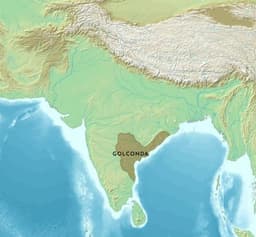
Abul Hasan Qutb Shah
Emperor · Modern
49.8Total
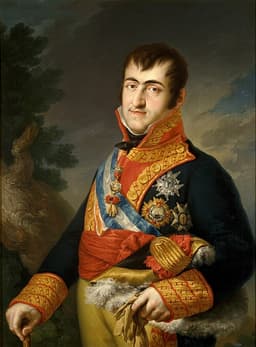
Ferdinand VII of Spain
Emperor · Modern
45.1Total
Basic Information
Born
1672
1784
Died
1699
1833
Era
Modern
Modern
Nationality
India
Spain
Occupation
Emperor
Emperor
Civilization
Indian
Western
Score Comparison
Military (10%)
50.0
14.9
Political (20%)
43.7
32.2
Influence (20%)
53.3
51.0
Legacy (20%)
42.5
41.7
Leadership (15%)
62.2
74.0
Strategy (15%)
50.0
45.0
TOTAL
49.8
45.1
Abul Hasan Qutb Shah — Complete Timeline
1672 AD
Accession to Golconda ThronePolitical Action◆ Major
Abul Hasan Qutb Shah became sultan of Golconda after the death of his father Abdullah Qutb Shah. His reign coincided with the final phase of Mughal expansion into the Deccan under Aurangzeb.
SuccessionGolconda Sultanate
Impact: regional
1687 AD
Mughal Siege of GolcondaWar
Aurangzeb's Mughal army besieged Golconda fort for eight months. The siege ended when a traitor opened the gates, leading to the capture of Abul Hasan Qutb Shah and the annexation of Golconda into the Mughal Empire.
SiegeMughal ConquestEnd of Dynasty
Impact: regionaltragic
Imprisonment by AurangzebPolitical Action◆ Major
After the fall of Golconda, Abul Hasan Qutb Shah was captured and imprisoned by Aurangzeb. He spent the rest of his life in captivity at Daulatabad fort, marking the end of the Qutb Shahi dynasty.
ImprisonmentMughal ConquestEnd of Reign
Impact: regionaltragic
Ferdinand VII of Spain — Complete Timeline
1808 AD
Accession to the thronePolitical Action◆ Major
Ferdinand VII became King of Spain after the abdication of his father Charles IV. His reign was interrupted by Napoleon's intervention and the Peninsular War, but he was restored in 1814.
SuccessionMonarchy
Impact: national
1814 AD
Abolition of the Constitution of 1812Political Action
Upon returning to Spain, Ferdinand VII abolished the liberal Constitution of 1812 and restored absolute monarchy. He persecuted liberals and reinstated the Inquisition, reversing the reforms of the Cortes of C
ConstitutionAbsolutismReaction
Impact: nationaldestructive
1820 AD
Trienio LiberalPolitical Action◆ Major
A military revolt led by Rafael del Riego forced Ferdinand VII to reinstate the Constitution of 1812, beginning the Trienio Liberal. Ferdinand was effectively a constitutional monarch for three years.
Liberal RevolutionConstitutionRevolt
Impact: national
1823 AD
French intervention and restoration of absolutismWar◆ Major
A French army, the Hundred Thousand Sons of Saint Louis, invaded Spain to restore Ferdinand VII's absolute power. The liberal government fell, and Ferdinand resumed repressive rule.
InterventionAbsolutismCongress of Vienna
Impact: regionaldestructive
1830 AD
Pragmatic Sanction of 1830Political Action◆ Major
Ferdinand VII issued the Pragmatic Sanction, abolishing Salic Law and allowing his daughter Isabella to inherit the throne. This led to the Carlist Wars after his death.
SuccessionLawCarlist Wars
Impact: national
This comparison has not been analyzed yet.
One-time AI generation (~1 minute). Scores and timeline are already available below.
Rankings
🥇
Abul Hasan Qutb ShahLeader
Mil: 50.0Pol: 43.7Inf: 53.3
49.8
🥈
Ferdinand VII of Spain
Mil: 14.9Pol: 32.2Inf: 51.0
45.1
+4.7 behind
How This Comparison Works
Algorithm
Each figure is scored on 6 dimensions (0—100 scale) based on structured historical data: Military (10%), Political (20%), Influence (20%), Legacy (20%), Leadership (15%), Strategy (15%). The weighted total produces the final ranking.
Data Sources
Scores are computed from structured sub-indicators in the database. Scale factors adjust for era (Ancient ×0.85, Modern ×1.0) and civilization size (Eastern ×1.05, Other ×0.80) to account for differences in population and military scale.
Maximum 3 Figures
Comparisons are limited to 2—3 figures to ensure readability and statistical meaningfulness.
Error Margins
±5 points per dimension — Sub-scores are derived from historical records with inherent uncertainty. Two figures within 5 points on a dimension should be considered roughly equivalent in that area.
Total Score Accuracy
±3 points overall — The weighted combination of 6 dimensions produces a total score with approximately ±3 points of uncertainty. Differences of less than 3 points are not statistically significant— the figures are effectively tied.
Known Limitations
- Historical records are incomplete and uneven across civilizations
- Figures from oral-tradition societies may be underrepresented
- Occupation labels can misclassify multi-role figures
- Scores measure capability and impact, not moral character
- Quantitative scoring is a comparison tool, not absolute truth
Capability Radar
Military (10%) — Battles & Warfare
Battles
25
10
Win Rate
20
5
Expansion
10
5
Political (20%) — Governance & Reform
Reform
30
5
Diplomacy
25
20
Economy
35
10
Influence (20%) — Cultural & Global Reach
Cultural
40
15
Global
20
20
Legacy (20%) — Historical Impact
Historical
35
30
Longevity
30
20
Leadership (15%) — Power & Stability
Tenure
40
60
Stability
20
10
Strategy (15%) — Tactics & Innovation
Strategy
25
5
Tactics
30
5
Reform
15
5
Similar Comparisons
Comments & Discussion
No comments yet. Be the first to share your thoughts!