Loading...
Abu Jafar al-Mansur vs Tailapa II
Abu Jafar al-Mansur leads by 5.1 pts · 2 figures compared
…
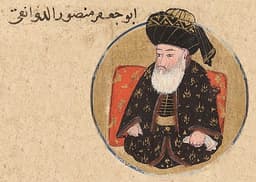
Abu Jafar al-Mansur
Emperor · Medieval
65.5Total
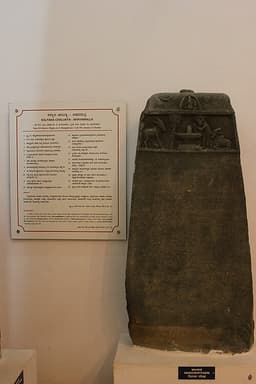
Tailapa II
Emperor · Medieval
60.4Total
Basic Information
Born
714
957
Died
775
997
Era
Medieval
Medieval
Nationality
Abbasid Caliphate
India
Occupation
Emperor
Emperor
Civilization
Middle Eastern
Indian
Score Comparison
Military (10%)
65.0
74.7
Political (20%)
75.0
53.8
Influence (20%)
40.0
61.0
Legacy (20%)
80.0
52.0
Leadership (15%)
82.0
72.0
Strategy (15%)
55.0
58.0
TOTAL
65.5
60.4
Abu Jafar al-Mansur — Complete Timeline
754 AD
Consolidated Abbasid Power After the RevolutionPolitical Action◆ Major
Al-Mansur eliminated rivals including his uncle Abd Allah ibn Ali and the Barmakids, securing Abbasid control. He established a centralized bureaucracy and suppressed rebellions, including the Rawandiyya uprising.
Impact: global
762 AD
Founded the City of BaghdadPolitical Action
Abu Jafar al-Mansur founded the city of Baghdad as the new capital of the Abbasid Caliphate. The Round City was designed as a center of administration and culture, becoming one of the largest cities in the world.
Impact: globalconstructive
770 AD
Patronized Translation of Greek WorksCultural◆ Major
Al-Mansur supported the translation of Greek philosophical and scientific texts into Arabic. This initiative laid the foundation for the Abbasid translation movement, which preserved and expanded classical knowledge.
Impact: globalconstructive
Tailapa II — Complete Timeline
973 AD
Founding of the Western Chalukya DynastyPolitical Action◆ Major
Tailapa II overthrew the Rashtrakuta ruler Karka II and established the Western Chalukya dynasty. This marked the end of Rashtrakuta rule in the Deccan and the beginning of a new Chalukya era.
Impact: regional
995 AD
Defeat of the Paramara King MunjaWar◆ Major
Tailapa II defeated and captured the Paramara king Munja of Malwa. This victory consolidated Western Chalukya control over the northern Deccan and established their military reputation.
Impact: regional
Expert Analysis
Abu Jafar al-Mansur vs Tailapa II
### The Founder and the Builder
On a dusty battlefield in the Deccan, around 973 CE, a man named Tailapa II watched the last Rashtrakuta emperor fall. He had not simply won a war; he had reclaimed a legacy that had been stolen from his ancestors two centuries earlier. Across the Islamic world, some twenty years earlier, another man named Abu Jafar al-Mansur sat in a tent, plotting the murder of his own uncle to secure a throne that had been won by his brother's sword. Both were founders. Both were ruthless. But while one built a dynasty that would flicker and fade, the other constructed a civilization that would illuminate the world for centuries. The difference between them was not merely in their victories, but in what they chose to build after the dust settled.
### Origins
Tailapa II was born in 957 into a world of shadows. The Chalukya dynasty, which had once ruled the Deccan with grandeur, had been crushed by the Rashtrakutas in the 8th century. For generations, the Chalukya scions lived as minor feudatories, nursing a grievance that had grown cold with time. Tailapa was a warrior bred in the frontier, where survival meant constant vigilance and ambition meant everything. His world was the battlefield, his language the sword.
Al-Mansur, born in 714, came from a different kind of shadow. His family, the Abbasids, had spent decades weaving a conspiracy against the Umayyad Caliphate, using propaganda, secret networks, and the resentment of non-Arab Muslims. He was not a soldier by instinct but a strategist, a man who saw power as a web of alliances, patronage, and fear. His upbringing was steeped in the politics of rebellion, not the honor of dynastic restoration.
### Rise to Power
Tailapa’s path was direct. In 973, he marched against Karka II, the Rashtrakuta ruler, and overthrew him in a single decisive campaign. The Western Chalukya dynasty was born in that moment—a restoration of blood and pride. There was no subtlety, no long game. He simply seized what he believed was his.
Al-Mansur’s rise was far bloodier and more intricate. When his brother, the first Abbasid caliph al-Saffah, died in 754, al-Mansur inherited a throne that was still trembling. He immediately moved against his uncle, Abd Allah ibn Ali, who had commanded the Abbasid armies and believed he deserved the crown. Al-Mansur had him arrested and executed. Then he turned on the Barmakids, the powerful Persian family that had helped the Abbasids rise, and crushed them too. He understood that a revolution is not won by defeating the enemy—it is won by eliminating every friend who might one day become one.
### Leadership & Governance
Tailapa II ruled as a warrior-king. His greatest military achievement came in 995, when he defeated and captured the Paramara king Munja of Malwa. That victory consolidated Western Chalukya control over the northern Deccan and sent a clear message to his rivals, including the powerful Chola dynasty to the south. Yet his governance was largely traditional: he minted coins, patronized temples, and maintained the feudal structure he had inherited. He was a restorer, not a reformer.
Al-Mansur, by contrast, was an architect of institutions. His political score of 67.9 and leadership score of 79.4 reflect a man who understood that power must be housed, not just wielded. In 762, he founded Baghdad—the Round City—a marvel of urban planning and a deliberate symbol of Abbasid authority. More importantly, around 770, he began patronizing the translation of Greek philosophical and scientific texts into Arabic. This was not a hobby; it was state policy. He knew that a caliphate built only on swords would crumble, but one built on knowledge would endure.
### Triumph & Tragedy
Tailapa’s triumph was his restoration. For a brief moment, the Chalukya name blazed again. But his tragedy was that he left no lasting institution. After his death in 997, the Western Chalukya dynasty would survive for another two centuries, but it would be a story of slow decline, overshadowed by the rising Cholas and later the Hoysalas. His victory over Munja was a peak, not a plateau.
Al-Mansur’s triumph was Baghdad—a city that would become the intellectual capital of the medieval world. But his tragedy was the cost. He ruled through fear, purging his own family, his allies, and anyone who threatened his vision. The Barmakids, who had helped build the Abbasid state, were wiped out in a single night. Al-Mansur died in 775, a man surrounded by silence, having ensured that no one was powerful enough to challenge his son.
### Character & Destiny
Tailapa’s personality was forged in the crucible of restoration. He was proud, direct, and honorable in the way of a feudal lord. He fought for his name, his lineage, his dynasty. But that very pride limited his horizon. He saw the throne as the goal, not the foundation.
Al-Mansur was paranoid, calculating, and visionary. He did not fight for a name; he fought for a system. His cruelty was not personal—it was architectural. He eliminated rivals not because he hated them, but because they were obstacles to a structure he was building. His destiny was to be the father of an empire, not merely its king.
### Legacy
Tailapa II is remembered today as a footnote in Indian history, a name on a list of medieval dynasties. His total score of 66.6 and influence score of 73.5 place him firmly in the second tier of historical figures. He is respected by specialists but unknown to the world.
Al-Mansur, with a total score of 69.1 and an influence score of 75.0, is a different story. His legacy is Baghdad, the Abbasid Golden Age, the translation movement that preserved Greek philosophy for Europe. He is not a name on a list; he is a foundation stone of world civilization. His legacy score of 70.0 reflects a man who built something that outlasted him by half a millennium.
### Conclusion
Standing at the edge of their respective eras, both men faced the same question: What do you do after you win? Tailapa II answered by fighting more battles. Al-Mansur answered by building a city. In the end, the warrior’s glory fades with the last echo of his trumpet, while the builder’s work becomes the air that future generations breathe. The difference between a dynasty and a civilization is not the size of the army, but the depth of the foundation.
Rankings
🥇
Abu Jafar al-MansurLeader
Mil: 65.0Pol: 75.0Inf: 40.0
65.5
🥈
Tailapa II
Mil: 74.7Pol: 53.8Inf: 61.0
60.4
+5.1 behind
How This Comparison Works
Algorithm
Each figure is scored on 6 dimensions (0—100 scale) based on structured historical data: Military (10%), Political (20%), Influence (20%), Legacy (20%), Leadership (15%), Strategy (15%). The weighted total produces the final ranking.
Data Sources
Scores are computed from structured sub-indicators in the database. Scale factors adjust for era (Ancient ×0.85, Modern ×1.0) and civilization size (Eastern ×1.05, Other ×0.80) to account for differences in population and military scale.
Maximum 3 Figures
Comparisons are limited to 2—3 figures to ensure readability and statistical meaningfulness.
Error Margins
±5 points per dimension — Sub-scores are derived from historical records with inherent uncertainty. Two figures within 5 points on a dimension should be considered roughly equivalent in that area.
Total Score Accuracy
±3 points overall — The weighted combination of 6 dimensions produces a total score with approximately ±3 points of uncertainty. Differences of less than 3 points are not statistically significant— the figures are effectively tied.
Known Limitations
- Historical records are incomplete and uneven across civilizations
- Figures from oral-tradition societies may be underrepresented
- Occupation labels can misclassify multi-role figures
- Scores measure capability and impact, not moral character
- Quantitative scoring is a comparison tool, not absolute truth
Capability Radar
Military (10%) — Battles & Warfare
Battles
60
70
Win Rate
65
75
Expansion
70
75
Political (20%) — Governance & Reform
Reform
90
65
Diplomacy
80
60
Economy
85
65
Influence (20%) — Cultural & Global Reach
Cultural
85
55
Global
80
40
Legacy (20%) — Historical Impact
Historical
90
60
Longevity
85
50
Leadership (15%) — Power & Stability
Tenure
85
70
Stability
75
60
Strategy (15%) — Tactics & Innovation
Strategy
70
70
Tactics
55
65
Reform
75
60
Similar Comparisons
Comments & Discussion
**Bloodline Barbarian**6/16/2026
People romanticize Tailapa II as some noble avenger, but he was just a glorified warlord who won a single battle and claimed a legacy that didn’t really belong to him. The Chalukyas had been irrelevant for 200 years. Meanwhile, al-Mansur literally created Baghdad from scratch and set the administrative blueprint for the Caliphate. One built libraries; the other raided villages. Give me the calculator over the cavalry any day.
**沙漠读书人**6/16/2026
拿Tailapa II跟al-Mansur比?简直侮辱城市规划者。曼苏尔是算账的天才,不仅干掉他叔叔,还把整个帝国财政理清了。Tailapa就靠一场胜仗混了个王朝,然后呢?石窟刻名字,没别的了。曼苏尔搞了智慧宫的前身,那是文明的引擎。Tailapa的战马能跑,但跑不过书卷的寿命。
**Data Dervish**6/16/2026
Tailapa II’s “empire” was a statistical blip. The Western Chalukya dynasty collapsed within 200 years and never controlled more than a fraction of the Deccan. Compare that to al-Mansur, whose reign set the Abbasid Caliphate on a path that covered 13 million square kilometers and lasted 500 years. Tailapa’s PR team did a better job than his soldiers. The numbers don’t lie — one is a footnote, the other is a chapter.
**古卷毒舌**6/16/2026
Tailapa打个仗还要靠祖先的牌子,曼苏尔直接造了一个城市文明。你说谁更硬核?曼苏尔在圆城布局里塞了天文台、市场、官方记录局,Tailapa呢?他在马哈拉施特拉挖了几座庙,然后就吹了几百年。别跟我扯“收复失地”——那是封建黑帮的逻辑。真正影响历史的是那些建图书馆的疯子,不是拿剑的土匪。
**Clio’s Crook**6/16/2026
Both were ruthless, but al-Mansur’s ruthlessness served a system. He killed his uncle, yes, but he also stabilized a caliphate that translated Aristotle, funded astronomy, and standardized law. Tailapa’s violence was just personal score-setting. He reclaimed a throne that had been dead for centuries, then spent his reign fighting off the same local rivals his ancestors faced. One innovated, the other just reheated leftovers.