Loading...
Abu Jafar al-Mansur vs Pachacuti
Pachacuti leads by 3.9 pts · 2 figures compared
…
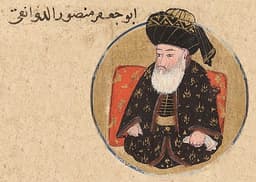
Abu Jafar al-Mansur
Emperor · Medieval
65.5Total
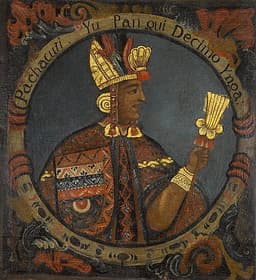
Pachacuti
Emperor · Medieval
69.4Total
Basic Information
Born
714
1418
Died
775
1472
Era
Medieval
Medieval
Nationality
Abbasid Caliphate
Inca Empire
Occupation
Emperor
Emperor
Civilization
Middle Eastern
Other
Score Comparison
Military (10%)
65.0
78.5
Political (20%)
75.0
58.1
Influence (20%)
40.0
65.0
Legacy (20%)
80.0
72.0
Leadership (15%)
82.0
78.0
Strategy (15%)
55.0
69.2
TOTAL
65.5
69.4
Abu Jafar al-Mansur — Complete Timeline
754 AD
Consolidated Abbasid Power After the RevolutionPolitical Action◆ Major
Al-Mansur eliminated rivals including his uncle Abd Allah ibn Ali and the Barmakids, securing Abbasid control. He established a centralized bureaucracy and suppressed rebellions, including the Rawandiyya uprising.
Impact: global
762 AD
Founded the City of BaghdadPolitical Action
Abu Jafar al-Mansur founded the city of Baghdad as the new capital of the Abbasid Caliphate. The Round City was designed as a center of administration and culture, becoming one of the largest cities in the world.
Impact: globalconstructive
770 AD
Patronized Translation of Greek WorksCultural◆ Major
Al-Mansur supported the translation of Greek philosophical and scientific texts into Arabic. This initiative laid the foundation for the Abbasid translation movement, which preserved and expanded classical knowledge.
Impact: globalconstructive
Pachacuti — Complete Timeline
1438 AD
Conquest of the Chanka KingdomWar
Pachacuti led the Inca army to defeat the Chanka, a powerful rival, in a decisive battle near Cusco. This victory secured his position as Sapa Inca and initiated a period of rapid expansion, transforming the Inca from a small kingdom into a vast empire.
ConquestInca ExpansionChanka
Impact: regional
1440 AD
Reconstruction of CuscoCultural◆ Major
Pachacuti rebuilt Cusco as the imperial capital, designing it in the shape of a puma and constructing massive stone structures like Sacsayhuam
Urban PlanningArchitectureInca Empire
Impact: regionalconstructive
1450 AD
Initiation of Machu Picchu's ConstructionCultural◆ Major
Pachacuti ordered the construction of Machu Picchu, a royal estate and ceremonial site high in the Andes. The complex featured sophisticated dry-stone masonry and terraced agriculture, serving as a symbol of Inca engineering and a retreat for the emperor.
ArchitectureRoyal EstateInca Engineering
Impact: regionalconstructive
Expert Analysis
Pachacuti vs Abu Jafar al-Mansur
### The Builder and the City
In the high Andes, a ruler reshapes mountains into a royal estate, carving stone with a precision that defies time. In the flatlands of Mesopotamia, another ruler draws a perfect circle on the desert floor, laying the foundations for a metropolis that will become the intellectual heart of the world. One man, Pachacuti, forged an empire from a single victory. The other, Abu Jafar al-Mansur, built a civilization from a single city. They never met, yet their lives pose a profound question: what is the most enduring foundation of power—conquest or culture?
### Origins
Pachacuti was born in 1418 into a world of fragile city-states. The Inca were a small kingdom in the Cusco Valley, constantly threatened by more powerful neighbors like the Chanka. His father, Viracocha Inca, was a cautious ruler, but the son was different. The name *Pachacuti* means "earth-shaker" or "cataclysm," a fitting title for a man who would upend the existing order. His upbringing was one of military training and the harsh realities of high-altitude warfare, where the thin air itself was an adversary.
Al-Mansur, born in 714, came from a lineage of revolution. His family, the Abbasids, had spent decades plotting the overthrow of the Umayyad Caliphate, a dynasty they saw as corrupt and un-Islamic. He was not a warrior in the same sense as Pachacuti; his battlefield was the court, the harem, and the spy network. His name, meaning "the victorious by God's help," reflected a man who understood that power was often won not in open battle, but in the silence of a palace corridor.
### Rise to Power
Pachacuti’s rise was forged in fire. In 1438, the Chanka kingdom launched a massive assault on Cusco. Viracocha and his chosen heir fled, but the young prince—not yet the Sapa Inca—refused to retreat. He rallied a desperate defense, leading the Inca army in a decisive battle near Cusco. The victory was total. The Chanka were crushed, their territory annexed. This single event, a turning point of extraordinary magnitude, catapulted Pachacuti onto the throne. He did not inherit power; he seized it from the jaws of annihilation.
Al-Mansur’s path was more deliberate and far bloodier. After the Abbasid Revolution overthrew the Umayyads in 750, his brother, Caliph al-Saffah, took the throne. Al-Mansur was the architect of the new regime’s consolidation. When al-Saffah died in 754, al-Mansur faced a series of revolts from rivals, most dangerously his own uncle, Abd Allah ibn Ali. Al-Mansur eliminated them with systematic ruthlessness, poisoning, imprisoning, and executing his way to absolute control. He understood that a revolution must devour its children to survive.
### Leadership & Governance
Pachacuti was a military genius of the first order. His leadership score of 84.5 reflects a man who did not just conquer but administered. He reorganized the Inca state into a network of provinces linked by roads and storehouses, creating a system of tribute and labor known as the *mita*. He rebuilt Cusco in the shape of a puma, a sacred animal, and initiated the construction of Machu Picchu around 1450, a breathtaking royal estate perched between two peaks. His strategy was one of integration: conquered peoples were resettled, their languages standardized into Quechua, and their gods tolerated as long as the sun god Inti remained supreme.
Al-Mansur was a political visionary. With a political score of 67.9, he was less a strategist than an institutionalist. His greatest act was the founding of Baghdad in 762. He designed the "Round City" as a perfect circle, with his palace and the great mosque at the center—a physical manifestation of the caliph’s absolute authority. But his true legacy was intellectual. By 770, he had begun patronizing the translation of Greek philosophical and scientific texts into Arabic. He did not write the books himself, but he built the house where knowledge could dwell.
### Triumph & Tragedy
Pachacuti’s triumph was the transformation of a small kingdom into the largest empire in pre-Columbian America, stretching from modern-day Ecuador to Chile. His tragedy was that his empire was built on a fragile personal authority. When the Spanish arrived decades after his death in 1472, the Inca state collapsed with shocking speed, partly because the system he created depended entirely on the Sapa Inca’s divine will.
Al-Mansur’s triumph was Baghdad. It became the center of the Islamic Golden Age, a city of scholars, poets, and scientists. His tragedy was personal. He was a paranoid, often cruel ruler who killed his own allies and lived in constant fear of assassination. He died in 775 on a pilgrimage to Mecca, a journey of penance that could not cleanse his hands of blood.
### Character & Destiny
Pachacuti was a man of immense confidence. He believed he was the son of the sun, and that conviction gave him a charisma that inspired loyalty. His decisions were bold, even reckless, but they worked. Al-Mansur was a man of deep suspicion. He trusted no one, and his greatest strength—his political cunning—was also his greatest weakness. It made him effective but isolated. One man built an empire through faith in himself; the other built a civilization through fear of others.
### Legacy
Pachacuti is remembered as the "Napoleon of the Andes," the founder of the Inca Empire. His name is etched into the stones of Machu Picchu, a site that draws millions of visitors today, long after his empire has crumbled. Al-Mansur is remembered as the founder of Baghdad, a city that, for centuries, was the world’s center of learning. The House of Wisdom he inspired would eventually preserve the works of Aristotle and Galen, lighting the way for the European Renaissance.
### Conclusion
Two builders, two worlds. Pachacuti shaped stone and men into a mountain empire that lasted a century. Al-Mansur shaped bricks and ideas into a civilization that lasted a millennium. The Inca emperor conquered bodies; the Abbasid caliph conquered minds. In the end, the walls of Cusco are ruins, and the palaces of Baghdad are dust. But the knowledge al-Mansur fostered still flows through the veins of modern science, while the spirit of Pachacuti still whispers in the Andean wind. The question of which foundation is more enduring remains unanswered, for it is a question every leader must answer for themselves.
Rankings
🥇
PachacutiLeader
Mil: 78.5Pol: 58.1Inf: 65.0
69.4
🥈
Abu Jafar al-Mansur
Mil: 65.0Pol: 75.0Inf: 40.0
65.5
+3.9 behind
How This Comparison Works
Algorithm
Each figure is scored on 6 dimensions (0—100 scale) based on structured historical data: Military (10%), Political (20%), Influence (20%), Legacy (20%), Leadership (15%), Strategy (15%). The weighted total produces the final ranking.
Data Sources
Scores are computed from structured sub-indicators in the database. Scale factors adjust for era (Ancient ×0.85, Modern ×1.0) and civilization size (Eastern ×1.05, Other ×0.80) to account for differences in population and military scale.
Maximum 3 Figures
Comparisons are limited to 2—3 figures to ensure readability and statistical meaningfulness.
Error Margins
±5 points per dimension — Sub-scores are derived from historical records with inherent uncertainty. Two figures within 5 points on a dimension should be considered roughly equivalent in that area.
Total Score Accuracy
±3 points overall — The weighted combination of 6 dimensions produces a total score with approximately ±3 points of uncertainty. Differences of less than 3 points are not statistically significant— the figures are effectively tied.
Known Limitations
- Historical records are incomplete and uneven across civilizations
- Figures from oral-tradition societies may be underrepresented
- Occupation labels can misclassify multi-role figures
- Scores measure capability and impact, not moral character
- Quantitative scoring is a comparison tool, not absolute truth
Capability Radar
Military (10%) — Battles & Warfare
Battles
60
85
Win Rate
65
90
Expansion
70
90
Political (20%) — Governance & Reform
Reform
90
92
Diplomacy
80
75
Economy
85
80
Influence (20%) — Cultural & Global Reach
Cultural
85
85
Global
80
65
Legacy (20%) — Historical Impact
Historical
90
80
Longevity
85
70
Leadership (15%) — Power & Stability
Tenure
85
85
Stability
75
82
Strategy (15%) — Tactics & Innovation
Strategy
70
88
Tactics
55
80
Reform
75
85
Similar Comparisons
Comments & Discussion
StoneSplitter6/16/2026
Pachacuti’s terraces at Machu Picchu could still baffle modern geotechnical engineers, but al-Mansur drew a circle in the sand for Baghdad. The Inca earth-shaker conquered on guts and altitude, reshaping nature to build power. Al-Mansur’s gut was court intrigue—poison pens over obsidian blades. Fact: Pachacuti never needed a round city; the Andes were his blueprint. But conquest fades; Baghdad fed translations that birthed algebra. Culture outlasts stone and steel.
沙漠智者6/16/2026
阿尔·曼苏尔真是聪明过头了。他把巴格达建成圆形,从零招揽学者,结果呢?帕查库蒂用石头和鲜血砸出一个帝国,连马丘比丘的接缝都严丝合缝——没有钉子。事实:印加没有货币,靠的是劳力税和集体意志,比任何官僚体系都硬核。征服不是蛮力,是组织力。文化?那是胜利者的奢侈品。