Loading...
Abu Jafar al-Mansur vs Charles de Gaulle
Charles de Gaulle leads by 2.7 pts · 2 figures compared
…
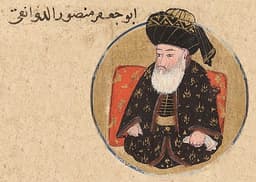
Abu Jafar al-Mansur
Emperor · Medieval
65.5Total
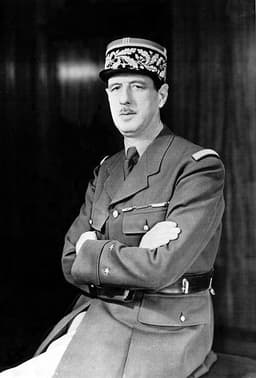
Charles de Gaulle
Politician · Modern
68.2Total
Basic Information
Born
714
1890
Died
775
1970
Era
Medieval
Modern
Nationality
Abbasid Caliphate
France
Occupation
Emperor
Politician
Civilization
Middle Eastern
Western
Score Comparison
Military (10%)
65.0
55.0
Political (20%)
75.0
75.0
Influence (20%)
40.0
65.0
Legacy (20%)
80.0
68.0
Leadership (15%)
82.0
78.0
Strategy (15%)
55.0
65.0
TOTAL
65.5
68.2
Abu Jafar al-Mansur — Complete Timeline
754 AD
Consolidated Abbasid Power After the RevolutionPolitical Action◆ Major
Al-Mansur eliminated rivals including his uncle Abd Allah ibn Ali and the Barmakids, securing Abbasid control. He established a centralized bureaucracy and suppressed rebellions, including the Rawandiyya uprising.
Impact: global
762 AD
Founded the City of BaghdadPolitical Action
Abu Jafar al-Mansur founded the city of Baghdad as the new capital of the Abbasid Caliphate. The Round City was designed as a center of administration and culture, becoming one of the largest cities in the world.
Impact: globalconstructive
770 AD
Patronized Translation of Greek WorksCultural◆ Major
Al-Mansur supported the translation of Greek philosophical and scientific texts into Arabic. This initiative laid the foundation for the Abbasid translation movement, which preserved and expanded classical knowledge.
Impact: globalconstructive
Charles de Gaulle — Complete Timeline
1940 AD
Appeal of 18 June 1940Political Action
From London, de Gaulle broadcast a radio appeal urging French resistance against Nazi occupation. He called on French soldiers and citizens to continue the fight, founding the Free French Forces and becoming the symbol of French defiance.
World War IIResistanceLeadership
Impact: nationalconstructive
1958 AD
Founding of the Fifth RepublicPolitical Action
De Gaulle returned to power during the Algerian crisis and oversaw the drafting of a new constitution. The Fifth Republic established a strong executive presidency, replacing the unstable parliamentary system of the Fourth Republic.
ConstitutionGovernment ReformPolitical System
Impact: nationalconstructive
1962 AD
End of the Algerian WarPolitical Action◆ Major
De Gaulle negotiated the
DecolonizationPeace TreatyAlgeria
Impact: regionalconstructive
1968 AD
May 1968 CrisisPolitical Action◆ Major
Mass student protests and general strikes paralyzed France, challenging de Gaulle's government. De Gaulle briefly fled to Germany, then returned to dissolve the National Assembly and call elections, which his party won, but his authority was weakened.
ProtestPolitical CrisisSocial Unrest
Impact: nationaldestructive
1969 AD
Resignation as PresidentPolitical Action
De Gaulle resigned after losing a referendum on regional reform and Senate restructuring. The defeat marked the end of his political career, as he withdrew from public life and died the following year.
ResignationPolitical DefeatReferendum
Impact: nationaltragic
Expert Analysis
Charles de Gaulle vs Abu Jafar al-Mansur
# The Architect and the Builder: De Gaulle and al-Mansur
In the summer of 1940, a solitary French general stood before a microphone in a London studio and declared that a flame of French resistance must never die. In 762, another leader—a caliph in a silk robe—stood on the banks of the Tigris and ordered his engineers to trace the outline of a perfect circle in the dust. Both men were builders of worlds, yet their worlds could not have been more different. Charles de Gaulle and Abu Jafar al-Mansur each faced a moment when history demanded a new foundation, and each responded with a vision that would define civilization itself. But why did one end in resignation and the other in absolute triumph?
Origins
Charles de Gaulle was born in 1890 into a devoutly Catholic, patriotic family in Lille, northern France. His father taught history and philosophy, and young Charles absorbed a sense of national destiny that bordered on the mystical. The Franco-Prussian War, which had humiliated France in 1870, haunted his childhood. He grew up believing that France could only be great if it refused to accept defeat. This was not ambition—it was conviction.
Abu Jafar al-Mansur was born in 714 in Humeima, in what is now Jordan, into the Abbasid family that claimed descent from the Prophet Muhammad’s uncle. His world was one of conspiracy and survival. The Umayyad Caliphate was collapsing, and the Abbasids had spent decades quietly building a revolutionary network. Al-Mansur learned early that power was won through patience, secrecy, and ruthlessness. Where de Gaulle’s formation was intellectual and moral, al-Mansur’s was pragmatic and strategic.
Rise to Power
De Gaulle’s path was improbable. A relatively obscure tank commander in 1940, he fled to London as France fell. His Appeal of 18 June 1940 was a gamble—a voice in the wilderness claiming to represent the true France. For four years, he led the Free French Forces from exile, battling not only the Nazis but also Allied leaders who doubted him. His turning point came in 1958, when the Algerian War plunged France into near civil war. The political class called him back from retirement, and he seized the moment to rewrite the constitution.
Al-Mansur’s rise was more brutal. He became caliph in 754 after the death of his brother al-Saffah, but his position was far from secure. His uncle Abd Allah ibn Ali raised an army to claim the throne. Al-Mansur crushed him. Then he turned on the Barmakids, the powerful Persian family who had helped the Abbasids rise. He did not hesitate to kill former allies. By 762, he had eliminated every rival and stood alone.
Leadership & Governance
Their styles could not have been more different. De Gaulle governed through words and symbols. He believed in a strong executive presidency, and the Fifth Republic he founded in 1958 gave him exactly that. He used television broadcasts and press conferences to speak directly to the French people, projecting an image of paternal authority. His military genius lay not in battlefield tactics—his Strategy score of 55 reflects a modest record—but in political maneuver. He ended the Algerian War in 1962 through the Évian Accords, a decision that sparked assassination attempts but ultimately saved France from endless colonial conflict.
Al-Mansur governed through institutions. He founded the city of Baghdad in 762 as a perfect round city, designed to centralize power and project the caliphate’s glory. More importantly, he patronized the translation of Greek philosophical and scientific works into Arabic, laying the foundation for the Abbasid Golden Age. Where de Gaulle built a constitution, al-Mansur built a capital and a culture. His Leadership score of 79.4 reflects his ability to create lasting systems rather than personal charisma.
Triumph & Tragedy
De Gaulle’s greatest moment was his return to power in 1958, when he saved France from military coup and civil collapse. His greatest failure came in May 1968, when student protests and a general strike paralyzed France. De Gaulle briefly fled to Germany, consulting with French generals, before returning to call new elections. He won, but the aura of invincibility was broken. In 1969, he lost a referendum on regional reform and resigned. He died the following year, a hero who had outlived his political moment.
Al-Mansur’s triumph was Baghdad itself—a city that became the intellectual capital of the medieval world. His tragedy was the cost. He ordered the execution of former allies, imprisoned his own relatives, and ruled through fear. When he died in 775 while on pilgrimage to Mecca, few mourned. But the city he built endured.
Character & Destiny
De Gaulle was aloof, arrogant, and deeply convinced of his own historical mission. He once said, “France is not really herself unless she is in the front rank.” This belief drove him to refuse compromise, whether with the Allies during World War II or with the protesters of 1968. His character was his strength and his limitation—he could save France, but he could not adapt to a changing society.
Al-Mansur was calculating, suspicious, and utterly unsentimental. He once said, “The caliphate is a garment that fits only those who are ready to spill blood for it.” He understood that power required constant vigilance and that mercy was a luxury he could not afford. His character made him a successful founder but a cold ruler.
Legacy
De Gaulle left France a stable republic with a strong presidency, a nuclear deterrent, and a restored sense of national pride. He is remembered as the man who said no to defeat and no to decline. But his legacy is contested—some see him as a savior, others as a authoritarian figure who centralized too much power.
Al-Mansur left Baghdad and the Abbasid Caliphate, which would flourish for five centuries. He is remembered as the founder of a golden age, but also as a ruthless consolidator. The translation movement he sponsored changed world history, preserving Greek knowledge and passing it to Europe.
Conclusion
Standing before his microphone in London, de Gaulle had nothing but his voice. Standing on the banks of the Tigris, al-Mansur had an empire at his feet. Yet both understood the same truth: that foundations are laid in moments of crisis, and that the builders of civilizations must be willing to stand alone. De Gaulle built a republic that still stands; al-Mansur built a city that still lives. Their differences—in era, in culture, in method—only highlight what they shared: an unshakable conviction that the future belongs to those who dare to shape it.
Rankings
🥇
Charles de GaulleLeader
Mil: 55.0Pol: 75.0Inf: 65.0
68.2
🥈
Abu Jafar al-Mansur
Mil: 65.0Pol: 75.0Inf: 40.0
65.5
+2.7 behind
How This Comparison Works
Algorithm
Each figure is scored on 6 dimensions (0—100 scale) based on structured historical data: Military (10%), Political (20%), Influence (20%), Legacy (20%), Leadership (15%), Strategy (15%). The weighted total produces the final ranking.
Data Sources
Scores are computed from structured sub-indicators in the database. Scale factors adjust for era (Ancient ×0.85, Modern ×1.0) and civilization size (Eastern ×1.05, Other ×0.80) to account for differences in population and military scale.
Maximum 3 Figures
Comparisons are limited to 2—3 figures to ensure readability and statistical meaningfulness.
Error Margins
±5 points per dimension — Sub-scores are derived from historical records with inherent uncertainty. Two figures within 5 points on a dimension should be considered roughly equivalent in that area.
Total Score Accuracy
±3 points overall — The weighted combination of 6 dimensions produces a total score with approximately ±3 points of uncertainty. Differences of less than 3 points are not statistically significant— the figures are effectively tied.
Known Limitations
- Historical records are incomplete and uneven across civilizations
- Figures from oral-tradition societies may be underrepresented
- Occupation labels can misclassify multi-role figures
- Scores measure capability and impact, not moral character
- Quantitative scoring is a comparison tool, not absolute truth
Capability Radar
Military (10%) — Battles & Warfare
Battles
60
60
Win Rate
65
55
Expansion
70
20
Political (20%) — Governance & Reform
Reform
90
95
Diplomacy
80
90
Economy
85
70
Influence (20%) — Cultural & Global Reach
Cultural
85
70
Global
80
80
Legacy (20%) — Historical Impact
Historical
90
85
Longevity
85
75
Leadership (15%) — Power & Stability
Tenure
85
85
Stability
75
75
Strategy (15%) — Tactics & Innovation
Strategy
70
85
Tactics
55
70
Reform
75
80
Similar Comparisons
Comments & Discussion
DeGaulleArchitect6/16/2026
De Gaulle won by losing. He lost every battle, was exiled from his own country, and resigned as a political failure. Yet his Fifth Republic stands while the Third Republic crumbled. Al-Mansur built a city of circles and walls; De Gaulle built a legacy of resilience that persists through every crisis. You can capture a capital, but you can't imprison an idea. The architect beats the builder every time.
城邦之影6/16/2026
曼苏尔建造的巴格达是圆形城池,但你见过谁还住在那座圆城里?德高乐留下的第五共和国至今还在运作。一个是砖石的永恒,一个是制度的永恒。我不崇拜君主,但我尊重那些把国家变成抽象概念的人。曼苏尔用刀剑统治,德高乐用宪法统治,高下立判。
SandstormSkeptic6/16/2026
Let's talk numbers. Al-Mansur ruled a population of roughly 30 million, expanding an empire that conquered at its peak. De Gaulle commanded a Free French force of maybe 50,000 at D-Day. One man built by the sword; the other by the pen and the radio. Pragmatically, al-Mansur's legacy touched more lives in a broader sweep of history—despite the bloody politics. Cold facts don't care about romantic narratives.
历史盲盒6/16/2026
你们都在说谁更伟大,但有没有想过这两种伟大根本无法比较?德高乐面对的是熟透的西方现代性,曼苏尔面对的是还在发酵的伊斯兰扩张期。一个是修补一个旧世界,一个是开创一个新世界。要我选,我会说曼苏尔的难度更高,因为他没有任何模板可以抄。但德高乐的勇气更让我舒服,因为他为自由战斗,而非为权力。
ClassicsCounterpoint6/16/2026
De Gaulle's historical mastery is obvious: he wrote extensively on warfare, on European integration, on French sovereignty. Al-Mansur? We know him only through court biographies and hostile sources. One man shaped his own narrative; the other is trapped in stories told by sycophants. In the game of historical memory, De Gaulle wins hands down. But for actual impact? Al-Mansur's Baghdad was the intellectual center of the world for centuries.
逆向显微镜6/16/2026
我发现一件很有趣的事:曼苏尔建造巴格达时,用的是圆形的理念,而德高乐的法国是线性的、纵向的。一个试图在空间上聚集所有知识和权力,一个试图在时间上延续国族的统一。这两个人其实都是π的早期应用者。但曼苏尔更像个数学家,德高乐更像个诗人。让我选的话,诗人可以激荡一时,数学家才能撑起千年。