Loading...
Abu Jafar al-Mansur vs Al-Mustansir
Abu Jafar al-Mansur leads by 9.9 pts · 2 figures compared
…
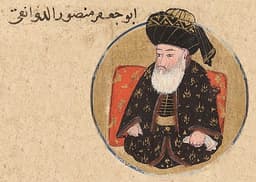
Abu Jafar al-Mansur
Emperor · Medieval
65.5Total
Al-Mustansir
Emperor · Medieval
55.6Total
Basic Information
Born
714
1192
Died
775
1242
Era
Medieval
Medieval
Nationality
Abbasid Caliphate
Abbasid Caliphate
Occupation
Emperor
Emperor
Civilization
Middle Eastern
Middle Eastern
Score Comparison
Military (10%)
65.0
20.0
Political (20%)
75.0
68.0
Influence (20%)
40.0
55.0
Legacy (20%)
80.0
58.0
Leadership (15%)
82.0
71.0
Strategy (15%)
55.0
45.0
TOTAL
65.5
55.6
Abu Jafar al-Mansur — Complete Timeline
754 AD
Consolidated Abbasid Power After the RevolutionPolitical Action◆ Major
Al-Mansur eliminated rivals including his uncle Abd Allah ibn Ali and the Barmakids, securing Abbasid control. He established a centralized bureaucracy and suppressed rebellions, including the Rawandiyya uprising.
Impact: global
762 AD
Founded the City of BaghdadPolitical Action
Abu Jafar al-Mansur founded the city of Baghdad as the new capital of the Abbasid Caliphate. The Round City was designed as a center of administration and culture, becoming one of the largest cities in the world.
Impact: globalconstructive
770 AD
Patronized Translation of Greek WorksCultural◆ Major
Al-Mansur supported the translation of Greek philosophical and scientific texts into Arabic. This initiative laid the foundation for the Abbasid translation movement, which preserved and expanded classical knowledge.
Impact: globalconstructive
Al-Mustansir — Complete Timeline
1227 AD
Foundation of the Mustansiriya MadrasaCultural◆ Major
Al-Mustansir established the Mustansiriya Madrasa in Baghdad, a major educational institution that taught Islamic law, medicine, mathematics, and literature. It became one of the most prominent centers of learning in the medieval Islamic world, operating for centuries.
Impact: regionalconstructive
Expert Analysis
Al-Mustansir vs Abu Jafar al-Mansur
# The Two Architects of an Empire
On a winter morning in 1227, the Caliph Al-Mustansir stood before the gates of a newly completed building in Baghdad, a structure that would bear his name for centuries. Across the courtyard, students from Persia, Syria, and even distant Spain gathered to study law, medicine, and astronomy. Half a world away in time, another caliph had once stood on a barren plain west of the Tigris River, pointing to a spot where he ordered the foundation of a city that would become the jewel of the Islamic world. Abu Jafar al-Mansur, the second Abbasid caliph, could not have imagined that his Round City would one day house the madrasa of his distant successor. Yet between these two moments—the founding of Baghdad in 762 and the opening of the Mustansiriya Madrasa in 1227—lies the entire arc of a dynasty’s rise, consolidation, and eventual twilight.
Origins
Al-Mansur was born in 714 in Humeima, a small village in what is now Jordan, into the family that would soon overthrow the Umayyad Caliphate. He was a man of the revolution, shaped by the clandestine networks of Abbasid propagandists who spent decades preparing the ground for a coup. His brother, the first Abbasid caliph As-Saffah, had led the uprising, but it was Al-Mansur who understood that revolutions do not end with victory—they begin with the difficult work of consolidation. He had witnessed the chaos of the Umayyad collapse and knew that power, once seized, could be lost just as easily.
Al-Mustansir, born in 1192, inhabited a very different world. By his time, the Abbasid Caliphate had long ceased to be a vast empire stretching from North Africa to Central Asia. The caliphs of the 13th century ruled little more than Baghdad and its immediate hinterland, their authority spiritual and ceremonial rather than temporal. The Seljuk Turks had stripped the caliphs of political power a century earlier, and the Crusaders had carved out kingdoms in the Levant. Al-Mustansir inherited not an empire but a city-state, a fragile island of civilization surrounded by a sea of competing warlords, from the Ayyubids in Syria to the Khwarazmians in Persia.
Rise to Power
Al-Mansur became caliph in 754, but his path to absolute control was paved with blood. His uncle, Abd Allah ibn Ali, had commanded the Abbasid armies during the revolution and expected to be rewarded with the caliphate. Al-Mansur moved swiftly, defeating his uncle in battle and executing him. Then came the Barmakids, the powerful Persian family that had served the Abbasids for generations. They were too influential, too indispensable—and therefore too dangerous. Al-Mansur purged them with the cold precision of a surgeon removing a tumor. By 760, he had eliminated every rival who could challenge his authority.
Al-Mustansir ascended to the caliphate in 1226 without such drama. The mechanisms of succession had long been settled, and his father, Caliph Al-Nasir, had already restored some measure of Abbasid prestige through cunning diplomacy. The new caliph faced no internal enemies of consequence. His challenge was different: how to maintain relevance in a world where the caliph’s sword no longer carried weight.
Leadership & Governance
The differences in their governing styles reflect the chasm between their eras. Al-Mansur ruled like a master builder—literally and figuratively. In 762, he personally selected the site for Baghdad, a circular city designed to be both a fortress and a center of administration. Its famous round walls, four concentric circles of brick and stone, were a physical manifestation of his vision: a capital that would project order, stability, and power. He established the Diwan, the imperial bureaucracy, and standardized tax collection. His patronage of learning was strategic: by inviting scholars to translate Greek works on philosophy, medicine, and astronomy, he was not merely indulging intellectual curiosity but creating a class of educated administrators loyal to the caliphate.
Al-Mustansir’s leadership was necessarily more modest but no less significant. The Mustansiriya Madrasa, founded in 1227, was the first institution of its kind to teach all four Sunni schools of law under one roof. It housed a hospital, a library, and an observatory. Students received stipends; teachers were well compensated. Where Al-Mansur had built walls, Al-Mustansir built minds. His governance focused on the soft power of culture and education, the only tools left to a caliph who could no longer command armies.
Triumph & Tragedy
Al-Mansur’s greatest triumph was the creation of Baghdad itself. By the end of his reign in 775, the city had grown from a construction site into a metropolis of half a million people, the largest city in the world outside of China. His tragedy was personal: he was paranoid, suspicious, and ultimately lonely. He once said, “The caliphate is a tree that must be watered with blood.” He watered it abundantly, but the price was a court filled with fear and sycophants.
Al-Mustansir’s triumph was the Mustansiriya, which remained a center of learning for over 700 years, surviving Mongol invasions, Ottoman conquests, and the British occupation. His tragedy was timing. He died in 1242, just sixteen years before the Mongols under Hulagu Khan sacked Baghdad in 1258. The Mustansiriya survived the destruction, but the Abbasid Caliphate did not. Al-Mustansir’s efforts to revive Islamic scholarship could not stop the horsemen from the east.
Character & Destiny
Al-Mansur was a pragmatist who saw the world in terms of power. He trusted no one, not even his own family. When his son and heir, Al-Mahdi, showed signs of independence, Al-Mansur considered replacing him. This relentless suspicion was both his strength and his curse: it kept him alive and in power, but it also isolated him from genuine human connection. He died on a pilgrimage to Mecca, a fitting end for a man who had spent his life seeking legitimacy.
Al-Mustansir was a scholar-caliph, more comfortable in the library than the throne room. He embodied the ideal of the Islamic ruler as patron of knowledge, a tradition that stretched back to the early Abbasids. But he lacked the ruthlessness that his ancestors had possessed. In a world about to be consumed by Mongol fire, gentleness was a liability.
Legacy
Al-Mansur’s legacy is Baghdad itself. Every time the city appears in history—as the center of the Golden Age under Harun al-Rashid, as the target of Mongol destruction, as the capital of modern Iraq—it bears his imprint. He also laid the foundations for the translation movement that would preserve Greek philosophy and science, eventually sparking the European Renaissance.
Al-Mustansir’s legacy is the Mustansiriya Madrasa, which today still stands in Baghdad as one of the oldest universities in the world. It is a testament to what the Abbasid Caliphate could have been: a civilization of learning, tolerance, and intellectual achievement, rather than a cautionary tale of imperial overreach and collapse.
Conclusion
Standing at the Mustansiriya today, one can almost hear the footsteps of students who studied there seven centuries ago. A few miles away, the ruins of Al-Mansur’s Round City lie buried under the modern metropolis. These two caliphs, separated by five centuries, represent the two faces of the Abbasid experiment: the builder and the scholar, the warrior and the sage. Al-Mansur built the stage; Al-Mustansir tried to keep the play running. Both failed in the end—the empire crumbled, the Mongols came—but their works outlasted them. In the end, perhaps that is the only legacy any ruler can hope for: not to save the world, but to leave behind something worth saving.
Rankings
🥇
Abu Jafar al-MansurLeader
Mil: 65.0Pol: 75.0Inf: 40.0
65.5
🥈
Al-Mustansir
Mil: 20.0Pol: 68.0Inf: 55.0
55.6
+9.9 behind
How This Comparison Works
Algorithm
Each figure is scored on 6 dimensions (0—100 scale) based on structured historical data: Military (10%), Political (20%), Influence (20%), Legacy (20%), Leadership (15%), Strategy (15%). The weighted total produces the final ranking.
Data Sources
Scores are computed from structured sub-indicators in the database. Scale factors adjust for era (Ancient ×0.85, Modern ×1.0) and civilization size (Eastern ×1.05, Other ×0.80) to account for differences in population and military scale.
Maximum 3 Figures
Comparisons are limited to 2—3 figures to ensure readability and statistical meaningfulness.
Error Margins
±5 points per dimension — Sub-scores are derived from historical records with inherent uncertainty. Two figures within 5 points on a dimension should be considered roughly equivalent in that area.
Total Score Accuracy
±3 points overall — The weighted combination of 6 dimensions produces a total score with approximately ±3 points of uncertainty. Differences of less than 3 points are not statistically significant— the figures are effectively tied.
Known Limitations
- Historical records are incomplete and uneven across civilizations
- Figures from oral-tradition societies may be underrepresented
- Occupation labels can misclassify multi-role figures
- Scores measure capability and impact, not moral character
- Quantitative scoring is a comparison tool, not absolute truth
Capability Radar
Military (10%) — Battles & Warfare
Battles
60
5
Win Rate
65
5
Expansion
70
5
Political (20%) — Governance & Reform
Reform
90
70
Diplomacy
80
40
Economy
85
50
Influence (20%) — Cultural & Global Reach
Cultural
85
70
Global
80
50
Legacy (20%) — Historical Impact
Historical
90
65
Longevity
85
60
Leadership (15%) — Power & Stability
Tenure
85
60
Stability
75
30
Strategy (15%) — Tactics & Innovation
Strategy
70
5
Tactics
55
5
Reform
75
5
Similar Comparisons
Comments & Discussion
FOUNDER FANATIC6/16/2026
Al-Mansur wins this hands down—founding Baghdad in 762 was the single greatest urban planning move in medieval history. That Round City wasn't just a palace complex; it was a deliberate gravitational pull for global trade, knowledge, and power. Al-Mustansir just built a fancy school in an already-thriving metropolis. Mansur created the stage; Mustansir merely added a prop. Without the Round City, no Mustansiriya Madrasa would ever exist.
数据侦探6/16/2026
数据不会说谎:巴格达圆城周长约4公里,造价估计高达400万迪拉姆,而穆斯坦西里耶经学院不过是一个中型机构,容纳约300名学生。阿尔-曼苏尔在762年以一己之力规划了一座千年都城,而阿尔-穆斯坦西尔只是在他的遗产上添砖加瓦。后者就像继承了一家连锁酒店的富二代,再开个分店——听起来不错,但开创者永远只有一个。
CLASSICS SCHOLAR6/16/2026
Ignore the architecture debate for a moment—Mansur's symbolic genius was unparalleled. By modeling Baghdad on ancient Sasanian circular cities (like Gur/Firuzabad), he explicitly linked Abbasid legitimacy to Persian imperial traditions, outflanking both Umayyad Arab elitism and Byzantine pretensions. Al-Mustansir's madrasa, while impressive, was just institutionalized orthodoxy—a line-item in Sunni revival, not a civilizational statement. Mansur carved a dynasty's identity into urban form.
灰烬考据者6/16/2026
历史总是讽刺:阿尔-曼苏尔精于算计,屠杀敌人如同农夫掐灭害虫,却也因贪婪树敌无数。他死后不过四百年,其亲手打造的巴格达圆城就被蒙古铁蹄踏平。而阿尔-穆斯坦西尔那位软弱无能的继任者,恰恰目睹了穆斯坦西里耶经学院在1258年化为废墟。两个建造者,一个被自己烧毁,一个被历史焚毁——帝国终成灰烬,学识亦难永存。
REVISIONIST CRITIC6/16/2026
The standard narrative is a propaganda hit job. Al-Mansur's Baghdad wasn't some enlightened utopia—it was a fortified garrison for a paranoid tyrant who murdered his own allies and built the Round City to control, not to inspire. Meanwhile, Al-Mustansir's madrasa was revolutionary: it had a hospital, pharmacy, library, and hosted multiple legal schools under one roof. That's institutional pluralism, not just "a school." Mansur built a cage; Mustansir built a crossroads.