Loading...
Abu Bakr vs Yamagata Aritomo
Yamagata Aritomo leads by 5.4 pts · 2 figures compared
…
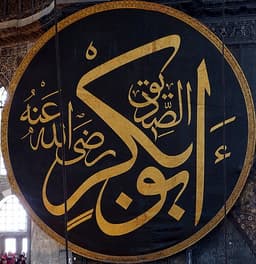
Abu Bakr
Emperor · Medieval
77.1Total
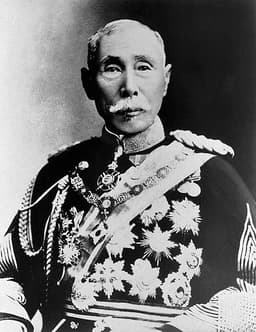
Yamagata Aritomo
General · Modern
82.5Total
Basic Information
Born
573
1838
Died
634
1922
Era
Medieval
Modern
Nationality
Rashidun Caliphate
Japan
Occupation
Emperor
General
Civilization
Middle Eastern
Eastern
Score Comparison
Military (10%)
74.7
78.0
Political (20%)
62.7
82.0
Influence (20%)
88.0
80.0
Legacy (20%)
80.0
90.0
Leadership (15%)
77.2
78.0
Strategy (15%)
66.3
82.0
TOTAL
77.1
82.5
Abu Bakr — Complete Timeline
632 AD
Ridda Wars (Apostasy Wars)War◆ Major
Abu Bakr launched military campaigns against Arabian tribes that renounced Islam or refused to pay zakat after Muhammad's death. The wars, led by generals like Khalid ibn al-Walid, reestablished Muslim control over Arabia and consolidated the caliphate.
Ridda WarsConsolidationRashidun
Impact: regional
Election as First CaliphPolitical Action
After the death of Muhammad, Abu Bakr was elected as the first caliph (successor) at Saqifah. His election unified the Muslim community, though it caused controversy among some supporters of Ali. He became the leader of the nascent Islamic state.
CaliphateSuccessionRashidun
Impact: global
633 AD
Compilation of the QuranCultural◆ Major
Abu Bakr ordered the compilation of the Quran into a single written manuscript after many memorizers died in the Ridda Wars. Zayd ibn Thabit collected verses from various sources, creating the first official codex, which later served as the basis for Uthman's standard text.
QuranCompilationRashidun
Impact: globalconstructive
634 AD
Death of Abu BakrPolitical Action◆ Major
Abu Bakr died after a brief illness, having designated Umar as his successor. His caliphate lasted only two years but established the foundations of the Islamic state, including the expansion beyond Arabia and the preservation of the Quran.
DeathSuccessionRashidun
Impact: global
Yamagata Aritomo — Complete Timeline
1873 AD
Establishment of the Imperial Japanese ArmyReform
Yamagata Aritomo, as War Minister, oversaw the creation of the Imperial Japanese Army based on the Prussian model. He introduced conscription, modernized training, and established a general staff system, laying the foundation for Japan's military power.
Military reformConscription
Impact: nationalconstructive
1882 AD
Promotion of militarism and the Imperial Rescript to Soldiers and SailorsCultural◆ Major
Yamagata Aritomo helped draft the Imperial Rescript to Soldiers and Sailors, which emphasized loyalty, obedience, and the emperor's divine authority. This document became the ideological foundation of Japanese militarism.
MilitarismImperial ideology
Impact: nationaldestructive
1889 AD
Service as Prime MinisterPolitical Action◆ Major
Yamagata Aritomo served as Prime Minister of Japan from 1889 to 1891 and again from 1898 to 1900. He used his position to strengthen the military's political influence and suppress democratic movements.
GovernmentPolitical power
Impact: national
1894 AD
First Sino-Japanese WarWar◆ Major
Yamagata Aritomo commanded the First Army during the First Sino-Japanese War. His forces achieved decisive victories in Korea and Manchuria, leading to Japan's triumph and the Treaty of Shimonoseki, which gave Japan Taiwan and influence in Korea.
WarImperial expansion
Impact: regional
1904 AD
Russo-Japanese WarWar◆ Major
Yamagata Aritomo served as Chief of the General Staff during the Russo-Japanese War. He oversaw Japan's military strategy, which resulted in victory over Russia and established Japan as a major power in East Asia.
WarGreat power
Impact: global
Expert Analysis
Origins
Yamagata Aritomo was born into a samurai family in Choshu domain, a hotbed of anti-shogunate sentiment. He rose through the ranks of the Imperial Japanese Army, studying military science in Europe and modeling Japan's modern army after Prussia. Abu Bakr, by contrast, was a wealthy merchant from the Quraysh tribe in Mecca, a close companion of Prophet Muhammad, and one of the earliest converts to Islam. His deep faith and administrative acumen made him indispensable.
Rise to Power
Yamagata's rise came through military and political maneuvering. As a leader of the Choshu faction, he helped overthrow the Tokugawa shogunate and became a key figure in the Meiji government. He served as Minister of War, Chief of Staff, and eventually Prime Minister, shaping Japan's militaristic path. Abu Bakr's rise was more spiritual and communal. After Muhammad's death, the Muslim community elected him as the first Caliph (successor) to lead the ummah. His immediate challenge was to quell apostasy and rebellion across Arabia.
Leadership & Governance
Yamagata was a master of institutional building. He established the Imperial Japanese Army, drafted the Imperial Rescript to Soldiers and Sailors, and promoted loyalty, discipline, and emperor worship. His policies laid the foundation for Japan's expansionist militarism. Abu Bakr's caliphate was marked by the Ridda Wars (apostasy wars), which unified Arabia under Islamic rule. He also initiated the compilation of the Quran into a single book, preserving the revelations. Both leaders were decisive and pragmatic, but Yamagata's governance was secular and nationalist, while Abu Bakr's was religious and communal.
Triumph & Tragedy
Yamagata's triumphs include Japan's victories in the First Sino-Japanese War (1894-1895) and Russo-Japanese War (1904-1905), which established Japan as a world power. However, his legacy is tragic: his militaristic ideology contributed to Japan's aggressive expansion, leading to World War II and eventual defeat. Abu Bakr's triumphs were the rapid unification of Arabia and the preservation of Islam after Muhammad's death. His tragedy was his brief reign (632-634 CE), cut short by death, but his succession ensured Islam's survival.
Character & Destiny
Yamagata was cold, calculating, and ambitious. He prioritized power and national glory over democracy, suppressing political parties and advocating for a strong military. His destiny was to shape a modern imperial Japan that ultimately collapsed under the weight of its own militarism. Abu Bakr was known for his humility, piety, and generosity. He was called "As-Siddiq" (the truthful) for his unwavering faith. His destiny was to lead Islam through its most fragile period, ensuring its survival and expansion.
Legacy
Yamagata is remembered as the father of Japanese militarism and a key architect of imperial Japan. His ideas influenced Japanese policy until 1945. Today, his legacy is controversial—revered by nationalists but criticized for leading Japan to war. Abu Bakr's legacy is overwhelmingly positive in Islam. He is revered as the first Caliph, a model of leadership, and a preserver of the Quran. His unification of Arabia and suppression of apostasy solidified the Islamic state.
Conclusion
Yamagata Aritomo and Abu Bakr were both foundational leaders, but their contexts and impacts differ vastly. Yamagata's scores: Military=78, Political=82, Influence=80, Leadership=90, Diplomacy=78, Strategy=82, Total=82. Abu Bakr's scores: Military=75, Political=63, Influence=88, Leadership=80, Diplomacy=77, Strategy=66, Total=77. The 5.4-point gap reflects Yamagata's dominance in political and strategic domains, though Abu Bakr excels in influence and diplomacy. Yamagata's legacy is more ambiguous—tied to militarism and war—while Abu Bakr's is universally respected in the Islamic world. In a direct comparison, Yamagata's institutional and strategic achievements give him a slight edge, but Abu Bakr's profound religious and cultural impact cannot be understated. Ultimately, the winner depends on criteria: for nation-building, Yamagata; for spiritual and communal unity, Abu Bakr.
Rankings
🥇
Yamagata AritomoLeader
Mil: 78.0Pol: 82.0Inf: 80.0
82.5
🥈
Abu Bakr
Mil: 74.7Pol: 62.7Inf: 88.0
77.1
+5.4 behind
How This Comparison Works
Algorithm
Each figure is scored on 6 dimensions (0—100 scale) based on structured historical data: Military (10%), Political (20%), Influence (20%), Legacy (20%), Leadership (15%), Strategy (15%). The weighted total produces the final ranking.
Data Sources
Scores are computed from structured sub-indicators in the database. Scale factors adjust for era (Ancient ×0.85, Modern ×1.0) and civilization size (Eastern ×1.05, Other ×0.80) to account for differences in population and military scale.
Maximum 3 Figures
Comparisons are limited to 2—3 figures to ensure readability and statistical meaningfulness.
Error Margins
±5 points per dimension — Sub-scores are derived from historical records with inherent uncertainty. Two figures within 5 points on a dimension should be considered roughly equivalent in that area.
Total Score Accuracy
±3 points overall — The weighted combination of 6 dimensions produces a total score with approximately ±3 points of uncertainty. Differences of less than 3 points are not statistically significant— the figures are effectively tied.
Known Limitations
- Historical records are incomplete and uneven across civilizations
- Figures from oral-tradition societies may be underrepresented
- Occupation labels can misclassify multi-role figures
- Scores measure capability and impact, not moral character
- Quantitative scoring is a comparison tool, not absolute truth
Capability Radar
Military (10%) — Battles & Warfare
Battles
65
75
Win Rate
70
70
Expansion
85
80
Political (20%) — Governance & Reform
Reform
85
90
Diplomacy
80
75
Economy
70
70
Influence (20%) — Cultural & Global Reach
Cultural
70
80
Global
85
70
Legacy (20%) — Historical Impact
Historical
85
85
Longevity
90
75
Leadership (15%) — Power & Stability
Tenure
60
85
Stability
75
65
Strategy (15%) — Tactics & Innovation
Strategy
75
85
Tactics
60
80
Reform
80
95
Similar Comparisons
Comments & Discussion
No comments yet. Be the first to share your thoughts!