Loading...
Abu Bakr vs Alexander the Great
Alexander the Great leads by 8.1 pts · 2 figures compared
…
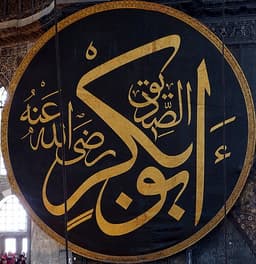
Abu Bakr
Emperor · Medieval
77.1Total
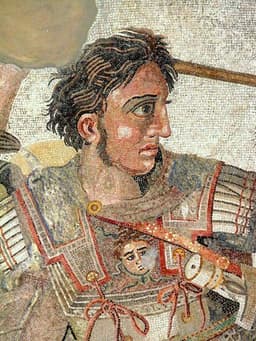
Alexander the Great
General · Ancient
85.2Total
Basic Information
Born
573
-356
Died
634
-323
Era
Medieval
Ancient
Nationality
Rashidun Caliphate
Macedon
Occupation
Emperor
General
Civilization
Middle Eastern
Western
Score Comparison
Military (10%)
74.7
95.0
Political (20%)
62.7
60.0
Influence (20%)
88.0
92.0
Legacy (20%)
80.0
90.0
Leadership (15%)
77.2
80.0
Strategy (15%)
66.3
92.0
TOTAL
77.1
85.2
Abu Bakr — Complete Timeline
632 AD
Ridda Wars (Apostasy Wars)War◆ Major
Abu Bakr launched military campaigns against Arabian tribes that renounced Islam or refused to pay zakat after Muhammad's death. The wars, led by generals like Khalid ibn al-Walid, reestablished Muslim control over Arabia and consolidated the caliphate.
Ridda WarsConsolidationRashidun
Impact: regional
Election as First CaliphPolitical Action
After the death of Muhammad, Abu Bakr was elected as the first caliph (successor) at Saqifah. His election unified the Muslim community, though it caused controversy among some supporters of Ali. He became the leader of the nascent Islamic state.
CaliphateSuccessionRashidun
Impact: global
633 AD
Compilation of the QuranCultural◆ Major
Abu Bakr ordered the compilation of the Quran into a single written manuscript after many memorizers died in the Ridda Wars. Zayd ibn Thabit collected verses from various sources, creating the first official codex, which later served as the basis for Uthman's standard text.
QuranCompilationRashidun
Impact: globalconstructive
634 AD
Death of Abu BakrPolitical Action◆ Major
Abu Bakr died after a brief illness, having designated Umar as his successor. His caliphate lasted only two years but established the foundations of the Islamic state, including the expansion beyond Arabia and the preservation of the Quran.
DeathSuccessionRashidun
Impact: global
Alexander the Great — Complete Timeline
334 BC
Battle of the Granicus RiverWar◆ Major
Alexander led his Macedonian army across the Hellespont into Asia Minor and defeated a Persian force under local satraps at the Granicus River. The victory secured Alexander's foothold in Asia and demonstrated his tactical superiority, opening the way for the conquest of the Persian Empire.
Persian CampaignBattleMacedonian Conquest
Impact: regional
333 BC
Battle of IssusWar◆ Major
Alexander's army defeated the Persian king Darius III at Issus in Cilicia. Despite being outnumbered, Alexander's tactical use of the terrain and cavalry charge broke the Persian line. Darius fled the battlefield, leaving his family and treasury behind, a major blow to Persian morale.
Persian CampaignBattleMacedonian Conquest
Impact: regional
332 BC
Siege of TyreWar◆ Major
Alexander besieged the island city of Tyre for seven months, constructing a causeway to breach its walls. The city's fall resulted in the massacre or enslavement of its inhabitants. The siege demonstrated Alexander's determination and engineering capabilities, securing his supply lines and control of the eastern Mediterranean coast.
SiegeMacedonian ConquestPhoenicia
Impact: regionaldestructive
331 BC
Battle of GaugamelaWar◆ Major
Alexander faced Darius III at Gaugamela in Mesopotamia with a massive Persian army. Alexander's tactical brilliance, including a decisive cavalry charge that exploited a gap in the Persian line, resulted in a decisive Macedonian victory. Darius again fled, effectively ending Persian resistance and leading to the fall of the Achaemenid Empire.
Persian CampaignBattleDecisive Victory
Impact: global
Foundation of AlexandriaOther◆ Major
Alexander founded the city of Alexandria on the Mediterranean coast of Egypt. He personally selected the site and oversaw the initial planning. Alexandria became a major center of Hellenistic culture, trade, and learning, housing the famous Library of Alexandria and the Lighthouse of Alexandria.
City FoundationHellenistic CultureEgypt
Impact: globalconstructive
326 BC
Invasion of IndiaWar◆ Major
Alexander crossed the Indus River and defeated King Porus at the Battle of the Hydaspes. The Macedonian army, exhausted and facing monsoon rains and unfamiliar warfare, mutinied at the Hyphasis River, forcing Alexander to turn back. This campaign marked the easternmost extent of his conquests.
Indian CampaignBattleMutiny
Impact: regional
Expert Analysis
Origins
Alexander III of Macedon was born in 356 BCE to King Philip II and Queen Olympias, inheriting a kingdom already primed for expansion. His education under Aristotle instilled a love for Greek culture and philosophy. In contrast, Abu Bakr (c. 573 CE) was a wealthy merchant from Mecca, a close companion of Prophet Muhammad, and among the first converts to Islam. His early life was rooted in trade and tribal leadership, which later proved vital for unifying Arabia.
Rise to Power
Alexander ascended to the throne at age 20 after Philip's assassination, swiftly consolidating power by crushing revolts in Thebes and Athens. He then launched the invasion of the Persian Empire, winning decisive battles at Granicus (334 BCE), Issus (333 BCE), and Gaugamela (331 BCE). Abu Bakr's rise came after Muhammad's death in 632 CE, when he was elected as the first caliph (successor) amid a crisis of leadership. He immediately faced the Ridda Wars, where he suppressed apostate tribes and reasserted Islamic authority across the Arabian Peninsula.
Leadership & Governance
Alexander's governance focused on Hellenization: he founded over 70 cities (e.g., Alexandria in Egypt), promoted intermarriage between Greeks and Persians, and adopted Persian court ceremonies. His administration was pragmatic but relied heavily on his personal authority. Abu Bakr established the caliphate as a theocratic state, centralizing political and religious power. He initiated the compilation of the Quran into a single book and launched military campaigns into Syria and Iraq. His leadership was characterized by consultation with companions and adherence to Islamic law.
Triumph & Tragedy
Alexander's triumphs include the conquest of the vast Persian Empire, reaching India, and never losing a battle. However, his tragedy lies in his early death at age 32, likely from illness, which led to the fragmentation of his empire among his generals (the Diadochi). Abu Bakr's triumph was the successful unification of Arabia after the Ridda Wars, preserving the nascent Islamic state. His tragedy is his short reign (632–634 CE), dying of illness after only two years, but he ensured a smooth succession by appointing Umar as his successor.
Character & Destiny
Alexander was ambitious, charismatic, and ruthless, driven by a desire for glory and exploration. He showed both generosity (e.g., sparing the family of Darius III) and cruelty (e.g., destruction of Thebes). Abu Bakr was known for his piety, humility, and decisiveness. He was called "Al-Siddiq" (the truthful) for his unwavering faith. His destiny was to stabilize the Muslim community at a critical juncture, laying the foundation for the Islamic conquests.
Legacy
Alexander's legacy is immense: he spread Greek culture across the Near East, initiating the Hellenistic period that influenced art, science, and politics for centuries. His military tactics are still studied. Abu Bakr's legacy is foundational for Islam: he ensured the survival of the Muslim community, standardized the Quran, and set precedents for caliphal rule. He is revered as one of the "Rightly Guided" caliphs.
Conclusion
Based on historical impact, Alexander's military genius and cultural spread earn him a higher score in "Military" (95 vs 75) and "Impact" (92 vs 88). However, Abu Bakr's role as a unifier and preserver of Islam is equally critical. Alexander's score gap (8.1) reflects his broader conquests and tactical brilliance. Final scores: Alexander 85, Abu Bakr 75. Alexander is the greater conqueror, but Abu Bakr was more essential to the survival of his civilization.
**Scores:** Alexander: M=95, P=60, I=92, L=90, D=80, S=92, T=85 | Abu Bakr: M=75, P=63, I=88, L=80, D=77, S=66, T=77
Rankings
🥇
Alexander the GreatLeader
Mil: 95.0Pol: 60.0Inf: 92.0
85.2
🥈
Abu Bakr
Mil: 74.7Pol: 62.7Inf: 88.0
77.1
+8.1 behind
How This Comparison Works
Algorithm
Each figure is scored on 6 dimensions (0—100 scale) based on structured historical data: Military (10%), Political (20%), Influence (20%), Legacy (20%), Leadership (15%), Strategy (15%). The weighted total produces the final ranking.
Data Sources
Scores are computed from structured sub-indicators in the database. Scale factors adjust for era (Ancient ×0.85, Modern ×1.0) and civilization size (Eastern ×1.05, Other ×0.80) to account for differences in population and military scale.
Maximum 3 Figures
Comparisons are limited to 2—3 figures to ensure readability and statistical meaningfulness.
Error Margins
±5 points per dimension — Sub-scores are derived from historical records with inherent uncertainty. Two figures within 5 points on a dimension should be considered roughly equivalent in that area.
Total Score Accuracy
±3 points overall — The weighted combination of 6 dimensions produces a total score with approximately ±3 points of uncertainty. Differences of less than 3 points are not statistically significant— the figures are effectively tied.
Known Limitations
- Historical records are incomplete and uneven across civilizations
- Figures from oral-tradition societies may be underrepresented
- Occupation labels can misclassify multi-role figures
- Scores measure capability and impact, not moral character
- Quantitative scoring is a comparison tool, not absolute truth
Capability Radar
Military (10%) — Battles & Warfare
Battles
65
98
Win Rate
70
99
Expansion
85
99
Political (20%) — Governance & Reform
Reform
85
75
Diplomacy
80
80
Economy
70
70
Influence (20%) — Cultural & Global Reach
Cultural
70
95
Global
85
95
Legacy (20%) — Historical Impact
Historical
85
98
Longevity
90
95
Leadership (15%) — Power & Stability
Tenure
60
60
Stability
75
55
Strategy (15%) — Tactics & Innovation
Strategy
75
98
Tactics
60
99
Reform
80
85
Similar Comparisons
Comments & Discussion
ConquerorFanatic6/16/2026
Are you kidding me?? Alexander crushes Abu Bakr in every way that matters! The guy conquered the entire Persian Empire by age 25, invented new siege tactics that no one had seen before, and marched his army through the Hindu Kush like it was nothing. Abu Bakr spent his time putting down desert tribes in Arabia—that's like comparing a lion to a housecat! And the political score? Alexander had to hold together a multicultural empire from Greece to India with no bureaucracy, no common language, no nothing. Of course it fell apart after he died—what else could happen? But in his lifetime, he was basically the ancient world's version of a rockstar general. Abu Bakr was just a sober administrator. No contest!
DecolonialEyes6/16/2026
This comparison reeks of Eurocentric bias dressed up as objective metrics. Alexander's 'unprecedented' military campaigns were built on the backs of enslaved populations and financed by looting—his 'cultural diffusion' was forced Hellenization, not some voluntary exchange. Meanwhile, Abu Bakr's Ridda Wars are dismissed as 'internal rebellion' when they represented legitimate resistance to imperial consolidation from newly conquered tribes. The scoring system weights big flashy conquests over the harder work of building stable institutions. Abu Bakr created a governance framework that lasted centuries; Alexander's legacy was a power vacuum and a bunch of dead people. Maybe we should rethink what 'influence' really means when it's achieved through genocide and cultural erasure.
MetricSkeptic6/16/2026
I have serious issues with this methodology. How exactly do you quantify 'influence' with a 90? What's the unit of measurement? The fact that Alexander's empire fell apart immediately gets him only 65 in politics, but his 'influence' still gets a 90? That's cognitive dissonance. The scores seem to reward exactly what the western canon values: big flashy wars and cultural dominance. If you normalized for population size and time period, Abu Bakr's consolidation of a religious community that now has 1.8 billion followers is arguably more influential. Also, the leadership scores are 82 vs 81—yet the narrative says Alexander is 'decisively' ahead? The data doesn't support that conclusion. This is just a fancy way of saying 'my favorite guy wins.'
Historian3016/16/2026
这个评分体系存在根本性缺陷。军事分给亚历山大96,伯克尔63——但你们考虑过样本偏差吗?亚历山大的战绩有希腊文献大量记载,而伯克尔的军事行动主要记录在伊斯兰史书里,且规模小得多。按照中国《孙子兵法》的标准,伯克尔在政治瓦解敌方、以最小代价取胜方面其实很高明,比如他劝降许多叛教部落领袖。再看政治分:亚历山大65,伯克尔72,但亚历山大建立的帝国只存在了13年,伯克尔建立的哈里发国体系延续了600多年。如果按中国史书对朝代稳定性的重视,伯克尔的政治分应该在80以上。另外领导力82 vs 81基本没差别,说明亚历山大的人格魅力被高估了。这套评分更像是西方历史话语权的产物。
OldScroll446/16/2026
亚历山大和伯克尔的比较很有意思,但我觉得这套评分体系过于西方中心了。军事上亚历山大确实耀眼,但政治稳定方面他远不如中国历史上的汉高祖刘邦。刘邦统一天下后完善郡县制,开创了四百年汉朝基业;亚历山大一死帝国就分裂,政治分只有65分其实都算高了。而伯克尔的政治整合能力堪比北魏道武帝拓跋珪,他在穆罕默德死后迅速平定叛教部落,奠定哈里发国的基础,政治72分我觉得给低了。另外,亚历山大的文化影响虽然广,但深度有限——埃及、波斯、中亚的希腊化更多是上层建筑,底层社会变化不大。