Loading...
Abu Bakr vs Kublai Khan
Abu Bakr leads by 2.8 pts · 2 figures compared
…
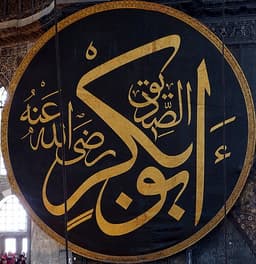
Abu Bakr
Emperor · Medieval
77.1Total
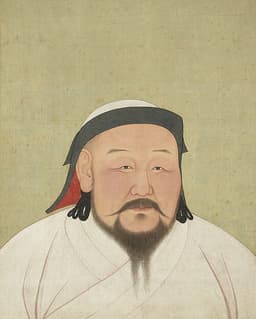
Kublai Khan
Emperor · Medieval
74.3Total
Basic Information
Born
573
1215
Died
634
1294
Era
Medieval
Medieval
Nationality
Rashidun Caliphate
Mongolia
Occupation
Emperor
Emperor
Civilization
Middle Eastern
Eastern
Score Comparison
Military (10%)
74.7
77.5
Political (20%)
62.7
79.2
Influence (20%)
88.0
75.0
Legacy (20%)
80.0
70.0
Leadership (15%)
77.2
72.0
Strategy (15%)
66.3
76.0
TOTAL
77.1
74.3
Abu Bakr — Complete Timeline
632 AD
Ridda Wars (Apostasy Wars)War◆ Major
Abu Bakr launched military campaigns against Arabian tribes that renounced Islam or refused to pay zakat after Muhammad's death. The wars, led by generals like Khalid ibn al-Walid, reestablished Muslim control over Arabia and consolidated the caliphate.
Ridda WarsConsolidationRashidun
Impact: regional
Election as First CaliphPolitical Action
After the death of Muhammad, Abu Bakr was elected as the first caliph (successor) at Saqifah. His election unified the Muslim community, though it caused controversy among some supporters of Ali. He became the leader of the nascent Islamic state.
CaliphateSuccessionRashidun
Impact: global
633 AD
Compilation of the QuranCultural◆ Major
Abu Bakr ordered the compilation of the Quran into a single written manuscript after many memorizers died in the Ridda Wars. Zayd ibn Thabit collected verses from various sources, creating the first official codex, which later served as the basis for Uthman's standard text.
QuranCompilationRashidun
Impact: globalconstructive
634 AD
Death of Abu BakrPolitical Action◆ Major
Abu Bakr died after a brief illness, having designated Umar as his successor. His caliphate lasted only two years but established the foundations of the Islamic state, including the expansion beyond Arabia and the preservation of the Quran.
DeathSuccessionRashidun
Impact: global
Kublai Khan — Complete Timeline
1260 AD
Adoption of Tibetan Buddhism as State ReligionCultural◆ Major
Kublai Khan appointed the Tibetan lama Drog
Tibetan BuddhismReligionMongol-Tibet Relations
Impact: regional
1271 AD
Proclamation of the Yuan DynastyPolitical Action◆ Major
Kublai Khan officially proclaimed the Yuan dynasty, adopting a Chinese-style dynastic name. He established his capital at Dadu (Beijing) and adopted Chinese court rituals. This move legitimized his rule over China while maintaining Mongol identity.
Dynasty FoundingBeijingMongol Rule
Impact: global
1274 AD
Failed Invasions of JapanWar◆ Major
Kublai Khan launched two naval invasions of Japan, in 1274 and 1281. Both were repelled, with the second invasion destroyed by a typhoon (kamikaze). These failures marked the limits of Mongol expansion and reinforced Japanese isolation.
Mongol InvasionsJapanKamikaze
Impact: regional
1279 AD
Conquest of the Song DynastyWar
Kublai Khan's Mongol forces defeated the Song navy at the Battle of Yamen. The last Song emperor drowned, ending the Song dynasty. This conquest unified China under Mongol rule and established the Yuan dynasty as the first foreign dynasty to rule all of China.
Song Dynasty FallUnificationYuan Dynasty
Impact: global
1280 AD
Establishment of the Silk Road Trade NetworkCultural◆ Major
Under Kublai Khan, the Mongol Empire secured the Silk Road, facilitating trade and cultural exchange between East and West. Marco Polo visited his court. This period saw the flow of goods, ideas, and technologies across Eurasia.
Silk RoadTradeCultural Exchange
Impact: globalconstructive
Expert Analysis
Kublai Khan vs Abu Bakr
# The Emperor and the Successor: Kublai Khan and Abu Bakr
In the winter of 1260, two men stood at the crossroads of history, each facing the impossible burden of inheriting a world-shattering legacy. One was a grandson of Genghis Khan, presiding over a court where Tibetan lamas chanted prayers in a conquered Chinese palace. The other, four centuries earlier, had been a humble merchant in Mecca, suddenly thrust into the role of guiding a fledgling faith after its founder’s death. Both would be called caliph, emperor, successor. Yet their paths diverged so sharply that comparing them reveals not just two lives, but two entirely different conceptions of power, faith, and what it means to hold the world in your hands.
Origins
Abu Bakr was born in 573 into the Quraysh tribe of Mecca, a man of modest wealth and deep loyalty. He was a cloth merchant by trade, known for his honesty and his unshakeable friendship with Muhammad. When the Prophet began receiving revelations, Abu Bakr was among the first to believe, without hesitation. His world was small, tribal, and intimate—a desert society where reputation was everything and betrayal meant death. The Arabia of his youth was a patchwork of warring clans, each worshipping its own gods, and the idea of uniting them under one faith seemed laughable.
Kublai Khan, born in 1215, entered a very different world. He was the son of Tolui, Genghis Khan’s youngest son, and grew up in the saddle of an empire that already stretched from Korea to the Caspian Sea. His childhood was one of constant motion, of felt tents and horse milk, of hearing tales of his grandfather’s conquests. But unlike his warrior brothers, Kublai was drawn to the sedentary civilizations his people had overrun. He learned Chinese, studied Confucian texts, and surrounded himself with scholars from the conquered lands. Where Abu Bakr’s world was closing in—a small society under existential threat—Kublai’s was expanding beyond any horizon his ancestors had imagined.
Rise to Power
Abu Bakr’s ascent was sudden and desperate. When Muhammad died in 632, the Muslim community was on the verge of collapse. Some tribes refused to pay the religious tax; others claimed they had only followed the Prophet, not God. At the meeting of Saqifah, in a covered portico under a blazing sun, the elders argued for hours. Abu Bakr was not seeking power. He was chosen precisely because he was not ambitious—because his loyalty to Muhammad was beyond question, and because he alone could hold the fractious tribes together. His election was a compromise, a desperate act of unity.
Kublai’s rise was a long, bloody struggle. He did not inherit the Mongol Empire; he had to carve it out. In 1260, when his brother Möngke died, Kublai was campaigning in China. He rushed back, convened his own kurultai, and declared himself Great Khan—but his younger brother Ariq Böke did the same in Mongolia. For four years, the brothers fought a civil war that tore the empire apart. Kublai won, but at a terrible cost: the Mongol Empire fractured into four khanates, never to reunite. Where Abu Bakr inherited unity, Kublai had to create it through war.
Leadership & Governance
Their styles of rule could not have been more different. Abu Bakr governed as a shepherd, not a king. He sat on the ground, ate simple food, and refused a salary from the state treasury. His two-year caliphate was defined by the Ridda Wars—the campaigns against tribes that had abandoned Islam. He did not seek conquest for its own sake; he fought to preserve the faith. When he ordered the compilation of the Quran into a single manuscript, after hundreds of memorizers had died in battle, he acted not as an emperor but as a guardian of revelation.
Kublai Khan ruled as a builder of empires. In 1271, he proclaimed the Yuan Dynasty, adopting a Chinese dynastic name and moving his capital to what is now Beijing. He built canals, standardized currency, and created a postal system that stretched across Asia. He was a pragmatist: he made Tibetan Buddhism the state religion in 1260, not out of deep piety, but because it gave him legitimacy among his Mongol subjects and a bridge to the Chinese. Yet his military genius was also his curse. In 1274 and again in 1281, he launched massive naval invasions of Japan, both destroyed by typhoons. The second fleet, with over 100,000 men, was annihilated. Kublai could not accept that some things could not be conquered.
Triumph & Tragedy
Abu Bakr’s greatest triumph was the survival of Islam itself. When he died in 634, after only two years as caliph, he had unified Arabia, preserved the Quran, and established the principle of succession by consultation. His tragedy was personal: he had lost his daughter Aisha, Muhammad’s widow, to a scandal; he had seen his closest friend die; and he knew his own death was approaching. He spent his last days in quiet prayer, having designated Umar as his successor, ensuring the community would not fracture again.
Kublai’s triumph was the conquest of the Song Dynasty in 1279, a feat that had eluded every previous invader. At the Battle of Yamen, his forces crushed the Song navy; the last emperor, a child, drowned with his loyal minister. China was unified under a foreign dynasty for the first time. But Kublai’s tragedy was that he conquered too much. His empire was too vast to govern, his wars too expensive to sustain. The invasions of Japan, Vietnam, and Java bled the treasury dry. He died in 1294, a lonely old man in a Chinese palace, surrounded by strangers.
Character & Destiny
Abu Bakr was a man of deep faith and profound humility. He once said, “I have been given the authority over you, and I am not the best of you. If I do well, help me; and if I do wrong, set me right.” His destiny was to be the bridge between prophecy and empire, the man who held the door open so that others could walk through. He succeeded because he never forgot that he was first a believer, then a ruler.
Kublai was a man of immense ambition and restless intellect. He wanted to be both Mongol Khan and Chinese Emperor, a contradiction that tore at his soul. He trusted foreign advisors over his own Mongol nobles, built a capital on Chinese soil, and yet refused to adopt Chinese succession practices. His destiny was to be the last great Mongol emperor, the one who brought the empire to its greatest extent and then watched it crumble. He failed because he could not decide what he wanted to be.
Legacy
Abu Bakr is remembered as “Al-Siddiq”—the Truthful, the one who never doubted. His caliphate lasted only two years, but it set the pattern for all that followed. The Quran he compiled is the same one read today. The wars he began opened the door to the great Islamic conquests. He is not remembered for glory, but for fidelity.
Kublai Khan is remembered as the emperor who opened China to the world. The Silk Road flourished under his rule; Marco Polo visited his court; trade and ideas flowed from Persia to Korea. But he is also remembered for his failures—the typhoons that saved Japan, the bankrupt treasury, the fractured empire. He is a figure of grandeur and tragedy, a man who built a bridge between East and West and then watched it burn.
Conclusion
Standing on the deck of a Mongol warship in 1281, watching a typhoon swallow his fleet, Kublai Khan must have felt something Abu Bakr never knew: the terror of having reached too far. Abu Bakr’s world was small enough to hold in his hands; Kublai’s was too vast for any man to grasp. One preserved a faith; the other built an empire. One was a shepherd; the other, a conqueror. Their differences are not just the differences of two men, but of two eras, two visions of power. Abu Bakr reminds us that sometimes the greatest leaders are those who know when to stop. Kublai Khan reminds us that even the mightiest can be undone by the very ambition that made them great.
Rankings
🥇
Abu BakrLeader
Mil: 74.7Pol: 62.7Inf: 88.0
77.1
🥈
Kublai Khan
Mil: 77.5Pol: 79.2Inf: 75.0
74.3
+2.8 behind
How This Comparison Works
Algorithm
Each figure is scored on 6 dimensions (0—100 scale) based on structured historical data: Military (10%), Political (20%), Influence (20%), Legacy (20%), Leadership (15%), Strategy (15%). The weighted total produces the final ranking.
Data Sources
Scores are computed from structured sub-indicators in the database. Scale factors adjust for era (Ancient ×0.85, Modern ×1.0) and civilization size (Eastern ×1.05, Other ×0.80) to account for differences in population and military scale.
Maximum 3 Figures
Comparisons are limited to 2—3 figures to ensure readability and statistical meaningfulness.
Error Margins
±5 points per dimension — Sub-scores are derived from historical records with inherent uncertainty. Two figures within 5 points on a dimension should be considered roughly equivalent in that area.
Total Score Accuracy
±3 points overall — The weighted combination of 6 dimensions produces a total score with approximately ±3 points of uncertainty. Differences of less than 3 points are not statistically significant— the figures are effectively tied.
Known Limitations
- Historical records are incomplete and uneven across civilizations
- Figures from oral-tradition societies may be underrepresented
- Occupation labels can misclassify multi-role figures
- Scores measure capability and impact, not moral character
- Quantitative scoring is a comparison tool, not absolute truth
Capability Radar
Military (10%) — Battles & Warfare
Battles
65
95
Win Rate
70
90
Expansion
85
95
Political (20%) — Governance & Reform
Reform
85
88
Diplomacy
80
85
Economy
70
90
Influence (20%) — Cultural & Global Reach
Cultural
70
85
Global
85
85
Legacy (20%) — Historical Impact
Historical
85
90
Longevity
90
80
Leadership (15%) — Power & Stability
Tenure
60
90
Stability
75
80
Strategy (15%) — Tactics & Innovation
Strategy
75
92
Tactics
60
85
Reform
80
88
Similar Comparisons
Comments & Discussion
KHAN-CRUSHER6/16/2026
Military historian here. The real insult is putting a steppe conqueror who maintained separate currency systems for Chinese and Mongol regions beside a man who organized Arabia's first formal military pension system. Abu Bakr understood that succession requires institutional continuity—he literally created the *diwan* (military registry) to track fighters' pay. Kublai spent 40 years trying to force square Mongol horsemen into round Chinese bureaucracies. One built infrastructure; the other impor
DATA-DRIVEN DOUBTER6/16/2026
The comparison is fluff without metrics. Let’s talk tax efficiency: Abu Bakr’s zakat collection in 633 CE brought in enough to fund a 12,000-man army while maintaining food imports to Medina. Kublai’s paper currency inflation hit 500% by 1280, requiring forced commodification of silk to keep the economy alive. Who “succeeded” better? Abu Bakr’s empire lasted 29 years under his successors; Kublai’s Yuan dynasty collapsed within a century. Show me the balance sheets, not the conquest maps.
ANCIENT-ROME-STAN6/16/2026
Classics scholar here, and this is embarrassing. Abu Bakr's *ridda* wars were a consolidation of existing alliances—comparable to Augustus reining in Roman legions. Kublai’s invasion of Japan (1274 and 1281) failed with 150,000 men because he couldn't read a monsoon. That's not "inheriting a legacy"; that's inefficient logistics. One man secured a faith, the other drowned an army. If history cares about execution, Abu Bakr wins by default. Kublai was a emperor who couldn't even conquer an island
元祖辩手6/16/2026
军事史角度:忽必烈靠的是蒙古铁骑的惯性征服,而阿布·巴克尔接手时只有一群信众和一卷《古兰经》。简言之,一个坐享其成,一个白手起家。忽必烈有完整的大汗继承制度,阿布·巴克尔却被宗族质疑,只能凭威望硬撑。真要吹,先看看谁在荒野里建教堂,谁在宫殿里修佛塔。装备差距太大,比什么?
古籍考据控6/16/2026
史料不撒谎:阿布·巴克尔66岁继位,执政18个月,平定了整个阿拉伯半岛的叛教运动。忽必烈68岁才攻灭南宋,还用了侄子海都的叛乱这十年缓冲。效率谁高?看寿命就说清:阿布·巴克尔短期内完成了统一,忽必烈花了半辈子还在内斗。论速成,后者连提鞋都不配。
世俗历史爱好者6/16/2026
别捧宗教领袖太高。阿布·巴克尔维护的是沙漠部落联盟,靠