Loading...
Abu Bakr vs Charles de Gaulle
Abu Bakr leads by 8.9 pts · 2 figures compared
…
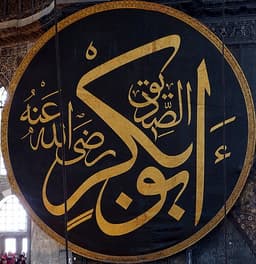
Abu Bakr
Emperor · Medieval
77.1Total
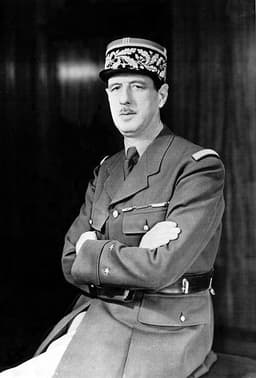
Charles de Gaulle
Politician · Modern
68.2Total
Basic Information
Born
573
1890
Died
634
1970
Era
Medieval
Modern
Nationality
Rashidun Caliphate
France
Occupation
Emperor
Politician
Civilization
Middle Eastern
Western
Score Comparison
Military (10%)
74.7
55.0
Political (20%)
62.7
75.0
Influence (20%)
88.0
65.0
Legacy (20%)
80.0
68.0
Leadership (15%)
77.2
78.0
Strategy (15%)
66.3
65.0
TOTAL
77.1
68.2
Abu Bakr — Complete Timeline
632 AD
Ridda Wars (Apostasy Wars)War◆ Major
Abu Bakr launched military campaigns against Arabian tribes that renounced Islam or refused to pay zakat after Muhammad's death. The wars, led by generals like Khalid ibn al-Walid, reestablished Muslim control over Arabia and consolidated the caliphate.
Ridda WarsConsolidationRashidun
Impact: regional
Election as First CaliphPolitical Action
After the death of Muhammad, Abu Bakr was elected as the first caliph (successor) at Saqifah. His election unified the Muslim community, though it caused controversy among some supporters of Ali. He became the leader of the nascent Islamic state.
CaliphateSuccessionRashidun
Impact: global
633 AD
Compilation of the QuranCultural◆ Major
Abu Bakr ordered the compilation of the Quran into a single written manuscript after many memorizers died in the Ridda Wars. Zayd ibn Thabit collected verses from various sources, creating the first official codex, which later served as the basis for Uthman's standard text.
QuranCompilationRashidun
Impact: globalconstructive
634 AD
Death of Abu BakrPolitical Action◆ Major
Abu Bakr died after a brief illness, having designated Umar as his successor. His caliphate lasted only two years but established the foundations of the Islamic state, including the expansion beyond Arabia and the preservation of the Quran.
DeathSuccessionRashidun
Impact: global
Charles de Gaulle — Complete Timeline
1940 AD
Appeal of 18 June 1940Political Action
From London, de Gaulle broadcast a radio appeal urging French resistance against Nazi occupation. He called on French soldiers and citizens to continue the fight, founding the Free French Forces and becoming the symbol of French defiance.
World War IIResistanceLeadership
Impact: nationalconstructive
1958 AD
Founding of the Fifth RepublicPolitical Action
De Gaulle returned to power during the Algerian crisis and oversaw the drafting of a new constitution. The Fifth Republic established a strong executive presidency, replacing the unstable parliamentary system of the Fourth Republic.
ConstitutionGovernment ReformPolitical System
Impact: nationalconstructive
1962 AD
End of the Algerian WarPolitical Action◆ Major
De Gaulle negotiated the
DecolonizationPeace TreatyAlgeria
Impact: regionalconstructive
1968 AD
May 1968 CrisisPolitical Action◆ Major
Mass student protests and general strikes paralyzed France, challenging de Gaulle's government. De Gaulle briefly fled to Germany, then returned to dissolve the National Assembly and call elections, which his party won, but his authority was weakened.
ProtestPolitical CrisisSocial Unrest
Impact: nationaldestructive
1969 AD
Resignation as PresidentPolitical Action
De Gaulle resigned after losing a referendum on regional reform and Senate restructuring. The defeat marked the end of his political career, as he withdrew from public life and died the following year.
ResignationPolitical DefeatReferendum
Impact: nationaltragic
Expert Analysis
Charles de Gaulle vs Abu Bakr
# The Crossroads of Crisis: De Gaulle and Abu Bakr, Founders in Fire
On a June evening in 1940, a tall, awkward French general stood before a BBC microphone in London, his voice crackling across the English Channel to a defeated nation. Half a world away, thirteen centuries earlier, an aging merchant from Mecca faced a different kind of collapse: the death of a prophet, the fragmentation of a faith, and the threat of total dissolution. Charles de Gaulle and Abu Bakr never met, never knew each other's worlds, yet they faced the same fundamental challenge—how to hold a civilization together when its center cannot hold. Their answers, forged in radically different eras and circumstances, reveal the eternal tension between the visionary and the consolidator, the rebel and the stabilizer.
Origins
Abu Bakr was born in 573 into the Quraysh tribe of Mecca, a society built on blood ties, trade, and shifting alliances. He was a cloth merchant by trade, known not for ambition but for steadiness—a man others trusted instinctively. When his close friend Muhammad began preaching a radical monotheism, Abu Bakr was among the first to believe, not because he sought power, but because he recognized truth when he heard it. His wealth, his calm demeanor, and his reputation for honesty made him the quiet anchor of the early Muslim community.
Charles de Gaulle, born in 1890 in Lille, came from a different tradition entirely: Catholic, conservative, military. His father taught philosophy and history; young Charles absorbed a France that was still smarting from the humiliation of 1870, still dreaming of glory. He entered Saint-Cyr military academy with a sense of destiny that bordered on the mystical. Where Abu Bakr was shaped by the pragmatism of the desert merchant, de Gaulle was forged in the rigid hierarchies of the French army—and in the bitter disappointment of its defeat.
Rise to Power
Abu Bakr’s rise was not a conquest but a consensus. When Muhammad died suddenly in 632, the young Muslim community faced an existential crisis. Some tribes saw the prophet’s death as the end of their obligations; others backed Ali, Muhammad’s cousin and son-in-law. At the meeting in Saqifah, it was Abu Bakr’s presence, not his ambition, that resolved the deadlock. He was elected caliph—not by divine right, but by the urgent agreement of those who feared disintegration. His power came from being the man nobody could object to.
De Gaulle’s rise was the opposite: a lonely defiance. In 1940, as France collapsed before the German blitzkrieg, he was a junior general with no political base. His Appeal of 18 June was an act of pure audacity—a voice from exile claiming to speak for a nation that had surrendered. He had no army, no territory, no legitimacy except what he invented. For years, he was dismissed by Churchill and Roosevelt as a nuisance, a prima donna. But de Gaulle understood that legitimacy is not inherited; it is performed. He made himself indispensable by refusing to accept defeat.
Leadership & Governance
Abu Bakr’s caliphate lasted only two years, yet in that time he performed the essential work of consolidation. The Ridda Wars, launched against tribes that refused to pay the religious tax or renounced Islam, were brutal but decisive. He did not negotiate; he compelled. His strategy was simple: the unity of the ummah was non-negotiable, and those who broke it would be broken. Yet he also ordered the compilation of the Quran into a single manuscript, preserving the revelation that would outlast any empire. His leadership was that of the shepherd who builds the pen, not the one who leads the charge.
De Gaulle’s governance was theatrical and aloof. As president of the Fifth Republic, he ruled from a distance, using referendums and television addresses to bypass the squabbling parties. He ended the Algerian War in 1962, a decision that horrified the French army that had brought him to power. He understood that France could not be great while bleeding in a colonial conflict. His constitution gave the president enormous power, a direct response to the parliamentary paralysis of the Third Republic. Where Abu Bakr built consensus through personal trust, de Gaulle built it through institutional authority.
Triumph & Tragedy
Abu Bakr’s greatest triumph was simply surviving. When he died in 634, he left a unified Arabian peninsula, a compiled Quran, and a designated successor in Umar. His tragedy is that he is often remembered as a transition—the man who held the door open for greater figures.
De Gaulle’s triumph was the liberation of France and the restoration of its pride. His tragedy came in 1968, when student protests and a general strike paralyzed the nation he had saved. He fled briefly to Baden-Baden, a moment of panic that betrayed his isolation. He resigned in 1969 after losing a referendum on regional reform—a petty end for a giant. The man who had defied Hitler was brought down by university students and bureaucrats.
Character & Destiny
Abu Bakr’s character was his destiny. He was called “Al-Siddiq”—the truthful one—because his faith was uncomplicated. He did not second-guess; he acted. When others hesitated, he moved forward. This simplicity made him an effective leader in a crisis, but it also meant his vision was limited to preservation, not transformation.
De Gaulle was made of contradictions: arrogant yet insecure, visionary yet rigid. He believed he was France, and in many ways he was right. But his greatness came with a coldness that left him isolated. He had no political party, no true friends, only a sense of mission. His destiny was to be indispensable and unloved.
Legacy
Abu Bakr’s legacy is the Sunni caliphate itself. Every caliph who followed owed their position to the precedent he set: that leadership is a trust, not a birthright. His decision to compile the Quran ensured that Islam would have a textual foundation immune to the fractures of dynastic politics.
De Gaulle’s legacy is the Fifth Republic, which endures today. He gave France a political system stable enough to survive its own contradictions. The man who once said “France cannot be France without greatness” left a nation that, for all its flaws, still believes in that ideal.
Conclusion
To compare de Gaulle and Abu Bakr is to see that leadership is always a response to collapse. One faced the death of a prophet; the other, the death of a nation. Abu Bakr built a fence around a fragile community; de Gaulle built a stage for a wounded pride. Both succeeded, but their success was contingent on the moment. In the end, what they share is the loneliness of the founder—the burden of being the one who says, “This will not fall apart, not while I am here.” And for a brief, blazing moment, they were right.
Rankings
🥇
Abu BakrLeader
Mil: 74.7Pol: 62.7Inf: 88.0
77.1
🥈
Charles de Gaulle
Mil: 55.0Pol: 75.0Inf: 65.0
68.2
+8.9 behind
How This Comparison Works
Algorithm
Each figure is scored on 6 dimensions (0—100 scale) based on structured historical data: Military (10%), Political (20%), Influence (20%), Legacy (20%), Leadership (15%), Strategy (15%). The weighted total produces the final ranking.
Data Sources
Scores are computed from structured sub-indicators in the database. Scale factors adjust for era (Ancient ×0.85, Modern ×1.0) and civilization size (Eastern ×1.05, Other ×0.80) to account for differences in population and military scale.
Maximum 3 Figures
Comparisons are limited to 2—3 figures to ensure readability and statistical meaningfulness.
Error Margins
±5 points per dimension — Sub-scores are derived from historical records with inherent uncertainty. Two figures within 5 points on a dimension should be considered roughly equivalent in that area.
Total Score Accuracy
±3 points overall — The weighted combination of 6 dimensions produces a total score with approximately ±3 points of uncertainty. Differences of less than 3 points are not statistically significant— the figures are effectively tied.
Known Limitations
- Historical records are incomplete and uneven across civilizations
- Figures from oral-tradition societies may be underrepresented
- Occupation labels can misclassify multi-role figures
- Scores measure capability and impact, not moral character
- Quantitative scoring is a comparison tool, not absolute truth
Capability Radar
Military (10%) — Battles & Warfare
Battles
65
60
Win Rate
70
55
Expansion
85
20
Political (20%) — Governance & Reform
Reform
85
95
Diplomacy
80
90
Economy
70
70
Influence (20%) — Cultural & Global Reach
Cultural
70
70
Global
85
80
Legacy (20%) — Historical Impact
Historical
85
85
Longevity
90
75
Leadership (15%) — Power & Stability
Tenure
60
85
Stability
75
75
Strategy (15%) — Tactics & Innovation
Strategy
75
85
Tactics
60
70
Reform
80
80
Similar Comparisons
Comments & Discussion
No comments yet. Be the first to share your thoughts!