Loading...
Abu Bakr vs Pachacuti
Abu Bakr leads by 7.7 pts · 2 figures compared
…
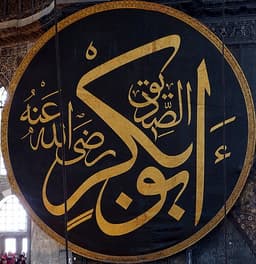
Abu Bakr
Emperor · Medieval
77.1Total
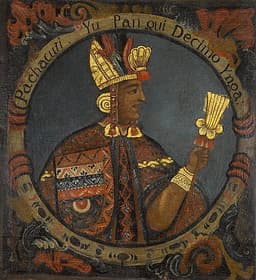
Pachacuti
Emperor · Medieval
69.4Total
Basic Information
Born
573
1418
Died
634
1472
Era
Medieval
Medieval
Nationality
Rashidun Caliphate
Inca Empire
Occupation
Emperor
Emperor
Civilization
Middle Eastern
Other
Score Comparison
Military (10%)
74.7
78.5
Political (20%)
62.7
58.1
Influence (20%)
88.0
65.0
Legacy (20%)
80.0
72.0
Leadership (15%)
77.2
78.0
Strategy (15%)
66.3
69.2
TOTAL
77.1
69.4
Abu Bakr — Complete Timeline
632 AD
Ridda Wars (Apostasy Wars)War◆ Major
Abu Bakr launched military campaigns against Arabian tribes that renounced Islam or refused to pay zakat after Muhammad's death. The wars, led by generals like Khalid ibn al-Walid, reestablished Muslim control over Arabia and consolidated the caliphate.
Ridda WarsConsolidationRashidun
Impact: regional
Election as First CaliphPolitical Action
After the death of Muhammad, Abu Bakr was elected as the first caliph (successor) at Saqifah. His election unified the Muslim community, though it caused controversy among some supporters of Ali. He became the leader of the nascent Islamic state.
CaliphateSuccessionRashidun
Impact: global
633 AD
Compilation of the QuranCultural◆ Major
Abu Bakr ordered the compilation of the Quran into a single written manuscript after many memorizers died in the Ridda Wars. Zayd ibn Thabit collected verses from various sources, creating the first official codex, which later served as the basis for Uthman's standard text.
QuranCompilationRashidun
Impact: globalconstructive
634 AD
Death of Abu BakrPolitical Action◆ Major
Abu Bakr died after a brief illness, having designated Umar as his successor. His caliphate lasted only two years but established the foundations of the Islamic state, including the expansion beyond Arabia and the preservation of the Quran.
DeathSuccessionRashidun
Impact: global
Pachacuti — Complete Timeline
1438 AD
Conquest of the Chanka KingdomWar
Pachacuti led the Inca army to defeat the Chanka, a powerful rival, in a decisive battle near Cusco. This victory secured his position as Sapa Inca and initiated a period of rapid expansion, transforming the Inca from a small kingdom into a vast empire.
ConquestInca ExpansionChanka
Impact: regional
1440 AD
Reconstruction of CuscoCultural◆ Major
Pachacuti rebuilt Cusco as the imperial capital, designing it in the shape of a puma and constructing massive stone structures like Sacsayhuam
Urban PlanningArchitectureInca Empire
Impact: regionalconstructive
1450 AD
Initiation of Machu Picchu's ConstructionCultural◆ Major
Pachacuti ordered the construction of Machu Picchu, a royal estate and ceremonial site high in the Andes. The complex featured sophisticated dry-stone masonry and terraced agriculture, serving as a symbol of Inca engineering and a retreat for the emperor.
ArchitectureRoyal EstateInca Engineering
Impact: regionalconstructive
Expert Analysis
Pachacuti vs Abu Bakr
### The Builder and the Unifier: Two Visions of Empire
In the high Andes, a king reshapes the world in stone, carving a celestial city from a mountain ridge. On the Arabian Peninsula, a grieving friend steadies a fractured community, binding sacred verses into a single book. One builds for eternity, the other for faith. Pachacuti and Abu Bakr, two medieval rulers from civilizations separated by continents and cultures, both forged empires from chaos. Yet their paths, their triumphs, and their tragedies reveal how profoundly a leader’s moment and character can shape the arc of history.
### Origins: The Mountain and the Desert
Pachacuti was born in 1418 into a world of stone and sky. The ninth son of the Inca ruler Viracocha, he was not destined for the throne. The Inca kingdom was a modest highland state, surrounded by powerful rivals like the Chanka. His upbringing was one of training in warfare and ritual, but also of watching a fragile realm constantly threatened by enemies. The name “Pachacuti” itself means “earth-shaker” or “cataclysm,” a prophecy of the transformation he would bring.
Abu Bakr, born in 573, emerged from the mercantile world of Mecca. He was a cloth merchant, a man of practical wisdom and deep loyalty. Unlike Pachacuti, he was not a prince but a friend—the closest companion of the Prophet Muhammad. His world was not one of mountain fortresses but of shifting tribal alliances, where a single word could start a war or seal a peace. The era of *jahiliyyah*, or ignorance, was about to be shattered by revelation. Abu Bakr’s early life was defined by trust and trade, not ambition.
### Rise to Power: The Sword and the Vote
Pachacuti’s rise came through cataclysm. In 1438, the Chanka army, a fierce and numerous force, marched on Cusco. The Inca king and his heir fled. But Pachacuti, then a prince named Yupanqui, refused to abandon the city. He rallied the remaining warriors, and in a desperate battle near Cusco, he crushed the Chanka. The victory was total. The fleeing king was deposed, and the earth-shaker took the throne. His rise was forged in blood and desperation—a gamble that turned a prince into a conqueror.
Abu Bakr’s rise was quieter but no less decisive. When Muhammad died in 632, the young Muslim community faced a crisis of succession. Some argued for a leader from the Prophet’s family; others for a chosen successor. In a tent at Saqifah, heated debate erupted. Abu Bakr, calm and respected, was elected as the first caliph—the “successor to the Messenger of God.” His authority rested not on a battlefield victory but on consensus, on the weight of his character and his closeness to the Prophet. It was a political choice, not a military one.
### Leadership & Governance: The Architect and the Shepherd
As ruler, Pachacuti was a visionary builder. He did not merely conquer; he reimagined the world. After 1440, he rebuilt Cusco in the shape of a puma, with massive stone walls that fit together without mortar—a feat of engineering that still baffles. He divided the empire into four provinces, imposed a single language (Quechua), and created a system of roads and storehouses that knit the Andes together. Around 1450, he ordered the construction of Machu Picchu, a royal estate perched between two peaks, a testament to his belief that empire was as much about awe as about power. His military strategy was one of overwhelming force followed by generous integration: defeated chiefs were often given positions in his administration.
Abu Bakr’s governance was more pastoral, more urgent. His caliphate lasted only two years (632-634), but it was a time of fire. Upon his election, many Arabian tribes renounced Islam or refused to pay alms. The Ridda Wars—the Wars of Apostasy—erupted. Abu Bakr did not hesitate. He dispatched armies across the peninsula, crushing rebellions with ruthless efficiency. Yet his greatest act was not military but cultural: he ordered the compilation of the Quran into a single written manuscript. Many who had memorized the holy text had died in battle. Abu Bakr understood that faith needed a foundation. He was a shepherd protecting the flock, not an architect building a city.
### Triumph & Tragedy: The Peak and the Brief Flame
Pachacuti’s greatest triumph was the transformation of a kingdom into an empire. By his death in 1472, the Inca realm stretched from modern Ecuador to Chile. He had built a civilization of roads, terraces, and stone that would awe the Spanish a century later. His tragedy was that his creation was brittle. The empire depended on his personal authority; after his death, succession struggles and civil war would weaken it, making it vulnerable to Pizarro’s small band of conquistadors.
Abu Bakr’s triumph was survival itself. He unified Arabia under Islam, preserved the faith, and handed a stable state to his successor, Umar. His tragedy was his brevity. He died after a brief illness in 634, at the age of 61, having ruled for just over two years. He never saw the conquest of Persia or Egypt, the great expansion that would follow. His legacy was a foundation, not a monument.
### Character & Destiny: The Visionary and the Steadfast
Pachacuti was a man of grand vision. He believed that he was destined to remake the world, and his confidence was contagious. He was ruthless when necessary—the Chanka were utterly destroyed—but also pragmatic, absorbing conquered peoples into his system. His personality was that of a mountain: immovable, towering, and cold.
Abu Bakr was steady, gentle, and deeply loyal. He was known as *As-Siddiq*, “the Truthful.” He never sought power; it was thrust upon him. His decisions were guided by a sense of duty, not ambition. When he designated Umar as his successor, he did so to prevent chaos, not to secure his own legacy. His personality was that of a desert: vast, quiet, and enduring.
### Legacy: Stone and Word
Pachacuti left a legacy carved in stone. Machu Picchu, Cusco, the road system—these are still visible, still awe-inspiring. He is remembered as the father of the Inca Empire, the man who turned a hill tribe into a superpower. His influence score of 77.6 reflects his enduring impact on Andean civilization.
Abu Bakr left a legacy written in words. The Quran as a single book, the institution of the caliphate, the unification of Arabia—these shaped the Islamic world for centuries. He is remembered as the first caliph, the friend of the Prophet, the unifier. His legacy score of 70.0 is a measure of his profound, if quieter, influence.
### Conclusion
Two rulers, two empires, two legacies. Pachacuti built for the eye, Abu Bakr for the soul. One conquered mountains, the other conquered hearts. Their differences are not just of culture but of purpose: Pachacuti sought to reshape the physical world, Abu Bakr to preserve a spiritual one. Yet both understood a fundamental truth: that empire is not built by force alone. It requires vision, unity, and the willingness to build something that outlasts the builder. As we walk the stone paths of Machu Picchu or open the pages of a Quran, we walk in the shadows of these two men—one who shook the earth, and one who steadied it.
Rankings
🥇
Abu BakrLeader
Mil: 74.7Pol: 62.7Inf: 88.0
77.1
🥈
Pachacuti
Mil: 78.5Pol: 58.1Inf: 65.0
69.4
+7.7 behind
How This Comparison Works
Algorithm
Each figure is scored on 6 dimensions (0—100 scale) based on structured historical data: Military (10%), Political (20%), Influence (20%), Legacy (20%), Leadership (15%), Strategy (15%). The weighted total produces the final ranking.
Data Sources
Scores are computed from structured sub-indicators in the database. Scale factors adjust for era (Ancient ×0.85, Modern ×1.0) and civilization size (Eastern ×1.05, Other ×0.80) to account for differences in population and military scale.
Maximum 3 Figures
Comparisons are limited to 2—3 figures to ensure readability and statistical meaningfulness.
Error Margins
±5 points per dimension — Sub-scores are derived from historical records with inherent uncertainty. Two figures within 5 points on a dimension should be considered roughly equivalent in that area.
Total Score Accuracy
±3 points overall — The weighted combination of 6 dimensions produces a total score with approximately ±3 points of uncertainty. Differences of less than 3 points are not statistically significant— the figures are effectively tied.
Known Limitations
- Historical records are incomplete and uneven across civilizations
- Figures from oral-tradition societies may be underrepresented
- Occupation labels can misclassify multi-role figures
- Scores measure capability and impact, not moral character
- Quantitative scoring is a comparison tool, not absolute truth
Capability Radar
Military (10%) — Battles & Warfare
Battles
65
85
Win Rate
70
90
Expansion
85
90
Political (20%) — Governance & Reform
Reform
85
92
Diplomacy
80
75
Economy
70
80
Influence (20%) — Cultural & Global Reach
Cultural
70
85
Global
85
65
Legacy (20%) — Historical Impact
Historical
85
80
Longevity
90
70
Leadership (15%) — Power & Stability
Tenure
60
85
Stability
75
82
Strategy (15%) — Tactics & Innovation
Strategy
75
88
Tactics
60
80
Reform
80
85
Similar Comparisons
Comments & Discussion
StoneScribe6/16/2026
Abu Bakr wasn’t a conqueror by temperament; he was a crisis manager who used Quranic compilation as a political weapon to centralize authority after Muhammad died—over 70 memorizers of the Quran perished at Yamama in 633, and if he hadn't acted, Islam might've fractured into competing oral traditions. Pachacuti's Machu Picchu was a royal retreat built from sheer ego, not necessity. Abu Bakr built for survival, Pachacuti for vanity.
石碑猎手6/16/2026
Pachacuti赢了战争,Abu Bakr赢了时间。Machu Picchu在今天还是旅游景点,但《古兰经》的文本统一呢?那才是真正永恒的遗产。Abu Bakr在两年内稳定了一个濒临崩溃的宗教共同体,Pachacuti花了三十年建一个帝国,还不是被西班牙人几年就打碎了。建设者?不如说是痴梦者。
DataSkeptic_426/16/2026
The analysis romanticizes both figures, but let's check the numbers: Pachacuti's Inca Empire covered about 2 million square kilometers by his death, while Abu Bakr’s Rashidun Caliphate was barely 1.5 million. Yet Abu Bakr ruled for only two years versus Pachacuti's three decades. On a per-year efficiency, Abu Bakr actually expanded faster, considering he was fighting apostate wars simultaneously. The "builder" label gets lazy when you ignore time compression.
尺度判官6/16/2026
比较两位领袖就像比较苹果和椰子——一个是山地王国,一个是沙漠联盟。Pachacuti的帝国基于强制劳役和太阳崇拜,Abu Bakr的政权基于教法共识和盟友网络。前者更像工程大王,后者更像外交操盘手。非要选一个"更伟大"?我会选那个死后没有引发内战的人——可惜Pachacuti的继承者直接内斗了,Abu Bakr的继承人奥马尔反而巩固了政权。
ClassicsChronicler6/16/2026
Pachacuti’s "earth-shaker" title is poetic but overblown: the Incas had no writing system, so all his deeds are mythologized oral history filtered through Spanish chroniclers. Meanwhile, Abu Bakr's consolidation is documented by early Islamic histories like al-Tabari. One is a legend carved in stone for tourists; the other is a historical figure whose decisions still shape the faith of 1.8 billion people today. Give me a text over a ruin any day.
历史锈痕6/16/2026
评论区的大家别忘了关键点:Pachacuti改造的Cusco城以Puma形状布局,象征权力与秩序,而Abu Bakr修建的麦地那清真寺只要简单功能。但Abu Bakr的团结政策把阿拉伯部落从小规模仇杀中拉回正轨,Pachacuti