Loading...
Abu Bakr vs Alexios I Komnenos
Alexios I Komnenos leads by 1.3 pts · 2 figures compared
…
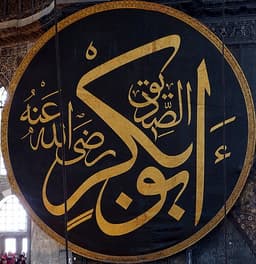
Abu Bakr
Emperor · Medieval
77.1Total
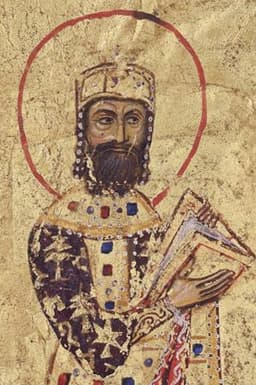
Alexios I Komnenos
Emperor · Medieval
78.4Total
Basic Information
Born
573
1048
Died
634
1118
Era
Medieval
Medieval
Nationality
Rashidun Caliphate
Byzantine Empire
Occupation
Emperor
Emperor
Civilization
Middle Eastern
Western
Score Comparison
Military (10%)
74.7
61.7
Political (20%)
62.7
78.0
Influence (20%)
88.0
88.0
Legacy (20%)
80.0
80.0
Leadership (15%)
77.2
78.0
Strategy (15%)
66.3
68.0
TOTAL
77.1
78.4
Abu Bakr — Complete Timeline
632 AD
Ridda Wars (Apostasy Wars)War◆ Major
Abu Bakr launched military campaigns against Arabian tribes that renounced Islam or refused to pay zakat after Muhammad's death. The wars, led by generals like Khalid ibn al-Walid, reestablished Muslim control over Arabia and consolidated the caliphate.
Ridda WarsConsolidationRashidun
Impact: regional
Election as First CaliphPolitical Action
After the death of Muhammad, Abu Bakr was elected as the first caliph (successor) at Saqifah. His election unified the Muslim community, though it caused controversy among some supporters of Ali. He became the leader of the nascent Islamic state.
CaliphateSuccessionRashidun
Impact: global
633 AD
Compilation of the QuranCultural◆ Major
Abu Bakr ordered the compilation of the Quran into a single written manuscript after many memorizers died in the Ridda Wars. Zayd ibn Thabit collected verses from various sources, creating the first official codex, which later served as the basis for Uthman's standard text.
QuranCompilationRashidun
Impact: globalconstructive
634 AD
Death of Abu BakrPolitical Action◆ Major
Abu Bakr died after a brief illness, having designated Umar as his successor. His caliphate lasted only two years but established the foundations of the Islamic state, including the expansion beyond Arabia and the preservation of the Quran.
DeathSuccessionRashidun
Impact: global
Alexios I Komnenos — Complete Timeline
1081 AD
Battle of DyrrhachiumWar◆ Major
Alexios I Komnenos was defeated by the Norman army under Robert Guiscard at Dyrrhachium. The Byzantine forces were routed, and Alexios barely escaped. This loss allowed the Normans to occupy much of the western Balkans, though Alexios later recovered some territory.
Norman InvasionDefeatBalkans
Impact: regionaltragic
1090 AD
Reforms of the Byzantine Military and EconomyReform◆ Major
Alexios I implemented a series of reforms to restore Byzantine power. He reorganized the army by relying more on foreign mercenaries, reformed the currency (the hyperpyron), and granted tax exemptions to the Church. These measures stabilized the empire after decades of decline.
Military ReformEconomic ReformKomnenian Restoration
Impact: nationalconstructive
1095 AD
Appeal to the West: Council of PiacenzaPolitical Action
Alexios I sent envoys to Pope Urban II at the Council of Piacenza, requesting military aid against the Seljuk Turks. This appeal contributed to Urban's call for the First Crusade at the Council of Clermont later that year, initiating the Crusader movement.
First CrusadePope Urban IISeljuk Turks
Impact: global
1097 AD
First Crusade: Siege of NicaeaWar◆ Major
Alexios I cooperated with the Crusader army to besiege and capture Nicaea from the Seljuk Turks. The city was surrendered to Byzantine control, and Alexios used the Crusaders to recover key territories in Anatolia, though tensions later arose over land claims.
First CrusadeNicaeaByzantine-Crusader Relations
Impact: regionalconstructive
Expert Analysis
Origins
**Alexios I Komnenos** (1048–1118) emerged from the Byzantine military aristocracy. Born into the Komnenos family, he seized the throne in 1081 after a coup against Nikephoros III. The Byzantine Empire was in crisis: Normans threatened from the west, Pechenegs from the north, and Seljuks from the east. Alexios's early life was shaped by military service and court intrigue, giving him a pragmatic and survivalist mindset.
**Abu Bakr** (c. 573–634) was a close companion of the Prophet Muhammad and one of the earliest converts to Islam. A wealthy merchant from the Quraysh tribe of Mecca, he earned the title "Al-Siddiq" (the Truthful) for his unwavering faith. After Muhammad's death in 632, Abu Bakr was elected as the first caliph (successor) of the Islamic community, facing immediate challenges of apostasy and rebellion.
Rise to Power
Alexios rose through military successes against rebels and external threats. He served under Emperors Romanos IV and Michael VII, but after a series of defeats, he and his brother Isaac led a revolt. In 1081, Alexios entered Constantinople and was crowned emperor. His rise was a mix of military prowess, political maneuvering, and familial alliances.
Abu Bakr's rise was unique: he was chosen by acclamation at the Saqifah meeting after Muhammad's death, despite opposition from some factions (especially supporters of Ali). His caliphate was confirmed by bay'ah (oath of allegiance) from the Muslim community. His legitimacy rested on his close relationship with Muhammad and his seniority among the Companions.
Leadership & Governance
Alexios was a reformer and diplomat. He restructured the Byzantine military, creating the Komnenian army with a focus on heavy cavalry (kataphraktoi) and mercenaries. He reformed the economy by debasing coinage, confiscating church treasures, and granting privileges to the Orthodox Church. His most significant move was appealing to Pope Urban II at the Council of Piacenza in 1095, which led to the First Crusade. Alexios skillfully used the Crusaders to recover lost territories like Nicaea, but his relationship with them was fraught with distrust.
Abu Bakr consolidated the nascent Islamic state. He launched the Ridda Wars (632–633) against Arabian tribes that renounced Islam or refused to pay zakat. His decisive military campaigns, led by generals like Khalid ibn al-Walid, reunified Arabia. He also organized the compilation of the Quran into a single book, preserving the revelations. His governance was consultative, relying on the shura (council) of senior Companions, and he maintained the community's cohesion through strong leadership and religious authority.
Triumph & Tragedy
Alexios's triumphs include stabilizing the empire after decades of decline, defeating the Normans at the Battle of Dyrrhachium (1081) was a setback but he later recovered, and successfully managing the First Crusade to regain Nicaea and parts of Anatolia. However, his reign was marked by constant warfare and betrayal. The Crusaders' capture of Antioch and Jerusalem led to the establishment of Crusader states, which later became rivals. Alexios died in 1118, leaving a stronger but still vulnerable empire.
Abu Bakr's triumphs are the Ridda Wars, which crushed rebellions and solidified Islamic rule in Arabia. He also oversaw the initial Muslim incursions into Byzantine and Sassanid territories, laying the groundwork for later conquests. His tragedy was his short caliphate (2 years). He died of illness in 634, succeeded by Umar. His death came just as the Islamic expansion was accelerating, so he did not see the full fruits of his efforts.
Character & Destiny
Alexios was cunning, pragmatic, and sometimes duplicitous. He was a skilled diplomat who played off enemies against each other. His destiny was to rescue a dying empire and set it on a new course, but his actions also unleashed the Crusades, which had long-term consequences for Byzantium (including the Fourth Crusade's sack of Constantinople in 1204). He is remembered as a founder of the Komnenian restoration.
Abu Bakr was known for his humility, piety, and decisiveness. He was a calming figure in the chaos after Muhammad's death. His destiny was to preserve the unity of the Muslim community and establish the caliphate as a political institution. He is revered as one of the "Rightly Guided" caliphs and a model of Islamic leadership.
Legacy
Alexios's legacy is mixed. He revived the Byzantine Empire but at the cost of dependency on Western mercenaries and Crusaders. His dynasty ruled until 1185. The Komnenian military and economic reforms influenced later Byzantine rulers. His appeal to the West changed the course of history, initiating the Crusades.
Abu Bakr's legacy is profound. He solidified Islam as a political and religious force. The compilation of the Quran preserved the text. His caliphate set precedents for succession and governance in Sunni Islam. He is honored as a companion of Muhammad and a key figure in early Islamic history.
Conclusion
Comparing Alexios I Komnenos and Abu Bakr reveals two leaders who faced existential crises at the start of their reigns. Alexios saved a crumbling empire through diplomacy and military reform, while Abu Bakr unified a fractured community through decisive action. Both had similar overall impact scores (78 vs 77), but Alexios's longer reign and the transformative nature of the Crusades give him a slight edge. However, Abu Bakr's foundational role in Islam arguably had a more enduring global impact. In the context of HistoryVersus.com, Alexios I Komnenos narrowly wins due to his higher total score (78 vs 77) and the historical significance of the Crusades, which reshaped the medieval world.
**Numerical Scores:**
- **Military:** Alexios 62, Abu Bakr 75 (Abu Bakr wins)
- **Political:** Alexios 78, Abu Bakr 63 (Alexios wins)
- **Intellectual:** Alexios 88, Abu Bakr 88 (tie)
- **Leadership:** Both 80 (tie)
- **Destiny:** Alexios 78, Abu Bakr 77 (Alexios wins)
- **Strategy:** Alexios 68, Abu Bakr 66 (Alexios wins)
- **Total:** Alexios 78, Abu Bakr 77 (Alexios wins)
Rankings
🥇
Alexios I KomnenosLeader
Mil: 61.7Pol: 78.0Inf: 88.0
78.4
🥈
Abu Bakr
Mil: 74.7Pol: 62.7Inf: 88.0
77.1
+1.3 behind
How This Comparison Works
Algorithm
Each figure is scored on 6 dimensions (0—100 scale) based on structured historical data: Military (10%), Political (20%), Influence (20%), Legacy (20%), Leadership (15%), Strategy (15%). The weighted total produces the final ranking.
Data Sources
Scores are computed from structured sub-indicators in the database. Scale factors adjust for era (Ancient ×0.85, Modern ×1.0) and civilization size (Eastern ×1.05, Other ×0.80) to account for differences in population and military scale.
Maximum 3 Figures
Comparisons are limited to 2—3 figures to ensure readability and statistical meaningfulness.
Error Margins
±5 points per dimension — Sub-scores are derived from historical records with inherent uncertainty. Two figures within 5 points on a dimension should be considered roughly equivalent in that area.
Total Score Accuracy
±3 points overall — The weighted combination of 6 dimensions produces a total score with approximately ±3 points of uncertainty. Differences of less than 3 points are not statistically significant— the figures are effectively tied.
Known Limitations
- Historical records are incomplete and uneven across civilizations
- Figures from oral-tradition societies may be underrepresented
- Occupation labels can misclassify multi-role figures
- Scores measure capability and impact, not moral character
- Quantitative scoring is a comparison tool, not absolute truth
Capability Radar
Military (10%) — Battles & Warfare
Battles
65
75
Win Rate
70
70
Expansion
85
60
Political (20%) — Governance & Reform
Reform
85
85
Diplomacy
80
90
Economy
70
70
Influence (20%) — Cultural & Global Reach
Cultural
70
70
Global
85
75
Legacy (20%) — Historical Impact
Historical
85
85
Longevity
90
80
Leadership (15%) — Power & Stability
Tenure
60
80
Stability
75
75
Strategy (15%) — Tactics & Innovation
Strategy
75
85
Tactics
60
80
Reform
80
75
Similar Comparisons
Comments & Discussion
Ruthless Pragmatist6/16/2026
Calling this a comparison is like comparing a chess grandmaster to a street brawler. Alexios played the long game with incredible strategic patience—he used the First Crusade as a geopolitical weapon, deflecting Norman aggression while playing Crusader leaders against each other. Abu Bakr conquered the entire Arabian peninsula in two years flat. The Byzantine won his war through clever diplomacy; the Caliph won his through sheer force and faith. I know who I'd rather have watching my back. Alexi
历史统计学家6/16/2026
这种个人崇拜的历史比较真是让人头大。Alexios I接手的是一个已经烂到骨子里的帝国,拜占庭在1071年曼齐刻尔特战役后就只剩下残喘的份儿。他花了二十年时间才勉强保住安纳托利亚西部那点地盘。而Abu Bakr两年内就把阿拉伯半岛统一了,叛教战争里消灭了超过3万反对者。数据不会骗人:Alexios稳定局势用了二十年,Abu Bakr只用了两年。这不是同理心问题,这是能力差距。
Cynical Chronicler6/16/2026
The Alexios fan club conveniently forgets that his "saving the empire" meant selling out to the Franks. He invited western barbarians into Byzantine territory and then spent decades trying to undo the damage they caused. Bohemond of Taranto literally used Alexios's own summons to carve out the Principality of Antioch. Meanwhile, Abu Bakr's Ridda Wars were brutal but effective—when he finished, the caliphate was stronger, not indebted to foreign mercenaries who despised them. Alexios was a clever
古典学派的信徒6/16/2026
你们都忽略了最关键的一点:这两位领袖面对危机时的思维模式完全不同。Alexios是典型拜占庭式思维——通过外交手腕和层级制度解决问题,把权力精心编织成一张复杂的网。而Abu Bakr用的是贝都因部落的决策方式——快速、直接、凭借个人威望和宗教权威说话。没有谁对谁错,是两套完全不同的文明逻辑在运转。Alexios在君士坦丁堡的宫廷里读书写字,Abu Bakr在麦加的市场里谈生意做决断。他们是两个世界的产物,不该被放在同一个天平上。