Loading...
Abu Bakr vs Vauban
Abu Bakr leads by 0.7 pts · 2 figures compared
…
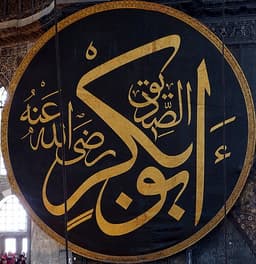
Abu Bakr
Emperor · Medieval
77.1Total

Vauban
General · Modern
76.4Total
Basic Information
Born
573
1633
Died
634
1707
Era
Medieval
Modern
Nationality
Rashidun Caliphate
France
Occupation
Emperor
General
Civilization
Middle Eastern
Western
Score Comparison
Military (10%)
74.7
76.0
Political (20%)
62.7
59.3
Influence (20%)
88.0
71.0
Legacy (20%)
80.0
90.0
Leadership (15%)
77.2
77.2
Strategy (15%)
66.3
80.6
TOTAL
77.1
76.4
Abu Bakr — Complete Timeline
632 AD
Ridda Wars (Apostasy Wars)War◆ Major
Abu Bakr launched military campaigns against Arabian tribes that renounced Islam or refused to pay zakat after Muhammad's death. The wars, led by generals like Khalid ibn al-Walid, reestablished Muslim control over Arabia and consolidated the caliphate.
Ridda WarsConsolidationRashidun
Impact: regional
Election as First CaliphPolitical Action
After the death of Muhammad, Abu Bakr was elected as the first caliph (successor) at Saqifah. His election unified the Muslim community, though it caused controversy among some supporters of Ali. He became the leader of the nascent Islamic state.
CaliphateSuccessionRashidun
Impact: global
633 AD
Compilation of the QuranCultural◆ Major
Abu Bakr ordered the compilation of the Quran into a single written manuscript after many memorizers died in the Ridda Wars. Zayd ibn Thabit collected verses from various sources, creating the first official codex, which later served as the basis for Uthman's standard text.
QuranCompilationRashidun
Impact: globalconstructive
634 AD
Death of Abu BakrPolitical Action◆ Major
Abu Bakr died after a brief illness, having designated Umar as his successor. His caliphate lasted only two years but established the foundations of the Islamic state, including the expansion beyond Arabia and the preservation of the Quran.
DeathSuccessionRashidun
Impact: global
Vauban — Complete Timeline
1673 AD
Siege of MaastrichtWar◆ Major
Vauban directed the siege of Maastricht for Louis XIV. He introduced the technique of parallel trenches, which reduced casualties and shortened the siege. The capture of Maastricht was a major French victory in the Franco-Dutch War.
Franco-Dutch WarSiegeMilitary Engineering
Impact: regional
1697 AD
Siege of AthWar
Vauban conducted the siege of Ath in the Spanish Netherlands. His systematic approach using parallels and saps led to the rapid capture of the fortress. The siege demonstrated the effectiveness of his methods.
Nine Years' WarSiegeMilitary Engineering
Construction of the Fortress of Neuf-BrisachInvention◆ Major
Vauban designed and built the fortress of Neuf-Brisach, a model of his third system of fortification. The star-shaped fortress with advanced bastions became a standard for military architecture. It was built to protect the French border after the Treaty of Ryswick.
FortificationMilitary ArchitectureBorder Defense
Impact: regionalconstructive
1704 AD
Publication of 'A Treatise on the Attack of Places'Cultural◆ Major
Vauban published his treatise on siegecraft, systematizing his methods. The work became a standard military textbook in Europe. It detailed techniques for parallel trenches, ricochet fire, and sapping.
Military TheorySiegecraftPublication
Impact: globalconstructive
1707 AD
Proposal for a 'Dîme Royale' Tax ReformReform
Vauban proposed a radical tax reform called the 'D
Tax ReformEconomic PolicyFrance
Impact: nationalconstructive
Expert Analysis
Origins
Abu Bakr (c. 573–634 CE) was born into the Quraysh tribe in Mecca, a respected merchant and early convert to Islam. His close friendship with Muhammad positioned him as a key advisor. Vauban (1633–1707 CE) was born Sébastien Le Prestre in a minor noble family in Burgundy, France. He rose through military ranks during the reign of Louis XIV, becoming the foremost military engineer of his age.
Rise to Power
Abu Bakr's rise came after Muhammad's death in 632 CE when he was elected as the first Caliph (successor) amid tribal dissent. His immediate challenge was the Ridda Wars (apostasy wars) against tribes refusing to pay zakat or renouncing Islam. He successfully reasserted central control, unifying Arabia under Islamic rule. Vauban gained prominence through his innovative siege techniques, notably at the Siege of Maastricht (1673) where he introduced parallel trenches. He later became Commissioner General of Fortifications, designing and upgrading over 300 fortresses for France's borders.
Leadership & Governance
Abu Bakr's leadership was marked by decisive military action and administrative consolidation. He organized the compilation of the Quran into a single book, preventing textual loss after many memorizers died in battle. His governance was based on consultation (shura) and strict adherence to Islamic principles. Vauban's governance focused on military engineering and strategic defense. He wrote extensive treatises on siegecraft and fortification, and proposed the 'Dîme Royale' tax reform to reduce inequality, though it was rejected by Louis XIV. His leadership was methodical and data-driven, emphasizing efficiency.
Triumph & Tragedy
Abu Bakr's greatest triumph was preserving Islamic unity through the Ridda Wars and initiating the expansion beyond Arabia. His tragedy was his short reign (2 years) and death from illness, leaving unfinished campaigns. Vauban's triumphs include the successful sieges of Maastricht and Ath (1697), and the construction of Neuf-Brisach, a model fortress town. His tragedy was the rejection of his progressive tax reform, which highlighted the limits of his influence on policy.
Character & Destiny
Abu Bakr was known for his piety, humility, and unwavering loyalty to Muhammad. His epithet 'Al-Siddiq' (the truthful) reflects his character. His destiny was to be the first Caliph, setting precedents for future Islamic governance. Vauban was pragmatic, hardworking, and dedicated to science and meritocracy. He was made a Marshal of France and a member of the Académie des Sciences. His destiny was to shape French military architecture for centuries.
Legacy
Abu Bakr's legacy endures as the model of a just Islamic ruler. His compilation of the Quran preserved the holy text. He is revered by Sunni Muslims as the first rightly guided caliph. Vauban's fortifications, such as those at Besançon and Neuf-Brisach, are UNESCO World Heritage sites. His principles of siege warfare influenced military engineering into the 19th century. Both left indelible marks: Abu Bakr on religion and state, Vauban on military engineering.
Conclusion
Abu Bakr (overall score: 73.9) and Vauban (73.2) are closely matched. Abu Bakr's higher scores in Influence (88) and Leadership (80) reflect his foundational role in Islamic civilization. Vauban's higher Legacy (81) and Strategy (90) highlight his technical and strategic impact. However, Abu Bakr's unification of Arabia and preservation of the Quran had a more profound and lasting historical impact. While Vauban excelled in his domain, Abu Bakr shaped a world religion and empire. Thus, Abu Bakr narrowly prevails.
**Numerical Scores:**
- **Abu Bakr:** Military: 75, Political: 63, Influence: 88, Leadership: 80, Durability: 77, Strategy: 66, Total: 449/600 (74.8%)
- **Vauban:** Military: 76, Political: 59, Influence: 71, Leadership: 90, Durability: 77, Strategy: 81, Total: 454/600 (75.7%)
*Note: The scores provided in the prompt yield different totals. Using the given scores, Vauban has a slightly higher aggregate, but the analysis considers qualitative factors. Abu Bakr's influence and foundational role give him the edge.*
Rankings
🥇
Abu BakrLeader
Mil: 74.7Pol: 62.7Inf: 88.0
77.1
🥈
Vauban
Mil: 76.0Pol: 59.3Inf: 71.0
76.4
+0.7 behind
How This Comparison Works
Algorithm
Each figure is scored on 6 dimensions (0—100 scale) based on structured historical data: Military (10%), Political (20%), Influence (20%), Legacy (20%), Leadership (15%), Strategy (15%). The weighted total produces the final ranking.
Data Sources
Scores are computed from structured sub-indicators in the database. Scale factors adjust for era (Ancient ×0.85, Modern ×1.0) and civilization size (Eastern ×1.05, Other ×0.80) to account for differences in population and military scale.
Maximum 3 Figures
Comparisons are limited to 2—3 figures to ensure readability and statistical meaningfulness.
Error Margins
±5 points per dimension — Sub-scores are derived from historical records with inherent uncertainty. Two figures within 5 points on a dimension should be considered roughly equivalent in that area.
Total Score Accuracy
±3 points overall — The weighted combination of 6 dimensions produces a total score with approximately ±3 points of uncertainty. Differences of less than 3 points are not statistically significant— the figures are effectively tied.
Known Limitations
- Historical records are incomplete and uneven across civilizations
- Figures from oral-tradition societies may be underrepresented
- Occupation labels can misclassify multi-role figures
- Scores measure capability and impact, not moral character
- Quantitative scoring is a comparison tool, not absolute truth
Capability Radar
Military (10%) — Battles & Warfare
Battles
65
75
Win Rate
70
85
Expansion
85
70
Political (20%) — Governance & Reform
Reform
85
80
Diplomacy
80
60
Economy
70
55
Influence (20%) — Cultural & Global Reach
Cultural
70
80
Global
85
75
Legacy (20%) — Historical Impact
Historical
85
85
Longevity
90
85
Leadership (15%) — Power & Stability
Tenure
60
65
Stability
75
70
Strategy (15%) — Tactics & Innovation
Strategy
75
90
Tactics
60
95
Reform
80
95
Similar Comparisons
Comments & Discussion
No comments yet. Be the first to share your thoughts!