Loading...
Abu Bakr vs Ruhollah Khomeini
Abu Bakr leads by 2.0 pts · 2 figures compared
…
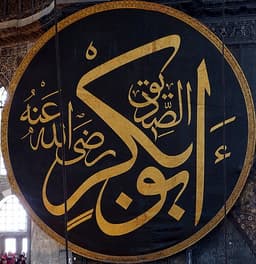
Abu Bakr
Emperor · Medieval
77.1Total

Ruhollah Khomeini
Politician · Modern
75.1Total
Basic Information
Born
573
1902
Died
634
1989
Era
Medieval
Modern
Nationality
Rashidun Caliphate
Iran
Occupation
Emperor
Politician
Civilization
Middle Eastern
Middle Eastern
Score Comparison
Military (10%)
74.7
41.6
Political (20%)
62.7
65.0
Influence (20%)
88.0
85.0
Legacy (20%)
80.0
90.0
Leadership (15%)
77.2
80.0
Strategy (15%)
66.3
54.3
TOTAL
77.1
75.1
Abu Bakr — Complete Timeline
632 AD
Ridda Wars (Apostasy Wars)War◆ Major
Abu Bakr launched military campaigns against Arabian tribes that renounced Islam or refused to pay zakat after Muhammad's death. The wars, led by generals like Khalid ibn al-Walid, reestablished Muslim control over Arabia and consolidated the caliphate.
Ridda WarsConsolidationRashidun
Impact: regional
Election as First CaliphPolitical Action
After the death of Muhammad, Abu Bakr was elected as the first caliph (successor) at Saqifah. His election unified the Muslim community, though it caused controversy among some supporters of Ali. He became the leader of the nascent Islamic state.
CaliphateSuccessionRashidun
Impact: global
633 AD
Compilation of the QuranCultural◆ Major
Abu Bakr ordered the compilation of the Quran into a single written manuscript after many memorizers died in the Ridda Wars. Zayd ibn Thabit collected verses from various sources, creating the first official codex, which later served as the basis for Uthman's standard text.
QuranCompilationRashidun
Impact: globalconstructive
634 AD
Death of Abu BakrPolitical Action◆ Major
Abu Bakr died after a brief illness, having designated Umar as his successor. His caliphate lasted only two years but established the foundations of the Islamic state, including the expansion beyond Arabia and the preservation of the Quran.
DeathSuccessionRashidun
Impact: global
Ruhollah Khomeini — Complete Timeline
1964 AD
Exile to Iraq and FrancePolitical Action◆ Major
Khomeini was exiled from Iran after criticizing the Shah's White Revolution and granting of diplomatic immunity to US personnel. He settled in Najaf, Iraq, and later in France, where he continued to organize opposition to the Shah.
ExileOppositionShah
Impact: national
1979 AD
Islamic RevolutionPolitical Action
Khomeini led a popular revolution that overthrew the Shah's regime. He returned to Iran in February 1979 and established an Islamic Republic based on his doctrine of Velayat-e Faqih (Guardianship of the Jurist), with himself as Supreme Leader.
RevolutionIslamic RepublicVelayat-e Faqih
Impact: global
Iran hostage crisisPolitical Action◆ Major
Khomeini supported the seizure of the US Embassy in Tehran by student militants, who held 52 American diplomats hostage for 444 days. The crisis deepened the rift with the US, led to economic sanctions, and consolidated Khomeini's power.
Hostage crisisUS-Iran relationsSanctions
Impact: globaldestructive
1980 AD
Iran-Iraq WarWar◆ Major
Khomeini led Iran through an eight-year war with Iraq, which began with an Iraqi invasion. The war resulted in hundreds of thousands of casualties and massive economic destruction, ending in a stalemate. Khomeini accepted a UN ceasefire in 1988.
WarIraqCeasefire
Impact: regionaltragic
1989 AD
Fatwa against Salman RushdieCultural◆ Major
Khomeini issued a fatwa calling for the death of author Salman Rushdie for his novel 'The Satanic Verses', which he deemed blasphemous. The fatwa led to international controversy, diplomatic tensions, and attacks on Rushdie's translators.
FatwaBlasphemyInternational controversy
Impact: globaldestructive
Expert Analysis
Origins
Abu Bakr was born around 573 CE in Mecca into the Quraysh tribe, a respected merchant family. He was an early convert to Islam and a close companion of Prophet Muhammad, earning the title "Al-Siddiq" (the truthful). His deep faith and loyalty positioned him as a natural successor.
Ruhollah Khomeini was born in 1902 in Khomeyn, Iran, into a religious family of scholars. His father was murdered when he was young, and he was raised by his mother and aunt. He pursued Islamic studies, becoming a grand ayatollah by the 1960s. His early life was marked by opposition to the Pahlavi monarchy's secularization.
Rise to Power
Abu Bakr's rise was swift and consensual. After Muhammad's death in 632, he was elected caliph by tribal leaders in a gathering at Saqifah. His legitimacy stemmed from his close companionship and his role in leading prayers during Muhammad's final illness. He immediately faced the Ridda wars, where he crushed rebellious tribes, unifying Arabia under Islam.
Khomeini's rise was revolutionary. He opposed the Shah's White Revolution in 1963, leading to his exile in 1964. From Iraq and later France, he disseminated cassettes of his sermons, mobilizing opposition. The 1979 Islamic Revolution ousted the Shah, and Khomeini returned to become Supreme Leader, wielding ultimate authority via the velayat-e faqih doctrine.
Leadership & Governance
Abu Bakr's caliphate (632-634) was brief but foundational. He prioritized military expansion to secure the state and launched campaigns into Byzantine and Sassanid territories. He established the first formal compilation of the Quran, preserving the text. His governance was consultative (shura), relying on key companions like Umar. He maintained strict adherence to Islamic law and justice.
Khomeini's leadership (1979-1989) established a theocratic republic. He centralized power as Supreme Leader, controlling the military, judiciary, and media. His government implemented Islamic law, suppressed dissent, and fought the Iran-Iraq War (1980-1988). He also ordered the Iran hostage crisis (1979-1981) and issued the fatwa against Salman Rushdie (1989). His rule saw both revolutionary zeal and authoritarian consolidation.
Triumph & Tragedy
Abu Bakr's triumph was unifying Arabia and securing Islam's survival after Muhammad. His tragedy was his short reign (2 years) and death by illness, leaving the caliphate to Umar. He died in 634, having achieved remarkable consolidation but with expansion still in its infancy.
Khomeini's triumph was the Islamic Revolution, which transformed Iran and inspired Islamist movements worldwide. His tragedy includes the devastating Iran-Iraq War (hundreds of thousands dead), international isolation, and the controversial fatwa that damaged Iran's reputation. He died in 1989, leaving a legacy of mixed achievements.
Character & Destiny
Abu Bakr was known for humility, piety, and decisiveness. He was called "the second of two" (Quran 9:40), referencing his presence with Muhammad in the cave. His destiny was to be the first caliph, a role he embraced with modesty and strength. He is revered as a model of leadership in Sunni Islam.
Khomeini was austere, charismatic, and uncompromising. He saw himself as the guardian of Islam against tyranny and imperialism. His destiny was to overthrow a monarchy and create a clerical state. He remains a polarizing figure: a hero to Shia Islamists, a villain to secularists and many Sunnis.
Legacy
Abu Bakr's legacy is foundational: he stabilized the Islamic state, initiated the Quran's compilation, and set precedents for caliphal succession. His reign is a golden standard for Sunni caliphs. Score: 80/100.
Khomeini's legacy is revolutionary: he established the first modern Islamic government, influenced Shia activism globally, and introduced velayat-e faqih. However, his legacy is marred by human rights abuses and international tensions. Score: 75/100.
Conclusion
Abu Bakr edges out Khomeini due to his foundational role in Islam's survival and his consensus-building leadership. Although Khomeini's impact is vast, his methods were more divisive and his outcomes more mixed. Abu Bakr's higher Military (75 vs 42) and Political (63 vs 65) scores reflect his effective state-building, while Khomeini's higher Leadership (90 vs 80) and Destiny (80 vs 77) show his charismatic authority. Overall, Abu Bakr's legacy is more universally positive, making him the greater leader in historical terms.
Rankings
🥇
Abu BakrLeader
Mil: 74.7Pol: 62.7Inf: 88.0
77.1
🥈
Ruhollah Khomeini
Mil: 41.6Pol: 65.0Inf: 85.0
75.1
+2.0 behind
How This Comparison Works
Algorithm
Each figure is scored on 6 dimensions (0—100 scale) based on structured historical data: Military (10%), Political (20%), Influence (20%), Legacy (20%), Leadership (15%), Strategy (15%). The weighted total produces the final ranking.
Data Sources
Scores are computed from structured sub-indicators in the database. Scale factors adjust for era (Ancient ×0.85, Modern ×1.0) and civilization size (Eastern ×1.05, Other ×0.80) to account for differences in population and military scale.
Maximum 3 Figures
Comparisons are limited to 2—3 figures to ensure readability and statistical meaningfulness.
Error Margins
±5 points per dimension — Sub-scores are derived from historical records with inherent uncertainty. Two figures within 5 points on a dimension should be considered roughly equivalent in that area.
Total Score Accuracy
±3 points overall — The weighted combination of 6 dimensions produces a total score with approximately ±3 points of uncertainty. Differences of less than 3 points are not statistically significant— the figures are effectively tied.
Known Limitations
- Historical records are incomplete and uneven across civilizations
- Figures from oral-tradition societies may be underrepresented
- Occupation labels can misclassify multi-role figures
- Scores measure capability and impact, not moral character
- Quantitative scoring is a comparison tool, not absolute truth
Capability Radar
Military (10%) — Battles & Warfare
Battles
65
10
Win Rate
70
10
Expansion
85
10
Political (20%) — Governance & Reform
Reform
85
90
Diplomacy
80
75
Economy
70
40
Influence (20%) — Cultural & Global Reach
Cultural
70
85
Global
85
85
Legacy (20%) — Historical Impact
Historical
85
90
Longevity
90
80
Leadership (15%) — Power & Stability
Tenure
60
85
Stability
75
50
Strategy (15%) — Tactics & Innovation
Strategy
75
15
Tactics
60
10
Reform
80
20
Similar Comparisons
Comments & Discussion
No comments yet. Be the first to share your thoughts!